


Dishes For Your Eid Al-Fitr Feast: Delicious Recipes To Help You Celebrate The End Of Ramadan



Eid al-Fitr is a three-day holiday marking the end of the holy month of Ramadan. It is a time of peace and joy. People gather in mosques for Eid prayers, visit relatives, enjoy delicious Eid meals, and participate in charitable activities. In this article, we explore some of the Eid foods, as well as a recipe for one of the most popular Eid sweets, maamoul.
1. Maamoul:
This dessert is primarily eaten in the Levant. There are various types of filling, usually made from dates, pistachios, or walnuts, and it is often covered in powdered sugar. Kalaysha is a very similar biscuit in Iraq, as are kahk in Egypt and Sudan.
2. Kambabur:
This Somali Eid bread is similar in texture to injera (an Ethiopian white leavened bread made from teff flour, similar to crepes) but with different spices. During Eid, it is usually served sweet, sprinkled with sugar and topped with yogurt for a refreshing touch. This recipe is also popular in Djibouti and may have originated there.
Recommend
3. Sher Khorma:
Literally translating to “milk with dates,” Sher Khorma is also known as Simai in Bangladesh. This sweet vermicelli dessert is a favorite Eid dessert in Pakistan, India, Bangladesh, and Afghanistan. It is prepared with vermicelli, milk, sugar, dates, pistachios, almonds, or raisins, depending on the country.
4. Tagine:
Tagine is often served in North African countries such as Morocco and Algeria. It is a slow-cooked stew made with some type of meat (often lamb or beef), along with vegetables and fruits such as peaches and apricots.
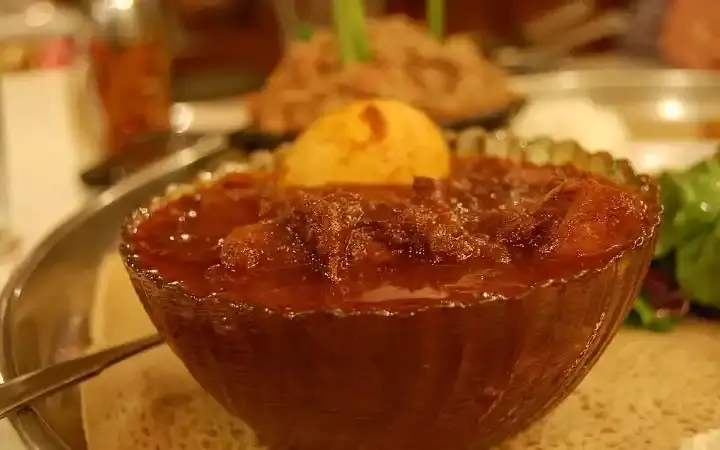
5. Doro Wat:
This is a delicious Ethiopian stew or curry made with chicken and typically eaten with classic injera, a sourdough-flavored bread. It is usually served in a communal dish, allowing everyone to share and enjoy the food and company.
6. Luqaim:
Also known as “Turkish Delight,” luqaim is a favorite during holidays in Turkey. This jelly-like dessert consists of a mixture of starch, sugar, and other fillings such as dates, pistachios, and walnuts. It tastes delicious and is also one of the most beautiful holiday desserts, as it can come in a variety of colors.
7. Tafhija:
Tafhija is a dessert enjoyed by many Bosnians during Eid. It consists of a boiled apple dipped in sugar and stuffed with walnuts. It is often elaborately served in a large individual cup filled with syrup and topped with whipped cream.
8. Manti:
These dumplings are a traditional Russian Eid al-Fitr food, although they are found all over the world. They are believed to have originated in China and are part of Afghan, Armenian, Turkish, Bosnian, and Central Asian cuisine. They are usually filled with spiced lamb or beef, and their size and shape vary from region to region.
9. Bulani:
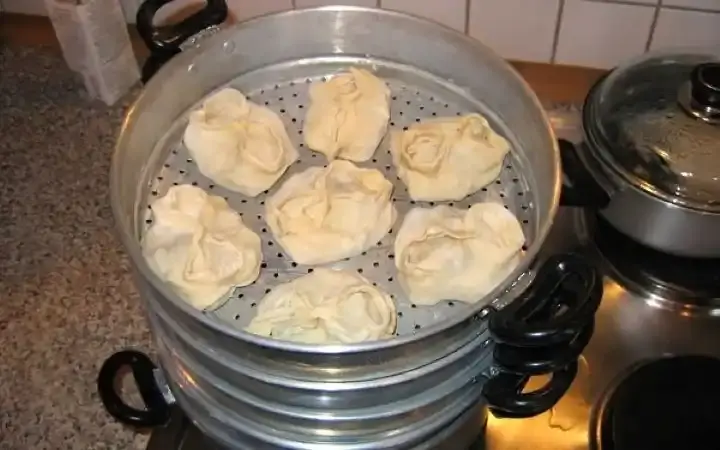
Bulani is a dish enjoyed throughout Ramadan and is still eaten during Eid al-Fitr and other special occasions throughout the year. Found in Afghanistan, it is a thin-crusted bread filled with vegetables and stuffed with foods such as potatoes, lentils, or pumpkin, and can be served with yogurt. It is usually served as a side dish or appetizer, although it can also be eaten as a main course.
10. Lapis Lahiri:
This Indonesian dish is inspired by traditional Dutch layered cakes developed during the colonial era. Like traditional cakes, it is made from flour, butter, and eggs, but it contains Indonesian spices such as cardamom and cloves. Preparing this cake requires a lot of effort, so it is considered a delicacy eaten on special occasions.
11. Beef Rendang:
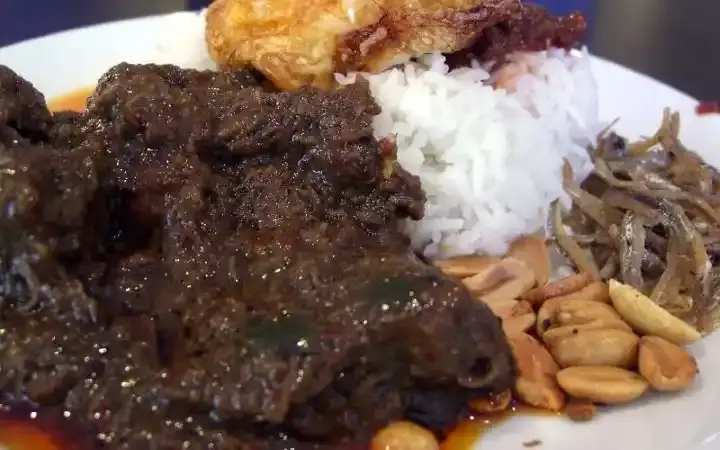
This spicy main course is a classic Eid dish in Malaysia. It originates from the Minangkabau ethnic group in Indonesia, who see this dish as an embodiment of their community's culture, with the meat symbolizing the leaders/king/elders, the coconut milk symbolizing the teachers and writers, the chili peppers symbolizing the religious leaders, and the spice mixture symbolizing the rest of the community.
Maamoul Recipe:
Ingredients:
- 3 cups flour
- A pinch of salt - approximately 1/8 teaspoon
- 1 tablespoon granulated sugar
- 1/2 teaspoon cinnamon
- 3 tablespoons toasted sesame seeds (optional but highly recommended)
- 1/2 teaspoon dry yeast
- 1 cup ghee, at room temperature and unmelted
- 1/3 cup warm water
For the pistachio and honey filling:
- 1 tablespoon ghee or butter
- 1 tablespoon flour
- 1 teaspoon sesame seeds
- 1/4 cup honey
- 1/2 cup coarsely ground pistachios
For decoration:
- Powdered sugar

Method:
- In a mixing bowl, add the flour, salt, sugar, yeast, cinnamon, and sesame seeds.
- Add the unmelted ghee (at room temperature) and mix until fully combined.
- Add the water and continue mixing until you get a firm dough.
- Cover and let it rest for an hour.
- Meanwhile, prepare the filling. Add the ghee or butter to a small saucepan over medium heat, then add the flour and mix until the flour turns golden brown.
- Remove from heat, add the sesame seeds and honey, and mix well. Return the mixture to a low heat until it thickens.
- Remove from heat, add the pistachios, and mix well. Let it cool for 10 minutes, then shape it into 20 small balls.
- After an hour, divide the dough equally into 20 balls, each weighing approximately 40 grams.
- Place the dough balls in a plate and cover with plastic wrap.
- Now begin filling and shaping the maamoul.
- Take one of the dough balls and place some of the pistachio filling in the center. Close the dough to form a ball around it.
- Gently press with a maamoul tool or make a pattern with a fork.
- Place the filled and shaped balls on a parchment-lined baking tray and bake at 180°C for 20-25 minutes, or until the bottom is golden brown.
- Leave to cool on a wire rack. Store in an airtight container.
- When ready to enjoy, sprinkle with powdered sugar.
Happy Eid, and may you have a healthy and prosperous life.
