


The Time Scientists Froze Light And Brought It Back To Life



In the world of scientific marvels, few things capture the imagination like the ability to manipulate light. In a feat that seems like it came straight from science fiction, researchers from the University of Florence and Italy's National Centre for Natural Resources have achieved what was previously considered impossible: They stopped light in its tracks, stored its quantum information in a crystal, and then released it intact—all within a fraction of a second. This experiment, published in the journal Nature, represents a pivotal leap toward practical quantum technologies.
This extraordinary achievement not only challenges our understanding of the universe but also opens up a world of possibilities for future technology and research. Imagine capturing a moment in time, freezing it in place, and then releasing it back into the flow of existence. This is the magical frontier the researchers have crossed, with implications that resonate far beyond the confines of the laboratory.
Recommend
The challenge: Can the fastest thing in the universe be stopped?
Light is made up of massless photons, always moving at 299,792 km/s (the speed of light in a vacuum). To "freeze" it, scientists had to trick the light into standing still without being absorbed or destroyed. This experiment builds on previous work, but offers new efficiencies and potential real-world applications.
Previous attempts:
- 1999: Len Hau of Harvard University slowed light to 17 m/s using a Bose-Einstein condensate (BEC), a state of matter that occurs when a gas of very low-density bosons is cooled to temperatures very close to absolute zero.
- 2001: Two teams (Hau's and Ronald Walsworth's) completely stopped light by converting it into atomic excitations.
- 2013: German scientists stored light for one minute inside a crystal—a record at the time.
Method: Converting Light into Matter (and Vice Versa):
Step 1: Slowing the Light with Extreme Cold
- A Bose-Einstein condensate is used, where the atoms move slowly.
- Laser light is shone into the condenser, and its photons pair with the atoms, creating particles called polaritons, which carry the light's information but move slowly.
Step 2: Freezing the Light by Converting It to Atomic Spin
- The light pulse is completely absorbed by the atoms, imprinting their quantum state on their spin.
- The photons cease to exist, but their information is preserved—like freezing a movie on a DVD.
Step 3: Bringing the Light Back to Life
- A second laser reactivates the atomic spin, converting the stored information back into photons.
- The light pulse emerges intact, as if it had never stopped.
Key Components:
- Quantum Memory Crystal (acting as a trap): A specially designed crystal made of yttrium orthosilicate, the atomic structure of which can temporarily "host" the quantum state of light. The electrons in this material have unusually long coherence times, preserving quantum information for longer than alternatives.
- Laser Control: Precise laser pulses trap and retrieve light.
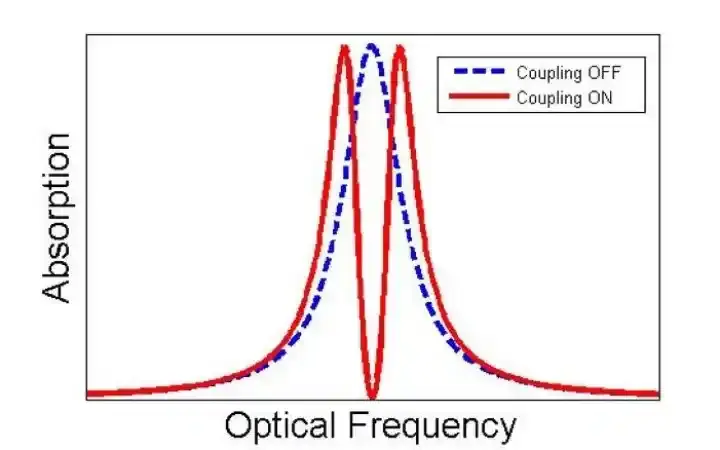
- Electromagnetically Induced Transparency (EIT) (acting as a pause button): The control laser makes the opaque crystal transparent only for a specific light pulse, which is then mapped onto the crystal's atomic spin. This is similar to freezing a waveform in ice, then thawing it later so the wave can continue.
- Recovery Laser (acting as a start button): A second laser pulse reverses the process, reconstructing the original light pulse with greater than 95% accuracy.
Why is this important? From science fiction to real-world applications:
Potential applications include:
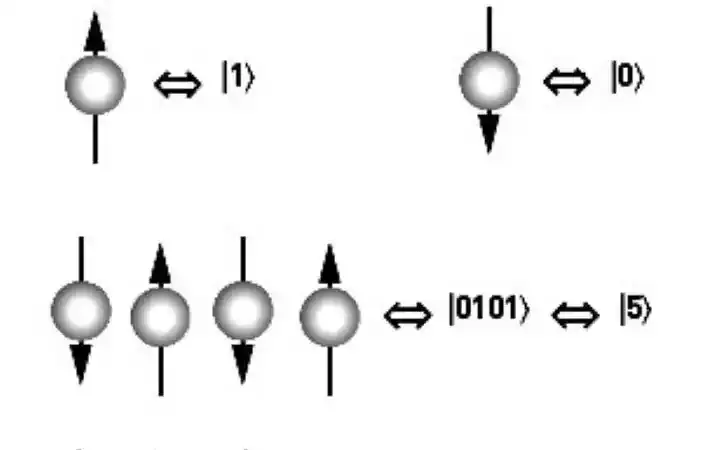
Quantum computing: Storing qubits in light-based systems.
Secure communications: Quantum networks require memory nodes to store and relay entangled photons. This crystal system could act as a repeater, enabling quantum-secure global links, where information is frozen during transmission. For example, China's Micius satellite already uses quantum cryptography—but lacks long-term light storage.
Astrophysics simulations: Testing the behavior of light in extreme environments (e.g., near black holes).
Challenges and Next Steps:
Although this experiment represents a significant leap, there are still hurdles:
Extending storage time: from milliseconds to seconds (or more).
Operation at room temperature: Current systems require extreme cooling (-269°C, just 4 degrees above absolute zero).
Retrieval accuracy: The retrieval accuracy must approach 100% for error-free quantum systems.
Scalability: Integrating this into practical quantum devices.
The Italian team is now collaborating with leading European quantum initiatives to improve the technology. It plans to test other crystal arrays (for example, praseodymium-doped materials), as well as integrate the system into existing fiber optic networks.
Conclusion - A New Chapter in Photonics:
The ability to freeze and reanimate light is no longer just a theory; it's a reality with profound implications. It's a gateway to quantum technologies we can't yet imagine. With the advancement of quantum networks and computing, this Italian achievement may be remembered as a pivotal moment in controlling light at the quantum level. As quantum physicist Anton Zeilinger once said, "If you can control light, you control the universe." This experiment brings us one step closer.
