


Ben Wahshia Al-Nabate. An Arab scientist deciphered hieroglyphic symbols five centuries before the discovery of the Rosetta Stone



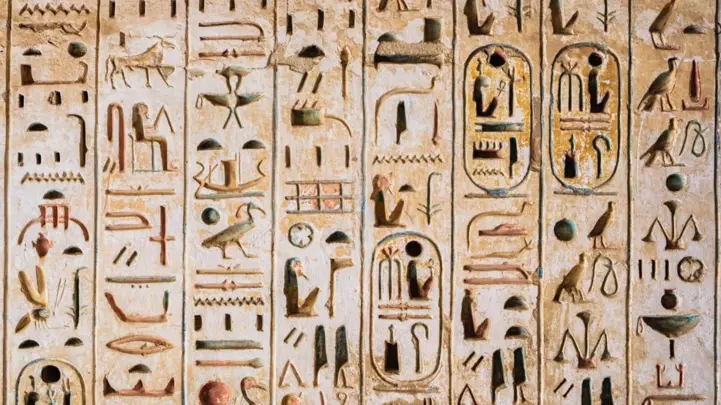
Who is Ben brutal?
Show key points
- Ibn Wahshia, also known as Abu Bakr Ahmed bin Ali bin Mukhtar, was an Iraqi scholar from Nabat renowned for his extensive contributions to chemistry and language sciences.
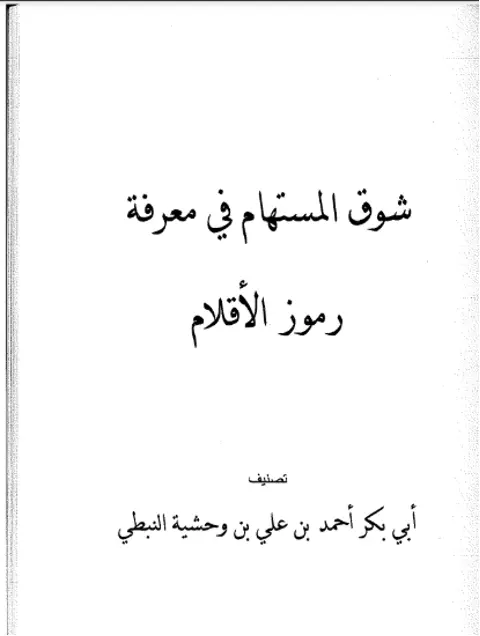
- Among his notable works is the book titled "Longing of the Mustaham in the Knowledge of the Symbols of Pens," which showcases his deep exploration into ancient scripts and symbols.
- He authored a unique book that discussed 89 languages, including ancient Egyptian hieroglyphs, demonstrating an unparalleled linguistic breadth.
- ADVERTISEMENT
- Hieroglyphics were just one script used to write the ancient Egyptian language, primarily for religious and funerary texts, and were not the language itself.
- Easier and more practical scripts used by ancient Egyptians included hieratic, demotic, and later the Coptic script, especially for everyday and literary writings.
- Ibn Wahshia made groundbreaking progress in deciphering hieroglyphics by understanding them as phonetic symbols and comparing them with Coptic and Arabic letters.
- His early theories and methods may have paved the way for scholars like Champollion, who used a similar comparative approach with the Rosetta Stone to crack the hieroglyphic code.
His full name is "Abu Bakr Ahmed bin Ali bin Mukhtar" and is known as "Ibn Wahsheh" Nabataean or Chaldean relative to his origin, an Iraqi scientist born in Nabat and specialized in a number of sciences was what won his most attention among them are chemistry and language sciences and has a lot of literature in them and among those books in language sciences has a famous book also called "longing Almstham in the knowledge of the symbols of pens" and also the book "The sun of the suns and the moon of the moons in revealing the symbols of the pyramid
One book with 89 languages, including ancient Egyptian with hieroglyphic writing
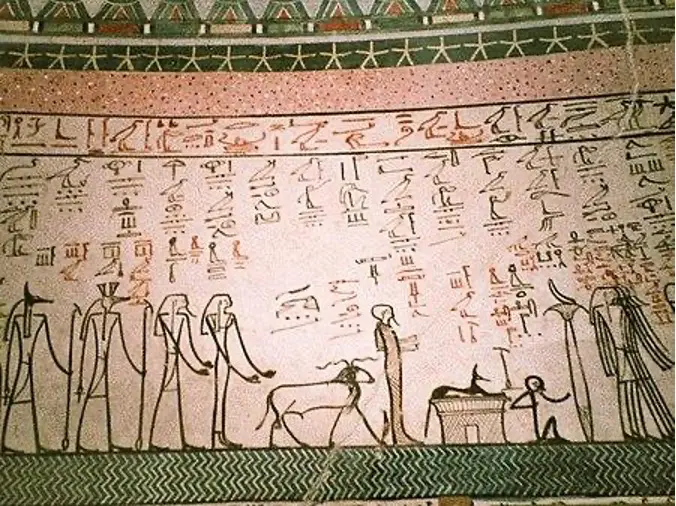
Hieroglyphics is only one of the ways in which the ancient Egyptian language was written, but many people confuse it with the language itself, although for decades hieroglyphic writing has been limited to writing in religious temples and funerary structures only, such as pyramids and tombs, whether built or carved into the rock.
Recommend
The Egyptian language has other scripts in which it was written that were much easier than the hieroglyphs that were written in the style of chisel engraving, whether that engraving was sunken or prominent. Examples of calligraphy written with linen pens and written using ink were hieratic, demotic, and Coptic script. In fact, in the late times of the ancient Egyptian civilization, specifically in the era of the New Kingdom, a simplified line of the hieroglyphic script was issued, and it was the one in which the book "Emmy Dawat" was written on the walls of the tomb of the great warrior king "Thutmose III" in the Valley of the Kings.
Hieroglyphics is not a language
Hieroglyphics is only one of the ways in which the ancient Egyptian language was written, but many people confuse it with the language itself, although for decades hieroglyphic writing has been limited to writing in religious temples and funerary structures only, such as pyramids and tombs, whether built or carved into the rock.
The Egyptian language has other scripts in which it was written that were much easier than the hieroglyphs that were written in the style of chisel engraving, whether that engraving was sunken or prominent. Examples of calligraphy written with linen pens and written using ink were hieratic, demotic, and Coptic script. In fact, in the late times of the ancient Egyptian civilization, specifically in the era of the New Kingdom, a simplified line of the hieroglyphic script was issued, and it was the one in which the book "Emmy Dawat" was written on the walls of the tomb of the great warrior king "Thutmose III" in the Valley of the Kings.
How the hieroglyphic codes were deciphered by Ben Brutality and then Champollion
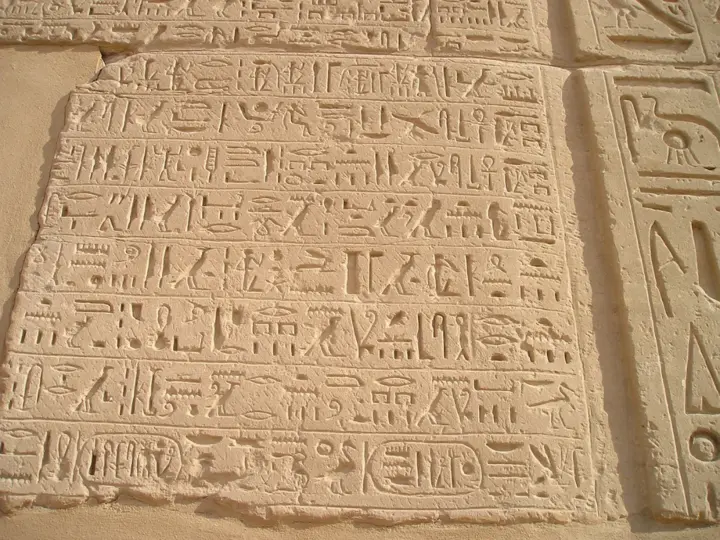
It was not easy, as the signs of hieroglyphic writing are varied, as they do not contain a single pattern of signs as in contemporary languages and fonts such as Phoenician, Akkadian, cuneiform writing, and even ancient Greek, which used most of the time the Coptic writing that entered Egypt with the entry of Alexander and then the Ptolemaic rule of the country for more than two centuries of years.
As for the secret with which agents such as Ben Wahsheh were able to decipher hieroglyphics, it was that he knew at first that these symbols are sound values, each of them stating that one or more of them was given a sound and each of them or a set of symbols gave a meaning. The Coptic language, which was used in writing Egyptian texts, was credited with facilitating Ben Wahsheh's access to this discovery, so he compared it with Coptic and then with Arabic letters. The result was impressive to reach because these drawn symbols, which are a strange mixture of straight and curved lines, animals, plants, and even dots, are not just decorative or decorative forms of the walls of temples and tombs, but this is a collection of texts that tell what was in previous centuries and what the ancient Egyptians lived on these Earth for thousands of years.
Ben brutality laid the road and the rest walked on it
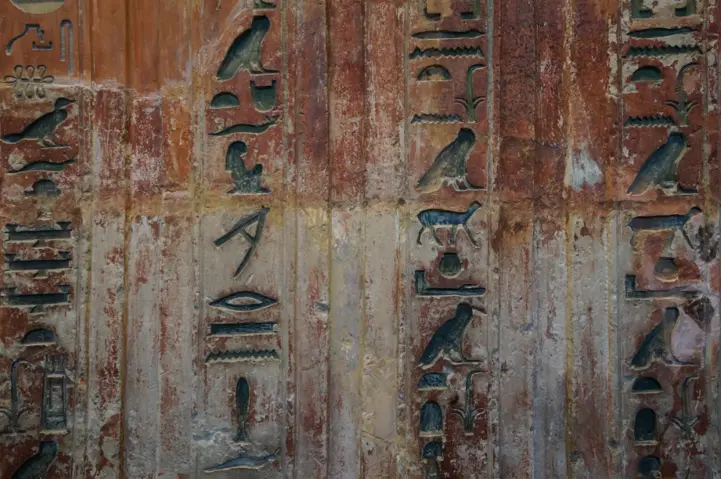
Some scholars believe that these steps taken by Ben Wahshia were the path that later guided Champollion and other scientists who decided to try to decipher these mysterious symbols that carry with them the tales of the greatest civilization that the simple world has seen to this day. Although this view is not certain that Champollion had seen the manuscript "The Longing of the Mustaham" written by "Ben Wahsheh" and translated by "Joseph von Hammer Burgstal", but in both cases, whether he saw it or not, "Champollion" took the same approach as "Ben Wahsheh" by comparing the text that was written in Coptic script and hieroglyphic script also on one stone, the Rosetta Stone, thus opening the way for the rest of the texts to be compared to the code extracted by "Champollion" using This method was developed by the Arab world "Ibn Wahshia Nabati
