


How to protect yourself from tooth decay: Know how certain foods contribute to tooth decay.



Teeth are one of the most influential organs on human life as they affect many things, the most important of which are:
Show key points
- Teeth significantly impact mental health, self-confidence, and physical well-being due to their role in appearance, speech, and chewing.
- Tooth decay, often caused by poor oral hygiene, sugary diets, and infrequent dental visits, is one of the leading causes of tooth loss.
- The formation of tooth decay requires three main factors: bacteria, food for bacteria, and time, with the latter two being within our control.
- ADVERTISEMENT
- Oral bacteria feed on sugars and carbohydrates, including commonly eaten foods like bread, fruits, and rice, not just sweets.
- Sticky foods and frequent snacking increase the risk of cavities by prolonging the time bacteria have to act on teeth.
- Sugar substitutes like xylitol and sorbitol can help prevent cavities but are costly and unsuitable for very young children.
- Regular brushing after meals, limiting sugary intake, creating gaps between meals, and routine dental check-ups are key to maintaining dental health.
The external appearance that reflects on the human mental health.
Pronunciation and letter exits that greatly affect a person's self-confidence and then his social life.
Chewing food and then the ability to choose food because of its benefits for the body and mind and not for ease of chewing.
How does a person lose his teeth?
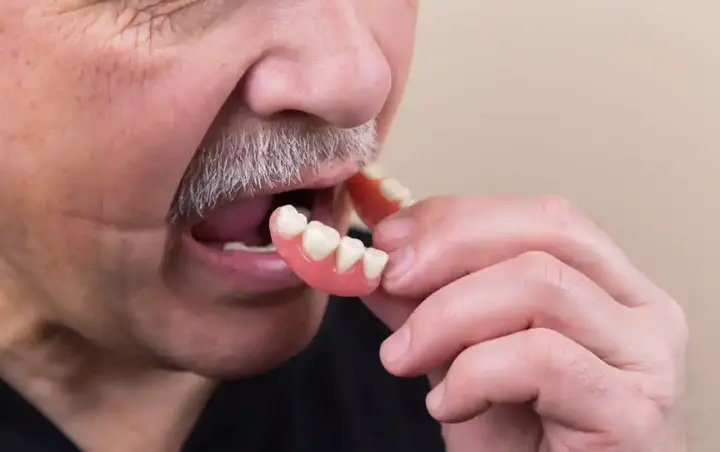
A person may lose his teeth for a variety of reasons, including tooth decay, trauma, accidents, immune diseases, increased blood sugar, tartar buildup, gingivitis and bone erosion. One of the most common of these causes is tooth decay. Many people neglect to visit the dentist because of lack of time, the cost of treatment or because they think that tooth extraction is an easy solution if the situation worsens. For all these reasons and because prevention is better than cure, everyone should know how tooth decay forms, what causes it and how we can avoid it as much as possible.
Recommend
How tooth decay is formed
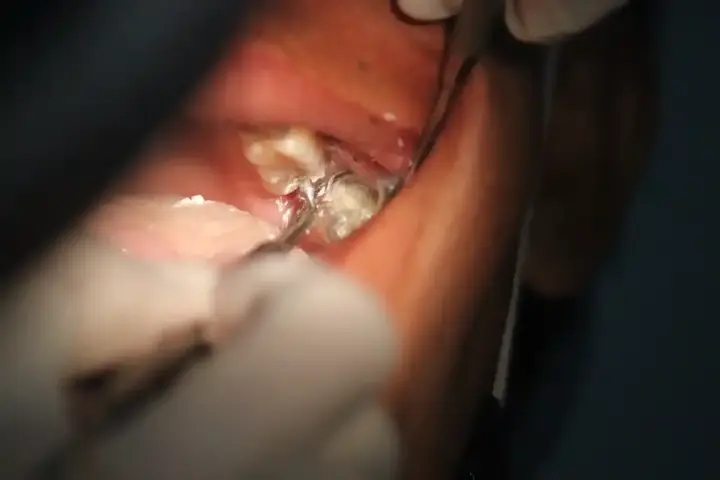
To be able to form, tooth decay needs three factors, bacterial food and time.
As a matter of fact, we have nothing to do about oral bacteria, but our efforts must focus on time and food for the bacteria.
To destroy the time factor, dentists recommend visiting a doctor for a regular check-up. The dentist determines how many visits the patient needs each year based on many factors, including the patient's adherence to instructions, the number of decayed teeth and other factors. Dental brushing should also be taken into account immediately after meals, especially high-sugar meals, so that the patient controls the time factor.
What is oral bacterial food?

Oral bacteria, like other bacteria, feed on sugars and carbohydrates that turn into sugars. Therefore, parents advise their children not to eat too much sweets so that their teeth do not decay. But foods that provide food for oral bacteria are not limited to sweets but include fruits, pastries, bread, rice, pasta and other foods that may fall under healthy food. It makes no sense to decide to abstain from all these types of foods in order to avoid tooth decay. It is therefore important for everyone to know what foods have the most impact on dental health and how to deal with them.
How do we eat and what do we eat for better health of our teeth and the teeth of our children?
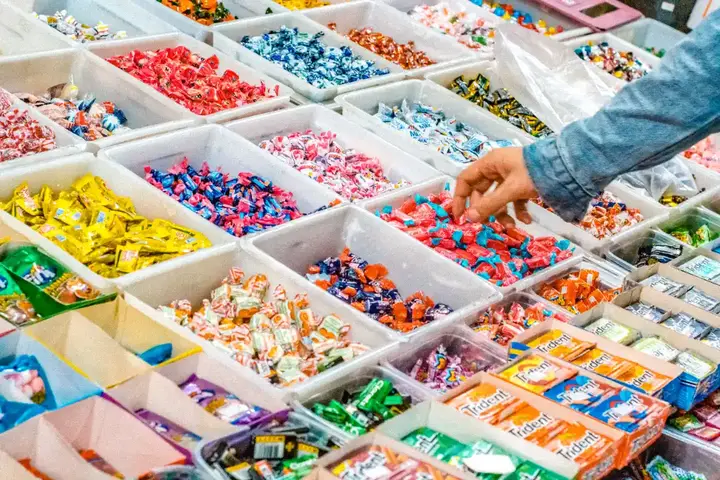
With the development of science and scientific research, recommendations have varied over the years, but always and never the main rule has been that eating candy causes tooth decay which is still true. But some candies have been found to be more harmful to dental health than others. Food that sticks to teeth has been found to be one of the biggest causes of tooth decay, even if it contains less sugar. If you think about this information a little, you will find that it makes a lot of sense after knowing the trio of caries, bacteria, bacteria and the food of bacteria and time. This triangle is completed when food adheres to the teeth because it strengthens the time factor and gives the bacteria a chance to perform their work.
It is not only the adhesion force of food to the teeth that is the only important factor but also the frequency and frequency of the chewing process. A few years ago, nutritionists and dentists differed on the point of frequency of meals so much that nutritionists would advise obese people to eat the main meal and then wait a while to eat fruit or snack. On the other hand, dentists have been and still recommend eating a snack, fruit or dessert immediately after the main meal as keeping the mouth without food residue for long periods is much better for oral health. Today, after the advent of intermittent fasting and prolonged fasting and after the development of scientific research on insulin resistance, both dentists and nutritionists agree that it is better for the health of the mouth and body as a whole that it is better to leave distances between meals.
The attitude of sugar substitutes to caries and dental health?

Scientific studies have proven that the use of some sugar substitutes actually helps reduce the incidence of caries. The most popular of these alternatives are Sorbitol and xylitol. This research has spread in the past years, and some companies producing gum have started using xylitol as a sugar substitute sweetener and marketed this gum as better for dental health. Although these statements are true, it is forbidden to use these sweeteners for children under 3 years of age. One of the problems that prevent the use of healthy sugar substitutes is the financial cost, as these alternatives are much more expensive than the widespread sugar extracted from cane or beets.
In the end, brushing the teeth after each meal remains very important to remove food debris and the layer of plaque that forms on the teeth within a few hours after eating and contains a lot of bacteria. By maintaining brushing, spacing between meals, reducing the intake of sugars, especially those that stick to the teeth, and visiting the dentist periodically at least once a year, the rate of tooth decay will inevitably decrease and you will get healthier teeth with less effort and cost.
