A Journey into the History of the Bibliotheca Alexandrina: From its Precious Books to Its Creation and Unique Location


Show key points
- The ancient Bibliotheca Alexandrina, established in the third century BC, was one of history’s greatest libraries and a symbol of global knowledge and culture.
- Initiated by Alexander the Great and developed by his Ptolemaic successors, the library aimed to collect all human knowledge in one location.
- It housed hundreds of thousands of manuscripts spanning various fields such as philosophy, science, literature, and religion, many collected from diverse regions and sources.
- ADVERTISEMENT
- The modern Bibliotheca Alexandrina, inaugurated in 2002 on the same site, serves as a cultural and scientific hub committed to reviving its ancient legacy.
- Strategically located on the Mediterranean coast, Alexandria’s historical and geographical significance enhances the library’s global role in connecting civilizations.
- The modern library features a digital archive, museums, and research centers, and hosts international events to promote education and intercultural dialogue.
- Despite the loss of the original manuscripts, the new library preserves their legacy through digital and printed copies sourced from institutions worldwide.
The Bibliotheca Alexandrina is considered one of the wonders of the ancient world and one of the most famous and important libraries in history. In this article, we explore how the library was established, the books and manuscripts it held, and the role it played as a center of science, culture, and education in ancient times.
We also examine its geographical, historical, and political setting and the events that led to its founding. Finally, we discuss the role of the modern Bibliotheca Alexandrina, which stands on the shore of the Mediterranean Sea and works to promote communication and understanding among peoples and civilizations.
The Bibliotheca Alexandrina: The Intellectual Foundation of the Library
Recommend
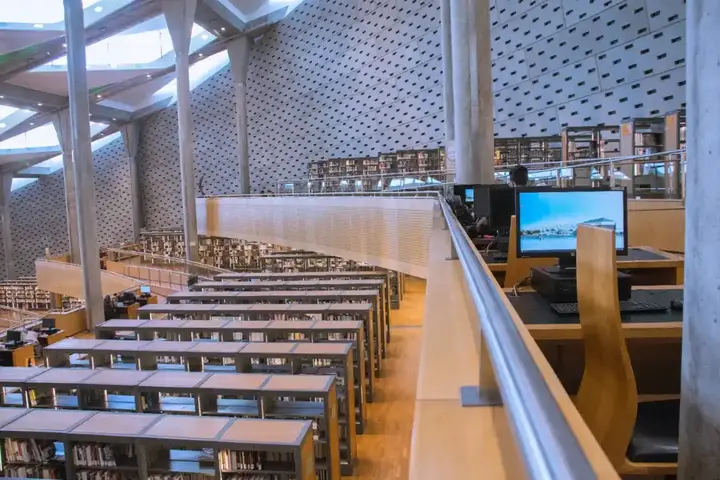
What is the Bibliotheca Alexandrina?
The Bibliotheca Alexandrina was one of the greatest libraries in history, founded in the third century BC in Alexandria, Egypt. The idea of a universal library was Alexander the Great’s dream: he wanted to gather the world’s knowledge in one place. His Ptolemaic successors carried that vision forward and turned the library into a global center of science, culture, and learning.
The library housed hundreds of thousands of books and manuscripts in many fields, languages, and traditions. It also hosted scholars, philosophers, and writers who contributed to the growth and spread of knowledge.
The modern Bibliotheca Alexandrina in Egypt is a cultural, scientific, and educational project that aims to revive the spirit of the ancient library while keeping pace with the modern era. Opened in 2002 on the same site as the ancient library, along the Mediterranean shore, the current institution includes several specialized facilities and sections:
1. Digital asset repository.
2. Manuscripts Center.
3. Antiquities Museum.
4. Center for Research and Studies.
The library also organizes a wide range of activities and events, including exhibitions, conferences, workshops, and seminars.
What was the importance of the library as a center of science, culture and education in ancient times?
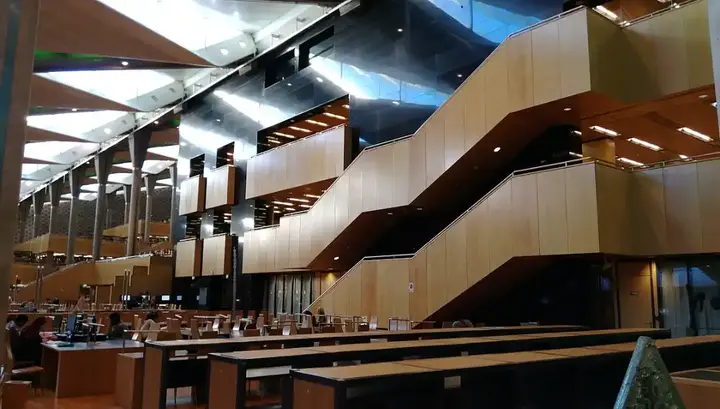
The Bibliotheca Alexandrina was far more than an ordinary collection of books; it was a landmark in the history of learning. Works from across the known world were gathered there, covering subjects from philosophy and mathematics to poetry and religion.
It was a workplace for many brilliant minds whose ideas shaped later thought and scholarship. The library fostered interaction among different civilizations, enabling the exchange of ideas and perspectives. It reflected Alexandria’s open and cosmopolitan culture and helped develop technologies and methods for recording and sharing knowledge. Above all, it carried a universal message: a pursuit of truth, beauty, and goodness.
What books and manuscripts were included in the Bibliotheca Alexandrina, and what were their sources and topics?
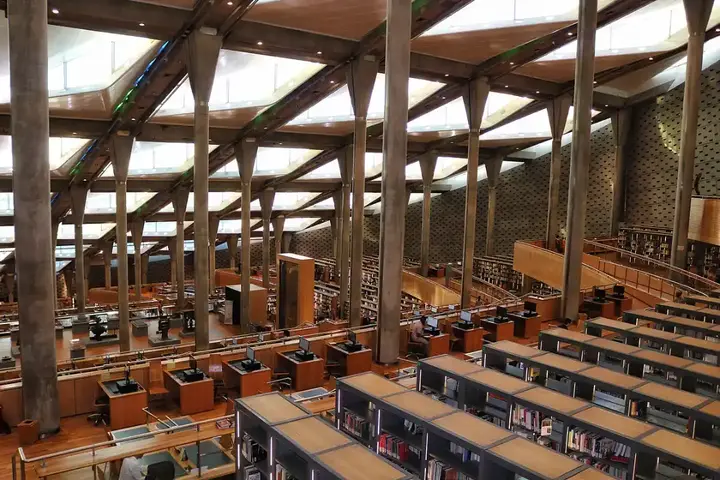
The ancient Bibliotheca Alexandrina contained rare and precious books and manuscripts that represented the scientific and cultural heritage of humanity. These works came from diverse sources: some were written locally by scholars who worked at or visited the library, others were imported from Greece, Persia, India, and China, and some were taken from ships that docked in Alexandria’s port—examined, copied, and then returned to their owners.
The subjects covered virtually every branch of knowledge: philosophy, logic, rhetoric, and literature; mathematics, physics, astronomy, medicine, and engineering; and history, geography, genealogy, and religion.

The modern Bibliotheca Alexandrina does not hold the original works from the ancient library, which were lost or destroyed over time by wars, fires, and earthquakes. However, it does contain digital and printed copies of many important texts, obtained from libraries, museums, and scholarly institutions around the world. These reproductions cover science, the arts, literature, history, religion, and more.
Among the works now available at the Bibliotheca Alexandrina are the following examples:
1. Euclid’s Elements, the foundational work on mathematics; a digital copy was obtained from the Bibliothèque nationale de France.
2. Aristotle’s History of Animals, an early scientific work on biology that classifies and describes animals and their parts; a digital copy was obtained from the Vatican Library.
3. The Book of Chemistry by Jabir ibn Hayyan, an early work on chemical processes, materials, and experiments; a printed copy was obtained from the Cairo Library.
4. One Thousand and One Nights, the famous collection of Arabic stories, folktales, and romances; a digital copy was obtained from the Library of Congress.
5. Ibn Sina’s The Canon of Medicine, a comprehensive medical encyclopedia that blends Greek, Islamic, and Indian medical knowledge; a digital copy was obtained from the AUB Library.
The Establishment of the Bibliotheca Alexandrina: An Ambitious Project in Antiquity and Today
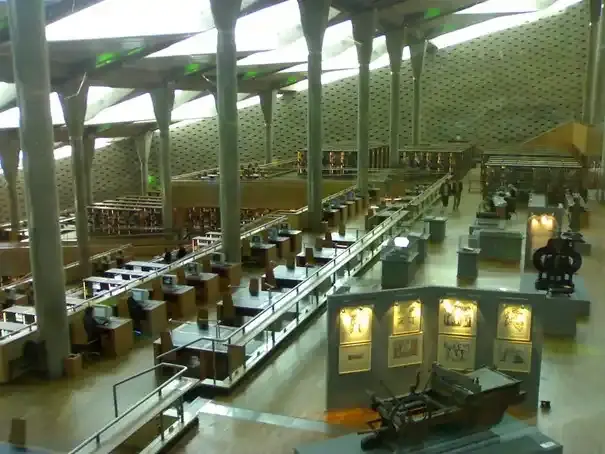
The founding of the Bibliotheca Alexandrina was an ambitious undertaking that reflected Alexander the Great’s vision in antiquity and later Egypt’s aspirations in the modern era. Alexander founded the city of Alexandria in 331 BC and aimed to make it a cultural and intellectual capital.
He promoted the idea of a great library that would collect the world’s knowledge. His Ptolemaic successors continued this project and made the library the most important in the ancient world—a gathering place for scholars, philosophers, and writers. Over time, the library was damaged and destroyed on several occasions, and many of its treasures were lost.
In the modern era, Egypt revived that ambition by building the new Bibliotheca Alexandrina on the ancient site along the Mediterranean. Opened in 2002 with cooperation from UNESCO, donor countries, and international institutions, the new library seeks to restore the spirit of openness and inquiry that characterized the ancient institution while adapting to the digital and information age.
The library promotes partnerships with states and international and regional organizations and supports initiatives that foster peace, dialogue, and mutual understanding among peoples and civilizations.
Where is the Bibliotheca Alexandrina: A strategic location on the Mediterranean shore

The Bibliotheca Alexandrina is located in Alexandria, Egypt’s second-largest city and its most important Mediterranean port. Its location is significant for several geographical, historical, and political reasons:
1. Geographical factors: The library benefits from its strategic position on the Mediterranean shore, which links three continents—Europe, Asia, and Africa. It also lies near the Nile, a historic source of water, fertility, and life.
2. Historical factors: The library is closely tied to Alexandria’s history. The city, founded by Alexander the Great in the fourth century BC, has hosted many civilizations over the centuries, including Greek, Roman, Coptic, and Islamic cultures.
3. Political factors: The Bibliotheca Alexandrina reflects Egypt’s identity as an Arab, African, and Mediterranean country that plays an important regional and international role.
The library actively promotes cooperation with countries and international and regional organizations. It hosts events, conferences, and exhibitions and offers services and projects for local and international communities. Through these activities, the Bibliotheca Alexandrina seeks to spread peace, dialogue, and mutual understanding among peoples and civilizations.
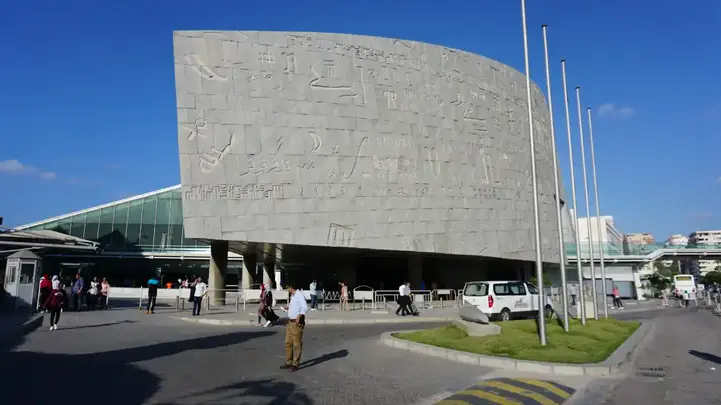
This has been a tour of the Bibliotheca Alexandrina’s history, from its ancient collections to its modern rebirth and unique setting. We reviewed the reasons and circumstances that led to its foundation in antiquity and its reconstruction in recent times. We examined the library’s importance as a center of science, culture, and education in both past and present eras, and discussed its role in promoting communication and understanding among peoples and civilizations.
We hope this article has increased your knowledge and sparked your curiosity to learn more. We invite you to visit the Bibliotheca Alexandrina to admire its collections and architecture. Please share your opinions and comments on this article and feel free to ask any questions or make suggestions. Thank you for reading and following.