


Can your introverted nature get in the way of success?




When we look at the design of the offices of big tech giants, we see a clear collaboration. How amazing are Google and Netflix workspaces and spaces! Open floor designs, glass walls, slides, popcorn machines and long tables in cafeterias encourage collaboration and communication.
Show key points
- Modern office designs at companies like Google and Netflix promote collaboration and communication, often favoring extroverted workstyles.
- Contrary to popular belief, introverts are not antisocial but are thoughtful, detail-oriented, and possess valuable qualities for the corporate world.
- Studies show that creativity often thrives in solitude, making introverts naturally suited for roles requiring innovation and deep thinking.
- ADVERTISEMENT
- Research indicates that introverted leaders can outperform extroverted ones, especially when managing proactive employees.
- Different work environments benefit from different leadership styles, with introverts excelling in stable, supportive settings like schools.
- Academic research reveals that introverts' conscientiousness aligns with higher academic achievement and helps in informed career choices.
- The article emphasizes the need for psychological diversity in workplaces alongside social inclusion, advocating for environments where introverts can succeed without changing their nature.
We grew up with this belief that to be a successful leader, you have to be an extroverted person. You can't shy away in your cabin, using your Airpods wearing your jacket and immersed in work.
However, since almost half of the population are introverts, it is not easy for everyone to always socialize with their colleagues. Does this mean that if you're an introvert, you won't be successful? Let's find out!
What is introversion?
Recommend

Introverts are considered shy, lost in their world, and at times, antisocial. That guy at the office party who is waiting to come home, but is pushed by his extroverted colleagues to stay later, is an introvert. But this stereotype is far from the truth!
Carl Jung shed light on introversion in the twenties of the last century. According to him, introverts are people who look inward, not outward, and tend to think deeply before talking. Introverts pay great attention to detail, are analytical, and are great at organizing. Aren't these traits important in the corporate world?
Introversion and creativity

We live in a complex world that requires creative problem solving. According to Gregory Fest, a prominent psychologist, creativity and introversion have a strong relationship. In other words, many of the most creative minds in history were introverts. J.K. Rowling, Albert Einstein, Bill Gates, Michael Jackson, Nikola Tesla, Rosa Parks, and Abraham Lincoln have one thing in common: introversion.
Constant collaboration and brainstorming are not the only paths to creativity. Creativity can also come from isolation and silence, which introverts prefer.
Office spaces with quiet areas can help accommodate the business style of introverts. Besides sexual, cultural and ethnic diversity, companies need to work on psychological diversity.
Introverts as leaders

In general, when we think of CEOs, we think of life-bigger personalities, similar to celebrities who run companies, but let's look at how introverts perform as CEOs.
According to a study by Grant, Gino and Hoffman (2011), introverted leaders produced greater collective performance when their employees were primarily proactive, while extroverted leaders produced better performance with passive employees. It's weird isn't it? Good listening skills in introverts make their employees feel heard. Such leaders are also less threatened by their colleagues and have less need for dominance.
According to another study on leadership and organizational success, Collins (2001) found that a company needs a "level five leader." This is the leader: not the loud but rather shy and courageous, all at the same time. He is a humble person with a professional will, and at the same time does not like the attention of the public. These qualities are usually shown by introverted CEOs.
Personality and work environments

It is also important to consider the working atmosphere before hiring leaders.
Extroverted leaders are better suited to a dynamic work environment, such as the military, while introverted leaders are better suited to sedentary work environments, such as schools. Dynamic work environments require charisma to motivate people.
In a stable work environment, such as schools that build supportive structures to help students and teachers learn, introverts make better leaders. In education there is no institutional ladder to climb, and competition is less. Thus, introverted school principals may be more suitable as leaders in education.
Introversion and academic success

Let's take a step back from becoming world leaders and look at the process of creating leaders: schools. Your training to enter your career begins with learning about the field.
Of the five major personality traits, awareness, a trait more prevalent among introverts, was a strong predictor of academic success. A conscious student will have better self-regulation of behavior and achievement of goals. Awareness and conscience also have a positive correlation with GPA in universities.
However, introversion and openness play a role in students' choice of majors. Introverts prefer the humanities and natural sciences, while extroverts choose economics, sports science, and law. This shows that knowing who you are can be a great help in determining your success in life by choosing the right field of work.
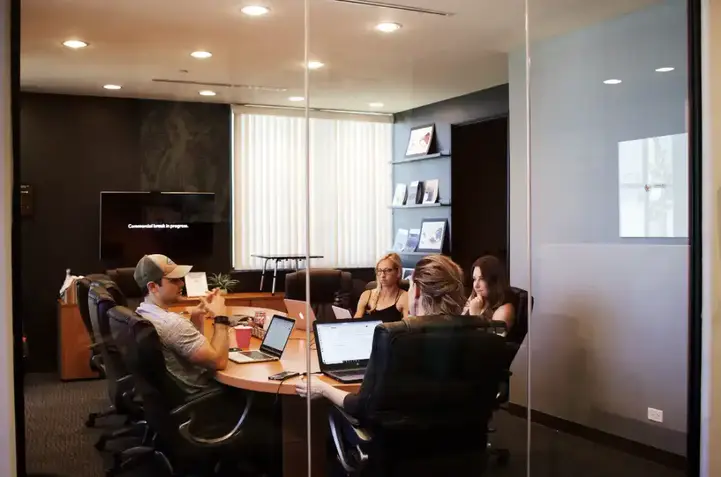
The aim of this article is to highlight the strengths of introverts in leadership roles. Just like the nature versus parenting debate, there is no single correct answer to introversion versus openness – both contain an important spectrum of personalities, and both play an important role in leadership. Since extroverted leaders are the norm, the purpose of this article is to highlight the strengths of introverted leaders.
I hope that by reading this article, my fellow introverts will not feel the need to be more outspoken or change who they are. With increased cultural, ethnic and gender inclusion, it's time for workspaces to consider character inclusion as well. We live in a world where everything favors extroverts from office design to hiring leaders. Introverts have a lot to offer in leadership, but they need to be provided with the right environment to thrive in their own way.
