


Disaster in the sky: what happens when birds collide with planes?



Humans are constantly under threat from a number of potential hazards; the more we invent, the more likely we are to fail our inventions. Nowadays, the number of threats that interest us is so great that it is foolish to even try to make a complete list.
Show key points
- Bird strikes occur when birds or bats collide with aircraft, posing a threat primarily during takeoff or landing when planes are flying at lower altitudes.
- These incidents can damage aircraft components like engines, windshields, and wings, although they are usually fatal only for the birds involved.
- The risk of bird strikes isn't limited to low altitudes, as they have even occurred at extreme heights, with the highest recorded at over 11,000 meters.
- ADVERTISEMENT
- The severity of the damage from a bird strike can vary depending on the bird’s size, speed, and the point of impact on the aircraft.
- Bird ingestion into jet engines is particularly hazardous, potentially leading to complete engine failure and critical flight emergencies.
- A historic case, known as the "Miracle on the Hudson," showed how bird strikes could disable both engines, forcing a successful emergency landing in a river.
- Despite the potential danger, major accidents caused by bird strikes are relatively few, thanks in part to improved aircraft design and pilot training.
Let's narrow this down a bit and talk about the threats from flying through the air in a giant container of metal and fiber, or in other words, in an airplane.
Threat: bird strikes!
What is a bird's strike?
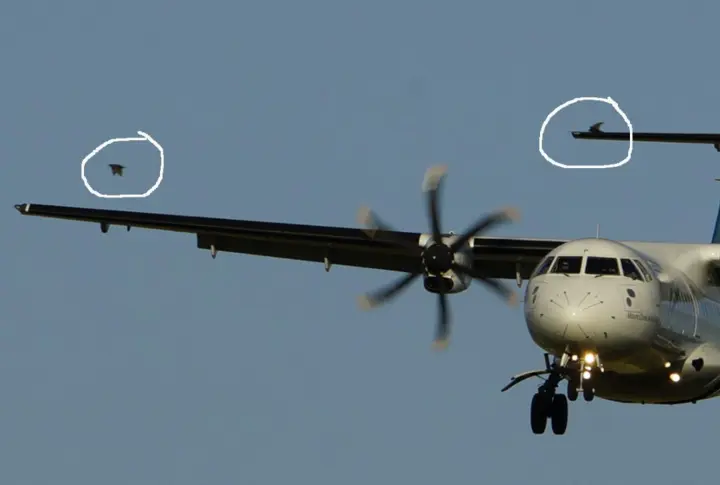
The event of an airborne animal (usually a bird or bat) colliding with an aircraft in flight is referred to as a bird strike. They are also known by some other names, such as bird injury, bird swallowing or BASH (for Bird Aircraft Strike Hazard). Bird collisions with other man-made objects also occur on Earth, such as cars, power lines and wind turbines, which usually lead to the death of birds.
Recommend
The first-ever bird collision was reported by Orville Wright (one of the Wright brothers credited with inventing and flying the world's first successful aircraft) in 1905 – 114 years ago (from this year – 2019)! But interestingly, the blow was not entirely accidental. Orville was flying in circles near a cornfield in Ohio. He apparently chased herds of birds before colliding with one of them. The dead bird lay on the wing of his plane until he turned hard to get rid of it.
Although bird collisions pose a significant threat to aviation safety, the number of major accidents caused by bird collisions is very low. The majority of bird collisions cause only minor damage to the damaged aircraft, but these collisions are always fatal to the birds involved in the accident.
The most vulnerable and vulnerable flight mode
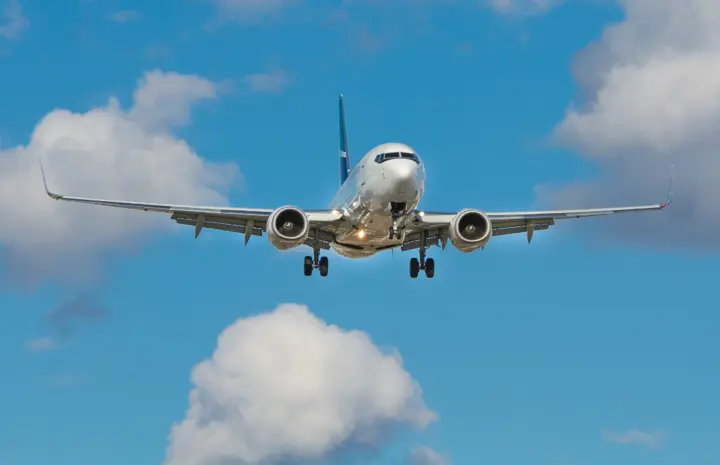
Although it is true that there is no way you can be completely sure that bird collisions are avoided (unless you are flying in a world where there are no air animals, which is currently unknown), these bird collisions usually occur when the aircraft is flying at low altitudes. Therefore, the most favorable conditions for hitting birds are during take-off or landing of aircraft (or other related stages). The reason for this is obvious; most birds fly at low altitudes, increasing the risk of colliding with an airborne machine.
However, this does not mean that there are no birds flying at altitudes higher than "normal" altitudes. In fact, bird collisions have also been reported at higher altitudes of about 6,000 metres (20,000 ft) to 9,000 metres (30,000 ft). The world record for hitting birds at the highest altitude ever is 11,300 meters (11.3 kilometers) above the ground!
What happens during a collision with birds?
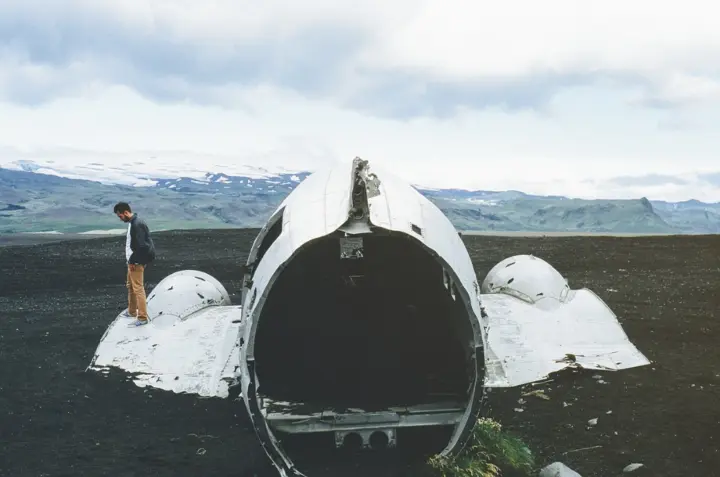
Birds usually hit any of the front edges of the aircraft, which include the wings, the cone of the nose and the most common location – the jet engine.
There have been cases of birds hitting the windshield or parachute of Airbus and fighter jets, which can (sometimes) crack the surface of the parachute or windshield. These cracks can sometimes disrupt the air pressure inside the cabin and lead to loss of altitude or other flight-related problems. The severity of damage caused by a bird's impact depends on several factors, including the difference in speed, the direction of impact, and the weight and size of the bird.
To put it in perspective, imagine a 5kg bird colliding with an aircraft at a relative speed of 275 km/h. Can you see how much effect this trauma translates to?
This effect is equivalent to the fall energy of a 100 kg bag from a height of 15 meters! Imagine how it would feel when you hit a bag weighing 100 kg from this height. Come on, take a few seconds and imagine it yourself. Not feeling so pleasant!
The most dangerous circumstances arise when the bird hits the turbine and gets stuck in the engine; this event is referred to as the ingestion of a jet engine (since the engine "swallows" the bird).
After the bird "gets stuck" in the motor, it can disrupt the rotational movement of the propeller blades, resulting in partial or total failure of that motor. Now, what can a sudden failure of an airplane's engine do? Let's not talk about it. Bird herds are more dangerous, as they can collectively have a more sinister effect.
The Miracle on the Hudson River
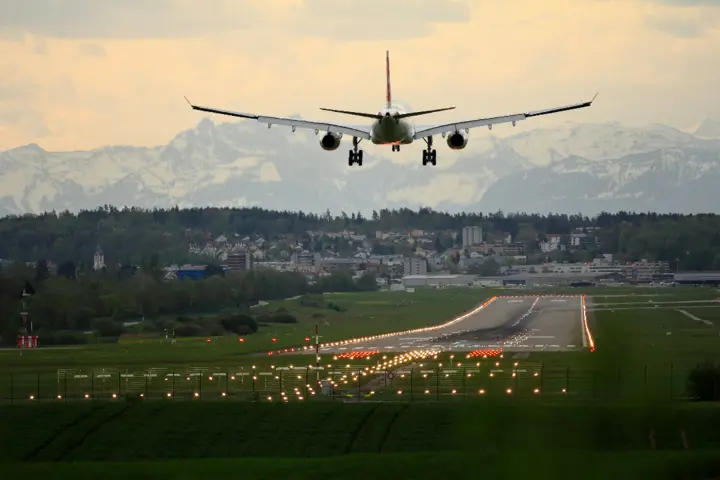
There have been many bird collisions, but one that received a lot of attention was that of American Airlines Flight 1549. On January 15, 2009, an Airbus 320 made a miraculous unequipped landing in the Hudson River after being hit by a flock of birds shortly after taking off from New York City's LaGuardia Airport. Unbelievably, not a single injury was reported. It is not surprising that this event was known as the "Hudson River Miracle".
Although there was no loss of life, this event highlighted the catastrophic failure that bird strikes can actually cause to an airborne machine, even if it is as huge as an Airbus plane!
