Snake Island: The True Story of the Most Inhabited Island by Snakes on Earth

Ophidiophobia is the scientific term for a fear of snakes. The worst nightmare for anyone with this condition is to suddenly find themselves on a snake island. Even without a full phobia, it is natural to be afraid of these slithering, crawling and sometimes venomous creatures that kill thousands of people around the world every year. Yet a small island of 430,000 square meters (about 106 acres) is so packed with snakes it would trigger ophidiophobia in most people. Today we will talk about that island, Ilha da Queimada Grande, commonly known as Snake Island in Brazil.
Show key points
- Ilha da Queimada Grande, famously known as Snake Island, is located off the southeastern coast of Brazil and is part of the state of São Paulo.
- The island is the only natural habitat of the golden lancehead viper (Bothrops insularis), one of South America's most venomous and endangered snakes.
- Due to the snake's potent venom and the remote location of the island, unauthorized entry is prohibited by the Brazilian government for public safety.
- ADVERTISEMENT
- Legends about deadly snake attacks on past lighthouse keepers persist, although many of these stories are likely myths rather than factual accounts.
- The current snake population on the island is estimated between 2,400 to 2,900, far fewer than earlier, exaggerated reports of one snake per square meter.
- Golden lancehead vipers feed primarily on migratory birds, but habitat degradation and fewer bird visits have led to growing food scarcity.
- Despite the island's deadly reputation, it plays a critical role in scientific research and biodiversity, though illegal poaching for the black market remains a concern.
The island is simply full of snakes, and they are not all small. It is home to Bothrops insularis, the golden lancehead, a close relative of the fer-de-lance—one of the most dangerous snakes in the Americas. Let’s look at the true story of the island, explore its history and dispel some of the myths around this notorious place.
Recommend
Where is Snake Island located?
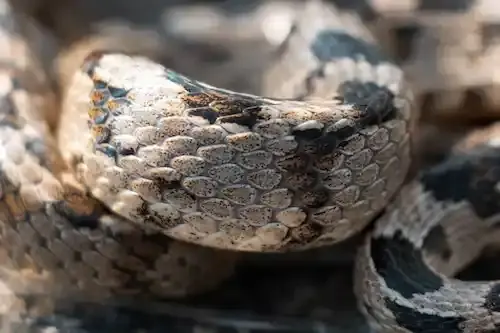
Ilha da Queimada Grande, also known as Snake Island, is a small island off the southeastern coast of Brazil. It lies within the state of São Paulo and contains several types of terrain, including a small area of rainforest.
Brazil’s Snake Island is located about 20 miles off the mainland—far enough to prevent the snakes from reaching the South American continent. Given how potent their venom is, that fact reassures many people.
The island’s name does not literally translate as "Snake Island." Instead, it refers to attempts to clear vegetation by burning. In the early twentieth century a large fire was set as part of an effort to prepare the land for banana cultivation. That plan failed once locals realized how many deaths would occur among the people already living on the island.
The island once housed a staffed lighthouse; the keepers lived there. Today the lighthouse operates automatically, and the Brazilian Navy performs annual maintenance.
There are many legends about what happened to the last lighthouse keepers. Some say snakes mounted a coordinated attack, sneaking into bedrooms through windows and biting family members as they fled, leaving bodies in the forest. That account, however, is likely untrue.
What snakes live on Snake Island?
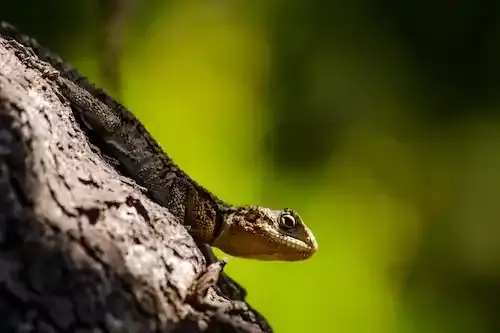
Ilha da Queimada Grande is home to the snake Bothrops insularis, commonly called the golden lancehead. This species is related to the mainland fer-de-lance. Notably, the golden lancehead is found only on Snake Island; there is nowhere else on Earth where this snake lives.
The prevailing theory is that the species became isolated on the island after the end of the last ice age, more than 11,000 years ago, when rising sea levels submerged the land bridge that once connected the island to the mainland.
The golden lancehead is distinctive. Its coloration is pale yellow to light brown, especially on the underside, and it shares the fer-de-lance’s characteristic head shape: a long head that tapers to a point resembling a spear blade.
This snake is extremely dangerous, but let’s separate fact from the extraordinary legend that surrounds it.
How dangerous is the golden lancehead?
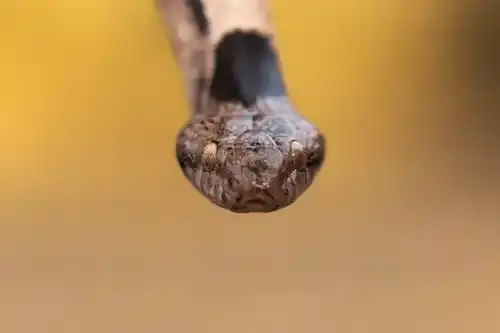
The golden lancehead is one of the most venomous snakes in South America. It is believed that the mortality rate for people who receive antivenom is up to 3%. That number rises dramatically without treatment, reaching as high as 7%. Even survivors often suffer severe bodily damage.
The venom is blood-toxic: it attacks red blood cells and can cause a range of physical problems. A bite can produce intense pain, internal bleeding, muscle necrosis, possible brain hemorrhage and other serious symptoms.
Since the Brazilian government prohibits casual visits to the island, there are no recent records of deaths from bites there. The golden lancehead is not among the very most venomous snakes in the world, but it is dangerous enough to kill humans.
Anyone who sneaks onto the island and is bitten would face grave health problems. They would also be roughly 90 miles from the nearest stock of antivenom.
How many golden lanceheads live on Snake Island?
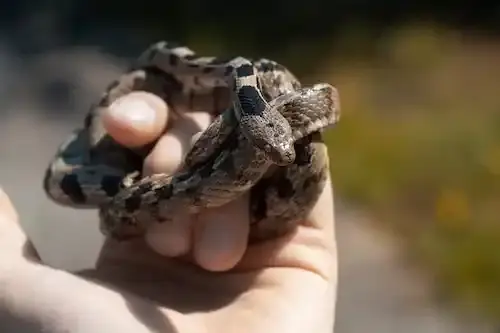
With so few people setting foot on the island and its reputation as home to deadly snakes, you might imagine the golden lanceheads rule the island in vast numbers. In reality, the species’ future is uncertain.
Estimates put the number of golden lanceheads on Snake Island at only 2,400 to 2,900. Since this is the only place on Earth where they exist, they are an endangered species.
In the past, some estimates claimed there were as many as 400,000 snakes, or one snake per square meter, but that is not accurate. There simply are not enough food resources on the island to support so many snakes. It is likely that such high figures were never realistic.
A more plausible average is about one snake per 140 square meters. However, snakes concentrate in certain small areas—such as rocky outcrops—so there are spots where snakes are far more common, and those areas remain unwelcoming to people.
Poaching is another serious threat. Scientific interest and the illegal pet trade have made these snakes highly valuable; criminals have tried to capture and smuggle specimens, which can fetch between $10,000 and $30,000 each.
What do snakes eat on Snake Island?
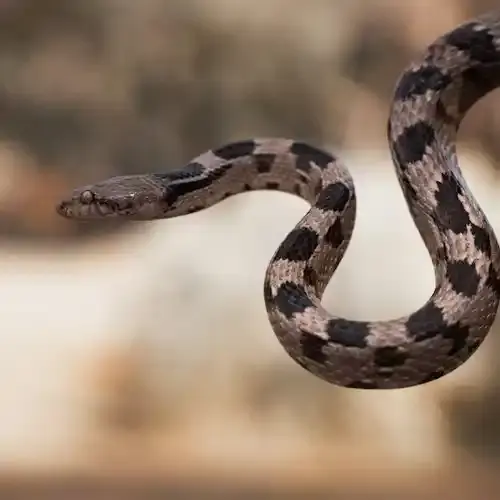
There are virtually no other animals left on the island; the snakes have reduced the fauna. They prey mainly on migratory birds that stop there to rest. The snakes wait in trees for birds to land and have evolved a potent, fast-acting venom to kill them before they can fly away.
Adding to the problem, deforestation on the mainland has reduced numbers of migratory birds that reach the island. With fewer birds, snakes face stiffer competition for food, and their population is likely to decline as a result.
Can you visit Snake Island?
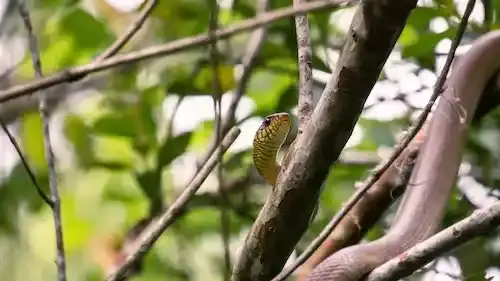
The Brazilian government has closed the island to protect both people and snakes. The Brazilian Navy enforces the restriction, though it visits the lighthouse each year to perform repairs.
Only a handful of researchers receive permission to go there. Those who do must obtain special authorization and are required to be accompanied by certified medical personnel.
Because the snakes are unique, restrictions may not entirely stop criminals attempting to collect specimens. Still, reports of so-called "biopirates" raiding the island and smuggling snakes to researchers or the pet trade can be exaggerated or false, given the danger involved in visiting Snake Island.
In short, Ilha da Queimada Grande does not live up to the wildest legends. It is, however, extremely dangerous and not a place for casual visitors. Anyone who goes there without permission risks severe legal consequences and even death. It is best to admire the golden lancehead from a safe distance—through photographs or a computer screen.