


Huge wealth you didn't realize: there are more than 3 million shipwrecks in the world


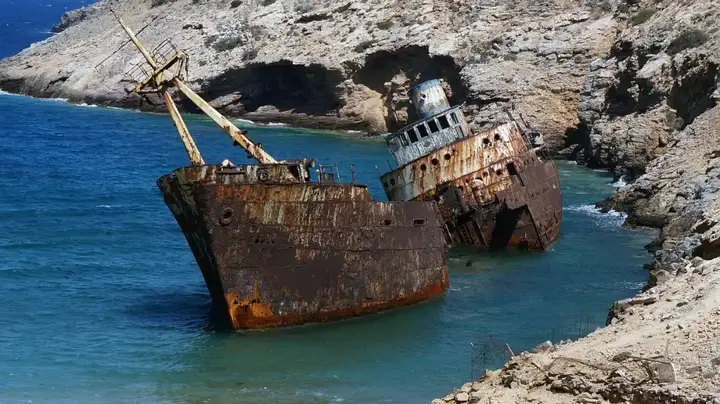
Humans have navigated the world's oceans for thousands of years, but not all have made it to port. Researchers estimate that there are about three million shipwrecks worldwide, settling in rivers, shallow bays, coastal waters and deep oceans. Many have sunk during disasters – some during storms or after they run aground, others in battle or collisions with other ships.
Show key points
- Experts estimate there are over three million shipwrecks scattered across the world’s oceans, many still undiscovered and hiding valuable historical insights.
- Shipwrecks result from a range of causes, including natural disasters, navigational errors, wars, and vessel collisions over thousands of years.
- Recent technological advances like multi-beam sonar and underwater robots have made it significantly easier to locate deep-sea wrecks.
- ADVERTISEMENT
- The discovery of ancient wrecks such as the Roman Antikythera ship has captivated archaeologists and the public alike, revealing treasure troves of art and artifacts.
- UNESCO and international scientists continue to find new wrecks in hotspots like the Skirki Bank and the Forni Archipelago due to the regions' busy maritime histories.
- Some shipwrecks, like the San José, are not only archaeological goldmines but also hold immense monetary value, sparking legal and ethical battles over ownership.
- Despite all advances, many famous ships such as the Waratah still remain lost, keeping the mystery of the ocean's depths alive.
UNESCO announced that it had found three new shipwrecks, including two dating back thousands of years.
It was in the spring of 1900, and Stadiatis accidentally discovered the wreck of the ship Antikythera - the remains of a Roman cargo ship that sank more than two thousand years ago. It soon became clear that they were not teeming with corpses, as it seemed at first glance, but with works of art – marble sculptures and bronze statues, nestled for thousands of years among algae, sponges and fish.
Recommend
More than 100 years later, antiquities in Antikythera, found off the coast of a Greek island on the edge of the Aegean Sea, continue to capture public interest. But there are a lot of underwater wonders still waiting to be discovered.
Take, for example, a recent UNESCO expedition to the bank of Skirki, a particularly shallow and treacherous coral reef connecting the eastern and western Mediterranean. They have been used extensively for thousands of years – and at the time, they claimed hundreds of ships. Using multi-beam sonar and underwater robots, a team of scientists from eight countries mapped the seabed in the region. This week, they announced the discovery of three new wreckage: the remains of ghostly boats dating back to the first century BC, the second century AD, and the nineteenth or twentieth centuries.
Hidden record
Where there are sea crossings, there are shipwrecks. Today, thousands of shipwrecks of merchant, war, and expeditionary ships – pirate ships laden with silver, cargo boats along the Maritime Silk Road, luxury royal boats that disappeared with future kings, ancient fishing ships, modern destroyers and submarines, nineteenth-century whaling ships, and huge passenger ships like the Titanic. Like long-forgotten capsules, these ships captivated archaeologists and filled museums around the world with ancient wonders. Including the mysterious astronomical clock from Antikythera, which some experts consider the oldest computer.
So, how many of these debris are in total, and how much is still hidden in the depths of the ocean?
There are many shipwreck databases in the world, each with a slightly different estimate of the total number found. The wreck service website has a catalog of 209,640 known sunken boats, 179,110 of which are known. On the other hand, the Global Naval Shipwreck Database (GMWD) contains records of more than 250,000 sunken vessels, although some have not yet been found.
According to one estimate, about 15,000 ships sank during World War II alone, and there are forgotten warships and oil tankers scattered from the Pacific to the Atlantic, gradually bleeding oil, chemicals and heavy metals into the surrounding waters as they decompose.
In fact, shipwrecks documented are believed to account for only a small fraction of the total. According to a UNESCO analysis, there are more than three million undiscovered debris in the world's oceans.
These elusive effects are unlikely to be evenly distributed. As expected, there are a number of shipwrecks hotspots – marine graveyards along popular or perilous routes, which have proven to be fertile fishing grounds in the past.
This includes the bank of Skirki, as well as the Forni archipelago, also found in the Mediterranean, where 58 ships have been discovered so far – including 23 in just 22 days in 2015. Although the Forni archipelago was not considered particularly dangerous, it was commonly used as a safe haven and anchoring point. Therefore, it is believed that the sheer volume of traffic has led to a significant concentration of ships coming to settle there.
Treasure Buried
Not only does this hidden cache of shipwrecks undiscovered contain fascinating details of how people once lived – and potential risks for the future – but it can also contain incredible riches. This can be a dilemma. At around 7 p.m. on June 8, 1708, a powerful explosion reverberated across the Caribbean Sea off the coast of Colombia. This was the cry of the last battle of San José, a sailing ship that sailed from Spain two years ago. The boat was part of the Spanish Treasures Fleet, a caravan of boats loaded with sugar, spices, precious metals and other goods, transported between Spain and its territory in the Americas. As the main ship, San Jose carried a mother box - chests of silver, emeralds and a huge amount of double gold. But it made a violent end during a confrontation with a British ship. Hours after the battle, its gunpowder stores suffered a heavy blow, sinking almost immediately – disappearing into the ocean with nearly 600 crew members. More than 300 years later, in 2015, the Colombian Navy finally identified its shattered remains, along with cannons, ceramics and coins. Its total tonnage is estimated at around $17 billion (£13.5 billion). But the discovery immediately led to a bitter battle over who owned the wreckage. Now there are fears that the archaeological site will be looted rather than protected.
Golden Age
These types of conflicts may soon become more common.
In the past, many shipwrecks have been found in relatively shallow waters, sometimes by accident, while fishermen, scientists or treasure hunters explore the seabed around the world's coasts. But with access to sophisticated submarines, modern imaging equipment and new sonar technologies, finding deeper shipwrecks has never been so easy.
It is now possible to create a picture of the ocean floor even in the deepest waters – in 2019, researchers discovered where the destroyer USS Johnston rested at a depth of 6 kilometers (3.7 miles) in the Philippine trench. (Read more from BBC Future on how to find the deepest shipwreck in the world.) Earlier this year, scientists built a digital twin of the Titanic in three dimensions, based on surveys of wrecks at the bottom of the Atlantic Ocean.
As a result, the oceans are giving up their secrets at an unprecedented speed. Just as the use of sonar and GPS has transformed fishing – allowing entire swarms of once elusive tuna to be identified in the open ocean – anyone can now use these same techniques to find shipwrecks in previously unsuspecting locations.
But for now, there are still plenty of undiscovered shipwrecks lurking in the depths, including some of the most famous. Take the Waratah, a giant passenger ship often compared to the Titanic. She sailed from Durban to Cape Town on 26 July 1909 with 211 passengers on board, then disappeared. To this day, no one knows exactly what happened or where the giant ship sank: despite at least nine expeditions to search for its remains, none of them have ever been found.
And who knows what will happen next. One thing is certain: it won't be long before we find out.
