


The Time Travelling Text Detective: AI Cracks Open the Vault of Ancient Knowledge




While Alan Turing was grappling with the complexities of German codes during World War II, his pioneering "computing machines" were packed with possibilities far beyond battlefield intelligence. Perhaps in its complex circles lies the emerging dream of solving the mysteries of forgotten languages and giving voice to the silent whispers of ancient civilizations.
Show key points
- Alan Turing's early computing machines hinted at broader applications beyond wartime codebreaking, such as deciphering ancient languages.
- In the 1960s, Hugh Kennedy developed an early computer program that helped uncover grammatical structures in the syllabic script of Linear B.
- Despite the technological limitations of his era, Kennedy's foundational work initiated the trend of using AI to decode ancient scripts.
- ADVERTISEMENT
- Neural networks have been applied to the mysterious Voynich Codex, revealing repeating patterns and potential linguistic connections to Romance languages.
- Artificial intelligence has successfully identified structures in Mayan manuscripts, aiding the interpretation of their calendars, rituals, and royal histories.
- AI analysis of Indus Valley script has suggested a link to the Dravidian language family, shifting previous assumptions about the civilization's linguistic roots.
- Recent AI-driven advancements have reconstructed missing papyrus texts and exposed editorial changes in Babylonian writings, deepening our understanding of ancient medical knowledge and literary manipulation.
In the sixties, Hugh Kennedy, a mathematician and physicist, developed an early computer program capable of identifying repeating syllables and word patterns in tablets Linear B. Linear B is an ancient writing system that was used in ancient Greece. It is syllabic text, which means that each symbol represents a syllable and not individual letters.
Recommend
This groundbreaking work helped identify previously unknown grammatical features and shed light on the structure of the language. More valuable information about trade networks, agricultural practices, religious beliefs, and political structures of the Minoan and Mycenaean civilizations has now been deciphered.
Constrained by the technological limitations of his time, Kennedy's pioneering conquest of AI-powered decoding faced formidable obstacles. With a slim set of data, early computers running like old engines, and AI algorithms still in its infancy, his analysis could only deal with the surface layer of repetitive patterns and motifs. The complex grammatical texture and delicate manipulation of meaning remained frustratingly elusive.
After his pioneering work in the sixties, the field of applying artificial intelligence to decipher ancient texts has seen a series of exciting developments, fueled by advances in technology and refined methods.
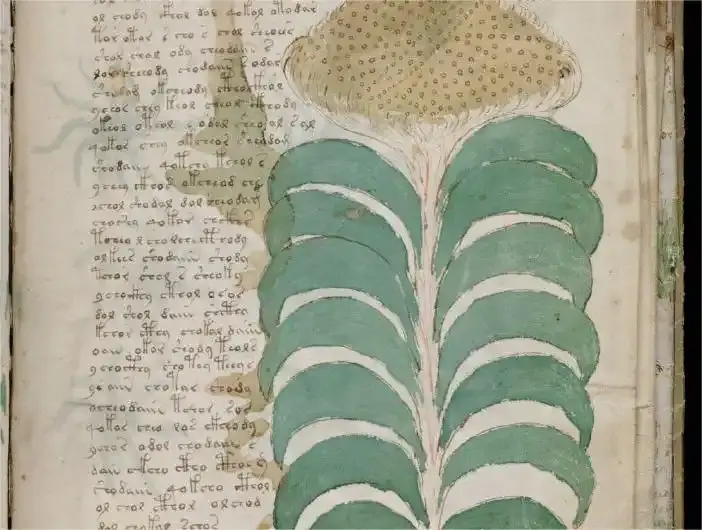
The Voynich Codex, shrouded in mystery for centuries, is an illustrated manuscript written in an unknown script. The manuscript's nearly 240 pages are filled with vibrant illustrations depicting exotic plants, fictional landscapes, nude figures bathing in pools, and astronomical symbols. Despite extensive analysis, the purpose and meaning of the text and illustrations remains unclear.
Neural networks were used to analyze the manuscript's unique text and identify repeating patterns.
Researchers such as Greg Kondrake have identified possible links between Voynich symbols and words from Romance languages such as Spanish and Italian. Others suggest links to medicinal terms and herbal descriptions, noting the possible content of the manuscript.
The algorithms also revealed statistically significant patterns within Voynich's text, suggesting an orderly language system rather than random codes.
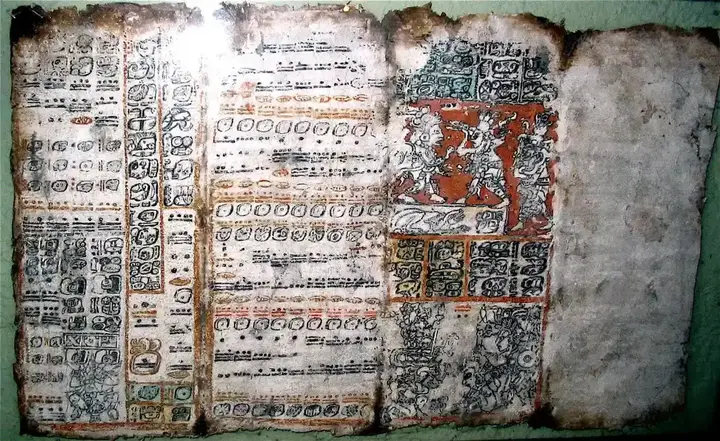
Mayan manuscripts are magnificent and unique artifacts that offer a glimpse into Mayan life, beliefs and knowledge. These precious folded and bark books, also known as libri lapilli, are the only surviving written records from the once-powerful Mesoamerican civilization.
Only four Mayan manuscripts remain, named after the cities where they were eventually discovered: Dresden, Madrid, Paris, and Grolier. The manuscripts are beautifully decorated with vibrant colors and intricate hieroglyphic writing, embodying the artistic and intellectual development of the Maya. It is one of the most complex and fragmented texts that has not yet been discovered.
Although the road is long, with the help of artificial intelligence, repeated patterns have been identified in glyphs, indicating grammatical structures and relationships between symbols. Artificial intelligence has demonstrated astronomical calculations and calendar systems within manuscripts, helping us understand timekeeping and Mayan rituals.
Artificial intelligence has also contributed to the discovery that some manuscripts record royal genealogy and historical events, providing valuable information about Mayan political and social structures.
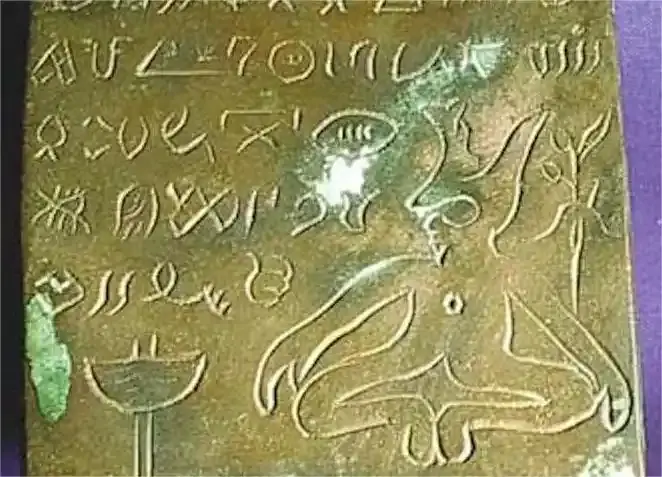
For centuries, the Indus Valley Civilization, which flourished in ancient India and Pakistan around 3300-1300 BC, remained shrouded in mystery due to its undeciphered text. In 2016, a team of researchers led by IBM's Rajesh Rao used a complex deep-learning algorithm called Character RNN to analyze thousands of clay tablets in the Indus Valley. Surprisingly, their AI identified the links between the symbols of the Indus Valley and the Dravidian language family, used in southern India today. This groundbreaking discovery challenges the previously held assumption that the people of the Indus Valley speak an Indo-European language like Sanskrit, rewriting our understanding of their linguistic origins and possible cultural links with the Dravidion communities.
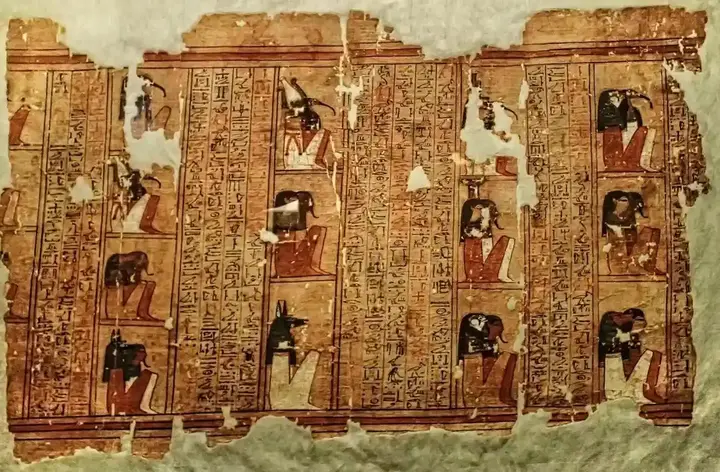
In another case, scientists at the University of Basel in Switzerland applied image-processing algorithms to fragmented papyrus from Ptolemaic Egypt. Their AI reconstructed the missing sections of documents, uncovered previously unknown parts of a medical thesis, and explained ancient medical practices and herbal remedies. This innovative approach showcases AI's ability to recover and complete damaged historical texts, and provides glimpses of lost knowledge.
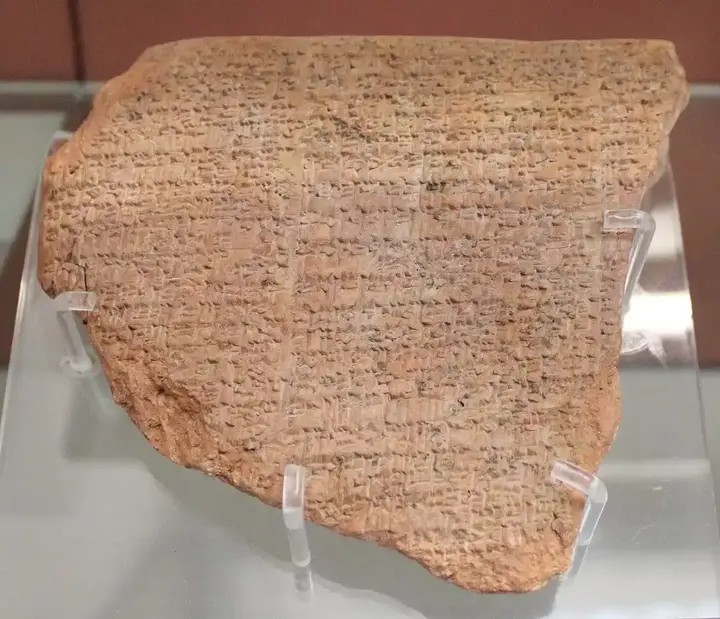
More interestingly, the researchers used artificial intelligence to analyze a collection of ancient Babylonian literary tablets. Their algorithm revealed minor edits and revisions made to certain paragraphs, indicating instances of censorship or deliberate modification of the original texts. This discovery highlights the ability of AI to uncover hidden layers of meaning and manipulation within historical documents, providing a deeper understanding of power dynamics and political agendas in ancient societies.
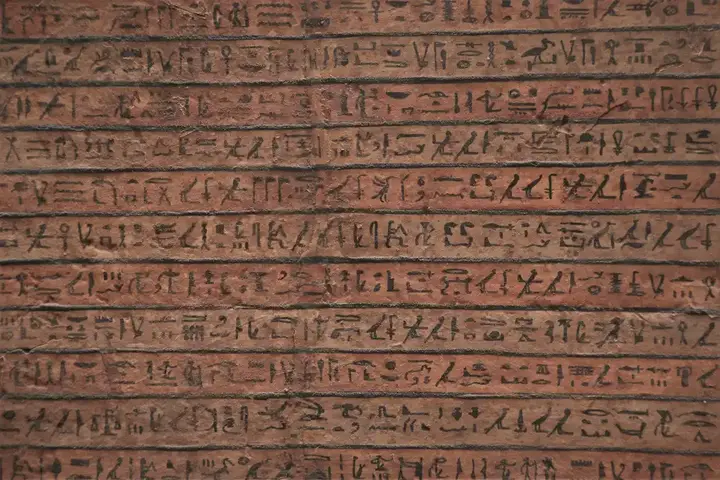
These are just a few examples of how AI is expanding our knowledge and challenging our interpretations of ancient texts.
The progress made in recent years in the development of technology has made a significant leap in artificial intelligence applications. Massive digital archives of ancient texts, including newly discovered artifacts and inscriptions, provide AI with a richer training ground.
Sophisticated algorithms and models have been developed to decipher complex patterns and relationships within data, detecting hidden structures and grammar in ancient languages more effectively than early statistical methods.
It's safe to say that AI tools will foster collaboration between computer scientists and linguists, and secrets found in ancient texts will one day be explained.
