


Heraclion: The ancient Egyptian city that was lost in the sea



Almost everyone has heard of Atlantis. The legendary tale of the legendary continent with its advanced civilization, lost under the Atlantic Ocean. Or El Dorado, a legendary city of gold hidden deep in the forests of South America.
Show key points
- Heraclion, once a thriving Egyptian port city at the mouth of the Nile, was lost beneath the Mediterranean due to natural disasters and rising sea levels.
- As a major maritime hub, Heraclion facilitated international trade and cultural exchange between Egypt and ancient civilizations like Greece and Phoenicia.
- The city's gradual decline was accelerated by Alexandria's rise to prominence and a catastrophic natural event involving soil liquefaction.
- ADVERTISEMENT
- Ancient references to Heraclion by historians such as Herodotus were confirmed in 2001 when French archaeologist Franck Goddio rediscovered the city using advanced underwater technology.
- Underwater archaeological missions face challenges due to the city’s depth but have successfully uncovered well-preserved statues, temples, and everyday artifacts.
- Discoveries like the statue of Hapi and the remains of the Temple of Amun-Gereb highlight the city’s religious importance and the central role of the Nile in Egyptian society.
- Heraclion's rediscovery has greatly expanded our understanding of ancient Egypt’s global connections, daily life, and spiritual culture.
Lost cities have captivated our collective imagination for a long time. However, there is a lost city that is overlooked. A city that already existed but was consumed by the waters of the Mediterranean.
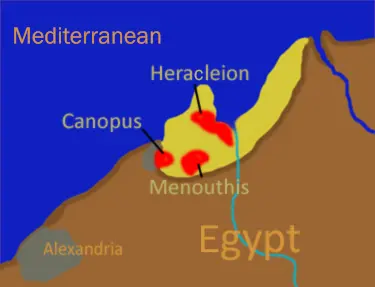
Heraclion, also known as Thunes, was a thriving Egyptian port city, located at the mouth of the Nile. As sea levels rose and the Nile continued to deposit silt, the great city was lost under the waves.
It has lost its culture, riches and history for centuries until it was recently rediscovered. This is the story of the lost city of Heraclion in real life.
Recommend
Historical significance of Heraclion
The ancient city of Heraklion was located northeast of Alexandria at the mouth of the Nile. During its heyday, Heraclion was a busy maritime city that played an important role in shaping the Egyptian and broader cultural history of the ancient Mediterranean.
Its strategic location at the mouth of the Nile made it an international melting pot that helped spread the exchange of goods, ideas and cultures.
Merchant ships and travellers from Greece, Phoenicia and beyond docked in this thriving city and contributed to cultural exchange. Foreign influences also helped influence Egypt's art, architecture, and religious practices.
During the second century BC, the nearby city of Alexandria gradually began to take priority over Heraclion as Egypt's main port. This contributed to its decline.
This diminished importance to Heraclion was exacerbated when a major natural disaster caused great damage to the city. Researchers have questioned the possibility that there could be a tsunami, an earthquake, or a combination of both.
Around 101 BC, the land on which Heraclion settled experienced what is known as soil liquefaction. It is a phenomenon that has turned the powerful clay terrain into a water swamp, swallowing grand temples and accelerating the city's demise.
However, despite its decline, the city was not completely abandoned until the entire Mediterranean consumed it sometime during the eighth century AD.
Discovery and rediscovery
Ancient accounts of Heraclion go back to the writings of ancient historians such as Herodotus and Strabeu, who admired its beauty and rich culture. Heraclion and the city of Thunias were originally thought to be the same thing.
But it was later discovered that "Thones" was the Greek name for Heraclion. This revealed that the Greeks traded with the Egyptians earlier than previously thought.
For centuries, the ancient city of Heraclion remained lost, and was merely a figment of mythology and folklore. It was until 2001 that French archaeologist Franck Godeaux and his team used historical texts, nuclear magnetic resonance magnetic resonance (NRI) magnetometers, bathymetry, and sonar to locate and map submerged monuments.
Godio and his team began mapping the area around the port of Alexandria in 1992. Four years later, they expanded their search to Abu Qir Bay. This came when their mapping equipment picked up strange anomalies on the ocean floor.
Upon closer examination, it was found that the ancient city was covered with sediments deposited by the Nile River. It happened because the city was built on the Nile Delta where the river flows into the sea.
Underwater archaeological expeditions
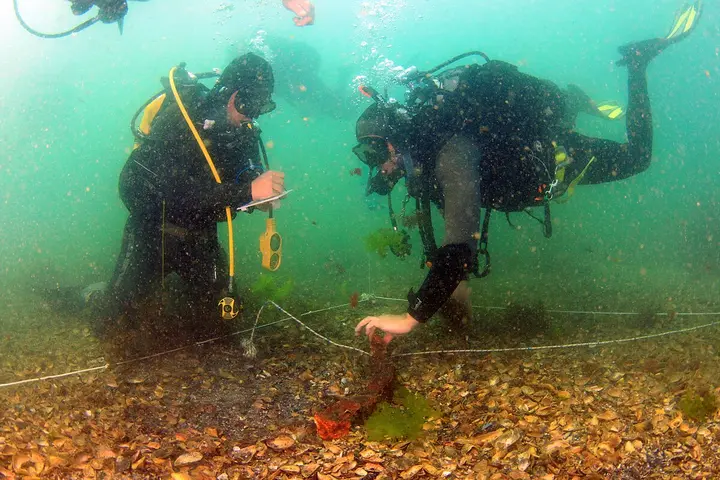
After the city was rediscovered in the early twenty-first century, archaeologists attempted to survey and map it. But its depth made this goal very difficult. Some areas of Heraclion are located at a depth of more than 30 meters under the Mediterranean Sea.
To aid their research, archaeologists are using advanced diving equipment, remotely operated vehicles (ROVs), and sonar technology to navigate and excavate the submerged site.
These expeditions revealed a wealth of remarkably preserved intricate artifacts, statues, and temple complexes. The artifacts offer a glimpse into the daily life of ancient Egypt, its role in the ancient world, and the legacy it left behind.
Antiques and fascinating discoveries
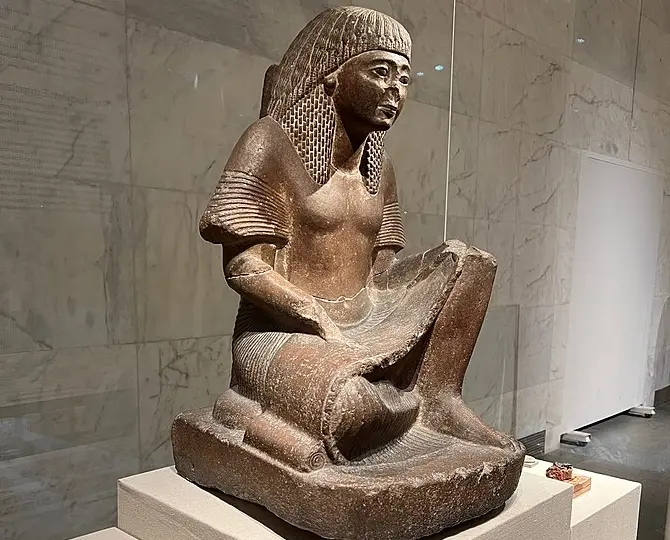
Underwater excavations at Heraclion have yielded a treasure trove of artifacts that will occupy researchers for years.
By studying them, they can build a better understanding of what life was like in the eighth century BC. The presence of Greek inscriptions and evidence of trade links revealed that ancient Egypt had more international influence than was previously known.
Some of the most famous finds found on the site include:
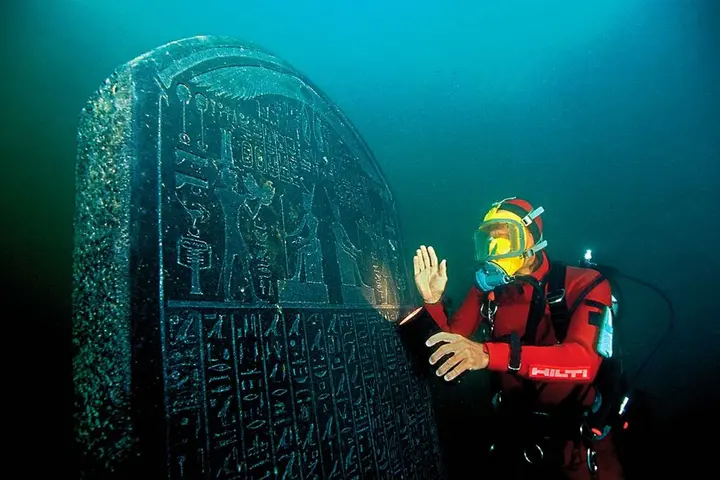
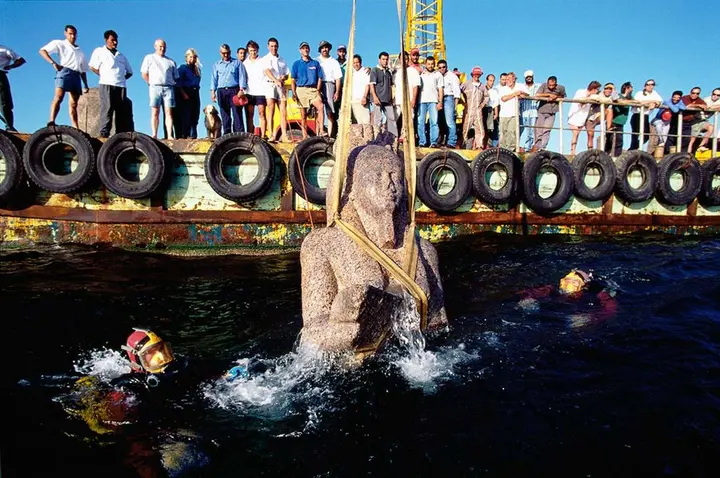
Habi Statue: One of the most exciting discoveries discovered is the huge statue of Pharaoh believed to represent Habi, the god of the annual flood of the Nile. The large size and details of this statue confirm the importance of the Nile in the lives of the ancient Egyptians.
Intricate temple structures: The remains of the Temple of Amun Gharib show the religious significance of Hercules. These temples played a central role in ancient Egyptian spirituality and were centers of worship and rituals.
Everyday objects: Artifacts such as pottery, jewelry, and glassware provide insight into the daily life of the city's residents.
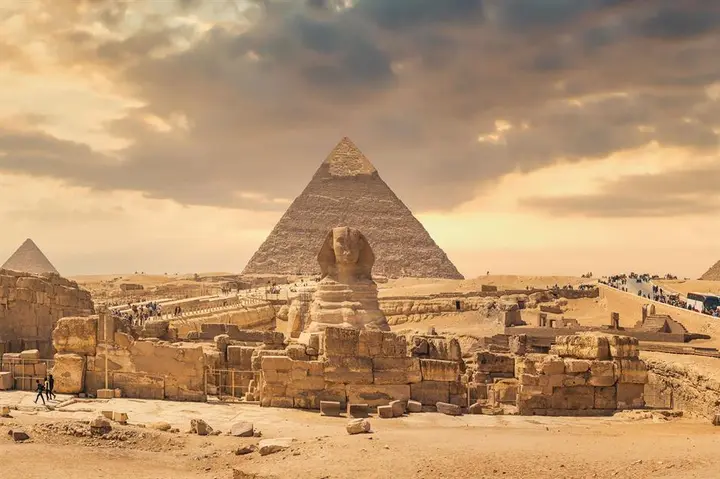
The sunken city of Heraclionion offers a magnificent window into the past.
This ancient city has revealed fascinating insights into ancient Egyptian civilization, its cultural richness, and its emergence as a vibrant commercial and religious center. Heraclion's ongoing explorations continue to uncover secrets from her past and shed light on the life of Egypt.
