


Death Valley National Park


Death Valley National Park is a land of extremes—scorching heat, towering dunes, and surreal landscapes that defy imagination. Far from lifeless, this desert wonder teems with mystery, history, and raw beauty. Step into one of Earth’s most unforgiving—and unforgettable—places.
Where is Death Valley located?
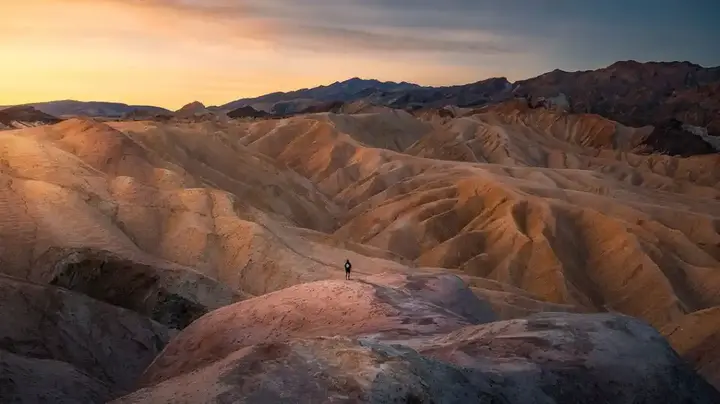
The magnificent desert valley is located on the eastern border of south-central California, in the north of the Mojave Desert, and is bordered by the Great Basin Desert. Covering an area of 5,270 square miles (3.4 million acres), Death Valley National Park extends into Nevada, and is the largest national park in the Lower 48 region.
Things to do in Death Valley
Recommend
From leisurely walks to hard hikes, from camping to even playing on the lowest altitude golf courses on the ground, there are countless ways to enjoy one of the hottest places on earth. The best way to learn about the huge Death Valley terrain — the largest park in the national park system — is to get your hands on the map available at the Frans Creek Visitor Center. Then plan a route to visit the most famous landmarks of Death Valley National Park. Even if you don't have enough time (or the ability to tolerate heat), the stops you should make include:
• Colorful Zabrski dot
• Search for robots in the flat dunes of Mesquite and Golden Canyon
• Reach the lowest possible level (in terms of height) in the Bad Water Basin
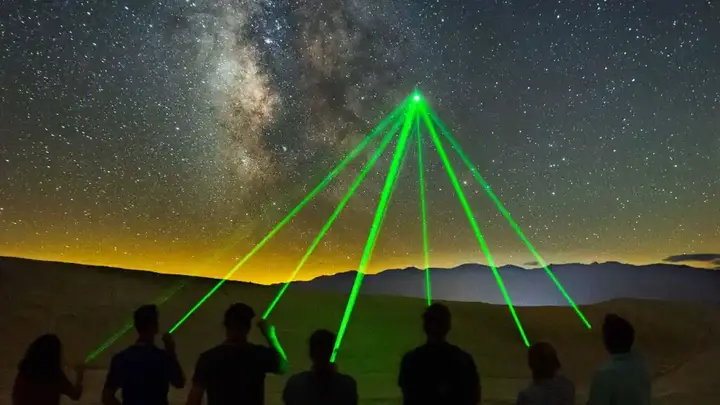
Other classic stops include the stunning Obihibe Crater, Mosaic Valley, Salt Creek, and the towering telescope summit; as well as the optimistically named Funeral Mountains, Hell's Gate, Hunger Valley, Dead Man's Pass, and the top of the sarcophagus. If you're looking to watch the world-renowned stars, Death Valley National Park is an international dark sky park, meaning it's known as one of the world's best spots to discover constellations – so plan your trip around a new moon, or be sure to attend the Death Valley Astronomy Festival on the calendar, which usually takes place in February each year.
Death Valley Rise: Bad Water Basin to the Top of the Telescope and Beyond
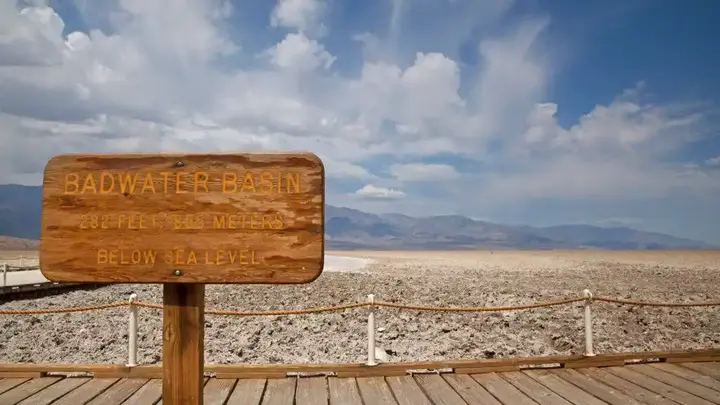
Death Valley's magnificent features span a bewildering distance of 130 miles long and 12 miles wide. Even more surprising is the fact that Death Valley covers a staggering 3.4 million acres of rugged terrain, most of which is uninhabited, filled with expanses of desert divided by towering mountains and rocky hills. The elevation to the northern tip is about 3,000 feet and steadily slopes downwards, placing the valley floor below sea level for 70 miles. Eventually, the terrain reaches far beyond Badwater Basin's Artist's Drive – the lowest, hottest and driest point in the Western Hemisphere – and sits at a whopping 282 feet below sea level. This blatant depression contributes to extreme temperatures just as much, which can rise to 130 degrees Fahrenheit during summer days and drop below 0 degrees Fahrenheit on winter nights (or even other seasons). We're not joking when we call Death Valley a hotspot, as Death Valley holds the record for the highest air temperature ever recorded in the world, reaching 134 degrees Fahrenheit in the summer of 1913.
Explore the dunes of Death Valley and salt flats
When you first visit Death Valley, it's easy to expect a sea of sand, right? You're not wrong – at least as far as certain places are concerned, including one of the country's most famous sand dunes found within the boundaries of Death Valley, the flat mesquite dunes. And if you see a flash at a distance that you think might be a vast expanse of water in the desert, think again – it could be 200 square miles of salt flats waiting in the Padwater basin. While recreation is allowed in the sand dunes and salt flats of Death Valley, the use of off-road vehicles, ice skating and sand boarding is prohibited in most places to protect the fragile desert environment.
Experience seasonal wildflowers in Death Valley
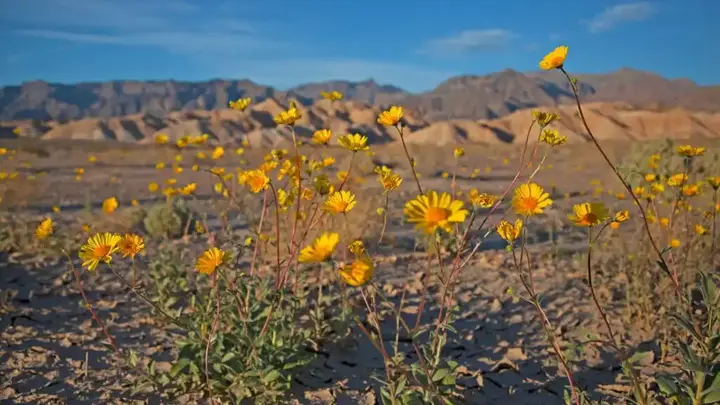
Death Valley is famous for its stunning wildflowers that bloom in spring, but not every year. When ideal conditions occur, the desert is filled with a sea of purple, gold, pink and white wildflowers. A good wildflower year depends on at least three things: widespread rainfall during winter and spring, sufficient warmth from the sun, and harsh desert winds with little to no light. The garden will know in advance if the conditions are suitable for producing seasonal flowers, or even the world-famous magnificent Death Valley flowers, but you can usually plan seasonal flowers from February to April at low altitudes, early April and May from 3,000 to 5,000 feet, and May to July for altitudes above 5,000 feet.
Wildlife in Death Valley
Death Valley is a refuge for 400 species of animals, and the key to their existence is their ability to adapt to the harsh climate of Death Valley. It is five feet tall and three feet at the shoulder, and the largest of these animals is the large desert manatee. Thanks to the year-round freshwater spring that feeds their irrigation hole, Titus Canyon is one of the best places to look for this large desert in Death Valley. At the other end of the animal spectrum, one of the best adapted animals in Death Valley is the kangaroo rat, which uses its strong hind legs to communicate through blows and jumps up to nine feet in a single jump. Birdwatchers can bring their binoculars to Death Valley to see the many species of birds that live in and migrate through the desert – go for a walk or visit the birdwatcher near the Creek Furnace Farm to spot birds such as road birds, hummingbirds, and shrikes.
