


Enchanting Journey to Easter Island: Exploring the Mysteries of Mayi Statues



Easter Island, a remote piece of land in the heart of the Pacific Ocean, is one of the most mysterious and attractive locations in the world. Despite being more than two thousand miles from the nearest inhabited spot, it attracts the attention of researchers and tourists alike, thanks to its huge Mayi statues. These statues, which stand tall for centuries, are surprising and impressive with their unique style and sheer size. So what is the story of these statues? And what secrets do you hide?
Show key points
- Easter Island, located in the middle of the Pacific Ocean, captivates researchers and tourists with its remote location and mysterious Moai statues.
- The Moai statues were carved by the indigenous people between the 9th and 17th centuries as spiritual representations of their ancestors, believed to contain a sacred energy called mana.
- Archaeological expeditions, beginning with Dutch explorer Jacob Roggeveen in 1722, have uncovered tools, quarries, and burial sites that shed light on the island’s ancient traditions.
- ADVERTISEMENT
- These massive statues, made from volcanic stone using primitive tools, feature detailed human forms and were originally carved lying down before being moved to their final locations.
- Modern experiments suggest the statues were transported using a "walking" technique with ropes and human force, overturning earlier theories involving sleds and rollers.
- Strategically placed around the island, especially facing inland from the coast, the statues were designed to watch over villages and symbolize both spiritual and political power.
- Today, the Moai statues stand as enduring icons of creativity, cultural identity, and the need for preservation amid growing environmental and human threats.
In this article, we'll take you on a magical journey to Easter Island to explore the island's unique history, ancient statue carving techniques, the deep symbolism it carries, and the efforts to protect it for future generations. Join us on this thrilling adventure to discover the secrets of one of the world's greatest archaeological wonders.
Recommend
History and mystery around Mai statues
Genesis of statues
•Local legends about Mai statues
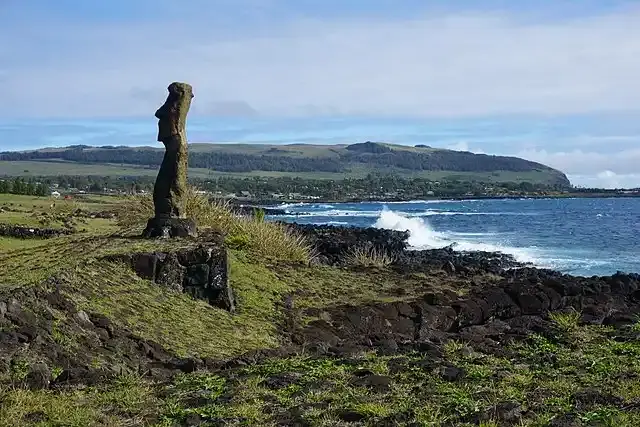
Easter Island is full of legends and stories that explain the genesis of Mai statues (or "Moai" as they are known locally). One of the most famous legends has it that these statues represent the ancestors of the natives, and they carved them as a kind of tribute and connection with the spirits of their ancestors. Each statue is believed to carry a special spiritual power called mana, which boosted the fortunes of the tribe and protected it from enemies and dangers.
•Beliefs and beliefs that led the indigenous people to carve these statues
The statues date back to between the ninth and seventeenth centuries and are attributed to the indigenous people of Easter Island, who believed in the existence of great spiritual powers embodied in these statues. They believed that spirits dwell in statues and give strength and prosperity to the tribes to which they belong. These beliefs led residents to carve statues in huge sizes and hold complex religious ceremonies around them, as each statue had a specific place and function within the community.
Archaeological Explorations
• The first archaeological expeditions to the island
The first European expeditions to arrive on Easter Island in the early eighteenth century were led by Dutch explorer Jacob Rogeven in 1722. These expeditions raised eyebrows and bewilderment at the sight of the huge statues scattered on the island. Over time, scientists and explorers became increasingly interested in this mysterious island, prompting frequent archaeological expeditions to study the Mayi statues and uncover their secrets.
•Key discoveries that shed light on the history of statues
As archaeological research and studies progressed, several major discoveries were uncovered that helped understand the history of Mai statues. Among these discoveries were the stone tools used to carve statues, which provided information on the advanced techniques used by ancient sculptors.
In addition, the locations of volcanic stone quarries that were used to carve the statues were found, which helped in understanding the process of extracting and transporting the huge stones. Excavations also revealed burial sites near the statues, reinforcing the idea that these statues had a deep religious and spiritual character.
By studying these discoveries, scientists were able to paint a clearer picture of the history of the Mai statues, and how they were an integral part of the life and culture of Easter Island inhabitants for centuries.
Design and sculpture of Mai statues
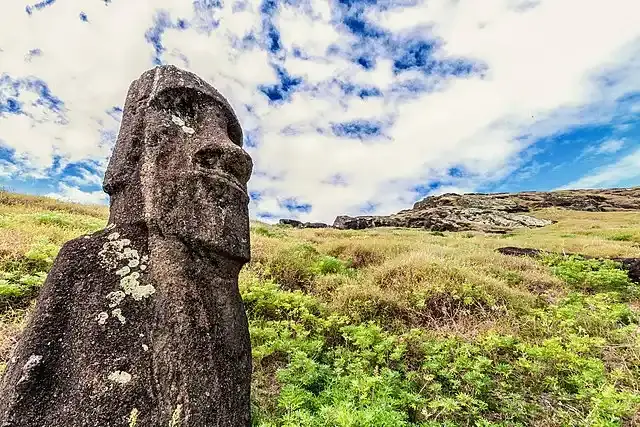
The Mai statues, also known as the Moai, are considered one of the greatest artistic and engineering achievements of the indigenous people of Easter Island. These statues represent human heads and bodies in distinctive shapes, often erected on large stone bases called aho.
The overall design of the statues reflects the attention to detail and high artistic skill, as each statue has unique facial features, precise proportions, and sometimes stone headdresses.
Huge adds to the overall height of the statue.
Ancient sculptural techniques
• Materials and tools used in sculpture
The Mai statues were carved using the solid volcanic stone available on the island, especially from the Rano Raraku volcanic quarry. The sculptors used simple stone tools such as chisels and hammers made of harder basalt stone. These tools enabled them to shape the fine details of the statues with amazing skill and precision, despite the simplicity of the technology available to them at the time.
•Manual processes and techniques that have been passed down
The process of carving the Mai statues took several months or even years, and involved a series of meticulous and elaborate steps. The artisans began by carving the statue lying on its side in the quarry, then meticulously detailed the facial and body features. Specific techniques were then used to cut the statue from its base and move it to its final position using a complex system of cranes and ropes, which required collective coordination and tremendous efforts. These technologies and knowledge have been passed down through generations, resulting in
Help preserve the magnificent tradition of sculpture.
Dimensions and unique characteristics of the statues
• Various shapes and sizes of statues
Mai statues vary widely in size and shape, ranging in height from a few feet to more than 30 feet (about 10 meters). Some statues have precise facial features and symmetrical proportions, while others have more abstract and simple features. Some statues also include additional details such as arms and hands, and sometimes vertical coverings that add to the height of the statue.
•Challenges faced by artisans in carving these monumental statues
The process of carving and transporting the monumental statues was full of difficult challenges. The artisans had to deal with the enormous weight of the volcanic stones, carving out fine details without causing the stone to break or crack. Moving the statues from the quarries to their final locations was also a formidable logistical challenge, as residents used complex systems of cranes and ropes to move the statues across the rugged terrain of the island. These challenges required careful planning and significant collective collaboration to ensure that the statues were kept intact and successfully placed in their designated places.
Transmission and distribution across the island
Ancient and modern theories about the process of transportation
The giant transport of Mai statues from their quarries to their final sites has aroused the curiosity of scientists and researchers for decades. Ancient theories suggested that the statues were transported using wooden skis and stone cylinders, or perhaps by large groups of people pulling the statues using ropes. Modern theories, based on archaeological discoveries and scientific simulations, suggest that the statues were "walked" across the island in a swing manner, slowly moving from side to side using only human power.
Scientific experiments carried out to simulate the transfer of statues
Several scientific experiments have been conducted to simulate the process of transporting statues, and the results have been astonishing. One of the most notable experiments led by American archaeologist Terry Hunt and his colleague Carl Lebow, showed that statues can be moved effectively using three groups of people pulling the statues with ropes from the sides and back. This experiment supported the theory of "walking" proposed by recent studies, and showed how statues can be safely transported over long distances.
Places of statues and their spread on the island
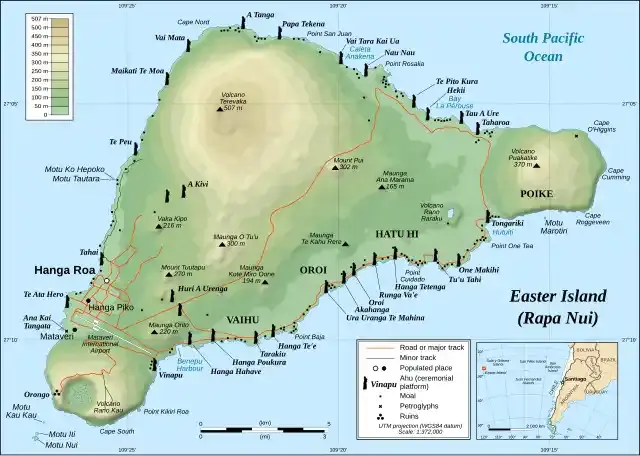
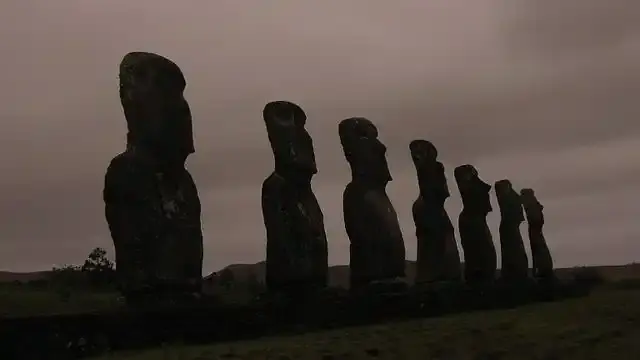
Mai statues are scattered throughout Easter Island, with major concentrations around the coasts and ancient villages. The most famous places include the Ahu Tongariki, the largest platform with 15 statues that were rebuilt after being destroyed by a tsunami.
The statues were strategically distributed facing inside towards the villages, reflecting residents' belief that the statues protect and monitor their communities. This strategic distribution indicates the importance of these statues in the daily and religious life of the indigenous people.
The symbolism and importance of statues in local culture
Religious and spiritual role
Mai statues were an integral part of the religious life of the indigenous people of Easter Island. The statues are believed to have embodied ancestral spirits and contained powerful spiritual powers known as mana. This force was used to protect villages and promote luck and prosperity. Around the statues were important religious rituals and ceremonies, where people offered offerings and performed prayers to connect with spirits and bring blessing to their communities.
Social and political functions
Besides their religious role, Mayi statues played an important role in the social and political structures of society. The statues were a symbol of power and authority, each representing a tribal leader or prominent figure. The location and size of the statues reflected the status and power of the tribe, and control over the carving and distribution of the statues was considered part of political and social control. This intermingling of religion and politics reflects the complexity that characterized the ancient societies of Easter Island.
Exploring the secrets of the Mai statues on Easter Island is a unique experience that combines rich history with deep mystery. These statues reveal the skill and creativity of the indigenous people, and tell stories about the religious and social beliefs that shaped their lives. By studying the design and sculpture of statues, understanding the ancient techniques they used, and theories about how they were transported and distributed around the island, we can appreciate the tremendous efforts these people put into centuries ago.
In addition, we note the significant role that Mai statues have played in social, political and religious structures, reflecting the intermingling of these aspects in indigenous culture. With all this beauty and mystery, comes the urgent need to protect these artifacts from the environmental and human threats they face today.
The Mai statues remain a testament to man's ability to innovate and create, and remain a symbol of Easter's rich cultural history, inviting us all to continue to discover and protect this unique archaeological wonder.
