3 reasons to visit Sidi Bou Said in Tunisia

If you're fascinated by the Greek island of Santorini, we're here to tell you that Santorini is simply a replica of the remarkable Tunisian suburb of Sidi Bou Said. Sidi Bou Said, often called the "Santorini of Africa" by European visitors, dates back to the Middle Ages and overlooks Carthage. Its most distinctive feature is the architecture of bright white houses with ornate blue doors. The suburb takes its name from Abu Sa'id al-Baji; its earlier name was Jabal al-Manar. Mount Manar served as a defensive and observation post protecting the Phoenician city of Carthage in the seventh century. Sidi Bou Said has a tranquil, almost spiritual atmosphere, overlooking the gulf and the blue waters of the Mediterranean under a bright sun.
Recommend
Show key points
- Bou Said, known as the "Santorini of Africa," dates back to the Middle Ages and charms visitors with its signature white-and-blue architecture overlooking Carthage and the Mediterranean Sea.
- The suburb maintains its historical and architectural authenticity by enforcing strict building regulations that preserve its original character.
- Bou Said offers a peaceful, spiritually rich atmosphere with artisan shops, the scent of jasmine, and local delicacies filling its quaint alleys.
- ADVERTISEMENT
- Unlike many tourist destinations, Bou Said is not overcrowded, allowing visitors to enjoy a genuine village lifestyle among locals from various social backgrounds.
- The area has long inspired both local and international artists, thanks to its colorful scenery, unique architecture, and vibrant artistic community.
- Bou Said is home to the historic Palace of the Blue Star, a blend of Andalusian and Tunisian styles, which now serves as a music museum featuring rare instruments and recordings.
- Its strategic location near Tunis and the ancient city of Carthage makes Bou Said easily accessible while offering breathtaking sea views and cultural experiences.
1- The originality of the city and its attractive colors
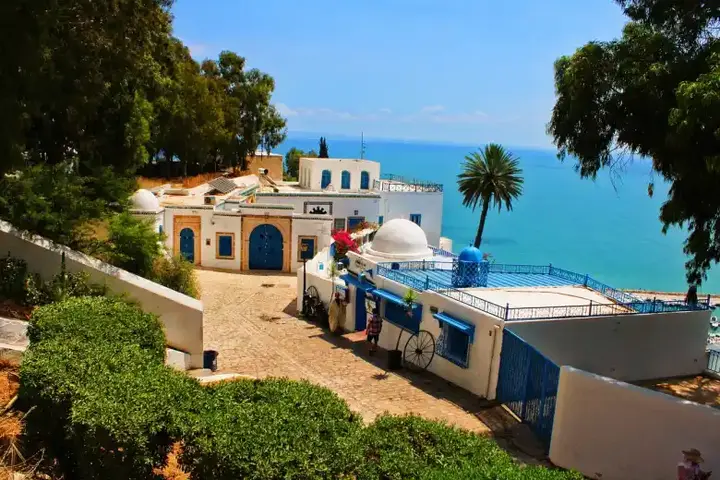
We often find that commerce dominates many famous tourist places, but in Sidi Bou Said you encounter an original, simple, and unspoiled character. Architects are required to build houses in the traditional style, following a set of city regulations designed to preserve the town's originality and charm.
Handicraft shops line the alleys, their colorful displays set against the blue-and-white palette of the town and the sea and sky. You won't walk its streets without smelling white jasmine and the tempting aroma of Tunisian pamploni pies, which resemble sugar-coated doughnuts.
Homes in Sidi Bou Said serve as summer residences for Tunisia's wealthy and as holiday retreats for middle-income families. Although the town is a tourist destination, you won't find the heavy crowds typical of other coastal resorts. Instead you'll experience a simple village life, where people from all walks of life—educated professionals, artists, craftsmen, and ordinary residents—gather at cafés in the evenings.
2. A city that inspires artists
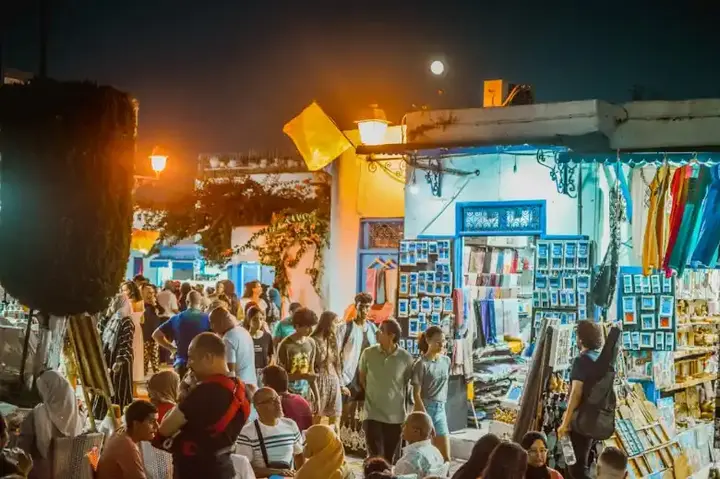
The suburb's architectural masterpieces and its almost painterly streets aren't the only reason Sidi Bou Said inspires artists. Its vivid imagery draws Tunisian and international artists alike to enjoy its colors and create work—paintings, photography, sculpture, wall and door engravings, handwoven textiles with inventive designs and colors, and handmade copper jewelry.
The House of Baron d'Erlanger (Ennejma Ezzahra), also known as the Palace of the Blue Star, blends Tunisian and Andalusian architecture. Built in the heart of a large garden, it is a museum and a center for Arabic music and was the first house in the town to be painted blue and white. Before that, the houses in Sidi Bou Said had been white and green; after the palace was painted, others followed and the town adopted the blue-and-white color scheme.
Baron Rodolphe d'Erlanger was of French-German descent; he studied painting and music and had a particular love for Arabic music. The house includes an exhibition of rare Arab, European, African, and Tunisian musical instruments, along with rare audio recordings. The Baron had come to complete the purchase of the land, but the place so enchanted him as an artist and music lover that he built the palace and made it his home.
3- Privileged location
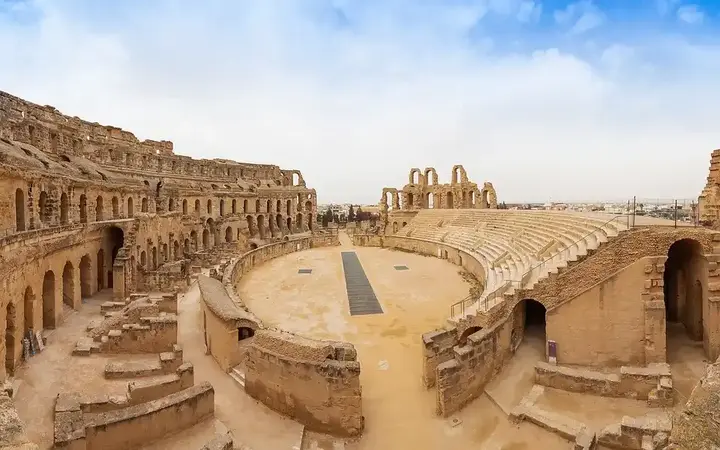
Sidi Bou Said's location is not only distinguished by its views of the bay, beaches, and yachts, but also by its convenience—it is no more than a 20-minute drive from downtown Tunis. The archaeological site of Carthage is only a 10-minute drive away, and you can even cycle there.
Carthage was a Phoenician kingdom, and on a tour of the site—listed by UNESCO as an archaeological site—you can visit the Carthage Theatre, one of the city's most famous monuments. The theatre hosts a well-known annual music festival and can accommodate 12,000 people.
You'll fully appreciate Sidi Bou Said's setting when you sit in one of its cafés at sunset, sip coffee or tea with almonds, and enjoy the sea view and the fragrant night breeze. Sidi Bou Said is truly a heavenly sight.