


The Golden Age of Kairouan



City of Kairouan
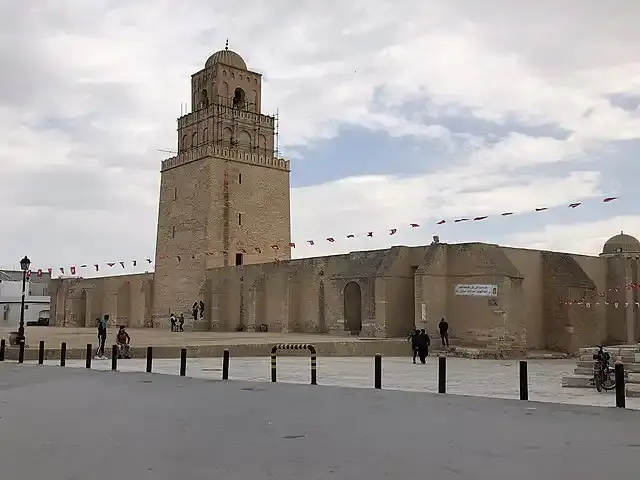
A city in the Maghreb did not enjoy the ancient history and prosperity of the city of Kairouan in Tunisia, as it was a brilliant cultural platform, especially after its conquest and entry into its golden age that lasted for four centuries as the gateway to religion, Islamic civilization and diverse cultures to the surrounding region in the African and European continents.
Show key points
- Kairouan, a historically significant city in Tunisia, served as a cultural and religious hub during its golden age, impacting both African and European regions.
- The city's name, derived from the Persian "Karo An" meaning a group of horses, was Arabized to "Kairouan" and held great spiritual significance, once considered the fourth holiest city in Islam.
- Founded by the Islamic military leader Uqba bin Nafi under Umayyad rule, Kairouan was strategically chosen for its geography and proximity to desert tribes for spreading Islam.
- ADVERTISEMENT
- During the Abbasid Caliphate, particularly under Harun al-Rashid and his successors, Kairouan flourished in scholarship, military strength, architecture, and religious influence.
- The Aghlabid dynasty, initiated by Ibrahim ibn al-Aghlab, brought long-lasting governance to Kairouan, but internal strife eventually led to its downfall and Fatimid takeover.
- Under Fatimid control, Kairouan remained a central power in the Maghreb until discord and Hilali invasions led to its decline and the end of its golden age.
- Today, Kairouan is a green, vibrant city with rich historical sites like the Uqba Mosque and religious shrines, continuing to attract tourists and preserve its cultural legacy.
The name of Kairouan, where did it come from and what does it mean?
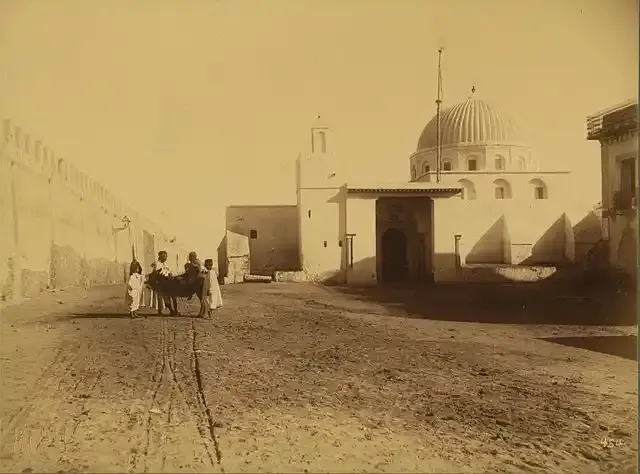
The name of Kairouan, where did it come from and what does it mean?
It was called "Karo An", a word of Persian origin and means a caravan of horses or a group of horses, and it was Arabized to "Kairouan" and its historical importance was called by jurists in ancient times "Rabaa al-Three", meaning that they considered it the fourth city of the three holy cities "Mecca, Medina and Jerusalem"
Recommend
The history of the founding of the city of Kairouan
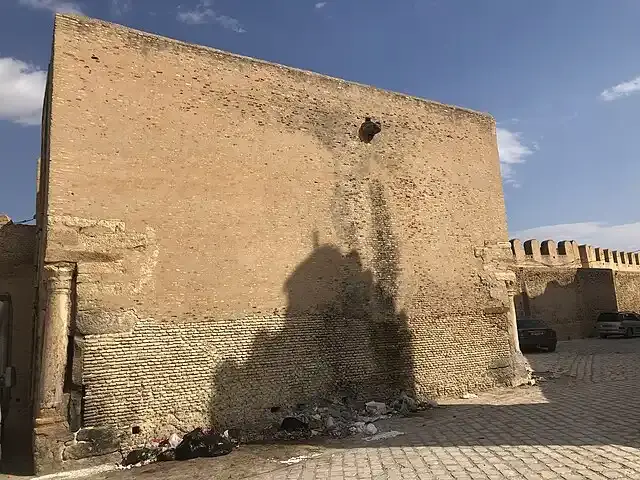
The city of Kairouan was built by the Islamic leader "Uqba bin Nafi" during the reign of the Umayyad caliph "Muawiya bin Abi Sufyan".
When he was governor of the Maghreb and Africa, and in the meantime Kairouan was a land full of trees and predators, so he cleansed it and made it a center where soldiers gathered before fighting and the headquarters of his emirate.
Al-Idrisi described it as "the mother of the cities and the base of the countries, and it was the greatest city in the West Qatar, the most human, the easiest money, the widest conditions, the most proficient in building, the same concern, and the most comfortable trade."
Aqaba chose the city of Kairouan because of its location because of the ease of its land, which makes the task of delivering basic resources through camels easy, in addition to its distance from the Byzantine naval fleet, and a third reason for its proximity to the Berbers in the desert in order to spread religion among them.
What is the Golden Age?
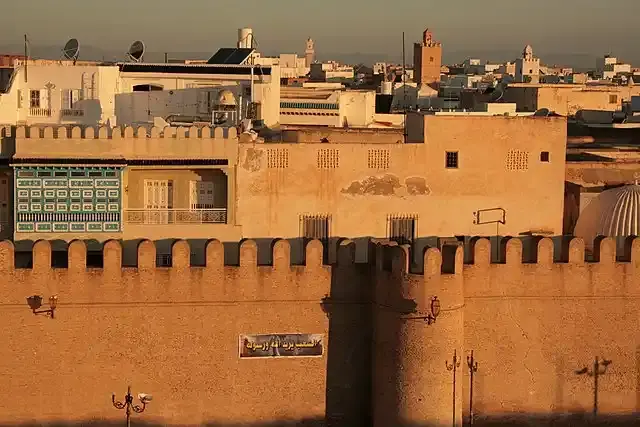
It is a period that passes through the city or country in which it is characterized by its prosperity and growth at all levels, whether military, cultural, civilizational, architectural or religious, and the exchange of that growth to and from within that city, which contemporaneously adjoins it from other civilizations.
How was the golden age of the city of Kairouan
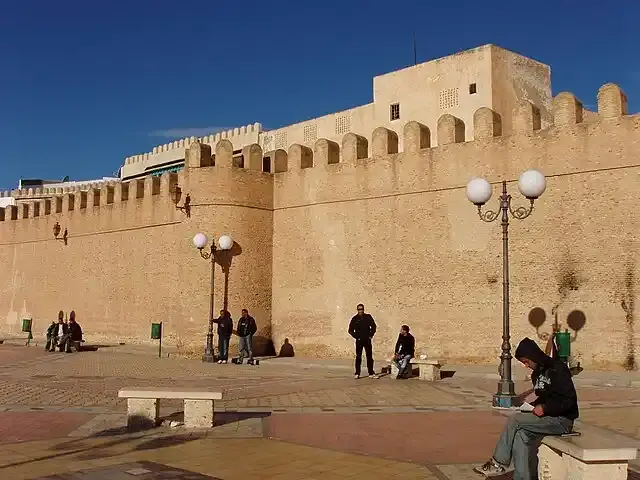
Aqaba was interested in the fact that Kairouan was a center full of scholars and jurists studying the religion of God, in addition to his interest in the private army of Medina and its emirate, and there were twenty-five companions of the Companions of the Messenger of God, may God bless him and grant him peace.
The golden age of the city of Kairouan shone since the era of the Abbasid caliph "Harun al-Rashid" and his son "Al-Ma'mun" and spread its rays until it covered the Middle East and the countries of the countries that enjoyed the light of Islam to open them and bring them out of darkness to light.
The Abbasid Caliph "Harun al-Rashid" "Ibrahim ibn al-Aghlab" took over Ifriqiya and made his sons and grandchildren after him, in exchange for preaching to the Abbasid caliphs on the pulpits of mosques.
Ibrahim ibn al-Aghlab established the pillars on which the state is based in Africa and saved it from the evils it covered, and this was the first step in building the Aghlabid state, which lasted in Africa and Kairouan for more than a hundred years.
During the reign of the founder of the Aghlabid state and the first ruler in it, "Ibrahim bin Al-Aghlab", strife and unrest returned to the increase between the princes of the Aghlabid house until a major sedition occurred in 280 AH, as a result of which the Aghlabid state fell and its rule fell in Kairouan, and in the meantime the Obaids seized it and gathered all the Arab Maghreb on one word under their control.
After settling specifically "Al-Mu'izz li-Din Allah Al-Fatimid" in Egypt, they had the opportunity to pay more attention to Kairouan to take it in the meantime as the center of their rule and control over the Maghreb and all of Africa, so the Caliph "Al-Mu'izz Li-Din Allah" placed "Belkin Senhaji" as its deputy and in recognition of his emirate over all Africa, including Kairouan.
The Maghreb and the city of Kairouan remained under the rule of the House of Senhaji for many decades under the protection of the Fatimid Caliphate and its center in Egypt until "Al-Mu'izz bin Badis Al-Senhaji" decided to defect from the Fatimid state, which decided to take revenge on him by sending the Hilalis, who caused the rupture of parts of the state and the loss of its unity.
Because of these conflicts, Kairouan was devastated and rebelled, and most of the signs of its golden age and glory were lost.
The city of Kairouan in our contemporary days
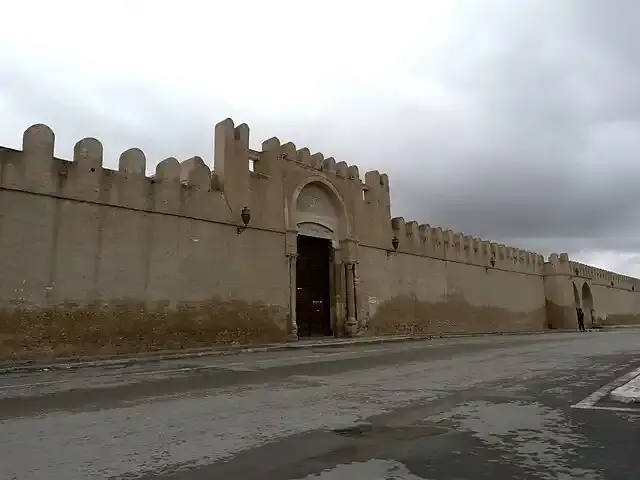
Kairouan is now one of Tunisia's green cities, with more than 100,000 inhabitants according to the 2004 census, almost twenty years ago.
The contemporary city of Kairouan is characterized by the fact that it contains many tourist and historical attractions, as it has the mosque built by the leader "Uqba bin Nafi" when he founded the city, and it is named after him until now.
This is the shrine of the great companion "Abu Zam'a al-Balawi", which is an important religious shrine in Green Tunisia.
And a group of other religious figures such as "Sidi Obeid Ghariani" and "Sidi Omar Abada".
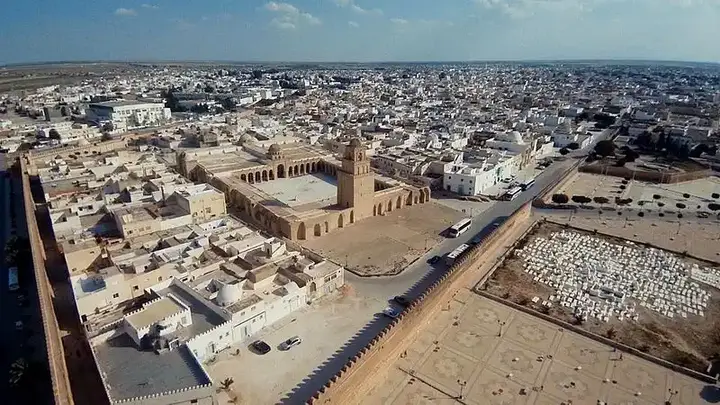
It has a mosque called the Three Doors Mosque.
The city of Kairouan remains to this day one of the most beautiful cities of the Maghreb, which retains its charm and luster at many levels of tourism, scientific, cultural and religious as well.
