The Arab-Islamic conquest of Andalusia: history - civilization and heritage


Show key points
- The Arab-Islamic conquest of Andalusia began in 711 AD under the leadership of Tariq ibn Ziyad and swiftly expanded to encompass most of the Iberian Peninsula.
- Abd al-Rahman I established an independent Umayyad dynasty in Andalusia, fostering political stability and contributing to major architectural developments like the Mosque of Córdoba.
- Islamic rule in Andalusia ushered in a golden age of intellectual and cultural exchange, with scholars such as Ibn Rushd and Ibn Khaldun making lasting contributions to global knowledge.
- ADVERTISEMENT
- Religious tolerance under Islamic rule allowed Muslims, Christians, and Jews to coexist peacefully, promoting a diverse and cooperative society.
- The architectural legacy of Andalusian Islam includes iconic structures like the Alhambra and the Grand Mosque of Córdoba, reflecting a fusion of various artistic traditions.
- Despite the fall of Granada in 1492, Andalusia’s cultural and intellectual heritage continued to influence both the Islamic world and European civilization.
- The migration of Andalusian scholars following the decline of Islamic rule helped disseminate its rich intellectual traditions throughout the broader Muslim world.
The Arab-Islamic conquest of Andalusia, which began in the early eighth century, represents one of the most important chapters in the history of Islamic expansion and European civilization. It left an indelible mark on the region’s cultural, intellectual, and architectural life and gave rise to a dynamic and sophisticated Islamic civilization in the Iberian Peninsula, characterized by cultural exchange, intellectual flourishing, and relative religious tolerance. This article examines the historical events and impact of the Arab-Islamic conquest of Andalusia and highlights its contributions to the region and the wider world.
Open Date:

The conquest of Andalusia began in 711 AD, when an army of some 7,000 fighters led by Tariq ibn Ziyad crossed the Strait of Gibraltar and defeated the Visigothic forces of King Roderic at the Battle of Guadalete. Tariq’s force was then reinforced by troops sent by the governor Musa ibn Nusayr, who organized a second invasion. Within a few years the two commanders controlled more than two-thirds of the Iberian Peninsula. The second expedition, which included about 18,000 mainly Arab soldiers, quickly captured Seville, then defeated Roderic’s supporters at Mérida and linked up with Tariq’s forces at Talavera. The combined armies advanced the following year into Galicia and the northeast, taking León, Astorga, and Zaragoza. This decisive series of victories led to the rapid expansion of Islamic rule across the peninsula and to the establishment of a sophisticated, cosmopolitan civilization in Andalusia.
Recommend
In 756, Abd al-Rahman I (al-Dakhil), a survivor of the recently overthrown Umayyad dynasty in the Levant, arrived in Andalusia and seized power in Córdoba and Seville, declaring himself emir and asserting continuity with the Umayyad caliphs. Abd al-Rahman’s rule brought stability in the years that followed, and he sponsored major building projects, the most famous of which was the Mosque of Córdoba. He helped consolidate the emirate and continued to defend it against invaders, suppressing numerous rebellions.
Abd al-Rahman I founded an independent dynasty that lasted until the eleventh century. It was followed by a series of small, short-lived principalities known as the taifa states, which were unable to halt the northward advance of the Christian kingdoms. The last Islamic principality, Granada, fell to the forces of Castile in 1492.
Impact and legacy:
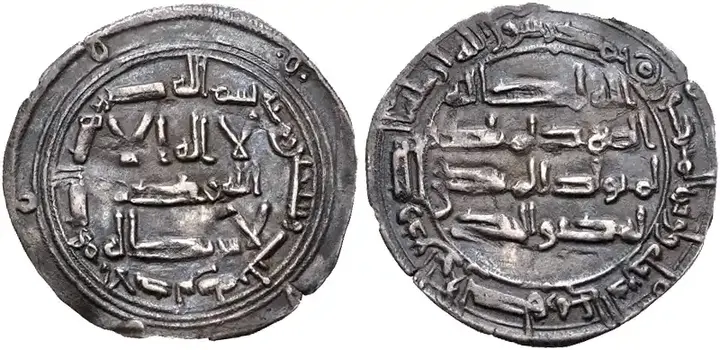
The influence of Andalusian Islam has been profound over the centuries and can be summarized in several key areas.
Cultural renaissance and intellectual exchange: The Arab-Islamic conquest of Andalusia set the stage for a cultural renaissance marked by a vigorous exchange of ideas, knowledge, and artistic expression. Scholars and philosophers from diverse backgrounds gathered in Andalusia and helped create a golden age of learning and innovation. Figures such as Ibn Rushd, Ibn Sina, and Ibn Khaldun made significant contributions to philosophy, medicine, mathematics, history, and astronomy. A vigorous translation movement transmitted classical knowledge from Greek, Latin, and Sanskrit sources, enriching the intellectual life of the Islamic world. That movement played a crucial role in preserving the heritage of antiquity and passing it on beyond the region.
Religious tolerance and interfaith relations: Islamic rule in Andalusia was marked by a notable degree of religious tolerance and coexistence. Muslims, Christians, and Jews lived side by side, creating a rich tapestry of cultural diversity and mutual engagement. The dhimma system guaranteed the protection of religious minorities, allowing Christians and Jews to practice their faiths and to participate in the social, economic, and intellectual life of Andalusian society. This atmosphere encouraged cooperation and dialogue and reflected principles of pluralism in practice.
Cultural synthesis and the Golden Age: Beyond tolerance, the Arab-Islamic presence in Andalusia produced a golden age of cultural synthesis and intellectual prosperity. Arab, Amazigh (Berber), Jewish, and Christian communities coexisted and contributed to a lively exchange of ideas, languages, and artistic traditions.
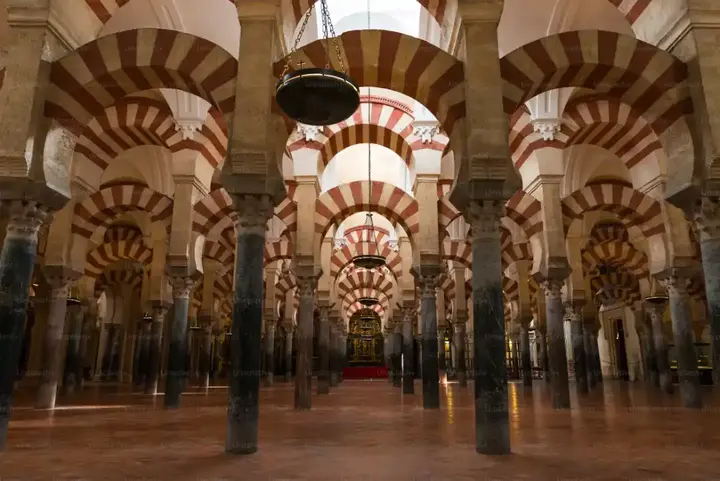
Architectural achievements and urban development: The Arab-Islamic rule of Andalusia brought an era of architectural innovation and notable urban development. The rulers patronized architecture and city planning, resulting in landmarks that still attract visitors today. Grand mosques, palaces, and fortifications dot the Andalusian landscape, displaying a blend of Islamic, Byzantine, and Western Gothic influences. Monuments such as the Great Mosque of Córdoba, with its distinctive arches, geometric patterns, and intricate mosaics, and the Alhambra in Granada, with its exquisite stucco work, gardens, and poetic inscriptions, remain enduring examples of Andalusian architectural mastery.
The end:

The Arab-Islamic presence in Andalusia stands as an example of the transformative power of cultural exchange, intellectual inquiry, and religious tolerance. Although Islamic rule declined in the late Middle Ages, the legacy of Andalusian civilization continues to inspire scholars, artists, and historians worldwide. The conquest and its aftermath offer a reminder of the possibilities for unity, diversity, and coexistence in human societies and provide lessons for building a more inclusive and enlightened world. Moreover, Andalusian cultural and intellectual heritage was not confined to what is now called the West. Andalusian Islam produced works, doctrines, and practices that had a lasting impact on the Muslim world as a whole. Following the westward expansion of Islamic lands, Andalusian intellectual elites began migrating to other parts of the Islamic world, helping to spread Andalusian achievements among Muslim societies. A look at the holdings of existing Islamic libraries shows that Andalusian texts remain widely read, and in certain regions, such as North and Central Africa, Islam cannot be fully understood without reference to the thought and work of Andalusian scholars.