


Make every day count: Fall in love with your to-do list



To-do lists look pretty straightforward. It basically represents a list of all the tasks that you planned to accomplish within a certain time frame, and are intended to make life easier. You jot down your tasks to avoid forgetting them and causing unnecessary stress.
Show key points
- A common mistake in creating to-do lists is failing to prioritize tasks properly, which can lead to less important items taking up prime positions.
- Assigning due dates and specific time slots to tasks can help manage daily priorities more effectively, but overdoing it may cause stress.
- An ideal to-do list includes only tasks that are both urgent and important, avoiding clutter from non-essential items.
- ADVERTISEMENT
- Adding context and breaking down large tasks into subtasks allows for better clarity and increases the chance of completion.
- Unfinished or postponed tasks should be reviewed regularly to determine their true priority or to address underlying issues.
- Using a two-column format that separates scheduled events from desired outcomes can help optimize productivity throughout the day.
- Ultimately, the key to a successful to-do list lies in proper coordination, focus on essentials, and structuring your tasks in a manageable and motivating way.
But, in some cases, making an already effective to-do list is not so simple.
We usually forget one integral question that we must ask ourselves if we want to make the ideal to-do list:
How do we make a to-do list that we may already be happy to accomplish?
Step One: Your first task should be the most urgent
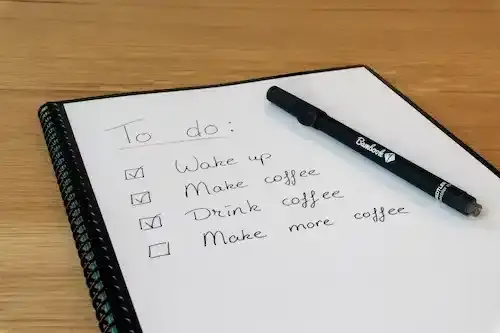
To-do lists can cause you some complications when it comes to prioritizing, because when something is at the top of your list, your brain will automatically assume that this specific task is the most important task you have to do.
Recommend
An effectively organized task list is a priority list, however, the first task is often there because you thought about it before all the others, some of which may be more important. Thus, your most important task may end in the middle of your list, or even at the bottom of it. However, the first task always gives the impression that it is the most important.
Step Two: Use Due Dates and Time Signals

Setting specific times for different activities and taking advantage of due dates will make a big difference when it comes to prioritizing your tasks for each day of the week.
One of the most effective techniques when creating such a list is to add due times as well, especially those tasks that are of paramount importance. This will help you tackle your most pressing tasks on time.
However, you have to be careful, because adding specific times to your to-do list can make it look stricter, which can make you want to avoid the list altogether because it puts pressure on you, so try not to overdo it.
Step Three: Qualify your tasks

To create an effective to-do template, all the tasks you type must fall into two categories:
1. The task should be something very important, not just something "you need to accomplish".
2. The task should be something that needs to be done on the same day.
We need to be able to effectively identify tasks that deserve to be included in the list. A to-do list is not a guide to life, it serves a specific purpose.
The problem is that in many cases, what we find in our to-do lists are things we don't have to do, don't really need, or are by no means urgent. These things can overshadow the most important tasks, which means you'll have to work longer and harder.
You may end up feeling disorganized.
Step Four: Add context to each item in the to-do list
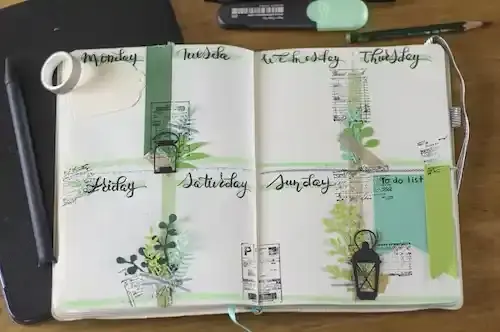
What exactly does that mean?
Break down big goals into small goals. Here is an example:
Buying batteries takes less time than writing a book, but when put on the to-do list, both tasks look the same.
Our to-do lists don't usually include context about a particular task, and we don't often break down larger tasks into smaller, accomplishable tasks.
Doing so will provide you with insight into how long it will take you to complete a particular task.
We consider ourselves trustworthy, but that's the simple truth.
It's much easier to create a to-do list, tackle simple tasks and leave time-consuming ones undone. In fact, we do this so often that 41% of all our to-do list tasks are never completed.
In order to create an effective to-do template, your tasks need more detail, perhaps tags for urgent tasks, subtasks so you can segment more complex tasks, and notes that explain each task in more detail.
Adding details and then taking a look before you start your workday may take a little of your time, but it will help you set expectations and perform your work more efficiently.
Step 5: Re-evaluate tasks you never reached
If you've ever made a to-do list, you know that you always have one or more options when it comes to postponing or changing the details of your tasks. But when you do, you need to keep track of tasks you've postponed, because an effectively organized to-do list is prioritized, and so are tasks.
If you repeatedly postpone an urgent task or task to the next day, you need to know why. Either this task is not urgent or important, and it shouldn't be on your to-do list, or there's a problem that you need to solve in order to be able to complete it. Be that as it may, it's a sign that something isn't right.
Step 6: Two-column approach and approach
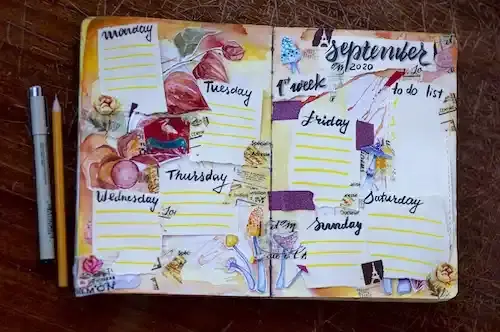
One of the best examples of a to-do list is trying to split it into two columns. On the left side, you'll make a chronological list of tasks to accomplish, such as appointments and meetings, and on the right, list what you hope will be accomplished during those events, such as discussing a specific issue or coming up with a plan.
Below your timelist, include tasks to do on that particular day. In this way, when you have a few minutes, you can check your list and see what tasks you can perform to make the most of this free time.

Whether you have a to-do list or not, you have things to do.
And that's exactly why you need to use a new way to manage your tasks and create an effective to-do list that you'll love. Remember that coordination, prioritization, and organization are the keys to a successful to-do list.
