Jaguar or Leopard? Discover the difference between these spotted cats

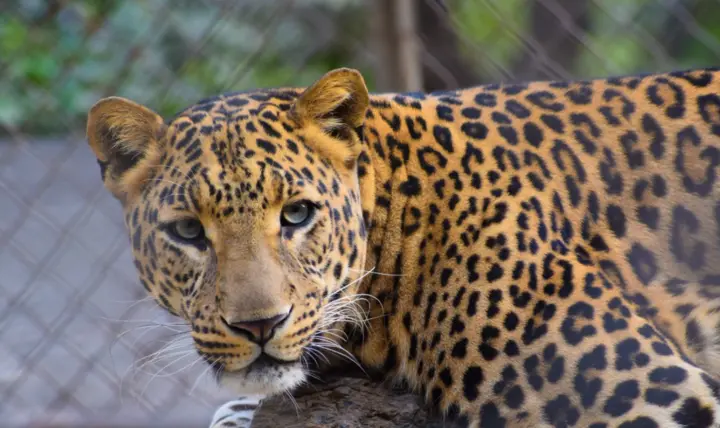
Show key points
- Jaguars and leopards are two magnificent spotted cats that evolved in different parts of the world—jaguars in the Americas and leopards in Africa and Asia.
- Despite their similar appearance, jaguars are generally larger and more muscular than leopards, with shorter tails and broader skulls.
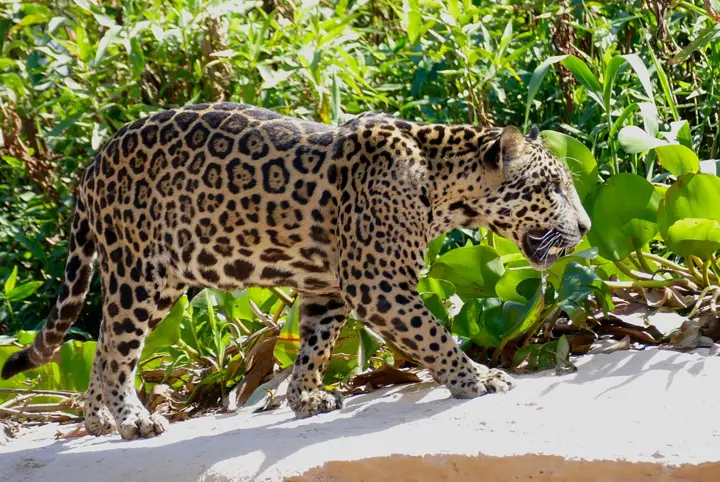
- Their fur patterns differ distinctively, where jaguars have larger, rosette-shaped spots with central dots, while leopards display smaller, more uniformly shaped rosettes.
- ADVERTISEMENT
- Jaguars are powerful swimmers and often hunt in water, whereas leopards are more arboreal and primarily hunt at night from elevated vantage points.
- Each species is uniquely adapted to its environment—jaguars to the dense rainforests and leopards to savannahs, deserts, and mountainous terrain.
- Both cats face threats due to habitat destruction and poaching, prompting global conservation efforts like protected reserves, anti-poaching initiatives, and community education.
- Through research, monitoring, and awareness programs, conservationists aim to secure a future for these majestic creatures and maintain the ecological balance they help sustain.
Spotted cats are among the most beautiful and mysterious creatures and have fascinated people for centuries. Despite their similar appearance, there are important differences between some spotted species, such as the jaguar and the leopard. In this article, we explore how a jaguar differs from a leopard and reveal some of their remarkable traits.
1. The origin of the jaguar and leopard and their spread in the world
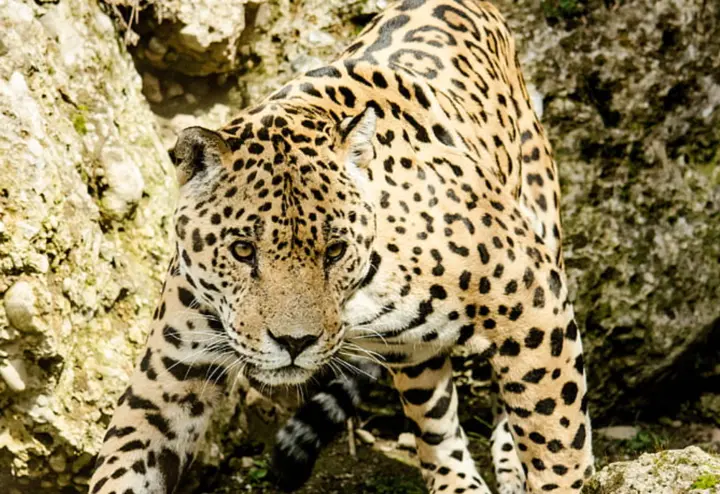
Over the ages, Earth has seen the rise and evolution of many fascinating animals, including the jaguar and the leopard. These two spotted cats capture the attention of researchers and wildlife lovers alike. Each species originated in a different region: the jaguar in the Americas and the leopard in Africa and parts of Asia.
Recommend
In the Amazon and the dense jungles of Central and South America, the jaguar finds refuge. It is the largest spotted cat in the world, with a powerful, muscular body that helps it hunt and adapt to diverse environments. In Africa and parts of Asia, the leopard lives in savannas and open woodlands, where its spotted coat helps it blend into trees and surrounding vegetation.
Their global distribution reflects their ability to adapt to different habitats and exploit available resources. Jaguars occur in many Central and South American countries, such as Brazil, Bolivia and Mexico, while leopards are found across much of sub-Saharan Africa and parts of the Arabian Peninsula and Asia. The presence of these two remarkable cats in separate regions shows how they evolved and adapted over time to survive and raise their young.
Below, we examine the physical differences between the jaguar and the leopard and how those differences affect their lives and behaviour in the wild, revealing more of these two surprising cats' secrets.
2. Physical differences between jaguar and leopard
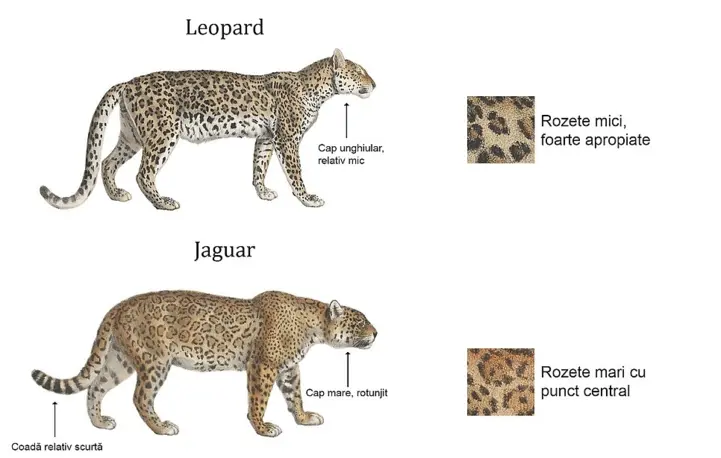
At first glance the jaguar and the leopard can look very similar because of their spotted coats, but several physical traits allow us to tell them apart. Here are the main differences.
First, body size and overall build:
The jaguar is generally larger than the leopard. The translation gives weights of around 500 pounds for jaguars and about 200 pounds for leopards. Jaguars have a stockier, more muscular build, while leopards tend to be longer and slimmer. The jaguar also has a larger neck and broader skull than the leopard.
Second, the spots and rosettes:
The spots on their coats are one of the clearest distinguishing features. Jaguars typically have larger, darker rosettes with a darker rim and lighter center; these often appear in ring- or square-like shapes. Leopards tend to have smaller, simpler dark spots that give a finer, more delicate appearance. Leopard rosettes are more often simple rings.
Third, skull and face:
The jaguar's skull is larger and more robust than the leopard's, and its jaw is especially powerful—capable of crushing bone. Leopards have smaller, narrower skulls and a more gracile facial structure.
Fourth, tail length:
The jaguar has a relatively short tail, reaching about 80 centimeters, while the leopard's tail is noticeably longer, around one meter.
Fifth, habitat adaptations:
Jaguars prefer tropical environments such as the Amazon and other rainforests, while leopards occupy grasslands, savannas and more arid areas in Africa and parts of Asia. These habitat differences influence their body shape and adaptations for survival in their respective environments.
3. Beautiful ornament pattern on jaguar and leopard fur
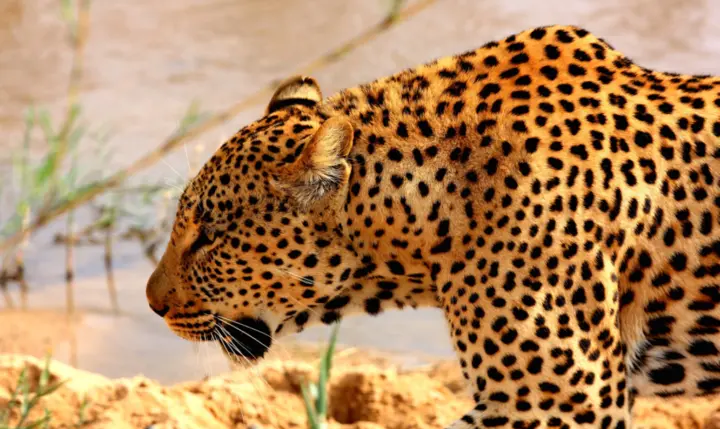
One of the most striking features of jaguars and leopards is their spotted fur. Each species has a distinct and beautiful pattern that helps it stand out among spotted cats. Here we look more closely at those patterns and the role they play.
Jaguars usually display larger, more uniform rosettes on their coats. Their prominent spots, often with a darker edge and lighter center, are a hallmark of the species. Scientists say these markings help jaguars blend into the forest environment, providing excellent camouflage while hunting. The contrast between dark edges and pale centers can create a three-dimensional effect in sunlight.
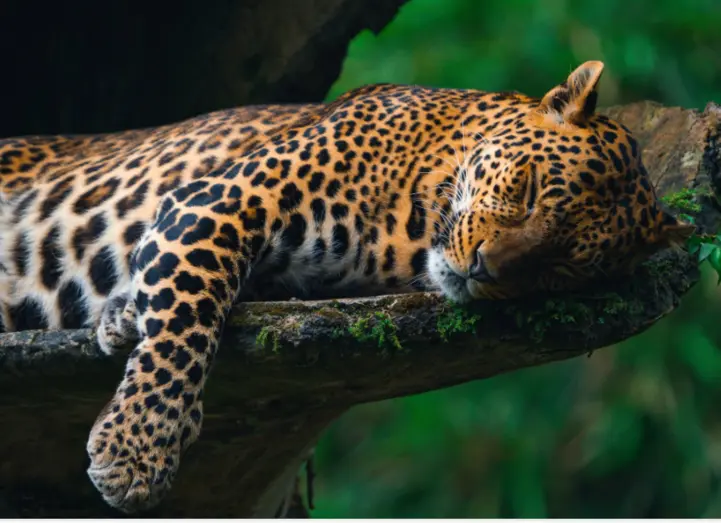
Leopards also have an impressive coat pattern. Their fur is typically light golden with many small, dark spots scattered irregularly. These spots provide camouflage in the dry and varied habitats where leopards live. Like jaguars, some leopard rosettes show a three-dimensional look that adds depth to their markings and enhances their appearance.
The decorative patterns on jaguar and leopard fur captivate many people and highlight the wonders of nature. These markings not only make the animals beautiful but also help them survive by blending into their surroundings.
4. Differences in the behavior and dietary pattern of the jaguar and leopard
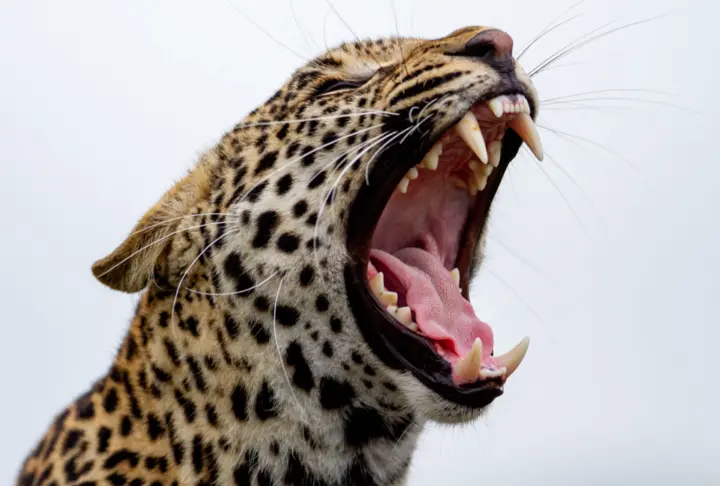
Behavior and diet further set jaguars and leopards apart. Although they share many biological traits, their habits and feeding strategies differ in notable ways.
Jaguars are strong swimmers and climbers, and they combine great power with agility. They can swim long distances and hunt in water, and they tend to be solitary and bold, defending large territories.
Leopards are mainly nocturnal hunters and often live in more wooded or mountainous areas. They are extremely powerful and fast, capable of long leaps and of hauling prey into trees. Leopards are generally shy and solitary, hiding in trees or caves during the day and hunting at night.
Regarding diet, jaguars take a wide range of prey, including deer, rabbits, monkeys and even fish. They often use ambush tactics, waiting silently before pouncing with great speed and force.
Leopards typically prey on wild animals such as deer, goats and sheep. They approach slowly then burst into a quick sprint to seize their prey, relying on their ability to blend into the environment for successful hunts.
Although jaguars and leopards can look similar, their behaviour and feeding habits reveal distinct and powerful survival strategies. There is much more to learn about both species beneath their spotted hides.
5. Protection and conservation efforts of these endangered species
Jaguars and leopards face serious threats to their survival, and conserving these spotted cats is one of the major challenges in wildlife protection. What are the obstacles and current efforts to save these two remarkable species?
Protected habitats: Natural reserves and national parks serve as safe havens for jaguars and leopards. Conservation programs aim to preserve these areas and prevent habitat loss and hunting. These efforts depend on raising awareness and encouraging community involvement in protection.
Combating poaching: Both species suffer from poaching for commercial purposes, including the trade in fur, bones and other body parts. Local and international organizations work to stop these illegal activities and to educate communities about their harmful impact.
Promoting biodiversity: Protecting jaguar and leopard habitats and maintaining biodiversity in those areas is essential. Activities such as reforestation, fire management and reintroducing prey species help create balanced ecosystems that support these big cats and other wildlife.
Research and monitoring: Field studies and monitoring are vital for understanding jaguar and leopard behaviour and assessing how environmental changes affect them. Many organizations collect data and track movements to inform conservation strategies and improve protection efforts.
Awareness and education: Public awareness and education are key to protecting jaguars and leopards. Programs that include workshops, school visits and community outreach explain the importance of these cats and how they contribute to ecosystem balance.
Through these combined efforts, we can hope for a better future for jaguars and leopards. With awareness and collaboration, we can preserve these wild treasures for generations to come.
In the end, the jaguar and the leopard are magnificent cats with unique characteristics that interest zoologists and wildlife enthusiasts. Despite the threats they face and the degradation of their habitats, many organizations are working to protect these spotted cats and preserve wildlife diversity. It is important that we recognize their existence and value, and work together to ensure their continued presence in our world.