


Ancient Wonders of the World: Your Comprehensive Guide to the Pyramids of Giza and the Sphinx



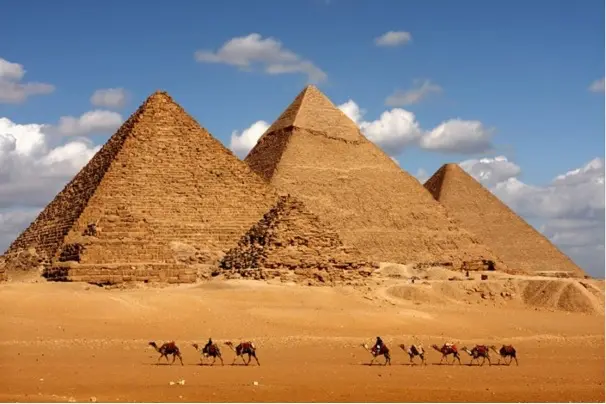
Located on the Giza Plateau in Greater Cairo, the Pyramids of Giza are part of a larger group of pyramids scattered along the Nile. These pyramids are considered one of the oldest and largest pyramids in Egypt, and were built as tombs for the pharaohs and protect their treasures for the afterlife.
Show key points
- The Pyramids of Giza, located on the Giza Plateau near Cairo, are part of a broader complex of pyramids that trace the Nile and were constructed as royal tombs.
- Built during Egypt’s Fourth Dynasty between 2600 and 2500 BC, the Pyramids of Giza represent a monumental engineering achievement of the ancient world.
- The Great Pyramid of Khufu, the largest and most famous of the three, is considered one of the Seven Wonders of the Ancient World.
- ADVERTISEMENT
- Legends and myths surrounding the pyramids and the Sphinx reflect humanity’s fascination with these monuments, often attributing their creation to divine or extraterrestrial forces.
- Contrary to old beliefs, archaeological findings suggest the pyramids were built by skilled laborers and engineers rather than slaves.
- The Sphinx, carved from a single rock and featuring a lion’s body and a human head, continues to puzzle researchers with theories about its true origin and hidden secrets.
- Visiting the pyramids offers not only a historic experience but also a deep emotional journey into human ambition, creativity, and the enduring mystery of ancient civilizations.
The Pyramids of Giza are a collection of three large pyramids. These pyramids are the Great Pyramid of Khufu, the Middle Pyramid of Khafre, and the Lesser Pyramid of Menkaure.
The pyramids were considered gateways to the afterlife, as it was believed that the pharaoh would pass through them to eternal life. It also expressed the power, wealth and advanced technology of the ancient Egyptians.
Recommend
The history of the construction of the pyramids of Giza
The Pyramids of Giza are considered one of the greatest engineering achievements in human history, and were built during the Fourth Dynasty of the Old Kingdom of Ancient Egypt, between 2600 and 2500 BC. The Great Pyramid, also known as the Pyramid of Cheops, is one of the Seven Wonders of the Ancient World and the largest of the three pyramids.
According to the Greek historian Herodotus, the Great Pyramid took nearly twenty years to build, with the passages and lower parts of the pyramid being built during the first ten years. Evidence indicates that the stones used in the construction of the Great Pyramid were cut from the surrounding area, while the exterior cladding stones were brought from the Tura Mountain area and the granite stones used in the inner rooms of the Aswan quarries.
The names of the three pyramids
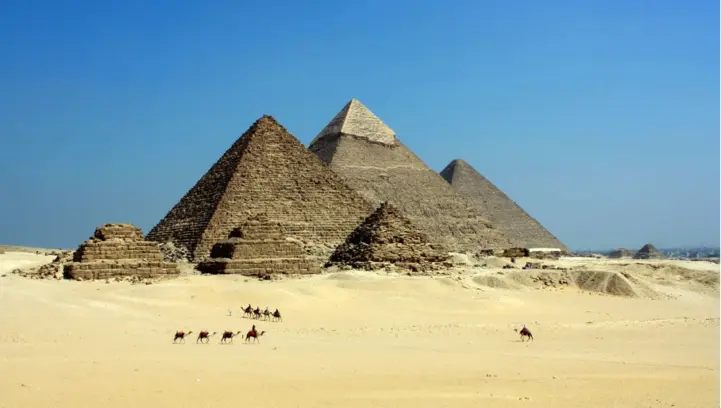
Khufu: The Great Pyramid The Great Pyramid, also known as the Great Pyramid of Khufu, is the largest of the three pyramids and is considered one of the Seven Wonders of the Ancient World.
Khafre: The Middle Pyramid, built for Pharaoh Khafre, is slightly smaller than the Great Pyramid, but retains an important place in the history of the pyramids.
Menkaure: The Lesser Pyramid, built for Pharaoh Menkaure, is the smallest of the three pyramids, but has unique architectural details.
Secrets of the pyramids between myth and history.
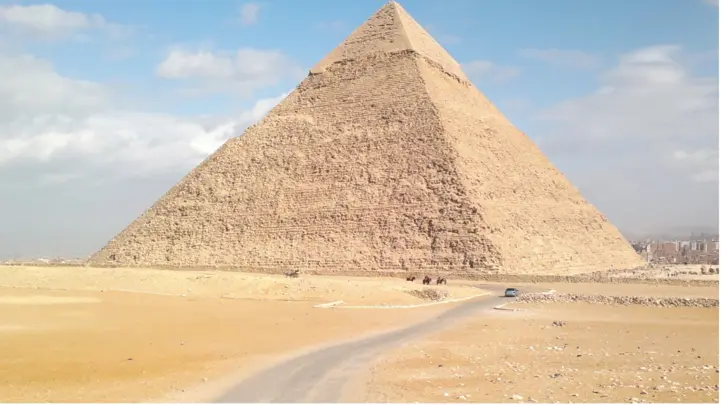
The pyramids are filled with many stories and legends that reflect the admiration and awe that these great monuments have aroused through the ages. Among these stories stands out the story of the Abbasid caliph al-Ma'mun, the son of Harun al-Rashid, who tried to enter the Great Pyramid. He is said to have dug a tunnel inside the pyramid, which was later renamed the "Ma'mun Tunnel" and is still used as the entrance to the pyramid today.
Stories are also told about failed attempts to demolish the pyramids, such as the attempt of al-Aziz Othman bin Yusuf, son of Salah al-Din al-Ayyubi, who tried to demolish the pyramids, starting with the small Red Pyramid. Despite harnessing a lot of labor and resources, he was only able to take off a few simple stones, and after a few months he gave up on the task.
Legends range from fairy tales to mythological interpretations of the construction of the pyramids. Some indicate that the pyramids were built with the help of gods or aliens, and some talk about the curses that afflict those who try to steal the treasures of the pyramids. These stories are part of the cultural heritage that surrounds the pyramids and adds to their mystery and appeal.
These stories and legends are testament to the profound impact that the pyramids left on the collective consciousness, and they show how man has woven around these great monuments tales expressing his admiration and awe at the abilities of his ancestors and the secrets that these pyramids still keep today.
Secrets of the pyramids and the Sphinx
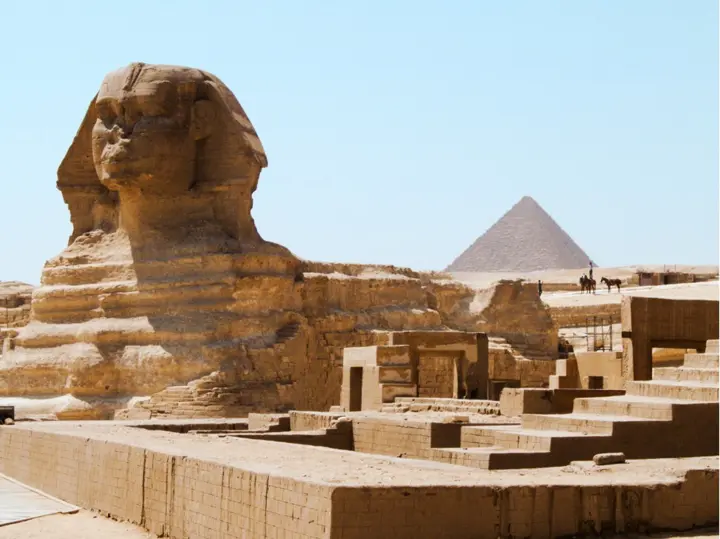
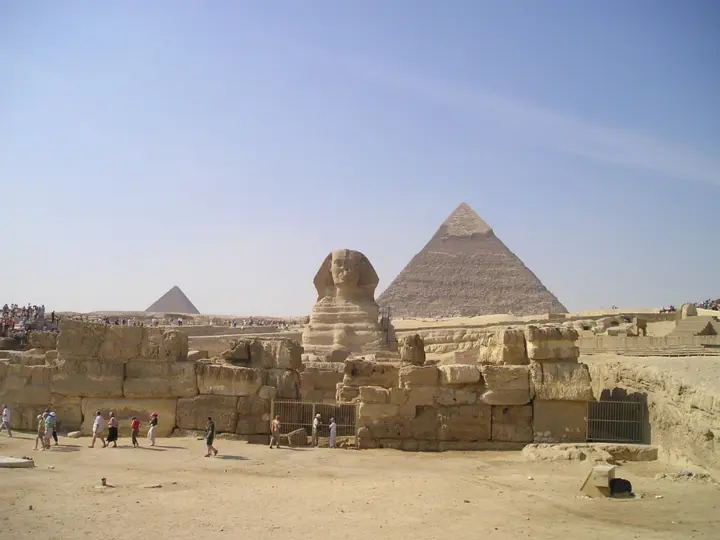
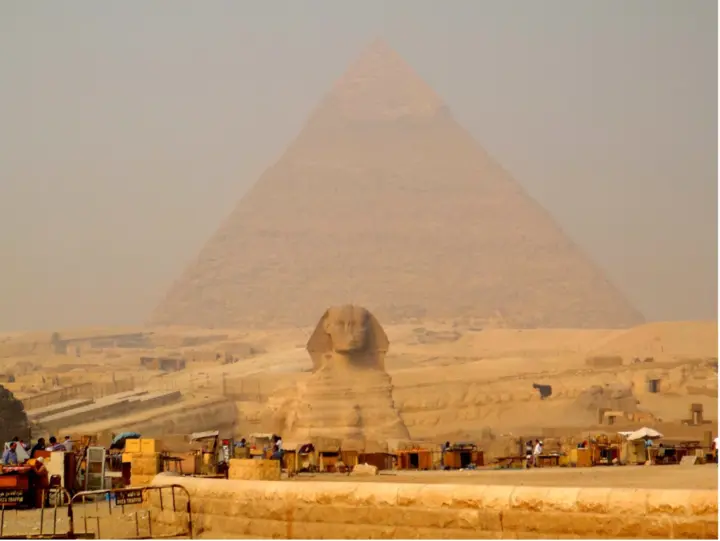
The Sphinx, which stands tall at the Giza plateau, is one of the most controversial and mysterious archaeological symbols of ancient Egypt. The Sphinx shows the body of a lion and the head of a human, representing power and wisdom, and is believed to have guarded the pyramids and refers to the spiritual relationship between the pharaohs and their gods.
According to many theories, the Sphinx is believed to be older than the pyramids themselves, and may date back to prehistoric times, suggesting that it may be part of a lost civilization. Some studies suggest that the erosion of the Sphinx may be the result of exposure to water rather than desert wind, reinforcing the hypothesis that it may be older than pyramids showing fewer signs of erosion.
The relationship between the Sphinx and the pyramids is the subject of many legends and stories. Some of them are said to have secret passages and hidden rooms under the Sphinx that may lead to libraries or ancient temples. These secrets are part of the magic that surrounds the Sphinx and makes it the subject of constant research and exploration.
Archaeological research shows that the Sphinx was carved from a single rock, which is an astonishing feat of engineering, especially when considering its huge size and fine detail. Despite all the studies and discoveries, the Sphinx still keeps its secrets, arousing curiosity and inspiring scientists and researchers to explore more about its mysterious history and its relationship to the Great Pyramids.
Secrets of building the pyramids
Archaeological evidence shows that the workers who participated in the construction of the pyramids were not slaves as previously thought, but skilled workers and trained engineers. They used various tools such as brass chisels and granite hammers to cut the stones and transport them to the construction site.
The way the pyramids were built is a mystery that lasted for centuries, until a mural was discovered in the tomb of Dzhiothihotep showing a man pouring water in front of the latch on the sand, illustrating the method used by the ancient Egyptians to transport the heavy stones used in the construction of the pyramids.
The pyramids of Giza are a testament to the superior engineering and organizational power of the ancient Egyptians, and are still a symbol of human creativity and cultural development. Evidence shows that the ancient Egyptians used advanced techniques and innovative tools to build the pyramids, which is considered a stunning feat of engineering.
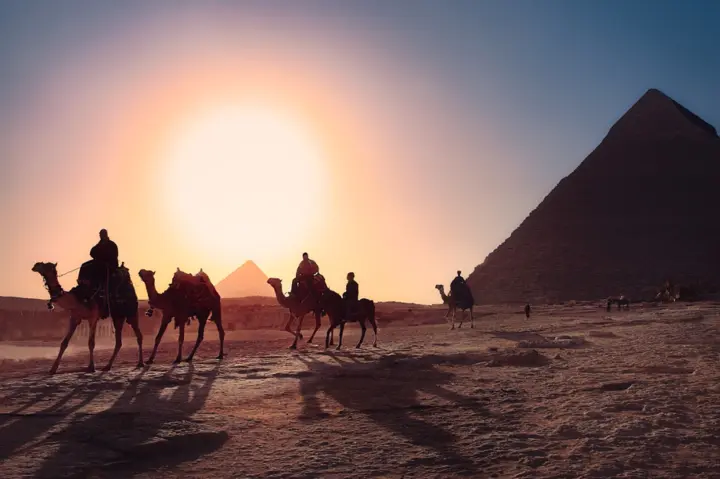
The pyramids have greatly influenced Egyptian civilization and the world, as they are considered a symbol of human creativity and cultural development. The Pyramids of Giza are part of the World Heritage, and there are ongoing efforts to protect and preserve them for future generations.
At the end of our journey through the corridors of history and the mysteries of ancient Egyptian civilization, we cannot help but stand in amazement at the grandeur and splendor of the Pyramids of Giza. These edifices are not merely stones piled on top of each other, but living testimonies of man's creativity and aspiration towards immortality. Visiting the pyramids is not just a tourist trip, but an experience that transports you through time and space to a world full of secrets and wonders.
We invite you to step on the sand on which the pharaohs walked, to look with your eyes at what the ancient Egyptians built, and to feel the inspiration that this monument has aroused in the hearts of people through the ages. Come and discover the pyramids, to see how these ancient wonders still retain their glamour and majesty, standing tall as symbols of human defiance and determination.
Visiting the pyramids is not just a point on the list of places to see, but an invitation to reflect and admire what a person can achieve with his determination and will. Don't miss the opportunity to live this unique experience that will remain etched in your memory forever.
