


The oldest human monuments in the world



Man is considered the most controversial being in terms of his amazing ability to make great changes in the place where he is, and of course this controversy appears between humans and each other and extends to the origin, origin and history of man. In this article, we will collect some information and discoveries about the oldest human monuments in the world that have been found, but let's agree that the information mentioned in this article does not represent the opinion of the writer and does not confirm the true history of humans and does not deny it, God knows when Adam was created and when he came down to earth, but it is an attempt to arouse the mind in thinking and reflection, and let's not forget that the religious, scientific, geographical and sometimes political background also has a great impact on scientists and causes a person's tendency to An opinion, especially if the opinion is related to a certain doctrine or intellectual orientation. Here are seven of the oldest human monuments discovered in the world to date.
Recommend
Show key points
- Humans have long sparked debate due to their transformative nature and mysterious origins, a topic influenced by religious, scientific, and political perspectives.
- The Sierra de Atapuerca caves in Spain revealed human remains over
- 2 million years old, including the oldest known human skull found to date.
- ADVERTISEMENT
- In Crete, Greece, fossilized human footprints estimated at more than 6 million years old challenge established timelines of human migration.
- The discovery of 800,000-year-old human footprints in Heisbro, England marks one of the oldest traces of human presence in Northern Europe.
- A fossilized human jaw found in Ethiopia in 2013 is considered a key evolutionary link between early hominins like Lucy and modern humans.
- Ancient shell jewelry unearthed in Morocco dating back 150,000 years suggests early human communication through symbolic expression.
- Ethiopia’s Omo Kibish 1 and the famous "Lucy" skeleton provide critical insight into early human development and are among the oldest fossilized human remains ever discovered.
1. Sierra de Atapurca Caves (Spain)

These caves are found in northern Spain, and scientists say they have discovered human fossil remains dating back to the first people who inhabited Europe 800,000 years ago. This site was discovered at the end of the nineteenth century when railway workers were digging a tunnel into a mountain to lay iron rails, but there was not enough scientific background to analyze fossil waste at this time. The first analysis of the fossil specimens discovered was done in 1978, followed by another sample in 1984, and the excavations rolled at the site until they reached 150 pieces of human remains, including a very distinctive piece of a human skull without jaw, which is the oldest human skull discovered in the world so far, dating back to 300,000 years, which they called the "Ataburikai man" skull. The discoveries continued until they found the human remains of the oldest human trace, dating back 1.2 million years, they said.
2. Crete (Greece)
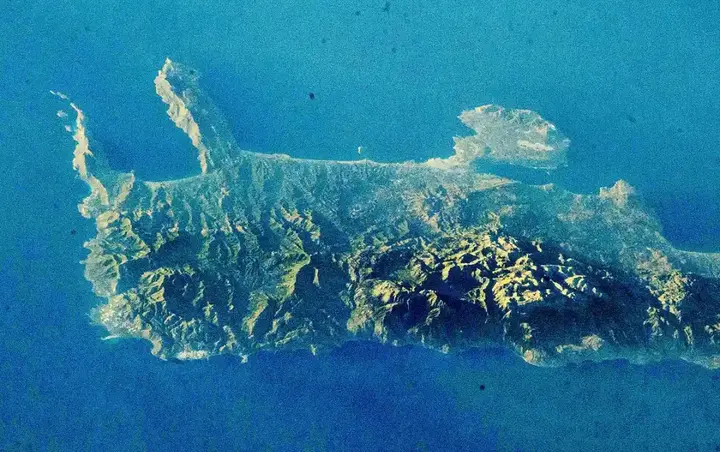
In 2002, footprints were found that scientists believe to be undoubtedly human, dating back more than 6 million years, they found them on the western side of the island of Crete belonging to Greece and were among the sedimentary rocks that formed on the shore of the Mediterranean Sea in time immemorial, where the island of Crete was still connected to Greece and the African coast, which indicates that these traces, according to humans, lived between Europe and Africa 6 million years ago.
3-Hispru footprints
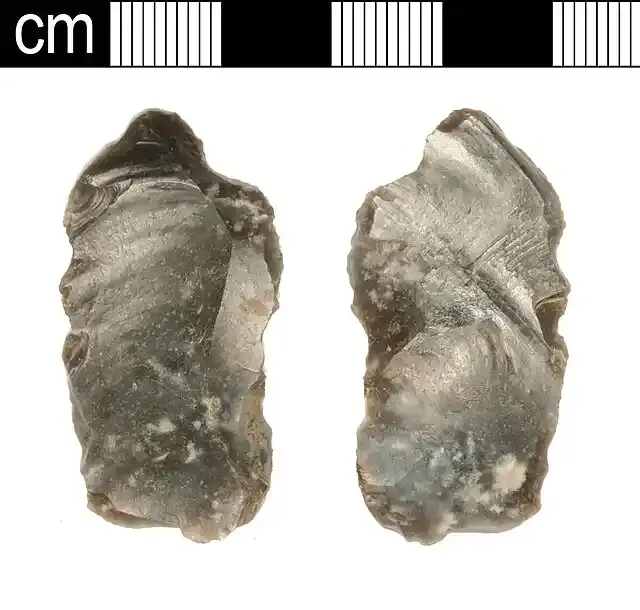
In 2013, on the beach of Heisbrow in Norfolk, England, scientists found human footprints dating back more than 800,000 years, and the oldest human trace before it in Britain was found in Eskimouth in Wales dating back to the Mesolithic Age and the history of carbon, specifically dating back to 4600 BC, which made the discovery of Heisbro footprints an important event in Britain.
The footprints of Heisbro, England date back more than 800,000 years (source)
4. Ethiopia's Human Decoding (Ethiopia)
In 2013, an Ethiopian student found an important piece of human jaw dating back more than 2.3 million years, and the importance of this piece, according to anthropologists, is due to the fact that it represents the link between the 3.2 million year old Lucy structure and modern humans, they claim.
4. Ethiopia's Human Decoding (Ethiopia)
In 2013, an Ethiopian student found an important piece of human jaw dating back more than 2.3 million years, and the importance of this piece, according to anthropologists, is due to the fact that it represents the link between the 3.2 million year old Lucy structure and modern humans, they claim.
5- Prehistoric jewelry and necklaces (Morocco)

In 2021, a team of researchers discovered a group of jewelry consisting of sea shells in Morocco, and scientists believe that these ornaments are the oldest human ornaments ever discovered, dating back to nearly 150,000 years old and they found them in a cave called "Bezmoun" southwest of the city of "Essaouira" in Morocco. The importance of this discovery lies in the fact that it is evidence of the possibility of the existence of a language of communication between humans in this unknown time, according to them, and then the discoveries of similar ornaments in Algeria and Palestine dating back to close eras reinforced, which strengthened the theory.
6- Human remains "Omo Kibish 1" (Ethiopia)
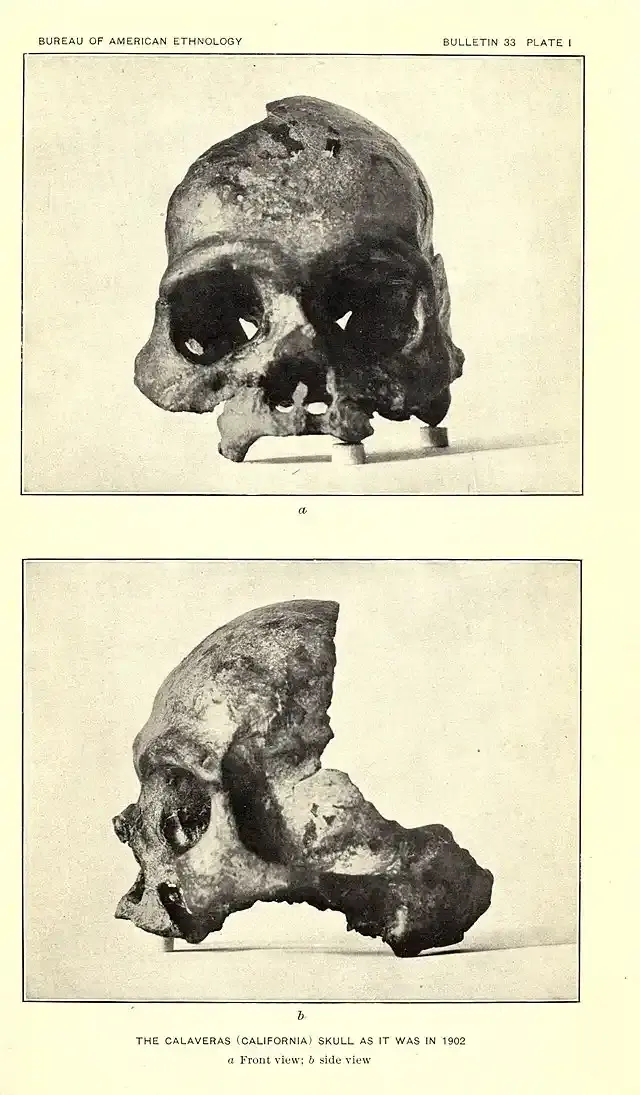
In 1976, a team of Kenyan scientists led by renowned scientist Richard Leckie discovered the remains of a fossilized human skeleton in Ethiopia believed to be the oldest full-skull human skeleton in the world, dating back more than 230,000 years and naming it "Omo Kibish 1".
7- Remains of the skeleton of the "Lucy" human (Ethiopia)
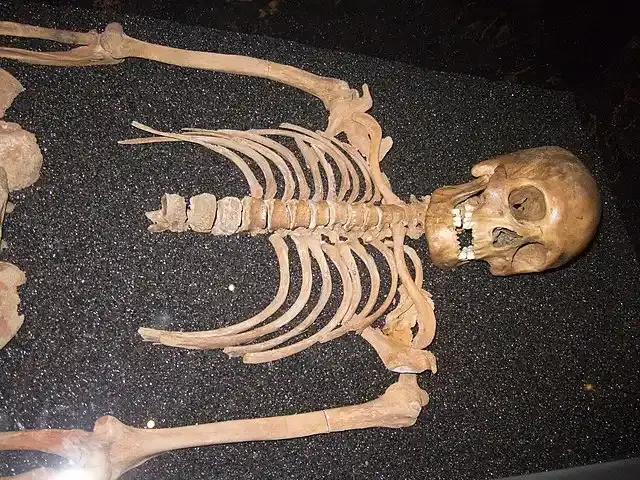
"Lucy" is the name given to hundreds of pieces and remains of the female skeleton that were found in a narrow valley of the valleys of the Afar region of Ethiopia by scientists Donald Johnson, Maurice Taieb and Tom Jarry. Scientists estimated the age of these remains at more than 3.2 million years, and the exploration team collected more than 40% of the total bones that make up this structure, and the reason for the name is that there was a song by the "Beatles" called "Lucy in the sky with diamonds" that the exploration team constantly hears in their camp before they discovered these remains, so they named it "Lucy" after the song and that it will make them one of the most famous explorers in the world.
Although we agree or disagree about what these discoveries are and how accurate the numbers and dates mentioned in them are, there is no doubt that our knowledge of them enhances our ability to critique and analyze logically.
