


Maximum imitation: 5 stones that anyone can think of as a diamond



Whether you're looking for an alternative piece of jewelry for diamonds, or you're more interested in gemological geology and gems, you've probably found yourself wondering about diamond-like stones. As can be seen, many stones fall into this category. Find out in the following list what makes a diamond a diamond. Then learn more about these five diamond-like stones.
Show key points
- Diamonds are a solid form of carbon known for their unmatched hardness and thermal conductivity, receiving a perfect 10 on the Mohs hardness scale.
- Because natural diamond mining is expensive and risky, lab-grown diamonds created under controlled conditions offer a more accessible and ethical alternative.
- Moissanite is a diamond-like gemstone composed of silicon carbide, featuring a rainbow-like light reflection and a Mohs hardness of
- ADVERTISEMENT
- 2
- White sapphire, a type of pure aluminum oxide, is colorless, natural, and hard, although it reflects less light than diamonds.
- Cubic zirconia, an affordable synthetic alternative to diamonds, has a Mohs hardness between
- 0 and
- 5 and is made from zirconium dioxide.
- White zircon is a natural gemstone often heated to resemble diamonds, but it has a relatively low hardness of 7 to
- 5 on the Mohs scale.
- White topaz is a naturally occurring colorless gem with a hardness of 8, although it is sensitive to detergents and can lose its clarity over time.
What is a diamond?
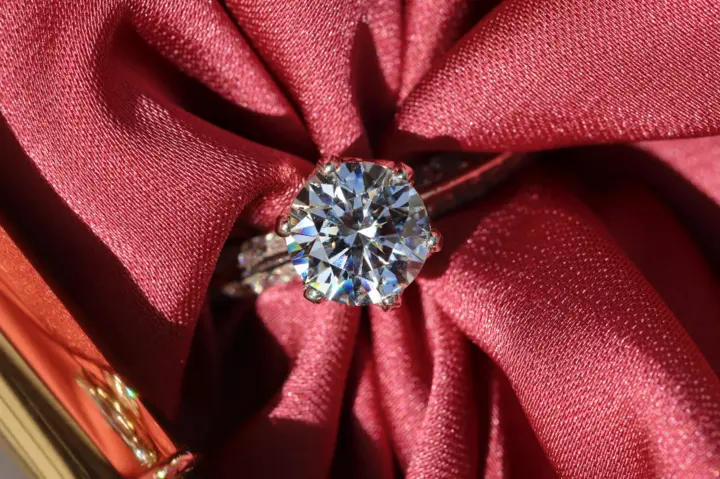
Although you may be familiar with diamonds when it comes to jewelry and accessories, you may not know much about this precious stone in a more natural context.
A diamond is a solid form of carbon, which is one of the elements found on the periodic table. Other forms of carbon, such as graphite, are formed under different conditions than diamonds. Of all natural materials, diamonds have the highest hardness and highest thermal conductivity. For this reason, it is not only used in jewelry, but also made of exceptional tools used in cutting and polishing. On the Mohs hardness scale, diamonds receive the highest rating of 10.
Recommend
Diamonds are usually extracted from the ground. However, given that this is a dangerous and costly business, alternatives have been found. This includes lab-grown diamonds, where these diamonds are manufactured in a similar way to natural diamonds, except that the process takes place in a controlled environment. Scientists take pure carbon and expose it to extreme pressure and heat, crystallizing it into granulated diamonds.
Natural diamonds can have a variety of different colors depending on how they are formed. However, colorless diamonds remain the most famous.
Although diamonds are rare and have a unique chemical composition, many stones look like diamonds. Explore below five of these stones and learn more about their appearance, how they form, and how their hardness compares to that of diamonds.
Stones that resemble diamonds: Mousanit:
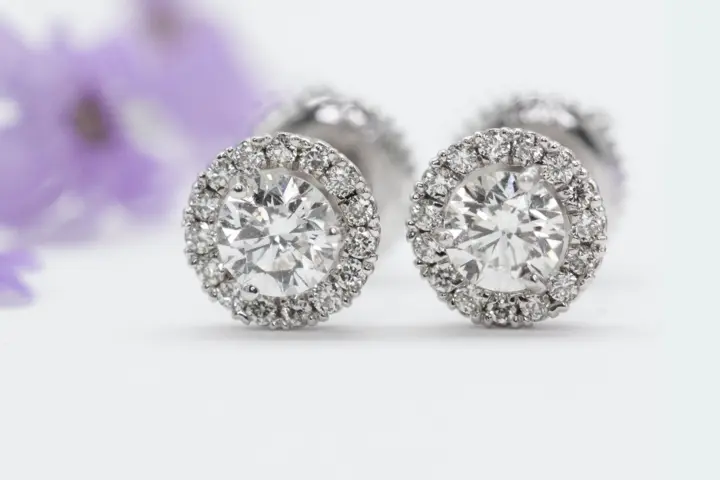
When considering jewelry, there are two stones that are most similar to diamonds in appearance. From a scientific point of view, only one of them is made in a similar way to diamonds, while the other, although manufactured in a different way, is also a natural gemstone. These diamond-like are Musanite and White Sapphire.
Like diamonds, Mousanite is a natural material. This stone is formed when both carbon and silicon are subjected to high pressure and heat. Although it doesn't have a spectrum of colors like diamonds, it has a similar colorless appearance, as well as rare shades of yellow and green. Musanite has a hardness of 9.25 on the Mohs scale. Because large mowasanites are extremely rare in nature, most of the mowasanite used in jewelry is grown in laboratories.
Although colorless moisanite and colorless diamonds are very similar, they also have some differences. And one of the biggest differences appears in the reflection when used in jewelry. Due to the way gemstones are cut to make rings and other forms of jewelry, they reflect light. And this is what gives it its shiny and charming appearance. Colorless diamonds give a white reflection. But the moissanite gives a reflection resembling a rainbow.
Stones that resemble diamonds: White sapphire:
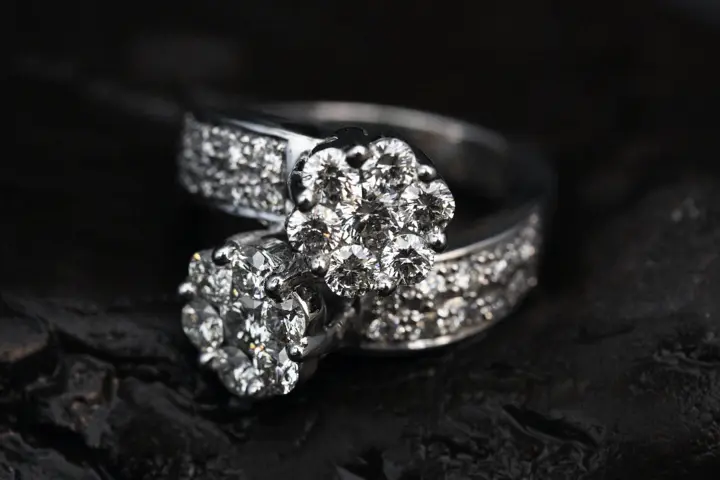
When you think of exhaling, you probably think of those gorgeous blue stones. But sapphire, as it turns out, is a kind of high-quality aluminum oxide. The red-colored aluminum oxide is called ruby, and all non-red aluminum oxides are called sapphire. Therefore, white sapphire, although it does not have the blue color familiar to sapphire, is considered sapphire, because it is not red.
Sapphire, like diamonds, is one of the very few true gemstones. White sapphires in particular are generally known for their pure nature. Thanks to its colorless appearance, you can conclude that nothing was inserted, such as glass, to change its appearance.
Compared to diamonds, white sapphires have a less pronounced luster. This is known as the presumption of refraction in jewelry. As a result, diamonds retain their shine in gloomy climates, but white sapphires need to be cleaned more for a beautiful shine. On the other hand, in terms of Mohs hardness, diamonds and sapphires have roughly equal hardness. The hardness of white sapphire is often between 9 and 10.
Stones that resemble diamonds: cubic zirconia:
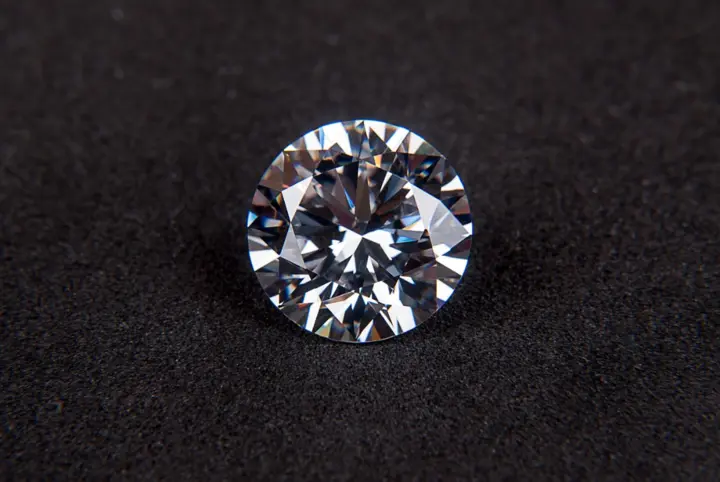
It is important not to confuse cubic zirconia with white zirconia. Both are stones similar to diamonds, but they are very different. Cubic zirconia is the crystalline form of zirconium dioxide (ZrO2). While sapphires and diamonds are classified as precious stones, cubic zirconia is a metal oxide.
Like Mouassanites, much of the cubic zirconia used in jewelry is industrial. Its production began in 1976. Since then, it has been considered an essential alternative to diamonds in jewellery and a budget companion. However, although the appearance of cubic zirconia is colorless, close to that of diamonds, it has the lowest Mohs score so far on this list. The hardness of cubic zirconia ranges from 8.0 to 8.5. Although this is lower than diamonds, moisanites or white sapphires, such hardness is still good for everyday wear in jewellery.
In its natural form, zirconia is a powder used for a wide range of purposes, including ceramics. In order to form cubic zirconia crystals, zirconium oxide is mixed with other substances. Such as magnesium and calcium. Then heat this mixture. Once removed from heat, crystals are formed, which later become cubic zirconia.
Stones that resemble diamonds: White Zircon:
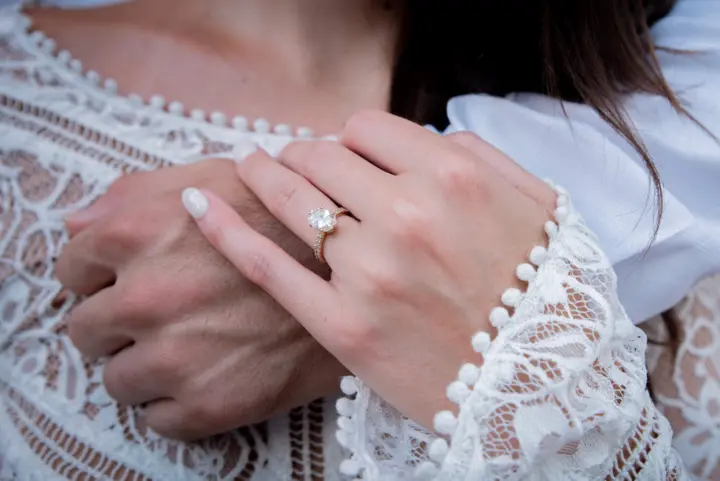
As seen above, cubic zirconia is a man-made synthetic material. Because they need magnesium and calcium to be made at high temperatures to stabilize, they are not found in nature. This is not true for white zircon, which is why it is important not to confuse the two.
White zircon is extracted from the ground, like diamonds and white sapphires. Areas where this diamond-like stone abounds include East Africa and Cambodia. White zircon in its natural form may not be colorless or completely white. But when heated, the stone acquires its diamond-like appearance. Like cubic zirconia, white zircon has been used for several decades as a substitute for budget-friendly diamonds.
Despite being a natural material and not synthetic, white zircon actually has less hardness than cubic zirconia on the Mohs scale. This makes it one of the weakest diamond-like stones on this list. However, although not as strong as diamonds or mosanites, white zircon has a hardness on the Mohs scale of about 7 to 7.5. For reference, a steel screw has a hardness on the Mohs scale of about 6.5.
Stones that resemble diamonds: White topaz:
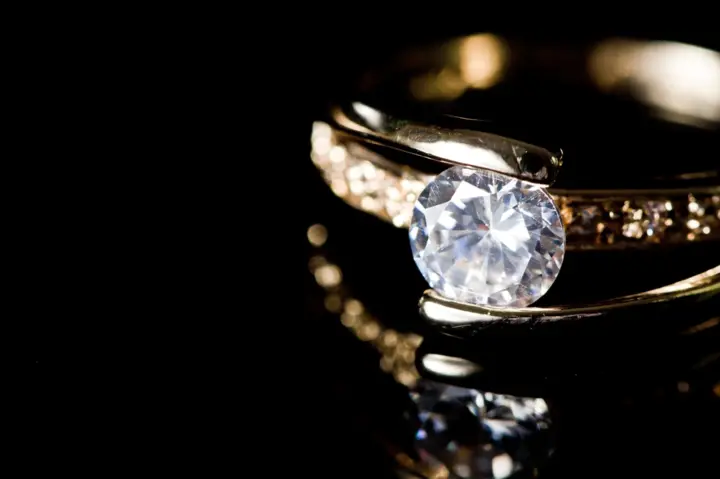
White topaz is also known as transparent or silver topaz. Although it's 8 on the Mohs hardness scale, it can be difficult to clean. The reason is that it is easy to change color, especially when using detergents. However, in terms of daily durability against scratches and breaks, white topaz is equivalent to cubic zirconia.
This stone is found naturally in different regions of the world. Some regions include the United States, Brazil, Russia, Mexico and China. It is commonly found in fractures of volcanic rock cavities. Topaz grows during the later stages when magma cools, because there is enough fluorine to help stabilize chemicals and form white topaz crystals. Because topaz requires cooling of volcanic magma and volatile elements such as fluorine, it is one of the last crystals to form at the magma site.
White topaz is a colorless type of topaz. It is the most common of topaz.
Whether you're looking for an alternative piece of jewelry for diamonds, or you're more interested in gemological geology and gems, you've probably found yourself wondering about diamond-like stones. As can be seen, many stones fall into this category. Find out in the following list what makes a diamond a diamond. Then learn more about these five diamond-like stones.
