


What is the point of giving gifts? Anthropologist explains this ancient part of being human




Have you planned to give your Eid gift? If you're like me, you're probably waiting until the last minute. But whether all your gifts are already wrapped and ready, or you won't be going to stores before Christmas Eve, giving gifts is a strange but essential part of being human.
Show key points
- Gift-giving is a universal human behavior found across all cultures and possibly rooted in our ancient history.
- The act of giving gifts serves multiple roles, including expressing love, moral values, and contributing to personal joy.
- French anthropologist Marcel Mauss emphasized that gifts involve a cycle of giving, receiving, and reciprocity that strengthens social bonds.
- ADVERTISEMENT
- Unlike commercial transactions, gifting fosters ongoing relationships and mutual obligations between people.
- Extravagant gifting ceremonies, like the potlatch among Indigenous peoples of North America, illustrate how gifts can be public expressions of generosity and honor.
- Modern consumerism surrounding holidays may distort the original meaning of gift-giving, sometimes leading to waste and excess.
- More thoughtful, personal, or experience-based gifts reflect deeper values and are less likely to be discarded, aligning better with the original intent of gifting.
While researching my new book, Too Many Things, about how humanity has become dependent on tools and technology over the past three million years, I was fascinated by the purpose of giving up things. Why do people simply hand over something precious or valuable when they can use it themselves?
For me as an anthropologist, this is a very important question because gift-giving probably has ancient roots. Gifts can be found in every known culture around the world.
Recommend
So, what explains the power of the gift?
Gifts serve a lot of purposes.

Undoubtedly, gifts serve a lot of purposes. Some psychologists have noted the so-called "warm glow" — an inner joy — associated with gift-giving. Theologians noted how gift-giving is a way of expressing moral values, such as love, kindness and gratitude, in Catholicism, Buddhism and Islam. Philosophers, from Seneca to Friedrich Nietzsche, considered gift-giving to be the best evidence of selflessness. It's no surprise, then, that gifts are an essential part of the hanukkah, Christmas, Kwanza, and other winter feasts – and that some people may be tempted to consider "Black Friday" – the opening of the year-end shopping season – a holiday in itself.
But of all the explanations for why people give gifts, the most convincing explanation, in my opinion, was given in 1925 by a French anthropologist named Marcel Moss.
Giving, receiving and reciprocity

Like many anthropologists, Moss was puzzled about societies where gifts are extravagantly given.
For example, along the northwest coast of Canada and the United States, indigenous peoples hold festive festivals called botlash. On these days-long holidays, the hosts give up huge amounts of possessions. Take, for example, a famous ceremony in 1921 by a clan leader from Canada's Kwakwakawaku, in which community members were given 400 bags of flour, piles of blankets, sewing machines, furniture, canoes, fuel-powered boats, and even pool tables.
In his now-famous essay "The Gift," originally published almost a century ago, Moss argues that botlash is an extreme form of gifting. However, he points out that this behavior exists in almost every human society: we give up things even when keeping them to ourselves seems to make more economic and evolutionary sense.
Moss noted that gifts create three separate but inextricably related verbs. They are: giving, receiving and reciprocity.
The first act of giving proves the virtues of the gift Mahdi. It expresses his generosity, kindness and honor to the other.
In turn, receiving the gift shows a person's desire to be honored. This is the recipient's way of showing his generosity, by being willing to accept what has been offered to him.
The third element of gift-giving is reciprocity, i.e. responding to what was first given in kind. In fact, the person who received the gift – implicitly or explicitly – is now expected to respond to the gift by presenting a gift to the original giver.
But then of course, once the first person gets something, they must give another gift to the person who received the original gift. In this way, gifting becomes an endless cycle of giving and receiving, giving and receiving.
This last step – reciprocity – is what makes gifts unique. Unlike buying something from a store, where the exchange ends when money is traded for goods, giving gifts builds and maintains relationships. This relationship between the giver and the recipient of the gift is related to morality. Gifting is considered an expression of justice because in general each gift has a value equal to or greater than the value of what was last given. Gifting is an expression of respect because it shows the desire to honor the other person.
Giving gifts, as such, connects people together. It keeps them connected in an endless cycle of mutual commitments.
Make better gifts
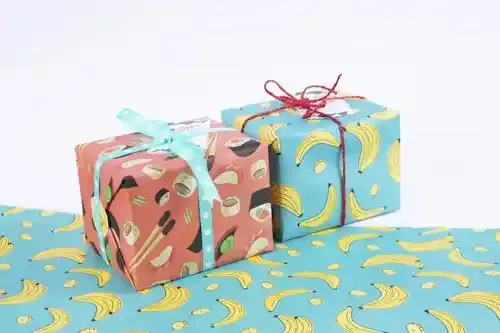
Are modern-day consumers inadvertently embodying Mohs's theory? After all, many people today suffer not from a lack of gifts, but from their excess.
Gallup notes that the average American shopper estimates that they will spend $975 on gifts in the festive period of 2023, the highest amount since this survey began in 1999.
And many gifts simply throws. In the 2019 holiday season, it is estimated that more than $15 billion worth of gifts purchased by Americans was undesirable, and 4% of it went directly to landfill. This year, holiday spending is expected to rise in the UK, Canada, Japan and elsewhere.
Modern-day gift-giving practices can be both a source of admiration and anger. On the one hand, by giving gifts, you engage in an ancient behavior that makes us human by nurturing and maintaining our relationships. On the other hand, it is as if some societies have become

They use the festive season as an excuse to consume more and more.
Moss's ideas do not encourage unbridled consumerism. On the contrary, his interpretations of gifts suggest that the more personal and meaningful the gift, the greater the respect and honor. A carefully considered gift is unlikely to end up in a landfill. Old, recycled, handmade goods, or a personal experience like a food tour or hot air balloon ride, may be more valuable than an expensive commodity produced in bulk on the other side of the world, packaged in plastic, and shipped across oceans.
High-quality gifts can express your values and maintain your relationships more meaningfully.
