The Cave of Ma'rib in Yemen: Dwelling of Jinn or a Stargate?

Deep in the Ma'rib desert, where sand intersects with rocky mountains, lurks a mysterious cave that has fascinated locals and researchers for decades. Known simply as "Ma'rib Cave," it holds stories and legends of supernatural creatures, unfamiliar events, and even theories linking it to the universe and its hidden dimensions. Is it merely a natural geological formation? Or is there something more to it? In this article, we examine this cave from multiple perspectives: geographical, historical, popular, and mythological.
Show key points
- Ma'rib Cave, located in eastern Yemen’s historical Ma'rib Governorate, is shrouded in legends, mysterious phenomena, and remains largely unexplored scientifically.
- Though its official name derives from the region, locals have dubbed it "Cave of the Jinn" or "Gate of the Unseen" based on its eerie reputation and folklore.
- The cave likely became known through Bedouin oral tradition, as no academic or archaeological discovery has yet formally documented it.
-
- Folk tales claim the cave is inhabited by jinn, swallows intruders, and emits strange sounds, contributing to its fearful mystique.
- Alternative theories suggest Ma'rib Cave may be a cosmic stargate, citing Ley Line intersections, unexplained ventilation, and rock symbols similar to ancient civilizations.
- Scientific investigations so far have found natural geological formations and no evidence of supernatural activity, pointing toward rational explanations.
- Visitors report strange physical sensations and technological malfunctions, which researchers attribute to magnetic anomalies or psychological responses to isolation and darkness.
Origin of the Name
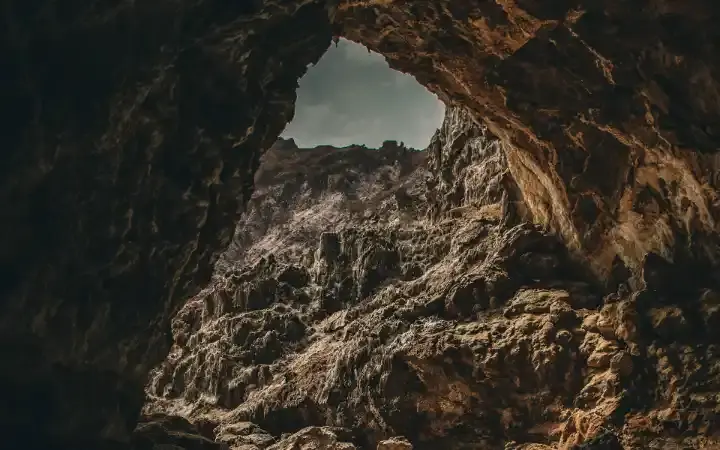
The name of Ma'rib Cave is directly linked to the name of the historical Yemeni governorate of Ma'rib, which was the capital of the famous Sabaean Kingdom. The cave has no independent name in popular lore or official records. Rather, it was given this name due to its geographical location, distinguishing it from other caves scattered throughout Yemen. In the absence of accurate archaeological documentation, the name "Ma'rib Cave" has remained popularly used to refer to this mysterious site.
Recommend
Some local residents have given it popular names such as "Cave of the Jinn" or "Gate of the Unseen," reflecting the mystery and myths surrounding it. However, the official or academic name has not yet been established due to the lack of field studies on the cave, which only adds to its mystique.
Who was the first to discover the cave?
It is not known precisely who was the first to discover Ma'rib Cave, as the cave has long remained part of local lore confined to the narratives of Bedouins and residents of the surrounding areas. It can be said that shepherds and nomadic Bedouins were the first to discover the cave and examine its entrance, and this knowledge was passed down through generations orally through stories and legends.
From a scientific or official perspective, there is still no documented archaeological or geological expedition announcing the "discovery" of the cave in the academic sense. However, some Yemeni adventurers have documented their visits to it in recent years and published their observations online, helping to draw attention to its existence.
The First Mention of Ma'rib Cave in Arab Heritage
To date, there is no explicit or documented mention of Ma'rib Cave in ancient Arab heritage sources, such as geography books or early literary works, such as Yaqut al-Hamawi's Mu'jam al-Buldan or al-Idrisi's Surat al-Ard, which typically document natural phenomena and geographical features.
However, legends related to jinn and caves in Ma'rib appear widely in unwritten folklore. It is believed that Ma'rib Cave may have been implicitly mentioned in the region's tales of jinn dwellings or "spirit caves," but the current name has not been directly linked to ancient narratives. Some hypotheses suggest the cave may have been linked to secret religious rituals of the Sabaean Kingdom, particularly given the presence of inscriptions and artifacts near its location. However, these hypotheses still require careful archaeological studies to prove their validity.
Geographical Location of Ma'rib Cave
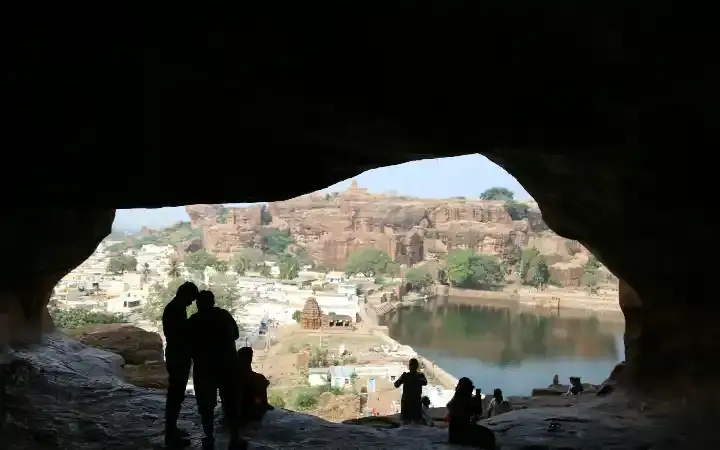
Ma'rib Cave is located in Ma'rib Governorate, eastern Yemen, a region rich in cultural and historical heritage and formerly the capital of the great Sabaean Kingdom. The cave extends amidst rare rock formations, and access requires long walks or four-wheel drive vehicles over rough roads.
The cave is characterized by its relatively narrow entrance, which gradually widens to reveal dark, labyrinthine interiors, extending hundreds of meters. Explorers have observed a strange natural ventilation inside, with cool air flowing incongruously with the surrounding desert heat, lending it an additional aura of mystery.
Folk Myths: Ma'rib Cave and the Dwelling of the Jinn
The cave has long been associated in Yemeni folklore with legends of the jinn. Many residents believe that the cave is not merely a natural cave, but rather the home of tribes of jinn who have inhabited the interior of the earth since pre-human times. Stories are told of people who entered the cave and never returned, or of strange sounds heard from within in the middle of the night. Some of the most common myths are:
- The cave is said to swallow anyone who dares to defy its "hidden guardians."
- Tales are told of shepherds losing their sheep near its entrance, only for them to be found later dead for no apparent reason.
- Some elders believe the cave is linked to the legendary "Wadi Abqar," the home of the jinn poets and Arab muses.
These stories are sometimes used to scare children or deter people from approaching the site, but they have also formed an integral part of Yemen's rich cultural heritage of superstitions and popular beliefs.
Strange Theories: The Stargate
Apart from the jinn, more exciting contemporary theories have emerged in recent years, suggesting that the Ma'rib Cave may be a stargate—a gateway to cosmic dimensions or parallel worlds, or even a passageway used by advanced extraterrestrial civilizations.
These theories are based on:
- Astronomical Cave Location: Some researchers in "energy geography" believe the cave lies at the intersection of Earth's energy lines (Ley Lines).
- The rock carvings within resemble symbols found in Mesopotamian and Egyptian civilizations.
- The complete absence of animals within, despite its vastness, may indicate a repulsive electromagnetic energy field.
Although these explanations lack direct scientific evidence, they are widely popular among those interested in paranormal phenomena and alien theories.
Scientific Research and Field Explorations
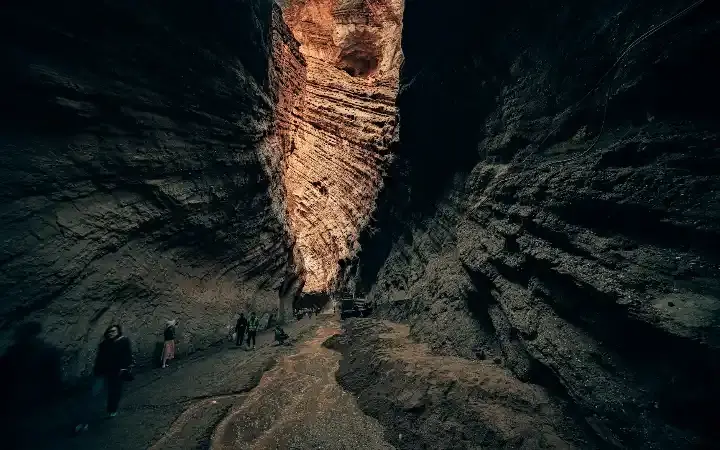
Ma'rib Cave has not been adequately studied by geologists or anthropologists, due to its difficulty in access and the deteriorating security situation during certain periods in Yemen. However, some local expeditions have undertaken preliminary exploration attempts, concluding as follows:
- The cave is composed of sedimentary and carbonate rocks, similar to those found in ancient caves around the world.
- It contains stalactites and stalagmites formed by seeping water, indicating its geological antiquity.
- No physical evidence of non-human beings or supernatural activities has been found.
These results indicate that the cave is naturally formed, but its origins have not yet been fully deciphered.
The Role of Ma'rib Cave in Ancient Sabaean Heritage
Some historical studies suggest that Ma'rib Cave played a ritual or religious role in the Sabaean civilization. In ancient cultures, caves were considered symbols of the lower worlds or places for contemplation and communication with spiritual forces.
The cave may have been used as a place of secret worship or spiritual seclusion by Sabaean priests or kings, especially if it was located near the ancient trade caravan routes that connected Yemen to the Arabian Peninsula and the Levant.
Pottery shards and stones inscribed with the Musnad script have also been found around the cave, supporting this theory, although this evidence still needs comprehensive archaeological documentation.
Visitor Experiences and Contemporary Stories
Despite the paucity of scientific studies, the cave has attracted some adventurers and exploration enthusiasts, who have shared their experiences on social media. Some of the most famous stories include:
- A feeling of heaviness in the head and shortness of breath upon entering.
- Sudden fluctuations in body temperature.
- Some electronic devices, such as phones and cameras, malfunction near the entrance.
- A feeling of being surveilled even though no one is inside the cave.
Some believe these phenomena are related to magnetic changes within the cave or psychological effects resulting from the darkness and absolute silence, while others see them as signs of supernatural energy or the presence of a "hidden cosmic portal."
Scientific Analysis vs. Myth
When viewed rationally, the myths and strange phenomena associated with Ma'rib Cave can be analyzed as follows:
However, on the other hand, myths remain an important element in understanding the relationship between humans and place, especially in an environment rich in history and beliefs like Yemen.
A closer look at the strange phenomena people report about Ma'rib Cave reveals plausible scientific explanations that may account for many of these mysterious sightings. For example, the strange sounds some claim to hear from within the cave may simply be the result of sound bouncing within the rocky spaces. The echoes reverberate in caves, creating the illusion of whispers or non-human voices.
As for the malfunction of electronic devices such as cameras and phones, this may be due to the presence of a natural magnetic field within the cave, resulting from the composition of the rocks or minerals found deep within the earth, which disrupts the operation of some sensitive devices.
As for stories about people disappearing inside the cave, they are often exaggerations resulting from popular exaggeration, or perhaps simply fictional tales used to fuel the mythical character of the place. As for the feelings of fear or anxiety that many experience when entering a cave, there is a clear psychological explanation. Being in a dark, enclosed, and unnaturally quiet place can generate a sense of dread and possibly sensory hallucinations. Thus, we see that most phenomena described as paranormal or mysterious can be explained from a scientific and logical perspective, without diminishing the importance of popular myths that add a distinctive cultural and symbolic depth to the place.
Conclusion: Ma'rib Cave: Between Fact and Fiction
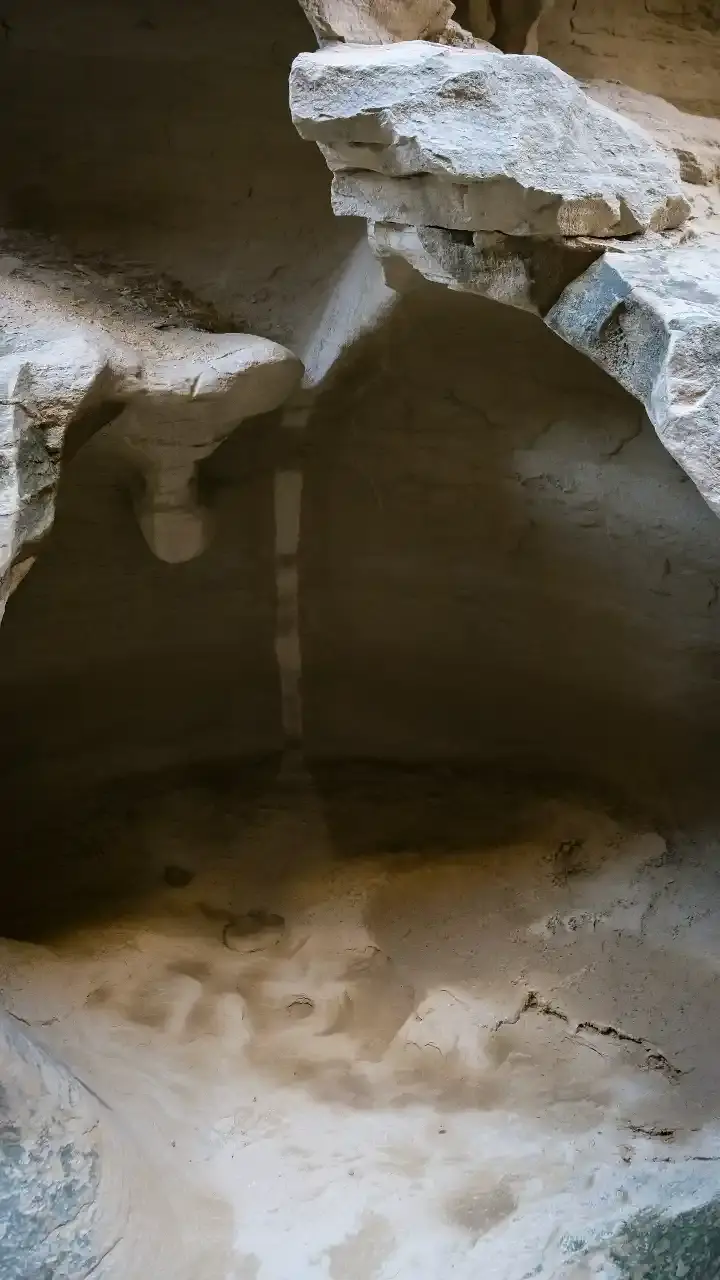
Ma'rib Cave remains an open mystery, where myth intersects with reality, and science with the unseen. It may be a rare natural cave, or a site with ancient cultural significance, and perhaps it still conceals undiscovered secrets.
Whether we consider it a dwelling place for jinn, a stargate, or a unique geological masterpiece, it certainly represents a huge scientific and tourism opportunity if it is invested in and explored in a safe, scientific manner.
Will the future reveal the truth about Ma'rib Cave? Or will it remain, as it has been throughout the ages, an ajar door between our world and other worlds?