Giving a Child a Toy Car: A Decision You Might Regret Later
ADVERTISEMENT
The story begins in the long checkout line at the supermarket. Groceries pile up, your energy is at its lowest, and your restless little one beside you has reached their limit. Whining rises from a low hum to a scream that signals an impending tantrum. Your eyes search for an
ADVERTISEMENT
escape and land on a shiny little solution: a toy car that costs a dollar.
It’s small, quiet, and harmless. You pay for it, hoping to buy ten minutes of peace. A small price for calm. This is the “easy way out.” You hand your child the car and the whining stops. Their fingers close around the miniature car, and their world narrows to this new shiny acquisition. You have achieved silence. You have won.
But you know this victory is a mirage. You haven’t solved the problem; you’ve merely introduced a small, four-wheeled Trojan horse.
ADVERTISEMENT
The Meltdown - The Law of Unintended Consequences of Toys:
Regret doesn’t always start immediately. For a few blissful minutes there are only the quiet “vroom vroom” sounds and the intense focus of an enthralled child. It feels like a promise kept. But the meltdown is as predictable as it is relentless.
First comes the demand for a road. The car isn’t meant to stay put; it’s built for speed. It must race. Instantly it’s on the floor, zooming across the kitchen table, running up the leg of your jeans. The silent object becomes a noisy moving machine, leaving skid marks on every surface of your home and in your mind.
Then comes the inevitable loss. The car, no larger than a credit card, has a unique talent for disappearing into the hardest-to-reach places in your home. It slips under the couch, hides behind the bookshelf, or vanishes into the same void that swallows single socks. Its absence isn’t met with quiet acceptance. Instead it’s greeted with painful, heart-wrenching whining. The peace you bought with a handful of coins shatters instantly, replaced by a desperate, frantic, and fruitless search on your hands and knees. That one car has now cost you far more time and emotional energy than it was worth.
ADVERTISEMENT
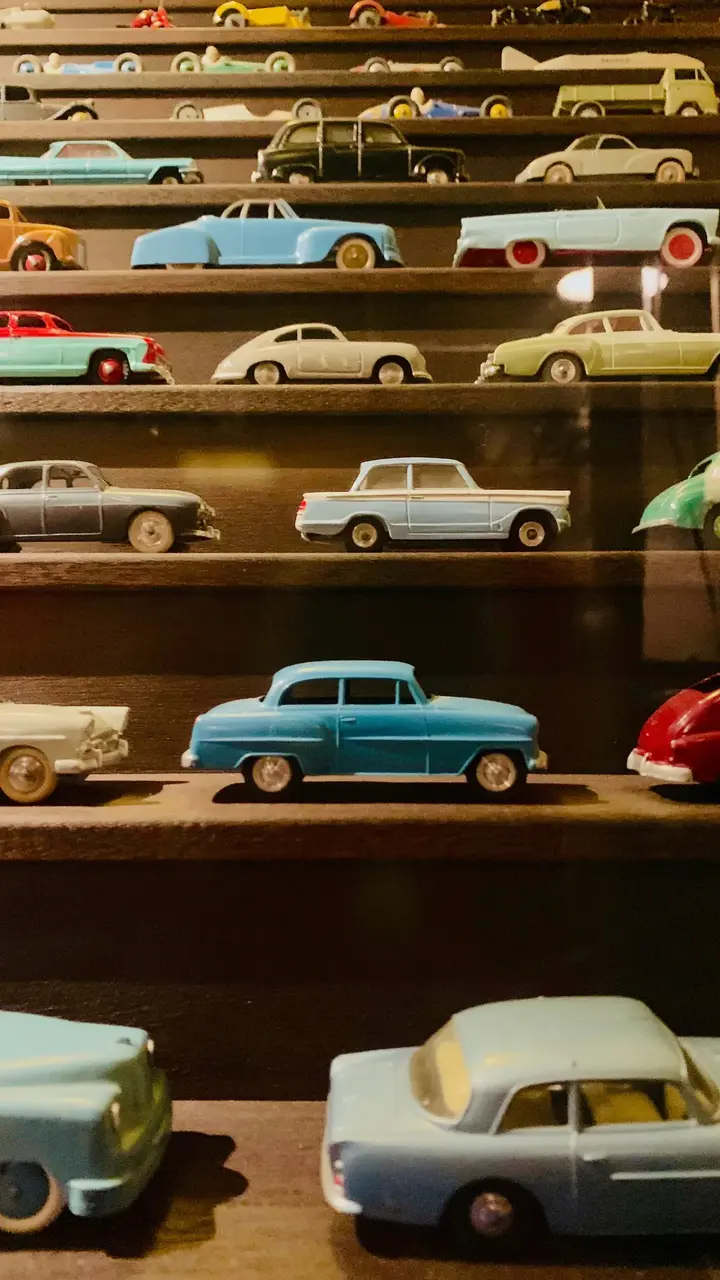
Photo by Angga Prasetya on Unsplash
Soon the car turns into a whole fleet
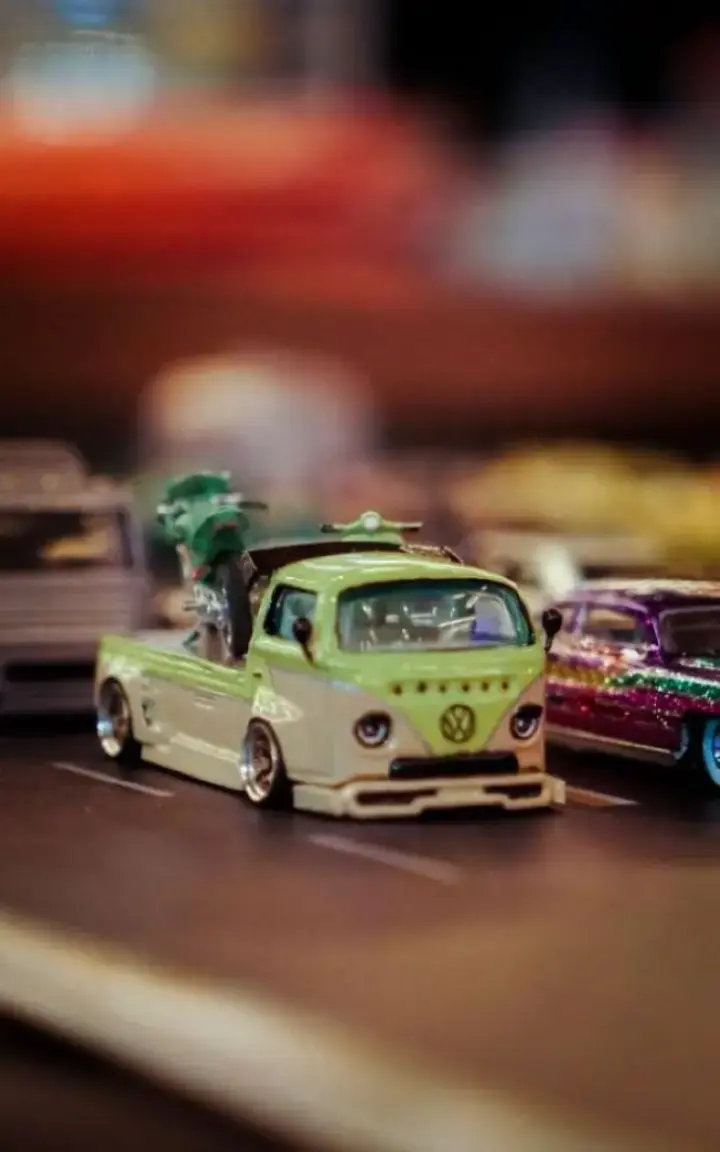
And this is just the beginning of the domino effect. One car is a novelty. Two cars are a race. Five cars are the start of a collection. Soon, every birthday, every holiday, every well-meaning relative adds five more cars to the fleet. You’re no longer the parent who bought a toy; you’re the curator of a sprawling, chaotic city of miniature cars. You’ll find them in the tool drawer, at the bottom of the laundry basket, hiding in jacket pockets, ready to tumble out at the most inconvenient times.
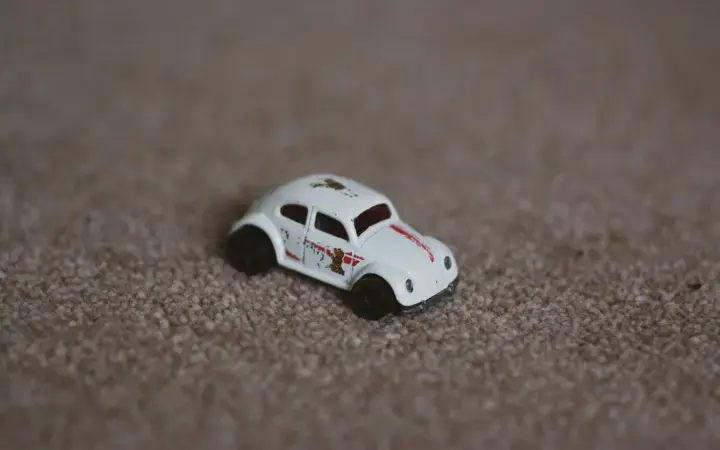
Then there’s the pain. The searing physical pain of discovering one of these fleet members with your bare foot in the middle of the night is a near-universal rite of passage for parents. The thing that once promised peace has turned into a thorn, a hidden landmine in the carpet. In that moment of hopping and cursing, the irony is as sharp as the plastic digging into your arch: this was the “easy way.”
ADVERTISEMENT
Photo by Jaye Haych on Unsplash
Soon family members start stepping on this fleet mistakenly
The Deeper Dilemma – Shortcut or Skill?
So what is the real cost of that dollar‑equivalent car? The dilemma isn’t only the mess or the stubbed toes; it’s the lesson learned by both parent and child. The “easy way” of giving in teaches a potent, if unintended, lesson: that discomfort, impatience, or whining is currency you can exchange for material rewards. It reinforces the idea that happiness is something external to be acquired to soothe internal discomfort.
The “harder way” — saying “not today,” playing a distraction game, or acknowledging a child’s frustration while holding boundaries — teaches a very different set of skills. It builds patience and resilience, showing both you and your child that you can endure a moment of discomfort without a quick fix. It’s a muscle, and like any muscle it needs consistent, challenging work. Every time we choose conversation or a simple distraction instead of something tangible, we lay a foundation for connection. We’re saying: “The boredom you feel now isn’t an emergency that must be solved with a product, but a feeling we can manage together.”
ADVERTISEMENT
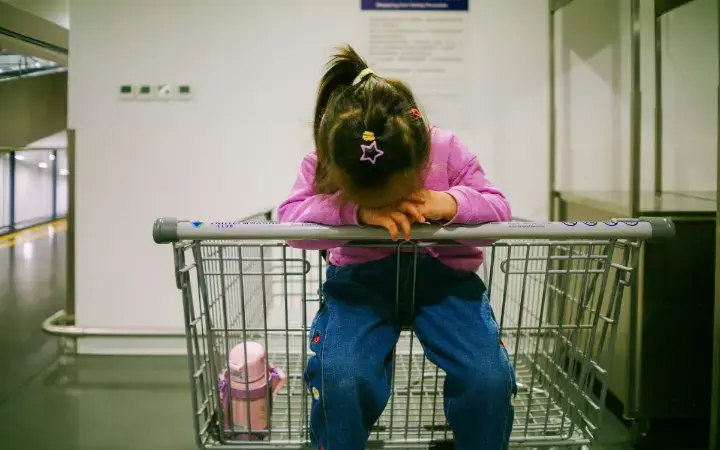
Photo by Benny Sun on Unsplash
Do you give them a toy or engage in conversation?
Moreover, constant “easy approval” contributes to a deeper chaos — the mental and physical clutter that plagues modern parents. Our homes become saturated with stuff, and our lives consumed in its management. Saying “no” doesn’t mean deprivation; it creates space. Space on the floors, space in our minds, space for more meaningful forms of play that require imagination rather than acquisition.
Conclusion:
This isn’t an article against toy cars. The joy of building an intricate track, the thrill of a perfect spin, and the physics lessons hidden in making a car jump on a ramp are real and valuable. The issue isn’t the toy itself — it could be any toy — but our reflexive use of it as a calming tool for kids.
ADVERTISEMENT
The goal, then, isn’t perfection but awareness. Some days you’ll be at the end of your rope and buy the car. Be gentle with yourself; parenting is, above all, practice and patience. But the next time your hand hovers over that shiny little solution, pause and recognize the choice for what it is. You’re choosing between a short‑term fix and a long‑term lesson. You’re choosing between calming a moment and building a skill. The “easy way” that truly lasts isn’t the quick fix; it’s built slowly, brick by brick, through small, tough choices that teach a child how to manage boredom and life’s inevitable disappointments. This path is harder to build, certainly. But it leads, unlike the path littered with forgotten toy cars, to a better place.
Klaus-Dieter Engel
ADVERTISEMENT
The Design Trick Hiding in Old Railway Viaducts
ADVERTISEMENT
The Nine Arch Bridge near Ella and Demodara looks graceful not because someone set out to make a pretty monument, but because an old railway had to solve a hard problem well: carry a train out of a tunnel, around a bend, and across a ravine on stone arches that
ADVERTISEMENT
could take weight again and again.
Most visitors meet it first as a scenic stop in Sri Lanka’s hill country. That is fair enough. You do not need any engineering at all to enjoy it. But once you know what the bridge is doing, your eye starts noticing a different kind of beauty.
My nephew, who thinks I turn every outing into a lecture, would call that suspicious. I call it paying attention. Look at the curve and ask yourself something simple: does this feel beautiful because it is decorated, or because it looks stable enough to trust?
ADVERTISEMENT
Why the bridge feels better than a normal viewpoint
Here is the plain fact first. The Nine Arch Bridge is a colonial-era railway viaduct in Sri Lanka, commonly described as having nine arches, built in stone and brick rather than steel. It sits on the line through the tea country near Ella, and it has lasted long enough to become one of the island’s best-known railway sights.
Its appeal is not only that a train passes over it. Plenty of bridges carry trains. This one satisfies the eye because the track does not arrive with a jolt, then leave with a jolt. It follows a continuous curve, and the arches below repeat that calm logic instead of fighting it.
Photo by Yves Alarie on Unsplash
That is the trick hiding in old railway viaducts. The line has to guide heavy vehicles smoothly. The structure underneath has to send that weight down into the ground. When both jobs are solved cleanly, the result can look almost effortless.
ADVERTISEMENT
The engineering secret is not decoration
My nephew usually says, “It is just an old bridge.” Fair point. But railways are fussy things. Trains do not like sudden changes in direction or sharp rises and dips, so route builders work hard to create a manageable path. On a hillside, that often means cutting a tunnel, then carrying the track across open ground at nearly the same level.
Now add the weight. A train does not press on a bridge in one dramatic burst and then disappear from the engineer’s mind. Every axle loads the rails. The rails pass that force into the deck. The deck passes it into the arches. The arches push it outward and downward into the piers, and from there into the foundations.
ADVERTISEMENT
Stone is well suited to this kind of work because it is strong in compression, which means it handles being squeezed far better than being pulled apart. An arch takes advantage of that. Instead of trying to span space with a flat piece that wants to bend, it turns the load into compressive force moving through the curve of the masonry.
Short version: curve above, arches below, force moving down. That is why the bridge looks composed. The shape is not pretending.
Engineers have explained this for a long time in language less friendly than mine. The Institution of Civil Engineers, in its public material on masonry arches, makes the same basic point: these bridges endure because their shape keeps loads in compression when they are maintained properly. The handsome part and the hardworking part are the same part.
ADVERTISEMENT
The few seconds tourists see—and the decades they do not
Stand at the lookout and the whole event is over quickly. A train slips out of the tunnel, takes the bend, crosses the viaduct, and the crowd gets its moment.
Then cut the timescale open.
That brief crossing is riding on decades of stored labor: every monsoon, every damp season, every spell of heat, every inspection, every repair to mortar, drainage, track, or masonry. What looks light in one passing instant is actually a structure that has spent year after year taking repeated loads and sending them safely through the same old paths of force.
That is the midpoint most visitors miss. The graceful moment is not fragile. It is accumulated survival.
ADVERTISEMENT
Why the curve matters as much as the arches
My nephew once said the arches were doing all the famous work. Not quite. The alignment matters too. A railway curve is never just a flourish. It helps the line fit the ground without forcing an abrupt change that would make operation rougher and engineering harder.
On this bridge, the curve and the viaduct belong to the same idea. The track needs a steady path from tunnel to hillside. The arches need regular spacing and support points that can carry that path. Seen together, they make the crossing feel coherent, which is another word for believable.
If you want a small self-check, ignore the fame for a second and watch only the geometry. The scene works because your eye can follow one line of travel and one line of support without hitting a visual argument. You are seeing alignment above and compression below.
ADVERTISEMENT
Is this just clever talk over a pretty place?
It is worth asking. People do project meaning onto travel landmarks all the time. Sometimes a place is simply pleasant, and that is enough.
But this is not engineering poetry pasted onto a postcard. The satisfaction here matches real physical logic. Trains need a smooth route. Masonry arches handle compressive loads well. Repetition spreads forces through multiple supports. Long survival in wet tropical conditions depends not on romance, but on sound form and continued maintenance.
Heritage agencies in Sri Lanka present the bridge as both an attraction and a working piece of railway history, which is the right balance. You can admire it as a view. You can also respect it as infrastructure that earned its good looks by doing a difficult job for a very long time.
ADVERTISEMENT
What to notice the next time you are there
If you visit the Nine Arch Bridge, or even just watch a train cross in a video, do one small thing. Do not separate the curve from the arches. Watch them as one idea.
See how the line of the track asks for a steady crossing, then see how the masonry below answers that request. One carries movement. The other carries load. Together they make the bridge look easier than it is.
That, to my mind, is why this old viaduct stays with people. It looks effortless because so much effort has already been absorbed into its design. Next time you see it, watch the bend and the arches as a single thought, and you will feel less like a tourist at a viewpoint and more like someone who has been quietly let in on the secret.
Oskar Reinhardt
ADVERTISEMENT
7 Things About Your Children You Should Never Share on Social Media
ADVERTISEMENT
What’s the harm in sharing photos of your children smiling and finger painting on social media? Surprisingly, there is more risk than you might think. Here's what you should avoid posting to ensure your children's safety.
Your Location
It might be just a photo of your child
ADVERTISEMENT
saying "cheese" in front of your home, but sharing images of your property can make distinctive information public. Street signs, house numbers, and apartment addresses might seem like harmless background details, but once those pictures are uploaded and shared, they can circulate, making your child vulnerable to identity theft and digital kidnapping. Strangers could lift the photos and pretend the children in them are theirs, or there could even be a risk of actual abduction.
ADVERTISEMENT
Personal Identifiers
Photo from rd
Your child holds up a hand-painted birthday sign that says, "I’m 6 years old today" in brilliant colors. Not a big issue, right? Actually, sharing details like your child’s birth date, place of birth, or full name isn’t ideal, as these identifiers are used to access many personal accounts. You might think a well-taken passport photo simply captures your child's smile and wavy hair, or you may be so delighted when your new driver—your child—passes their road test that you snap a picture of their license to celebrate. Before you post any images on social media, step back and think about the information you're providing. To keep threatening individuals at bay, consider blocking related accounts on social media.
ADVERTISEMENT
Any State of Undress
Photo from rd
No doubt, children who splash around at bath time are adorable, but posting pictures of your children in any state of undress—even if they’re in cute little bikinis—isn’t wise. It’s saddening to imagine these photos falling into the wrong hands and being readily available to online predators. Stacey Steinberg, a legal skills professor at the University of Florida Levin College of Law in Gainesville, Florida, and assistant director of the Center on Children and Families, says, "Think of your children as independent individuals entitled to protection from not only physical harm but also intangible harm." Definitely refrain from posting pictures of other people’s children without their permission, as this is actually illegal in some countries.
ADVERTISEMENT
Moments of Vulnerability and Embarrassment
Photo from rd
Posting a picture of your sick child may get comments and sympathy on social media, but think about how it might affect your child. What you consider a cherished moment—and choose to share—might be embarrassing to them. Next time your child is bedridden with a runny nose, shows bravery during a shot at the doctor’s clinic, or sits clad in a hospital gown, ask yourself this question before taking pictures: "Would my child want to see this photo of themselves online in the future?" The same applies to milestones such as using the potty for the first time, starting their period, or having their first kiss. Keep moments that might make your child blush with embarrassment off the internet and in the family scrapbook.
ADVERTISEMENT
Role-Playing Behaviors
Photo from rd
What seems like a "cute" tantrum your child has—or the bumper your teenager tore off the car last night—might be funny at the moment, but documenting bad behavior can come back to haunt your child in the future. Steinberg says, "The first generation of social media children is now entering adulthood and the job market," adding, "While I respect a parent’s right to share, it’s important to consider the child’s autonomy and allow them to create their own digital footprint."
Behavioral Struggles
Photo from rd
Social media is not for shaming kids. Whether it’s bed-wetting issues or difficulties in learning to read, taking a picture and commenting in a way that highlights your child’s struggles can create a problem. Revealing children’s vulnerabilities can open the door to harassment and bullying, providing labels that can stick. Steinberg says, "It’s important to invite older children into conversations about what should or shouldn’t be shared," adding, "We should ask them if something is embarrassing."
ADVERTISEMENT
Poor Grades
Photo from rd
Shaming your child online by posting a report card showing an "F" is not smart. While it is understandable to reach out for help, social media is not the right venue for doing so. Not only will there be unsolicited advice—much of which might be unsound and better suited for a parent-teacher meeting—but these posted grades could end up harming your child. According to the online job site CareerBuilder, nearly one in five employers uses social network sites to research job candidates. Even more importantly, nearly 59% say they are influenced by a candidate’s online presence. Don’t let your child start their journey in the red.