Many cat owners wonder: do cats really need baths? Veterinarians advise against exposing cats to water or bathing them frequently; monthly baths are usually sufficient, because cats groom themselves with saliva that contains cleaning ingredients and a tongue with rough areas that help them clean themselves. But how can we
ADVERTISEMENT
ensure our cats remain healthy and clean all the time? Here are some effective tips for caring for them.
Brush cleaning and hair combing
Photo from Wikimedia
Care should be taken to clean the cat brush regularly to remove accumulated hair and skin flakes. It is also recommended to comb the cat's coat regularly to prevent the formation of tangles and mats; this reduces the likelihood of the cat ingesting hair while grooming, which can later cause vomiting and other health problems. In the end, remember that cleaning the cat's brush and combing its hair is not just a duty but a precious moment of bonding, care, and love: when the cat lies gently on your lap and begins to lick its soft fur, you feel calm and connected with it.
ADVERTISEMENT
Changing the litter box
Photo from Wikimedia
In this noisy and busy world, people find in pets a haven of tranquility and happiness, but alongside this comfort comes a great responsibility for cat owners, reflected in maintaining the cat's cleanliness and health. Changing the litter and cleaning the litter tray regularly is not just a duty but an urgent necessity for the cat's well-being. Failing to change the litter can lead to the accumulation of waste and urine, the spread of bacteria and unpleasant odors, and may adversely affect the cat's health by increasing the likelihood of skin diseases and irritation.
Provide clean food and fresh water
Photo from Pixabay
To maintain the health and cleanliness of that small creature that fills our lives with moments of joy and happiness, you must provide clean food and fresh water every day, and clean the food and water bowls regularly to prevent the spread of bacteria. Do not treat feeding as merely preparing food; view it as moments that reflect care and love for this innocent creature.
ADVERTISEMENT
Ear and eye cleaning
Photo from Pixabay
Gently cleaning the cat's ears shows care and attention: use a soft cotton pad moistened with a suitable solution to remove dirt and secretions that may build up in the ear. Cleaning the eyes with a clean cotton pad soaked in warm water helps remove discharge and impurities, keeping the eyes healthy and clean. These simple and important actions reflect the deep care and attention given to a living being that shares our lives and brings us joy. If a cat's ears and eyes are neglected, it can develop many health problems and irritations.
Regular visits to the veterinarian
Photo from Wikimedia
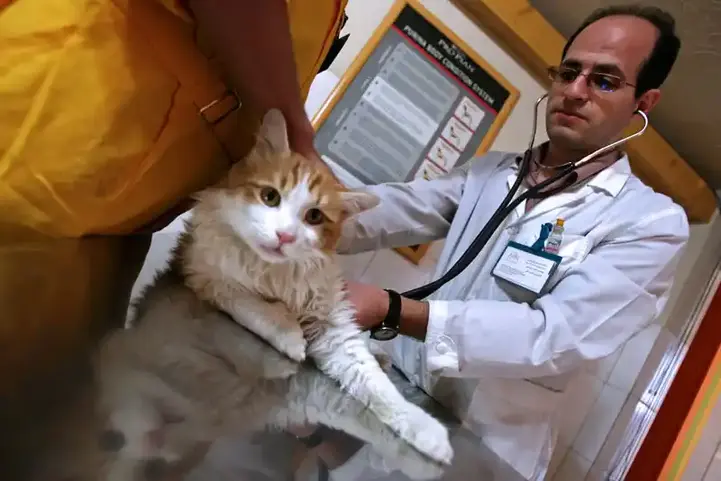
Cat owners should strive to maintain the health and hygiene of these animals that cannot express their pain or illness by scheduling regular visits to the veterinarian for routine examinations and preventive vaccinations. These visits are not just outings but moments of love and care that contribute to the happiness and health of these gentle, affectionate creatures.
ADVERTISEMENT
Cat oral hygiene care
Photo from Pixabay
In a small world full of innocence, the kitten begins its adventure of discovering life and the appearance of its first baby teeth. Amid these moments, the most important advice for caring for cats' health and hygiene is to maintain oral cleanliness: neglect may lead to tooth loss, gingivitis, and even bad breath. Using a toothbrush made for cats and veterinary toothpaste, you can accustom the cat to this important routine from an early age; with practice and patience, the cat will quickly adapt to the daily habit. Choosing dry food can also help prevent the buildup of dental tartar, as this type of food has a texture and certain properties that trap calcium in the saliva, which reduces tartar formation that may lead to health problems.
Nouran Elsadek
ADVERTISEMENT
Train Your Mind to Enhance Your Attention Span: Here's How
ADVERTISEMENT
From endless scrolling on social media to the lure of a sunny day, many distractions keep us from focusing on our work. Research shows human minds live in the moment for just over half of our waking hours; the rest of the time we are away from the present, thinking
ADVERTISEMENT
about other things. Unfortunately, mind wandering often happens at inopportune moments—during your boss's presentation when they ask you a question or in a lecture. The good news is there are habits you can adopt to increase your attention span and stay focused for more than half your day.
What Do We Mean by "Attention" and "Attention Span"?
Photo from Unsplash
We use the word "attention" as if it refers to a single psychological or brain function. In psychology, however, it is a broad term that covers various processes and mechanisms that determine which information from the outside world reaches us, gets processed, and influences our thoughts. It refers to the capacity to consciously select certain elements of the environment for processing. For example, as I sit here reading this article, I'm focused on the text in front of me and ignoring the second computer screen on my left, objects on my desk, my cellphone, the wall clock, and the children's noises. Our "attention span" is the length of time we can sustain that focus on a specific task before distractions or other thoughts make us less productive.
ADVERTISEMENT
What Factors Affect Our Attention Span?
Photo from Pexels
Increasing your ability to focus requires addressing both internal and external factors.
Internal factors affecting attention span: Your mind can lead you to shift from task to task. These include:
Lack of sleep: We are a chronically sleep-deprived society. Most people accumulate a sleep deficit during the week and try to make it up over the weekend. Try reading something challenging early in the afternoon—if you start dozing within five minutes, you desperately need more sleep. You might be tempted to remedy this with caffeine, but caffeine won't help your brain process or store information more effectively.
Frustration and boredom: After working on a task for a while, especially if it's progressing slowly, you may feel the urge to do something else. Boredom and frustration are the brain's way of signaling that you are spending energy on something that feels unproductive. Still, many tasks at work are genuinely hard or dull and require perseverance despite those feelings. Giving in can teach you to associate such negative feelings with stopping the task.
ADVERTISEMENT
External factors affecting attention span: The modern world is full of things vying for your attention. External factors include:
Busy office environments: Conversations happen around you, and there is random noise from people walking by.
Email and social media, among others: We've trained ourselves to check email, social media, and our phones multiple times an hour because we're rewarded with new information. Your brain learns these habitual actions and their frequency. As a result, if you check your phone or email several times an hour, your brain will cue you every 20 minutes or so to check again.
16 Tips to Increase Your Attention Span:
Photo from Unsplash
1. Create a strategic daily schedule: The more detailed it is, the better.
ADVERTISEMENT
2. Train yourself to check email and similar apps less frequently at first. Note how long you can usually focus on one task and what tempts you to switch, then begin extending those focus periods gradually.
3. Keep distractions out of reach: If your phone is at arm's length, you're more likely to reach for it. Put it away when working on something important, and close browser tabs with email and social media.
4. Pay attention to the emotions that prompt you to switch tasks: For example, you may find yourself checking email when you feel slightly frustrated. Train yourself to respond to that feeling with a better action, such as working on the task for just five more minutes first. Over time you'll maintain focus without needing to think about it consciously.
ADVERTISEMENT
5. Get enough sleep: It will help improve both your memory and focus; a well-rested brain is a stronger brain.
6. Discover your peak productive time of day: Use those hours—early morning or before bed—to accomplish as much as possible.
7. Meditate: Meditation is one of the best ways to enhance focus, since it is essentially mental training for attention.
8. Exercise: Even a brisk walk will do, as physical activity boosts cognitive control.
9. Stay hydrated: Dehydration harms not only your body but also your attention span. Drink plenty of water.
10. Sit at the front of the room: This forces you to engage with the discussion.
11. Ask questions: Stay alert by planning to ask at least one good question.
ADVERTISEMENT
12. Listen to music: Classical music can aid attention.
13. Drink tea: While coffee may keep you alert, tea can help you focus because it contains an amino acid shown to affect the brain areas that manage attention.
14. Take notes by hand: If you're trying to concentrate in a meeting or conference, use paper and pen for notes.
15. Take breaks: Use breaks to check email, have a snack, or simply stretch your legs—brief pauses can boost your energy.
16. Practice gradually and be gentle with yourself.
Hannah Seidel
ADVERTISEMENT
You're not a foodie: when you have a sudden desire to eat, your body reminds you of it.
ADVERTISEMENT
Why do we have food cravings? Are they secret signals from the body telling you exactly what you need? In general, cravings can indicate an imbalance, but that doesn't always mean you need a particular food. They can also be signs of dehydration, stress, or
ADVERTISEMENT
lack of sleep.
If you reach for a snack, eat it, and still don't feel any better, your body probably didn't need that food in the first place.
Here are some reasons you might crave specific types of food.
Chocolates
Photo via Unsplash
Have you suddenly craved something sweet and creamy? Although chocolate bars contain sugar and fat, dark chocolate does offer some nutritional benefits. Some studies suggest that people who eat a small amount of dark chocolate daily, as part of their total calories, may have lower blood pressure. Cocoa is nutrient-dense, providing magnesium, iron, and fiber.
ADVERTISEMENT
If you follow a plant-based diet, you may crave chocolate if you're low in iron. Although chocolate contains only a small amount of iron, it's relatively easy for the body to absorb.
Salt
Photo via Unsplash
When you crave salt, you may simply be dehydrated. Before you reach for a salty meal, drink plenty of water. Often when we think we're hungry, we're actually just thirsty.
Some studies show people taking salt-wasting medications—such as certain diuretics—often crave salt and may actually need more. Not all diuretics cause this, so check with your doctor or healthcare provider if you suspect it's relevant to you.
When stressed, people often reach for salty snacks like potato chips or savory pastries. If stress is the trigger, eating salty foods won't fix the underlying problem. Instead try breathing exercises, a brisk walk, or a short yoga session.
ADVERTISEMENT
Carbohydrates
Photo via Unsplash
Carbohydrates—pasta, biscuits, and bread—provide quick energy but don't keep you full for long. If you find yourself craving high-fat, high-carb foods, check your sleep habits. Your body may be seeking fats and carbs because sleep deprivation affects the hormones that regulate appetite and energy. A full night's sleep can help curb these unhealthy cravings.
Red meat
Photo via Unsplash
Many foods provide iron and zinc. If you crave red meat, consider whether you're getting enough of these minerals.
Although red meat is not generally recommended, it can be part of a healthy diet in moderation. Studies show most people can eat small amounts each week without harming their health, and some research points to benefits from modest consumption. However, people at risk for certain types of cancer may need to avoid red meat altogether.
ADVERTISEMENT
What to do if you crave something?
Photo via Unsplash
First, pause and ask yourself, "Do I need this?" You may need salt, for example, after a strenuous workout when you've lost a lot of sweat, or following an illness that depleted your salt stores. Even then, your body usually needs only a small amount.
You shouldn't always give in to a food craving. If you know your body is asking for something you don't need, set aside five minutes to do something else. Take a quick walk or talk to a friend, and you'll often find the desire fades. What you need may be stress relief or a way to relieve boredom. If after five minutes you still really want it, go ahead and eat it, but you'll usually feel better after exercising or stepping away from social situations.
ADVERTISEMENT
If cravings persist or worsen after you eat the desired food, the food probably isn't what you need; you may need stress relief, rest, or hydration.
Enjoy your favorite foods
Photo via Unsplash
When we mentally ban a certain food and stick to that rule completely, it often backfires.
Some people avoid a food they love for a month. Then they start thinking about it constantly and craving it, so I tell them to have a small amount. Personally, I'm a big fan of chocolate, so I eat a few pieces every day, include them in my daily calories, and enjoy them. Life is about balance.