Why Are There 24 Hours in a Day and 60 Minutes in an Hour?

Have you ever wondered why the wristwatch you wear (assuming you still use one) or any other clock shows 12 numbers representing 12 hours? Why not a random number like 28 or 16? What is the significance of the number twelve in our perception of time? I mean, if you think about it, you can't deny that our time measurement system is somewhat inconsistent. Let me explain:
Show key points
- Our modern division of time into 12 hours of day and 12 hours of night is based on a system developed by the ancient Egyptians.
- Ancient humans used various numerical systems such as base 12 and base 60, drawing from hand and finger structure to facilitate counting.
- Babylonians played a pivotal role in adopting the base 60 system, influencing the division of an hour into 60 minutes and a minute into 60 seconds.
-
- To measure time at night, Egyptians relied on a group of stars known as decans, developing precise star calendars to track time.
- The proposal to divide the day into 24 equal hours came from the Greek scholar Hipparchus to simplify astronomical calculations.
- Mechanical clocks that established the current system only began being used by ordinary people in Europe in the 14th century.
- The use of the sexagesimal system in time and geometry indicates the deep influence of the Babylonians on the mathematical systems we still use today.
24 hours are divided into two halves: 12 hours of day and 12 hours of night.
Each hour consists of 60 minutes, which also contain 60 seconds each.
Now, this seems like an odd way to divide a day. No wonder children struggle to learn how to tell time! But, as with everything else in the world, there is an explanation for it.
Recommend
The Influence of Civilization on Timekeeping
In our world today, we widely use the decimal system (base 10), which is believed to have originated because it made counting things with fingers easier.
Back then, when humans were still exploring the wonders of nature and finding answers to their countless questions, many other digital systems were commonly used. The Egyptians and Babylonians, who first divided the day into smaller segments, used the duodecimal (base 12) and sexagesimal (base 60) systems.
This, of course, raises the question: why base 12 and base 60? The reason is simple, yet it might surprise many.
Yes, believe it or not, the structure of our fingers is precisely the reason! The number of finger joints on each hand (excluding the thumb) makes it possible to count to 12 using the thumb. Surprised by this simple explanation? Well, things are about to get a little more complicated…
Why 24 Hours?
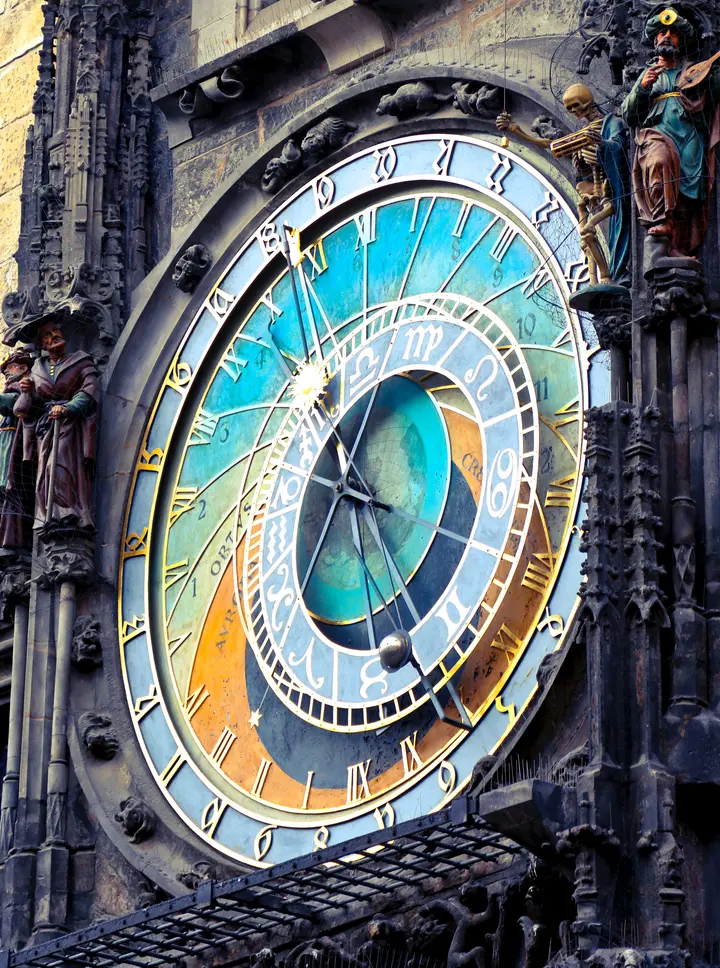
Let's try to understand this step by step. The concept of a 24-hour day comes from the ancient Egyptians. They divided the day into 10 hours using devices like shadow clocks and then added one hour at each end (one for twilight and one at the end of the day). Later, the Egyptians created a T-shaped bar calibrated to divide the time between sunrise and sunset into 12 parts. This T-shaped tool indicated the time by casting a shadow on one of these 12 parts based on the sun's position in the sky.
However, this system worked well during the day when the sun was present. The absence of sunlight made it difficult to determine the time at night. It's interesting to know how they dealt with this challenge.
Decans – Timekeeping Using the Stars
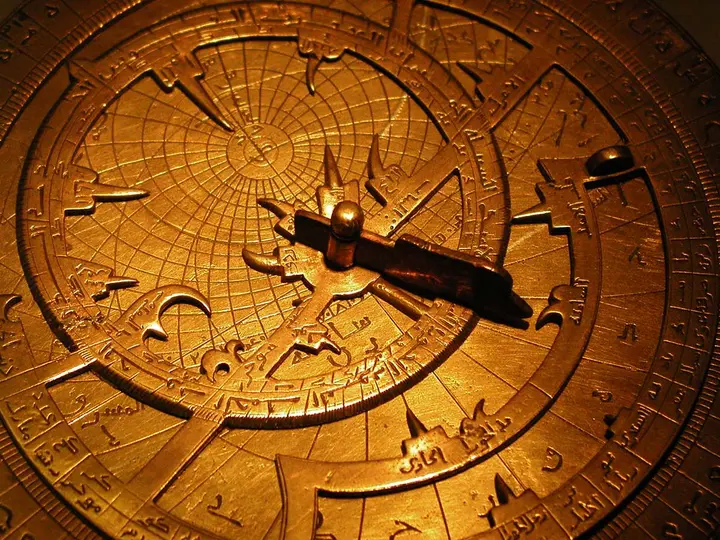
The ancient Egyptians used stars to measure time at night. They did this by paying close attention to a special group of 36 stars called "decans." These stars rose in the sky in a specific pattern and were used to track hours. However, only about 12 out of the 36 stars were visible at any given time, and the stars that appeared changed with the seasons and calendar year.
The Egyptians created special tables called star calendars to properly track time using stars. These schemes had 36 columns for each decan and 12 rows for each hour that could be counted during the night.
Eventually, this timekeeping process was standardized with days and nights, each consisting of 12 hours. However, this system works well only during the equinox when the sun is directly over the equator, dividing day and night into equal lengths. At other times, the length of an hour may vary. For example, daytime hours in summer would be longer, while shorter in winter.
Yet, back then, hours did not have a fixed length. Greek astronomers trying to find answers to questions about the universe, existence, stars, and galaxies (in short... astronomers) found it difficult to manage calculations with the prevailing method. Then, the Greek mathematician Hipparchus gave us "equinoctial hours" by proposing a division of the day into 24 equal hours. Even then, for a long time, ordinary people continued to use seasonally changing working hours. It remained so until the 14th century in Europe when mechanical clocks started being used, and the general public began following the system we practice today.
Why 60 Minutes and 60 Seconds?
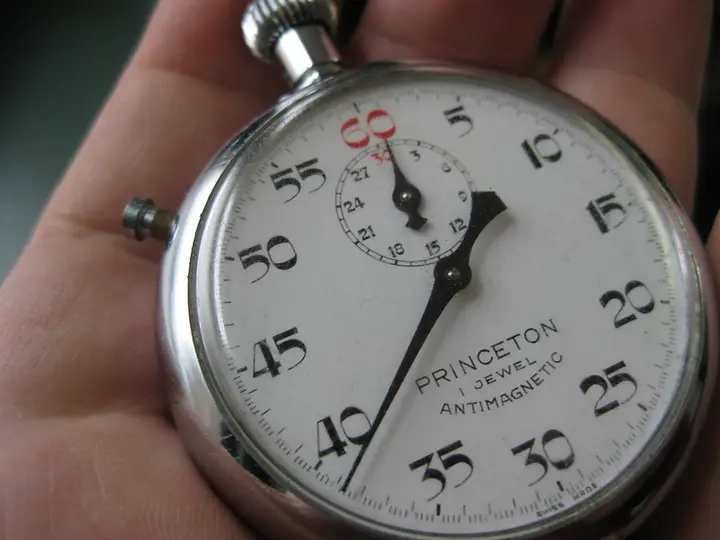
The Greek astronomers who helped make life easier by evenly dividing 24 hours followed the Babylonian sexagesimal (base 60) system for astronomical calculations. So, to make it easier, they divided the hour into 60 minutes and each minute into 60 seconds. It is unknown why the Babylonians used the base 60 system, but it may be because 60 is a special number for fractional calculations. It is the smallest number divisible by the first six counting numbers and by 10, 12, 15, 20, and 30. In fact, we borrowed this idea from the Babylonians not only to calculate time but also to measure degrees in geometry. That is also why a circle has 360 degrees instead of a number that might seem more intuitive, like 10 or 100.

Now, isn't that interesting? The elegant ideas of our ancestors continue to govern our daily lives thousands of years later. Now, go ahead, flaunt your newly acquired time knowledge, and make the most of it!