How Did Pepsi Become the Sixth Largest Army in the World?

Yes, I am talking about Pepsi, the competitor claiming Coca-Cola's throne - it became the sixth largest army in the world... but only for a short while.
Show key points
- The American National Exhibition in Moscow, 1959, witnessed a heated debate between U.S. Vice President Richard Nixon and Soviet Premier Nikita Khrushchev over the superiority of capitalism versus communism.
- Pepsi's vice president diffused the tension between the leaders by offering Khrushchev a Pepsi, which surprisingly, he enjoyed.
- Following this incident, the Soviet Union lifted the cultural ban on Pepsi products and began importing them in large quantities.
-
- The Soviets couldn't use rubles in global trade deals, so they swapped vodka for Pepsi instead of using currency.
- In the late 1980s, the Soviet Union struck a deal with Pepsi that included handing over a large fleet of warships, including submarines and destroyers, as a new form of payment.
- Pepsi temporarily became the sixth largest naval force in the world thanks to the massive military equipment it received from the Soviet Union.
- Eventually, Pepsi sold the naval fleet to a Swedish scrap company and returned to being just a beverage company.
Now, you have to ask yourself: how could a soft drink company possess enough military power to wage war against any second or third world country and win?
Well, this crazy chain of events, like many that occurred in modern history, was a product of the Cold War.
The American National Exhibition.
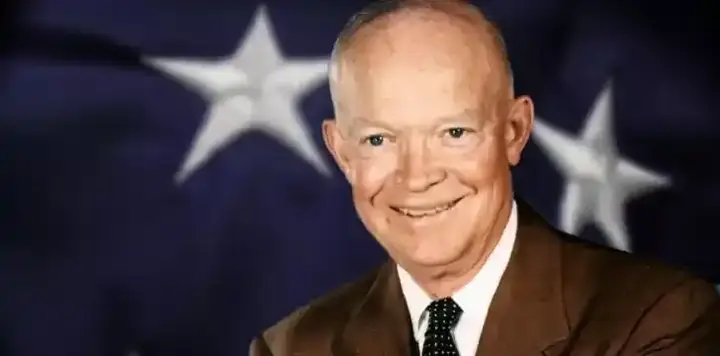
In 1959, U.S. President Dwight D. Eisenhower was incredibly pleased with how things were going in the United States.
Thus, he decided to share a slice of the American dream with his communist counterparts and showcase just how fantastic capitalism really was.
Recommend
To do this, Eisenhower's administration arranged the American National Exhibition in Moscow and sent only the then Vice President Richard Nixon to attend the opening and sing praises about the American way of life.
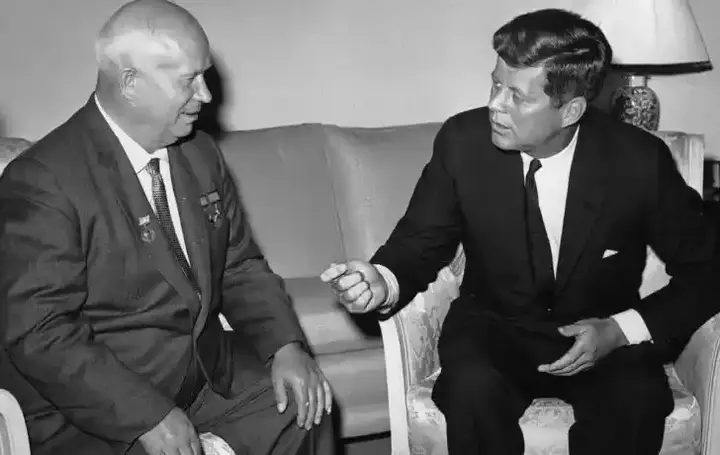
While Nixon was there, showcasing electric potato peelers and other wonders of Western capitalism and consumer culture, he found himself in a discussion with the Soviet Premier Nikita Khrushchev.
The conversation turned into an argument... it grew intense... and erupted into a full-blown debate.
Both Nixon and Khrushchev were trying to convince each other that their way of life was superior.
It was a direct confrontation between capitalism and communism between two of the biggest players on each side.
Nixon's head was bobbing outward in that angry chicken way, he was poking Khrushchev with his bony finger, and Khrushchev's rolls were tighter than a nursery rhyme spool.
Then - just when it seemed they might take off their shirts and settle their dispute in Cold War mortal combat style - the Pepsi vice president, who was at the exhibition, stepped in.
In an attempt to calm the Soviet Premier, he said something like "Hey! Dear Khrushchev, chill out and enjoy this," and raised a glass of Pepsi.
To everyone's surprise, Khrushchev took the glass and drank.
The bigger surprise was that he loved it!
In the end, I suppose there was some logic in Kendall Jenner's Pepsi ad...
The Blue Drink and the Red Nation
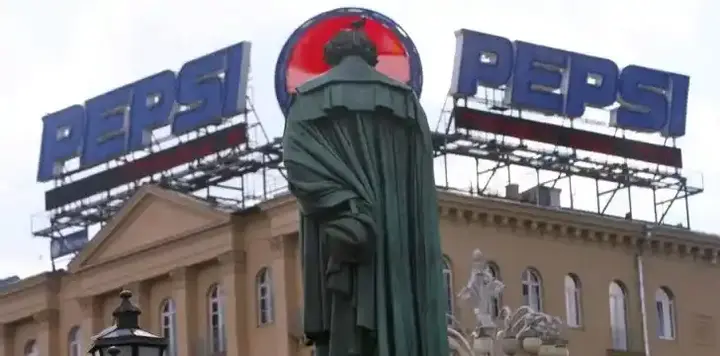
After a quick two years, Khrushchev was craving more of those delightful fizzy drinks that made him happy, so he decided to remove Pepsi from the Soviet cultural blacklist and import its products in large quantities to the Soviet Union.
The tricky part of this deal lay in determining the actual exchange for the purchase.
The Soviet ruble was not an internationally accepted currency, and as such, Khrushchev had to arrange a different kind of deal with the soda tycoon.
To do this, Khrushchev turned to one of Russia's most abundant resources and used it as a barter currency.
And you're wondering what that abundant Russian resource was?
Vodka!
The USSR made a deal with Pepsi where vodka would be exchanged instead of currency, and this continued until the late 1980s.
Pepsi Rules, Pepsi Rules the Waves.
After the initial agreement with Pepsi expired, the company no longer agreed to purchase increasing amounts of premium Russian vodka.
Since the Soviet ruble wasn't globally accepted, Pepsi needed to strike a new deal.
Thus, the Soviet Union decided to compensate Pepsi with something else they had in abundance.
War machines.
A massive $3 billion fleet of war machines!
The new agreement saw Pepsi acquire a full naval fleet comprising no fewer than 17 attack submarines, destroyers, a frigate, and a massive cruiser!
Once the deal was completed, papers signed, and keys exchanged, Pepsi was now the sixth-largest military power in the world!
So what did it do with all that power? Did it go full East India Company and dominate entire waves (seas) trade as you’d hoped it would?
No!
It sold it all for its nominal value to a Swedish scrap company. What a letdown.
And that right there is how Pepsi became the sixth-largest army in the world, only to return to being a soft drink company once again.