Mongol Empire: Genghis Khan's conquest of Asia and Europe

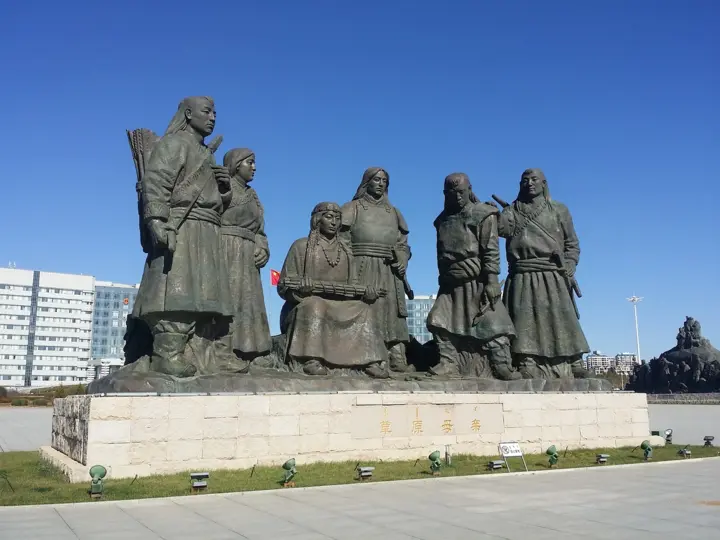
Among the empires in history, the Mongol Empire stands out as one of the most powerful and influential. Genghis Khan and his sons created a huge empire spanning Asia and Europe, building a powerful empire that lasted for centuries. In this article, we will trace the Mongol Empire and review Genghis Khan's conquest of Asia and Europe, and its great influence on these two continents.
Show key points
- Genghis Khan was a brilliant and rebellious leader who united diverse Mongolian tribes and established a vast empire across Asia and Europe
- Through strategic military campaigns, Genghis Khan orchestrated unprecedented invasions across the Old World, causing immense changes in societies and civilizations
- The Mongol Empire grew from a tribal royal family into the largest contiguous empire in history, spanning vast regions of Eurasia
-
- Despite its military dominance, the Mongol Empire promoted cultural exchange, trade, and tolerance towards various religions and traditions across conquered territories
- Genghis Khan's legacy extended beyond his lifetime through the continued expansion of the empire by his descendants, including the establishment of the Yuan Dynasty in China
- The Mongol invasions brought both terror and transformation, reshaping political boundaries and fostering increased East-West interaction
- The Mongol Empire's cultural, scientific, and artistic heritage, marked by religious pluralism and literary advancements, continues to influence modern civilizations.
1. Genghis Khan: intelligent and rebellious leader
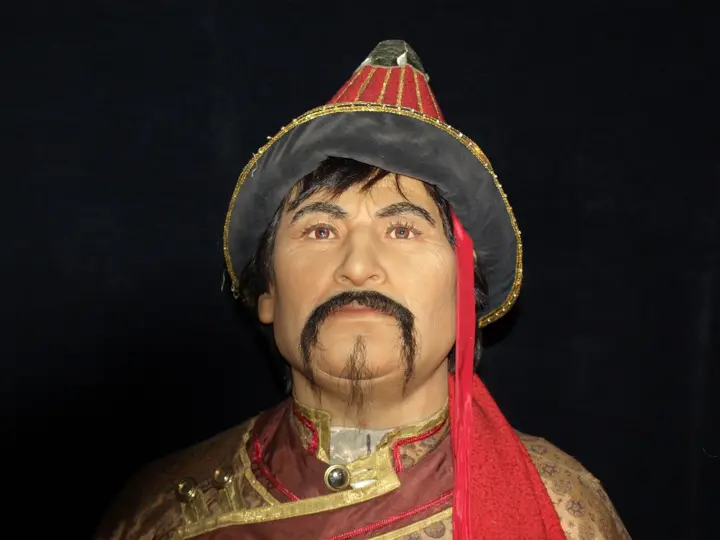
When we talk about the leaders of history who left an unforgettable imprint, Genghis Khan's name takes its front place. He is an intelligent and rebellious leader who was able to break the chains and create a huge empire that stretches across the continents of Asia and Europe. Genghis Khan is a legendary figure, distinguished by his remarkable courage and exceptional ability to plan and lead.
Recommend
Genghis Khan was born in the mid-twelfth century in an area known today as Mongolia. From a young age, he has shown exceptional leadership talents and strong determination. Genghis Khan led small military campaigns in his youth and proved himself a proficient commander in combat and strategic planning.
He was the leader of the Mongolian nation in the early thirteenth century (late Southern Song Dynasty), the first Great Khan of Great Mongolia, and the most famous and influential emperor, statesman, strategist, and leader in the history of China (including the Yuan Dynasty) and even in world history. Genghis Khan laid the political foundation for his later generations to carry out the "Western campaign," and the Mongol Empire he founded took control of Eurasia and brought about dramatic changes in Europe. Genghis Khan was the grandfather of Kublai Khan, the founder of the Yuan dynasty. He ruled from spring 1206 to 25 August 1227 for 22 years.
Genghis Khan was known for his inimitable intelligence and strategic wisdom. He used intelligence and intelligence gathering perfectly, allowing him to better understand the strengths and weaknesses of his enemies. Thanks to his strategic vision, Genghis Khan was able to expand his influence and control over previously unspent lands. He also had the ability to unite different tribes and nationalities and build a strong, disciplined and effective army.
2. The legendary invasion of Genghis Khan
In the Middle Ages, Genghis Khan and his vast forces invaded the Old World with an unprecedented conquest. Khan's journey was prosperous with battles and burning villages, and influenced the future of many nations and civilizations. While these invasions caused terror and hysteria in the hearts of the people, they are still considered one of the greatest military achievements in history.
In 1190, under Temujin's leadership, the Qian developed and expanded rapidly, causing dissatisfaction with Jamuka, the leader of the Zadalan tribe. Gamukha used the pretext for the murder of his younger brother Foucher by Temujin's men, and gathered more than 30,000 people from 13 tribes to attack Temujin. Timojin also mobilized the thirteen wings (i.e., 13 tribes) to fight him, the famous Battle of the Thirteen Wings. Despite Temujin's defeat and retreat to the Jelena region on the banks of the Onon River, Jamuka, who never expected to win, will lose people's hearts. After the war, Gamukha executed all the captives and divided them into seventy pots to be boiled and killed, which is known in history as the "massacre of seventy pots". This horrific scene made even his subordinates "suffer greatly from the illegitimacy of their master" and even worry about their fate. On the contrary, the generous and benevolent Temujin won the hearts of the people, and the subordinates of Jamukha who were worried about their fate turned to Temujin one by one. In this battle, Temujin was defeated and gained a large number of troops, which enabled him to recover quickly and develop his military strength. Suddenly Temujin's followers increased a lot.
Over many years, Genghis Khan has swept through many countries and places, from East Asia to Eastern Europe. It swept the Maghreb and the Middle East and grabbed the spotlight in Eastern Europe. At that time, the lands trembled and civilizations successively collapsed and renewed under the banner of Genghis.
Genghis Khan's strategy made him the most superior commander of the war. He used divisive and dominating tactics, allying himself with other tribes against common enemies, and then wisely dividing domination while inflicting extreme violence on the rebels. He was also known for his good examination of military technology and the effective use of horses in battles.
As the invasions progressed, Genghis Khan maintained order and discipline in the ranks of his armies. Despite his immense power, he also treated the locals with kindness and respected their traditions and religions. This wise approach not only won the loyalty and cooperation of the colonies he tampered with, but also contributed to building a broad base of support in the territories he ruled.
3. Mongol Empire: From the Royal Family to the Great Power
In the medieval era, the Mongol Empire was distinguished by its power and great influence on the world. Through the powerful system established by Genghis Khan and his sons, the empire was transformed from a small ruling family into a superpower spanning across continents. Let's explore the Mongol Empire's journey from the nascent royal family to a powerful and authoritarian state.
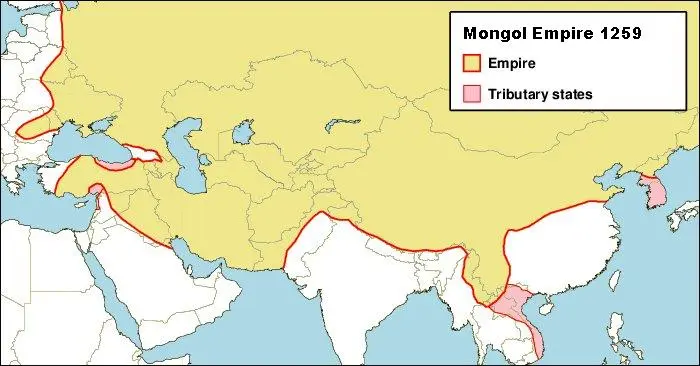
When it was powerful, it was a global empire spanning Europe and Asia, and it was also the country with the largest contiguous area in history. At that time, when Mongolian military power was at the height of its prosperity, three large-scale Western Mongol campaigns were launched. Then, between the ninth year of Mingi (1259) and the second year of Da da (1309), the maximum territory of the Mongol Empire regime was about 24 million square kilometers (one estimate is 34.5 million square kilometers). However, since Mongo's death in 1259, civil war broke out over the position of Grand Khan, causing several divisions within the empire and even leading to its collapse. After the Mongols destroyed the Jin dynasty and established their rule in the Central Plains, they founded the Yuan Dynasty in 1271. During the same period, there were also the four main khans in the west. In 1368, the Yuan Dynasty was destroyed by the Ming Dynasty founded by Han Zhu Yuanchang. The remaining Yuan Dynasty troops were expelled north of the Great Wall and entered the Northern Yuan Dynasty, gradually diminishing their influence on the Eurasian continent.
The Mongol Empire was founded by the Mongolian Temujin in the Mobi pastures in 1206. According to the "Secret History of Mongolia", it was founded at the source of the Onan River and named "Genghis Khan". It is generally believed that it was founded at the time when Temujin conquered various parts of the Mongolian plateau. Tribes (Tatar, Taichio, Merki, Neman, Kelli, Wangu, and the Mongol kingdom of two main tribes – Nylon and Diyljin, etc.) began to have the title "Genghis Khan" in 1206. After the establishment of the Mongol Empire, it expanded abroad several times, and when Genghis Khan was in power, he began to conquer Xixia, the Jin Dynasty, Xiliao, Khiva and other countries, and his successors fought two large-scale Western campaigns, and by 1259 (the ninth year of Emperor Xianzhong of the Yuan Dynasty.) Before his death, Meng He had occupied a large area including the Mongolian Plateau, Northwest, Southwest, Northeast and North China, Central Asia, Western Asia, and Eastern Europe.
Thanks to the Mongol Empire, trade and culture developed between Asia and Europe. The new trade routes opened a door for cultural and commercial exchange between East and West, and led to the transfer of technology, arts and sciences between different cultures. Much new lands and amazing natural riches were also discovered that helped the empire and the occupied territories flourish and develop.
In this way, the Mongol Empire managed to become a major player in the world stage and one of the most important powers in history. Its transformation from a small royal family to a superpower reflects Genghis Khan's power and ability to shape and direct events. Through their great legacy that lasted for centuries, the Mongol Empire remains the cornerstone of the world's historical and cultural records.
4. The influence of the Mongol Empire on Asia and Europe
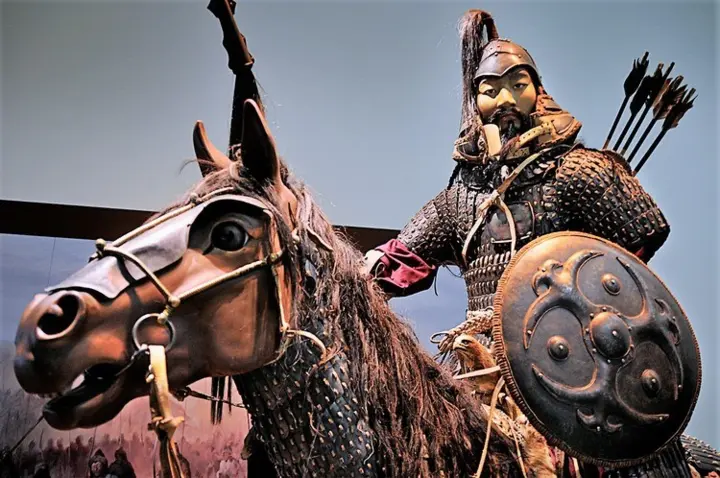
Historically, Asia and Europe have not experienced political and cultural transformation as much as the Mongol Empire. This huge empire conquered these two continents and left deep imprints that stretch through time. Through the cultural renaissance and massive political change practiced by the Mongol rulers, states and societies were greatly transformed and affected. In this part of the article, we will explore the influence of the Mongol Empire on Asia and Europe and the development of culture and politics in that important period.
The Mongol Empire brought about a paradigm shift in international relations and trade. Over the centuries, many cultures, sciences and technologies have contributed between East and West thanks to the expansion of the Mongol Empire. Conversely, many Mongol customs and practices have been adopted in a number of countries and societies. This mutual influence has led to new cultural developments and better trade mergers between East Asia and Europe.
In the thirteenth year of the reign of Emperor Taizhou of the Yuan Dynasty (1218), Genghis Khan led his army to embark on a Western campaign under the pretext of killing a Mongol caravan and looting on the border of Khiva in Central Asia. Genghis Khan's western trip shocked European countries, and China and European countries began to make extensive contacts.
Large-scale East-West battles carried out by the Mongolian army stretched almost from the Indus River to the Dnieper. From the first battle of its attack on the Central Plains until the eighteenth year of Yuan Taizhou's reign (1223), within 12 years the Mongolian army reached the Pacific Ocean, the Indus River, and the Black Sea. In the thirteenth century, Europe was severely shaken, and fortress-centered Europe was pushing forward the borders of Christendom and becoming an enemy of Islam. During this period, Islam remained the only enemy feared by Christian Europe. The sudden appearance of the Mongols was not just a surprise from heaven. In the words of one Russian historian: "Because of our sins, tribes unknown to us came, and no one knew who they were or where they came from – nor what their language was, what their language was. What race, what religion "they believe—only God knows who they are and where they come from." "The Tatars came back from the Dnieper, and we don't know where they came from, nor where they came from." "Where they hide again. Because of our sins, God knows where He brought them to punish us. "[113] Fear of the Mongolian army can be seen in Europe, which later influenced including the British. This was later one of the historical reasons for the "yellow peril" theory that swept the West at the end of the nineteenth and beginning of the twentieth centuries.
Hulegu, ordered by the fourth generation Khan Mongo, led his army to conquer the Arab world, capturing and completely destroying Baghdad, once the world capital, a pioneer in world history, and the center of the Arab world. As a result, the Abbasid state fell and the center of the Arab world moved to Cairo, Egypt. The Mongols established the Ilkhanid state in West Asia with the new capital of Tabriz as its center.
In short, it is not possible to say with certainty the extent of the Mongol Empire's influence on Asia and Europe. This enormous empire was able to radically change the lifestyle, trade and politics of these two continents. Therefore, the influence of the Mongol Empire on Asia and Europe is an important stage in human history that must be studied and understood to understand current developments and the future of the world.
5. Heritage of the Mongol Empire: Art, Science and Culture
religion
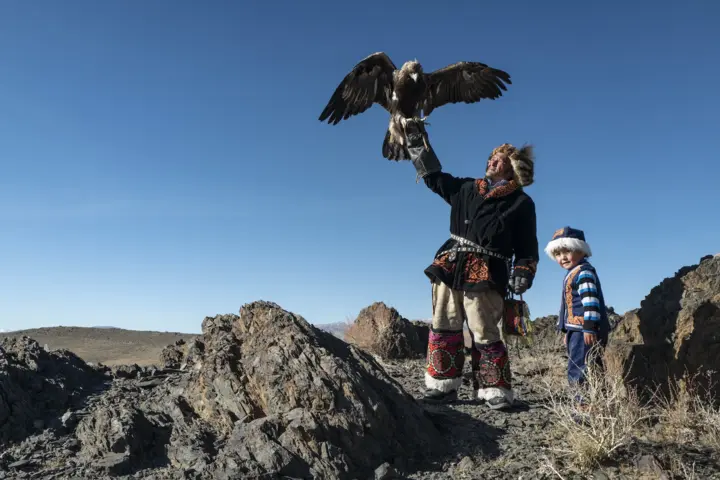
The Mongolian people originally believed in shamanism, a primitive spiritual belief. In addition to the shamanism they mainly believe in, some also believe in Nestorianism (a branch of Christianity), where religion is the main content of their spiritual life. After Genghis Khan founded Great Mongolia, he expanded abroad and came into contact with Buddhism, Taoism, Islam, Christianity, and other religions. The Khanates of the Great Mongol Kingdom understood that religion helped consolidate rule, and in principle they protected and supported all kinds of religions that could "wish heaven and celebrate their birthdays" for themselves. Of course, sometimes they were also categorized according to their needs and hobbies. Mongolian rulers generally adopted an eclectic attitude toward different religions, and the flourishing of multiple religions was a key feature of Mongolia's top four khanate culture.
Belief
The northern agricultural area under the original rule of the Jin Dynasty was called "Han Land" at that time. Genghis Khan used his forces against the Jin dynasty and seized a large area of land including Jin Zhongdu (today's Beijing), and the Jin dynasty was forced to move its capital to Nanjing (present-day Kaifeng, Henan). During the Ogidai Khan period, Mongolia destroyed the Jin dynasty and realized its rule over the "Han land". The traditional culture of the Central Plains with Confucianism has always been dominant in the "Han region".
Genghis Khan was in contact with individual Han scholars, such as Yilu Chukai of Khitan, as well as representatives of Buddhism and Taoism, but the traditional culture of the Central Plains had no place in his mind. Ojedi Khan accepted Yilu Chukai's proposal and took some measures to protect Han culture, such as identifying Confucian families through exams, establishing Bible recording offices, granting holy dukes, etc. However, as Yilu Chocai turned more policy after losing territory, measures in this area were no longer implemented. In addition, Ogidai Khan also ordered the establishment of a school in Yanging (present-day Beijing) to train translation talents, and appointed Quanzhen Taoist priests in charge. This is the origin of school education in Mongolia.
Literature, History and Chinese
The Mongols live in the grasslands of Mobi and practice the life of nomads. There was no writing in the past, and on the eve of the founding of the country, Genghis Khan destroyed the Neman tribe, captured the Uyghur Tata Tonga, and ordered him to write Mongolian in Uyghur letters, thus creating Mongolian writing in the Uyghur style. This was an essential step in the development of Mongolian civilization, and it was a major event
In the field of culture, the Mongol Empire played a major role in promoting cultural exchange and coexistence between different peoples. Mughal culture is characterized by the synthesis of different elements of the cultures conquered by the empire, which contributed to the enrichment and diversification of cultural expression. For example, Mughal culture blended elements of Persian, Chinese, and Muslim art, influencing literature, music, clothing, customs, and traditions.
The heritage of the Mongol Empire in the fields of art, science and culture is a symbol of diversity and innovation. It is a legacy that must be preserved and respected, carrying rich stories and cultural wealth that promote cultural understanding and exchange in our modern era.

In short, the Mongol Empire and Genghis Khan's conquest of Asia and Europe have a huge impact on history. The empire lasted for centuries and influenced many cultures and peoples who passed through it. Genghis Khan's invasion was undoubtedly one of the greatest in history, and led to a radical change in politics, culture, and commerce in Asia and Europe. We must remember this important history and carefully study it to understand the modern world and its development.