The Test Cricket Mistake Casual Viewers Make After Sunset

What looks like a sudden drop in batting certainty after sunset is often a change in visibility, not simply worse play — and the difference starts earlier than most spectators realize.
Casual viewers tend to read a mistimed drive or a late leave as nerves, pressure, or a batter going off the boil. Sometimes it is. But twilight cricket changes the basic act of seeing the ball, and that shifts the contest before the scoreboard has had time to tell you.
Recommend
The mistake starts from the stands
From a distance, evening cricket can look calm and readable. The field is still green. The white clothing still stands out. The floodlights come on and the game appears, if anything, more visible.
That is the trap. Spectators are watching the whole scene. Batters are trying to pick up one small moving object from the bowler’s hand, against a background that is changing by the minute.
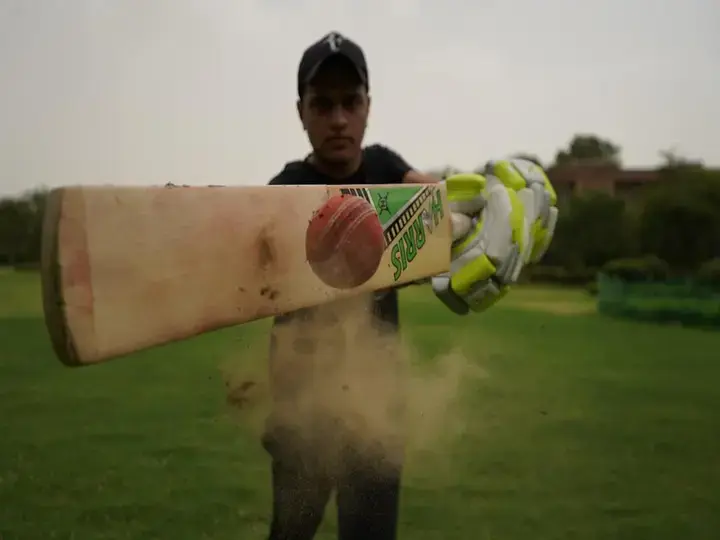
Slow that moment down. The sky has gone from warm gold to a denser blue. The ball leaves the bowler’s hand and, for a beat, it no longer looks like a clean bright dot. It can blend, flash, dull, then reappear. If you are standing at batter height, that split second matters more than almost anything else.
Cricket people talk about “picking up” the ball. They mean the instant when the batter first reads its line, length, and speed. Lose a fraction there and every later judgment gets tighter: whether to come forward, whether to cut, whether to leave, whether the bounce will arrive under your eyes or climb at your gloves.
Why the ball gets harder to read before the runs dry up
The mechanism is simple enough to picture. A cricket ball is seen against different backgrounds during its path: sky, crowd, sightscreen, clothing, turf. At twilight, all of those relationships shift at once.
How the visual background changes during one delivery
| Stage | Background | Why visibility gets trickier |
|---|---|---|
| Release | Bowler’s arm and white shirt under lights | The ball has to separate itself from a bright moving source immediately. |
| Early flight | Deepening sky | A red or pink ball can lose crisp contrast as natural light falls. |
| Mid-flight | Crowd or sightscreen | The background can shift in tone and texture before the eye fully adjusts. |
| Approach to bounce | Green outfield and turf | The visual task changes again just before the batter judges length and bounce. |
A red ball that was clear in full daylight can become less distinct as natural light falls. A pink ball was introduced partly to help with that, but twilight is exactly the awkward middle zone where the eye is adjusting while the background is still mixed. Floodlights help, but they do not turn dusk into noon. They create their own patches of contrast and glare.
White clothing can also work against the batter’s first pick-up. If the bowler’s arm and shirt are bright under lights, the ball has to separate itself from that brightness at release. Then it travels toward a darker sky or across a crowd background. Then toward the green outfield near the bounce. The visual job keeps changing in a second or less.
This is why a batter can look half a beat late without looking obviously reckless. The miss often begins with sight, not with a wild decision.
What the research cluster actually shows
Published work does not treat ball visibility as constant. It shows that light level, ball condition, and background all affect how easy the ball is to see, especially in the handover from daylight to floodlights.
2024 modeling study
J.J. Maule and colleagues modeled the visibility of new and old red, white, and pink balls under day-night lighting and different backgrounds.
Main result
Visibility changed materially with match conditions, including the twilight-to-floodlight period, making the problem perceptual before it becomes statistical.
Earlier support
A 2017 paper on pink-ball cricket also reported degraded visual conditions at sunset, reinforcing what players had long sensed.
There is a reason this has moved from dressing-room hunch to published research. In 2024, J.J. Maule and colleagues published a study in the Journal of Science and Medicine in Sport, also indexed on PubMed, that modeled the visibility of new and old red, white, and pink cricket balls under day-night lighting and different background conditions. In plain language: they tested how easy the ball should be to see as the light, the ball’s wear, and the visual setting changed.
Their finding matters because it backs what players and close watchers have long felt. Ball visibility was not constant. It changed materially with match conditions, including the twilight-to-floodlight period, which means the problem is perceptual before it becomes statistical.
Earlier work pointed the same way. A 2017 paper on pink-ball cricket reported degraded visual conditions at sunset, the exact handover period day-night cricket has to survive. That does not mean every pink-ball wobble is caused by sight alone. It does mean the eye is under stress at the very time viewers often think the batting side has simply lost composure.
The beautiful bit is also the deceptive bit
This is what makes twilight cricket so easy to misread. It is the prettiest phase of the day and one of the hardest to interpret. From the sofa or the upper tier, the scene still feels open and legible. Down at pitch level, the ball may already have stopped looking bright and obvious against the deepening sky.
Have you ever noticed that the game seems to change before the scoreboard does?
That is the pivot. At that point you stop being just an admirer of the hour and become an observer of perception. Watch the batter’s first movement. Watch whether the bat comes down a touch later. Watch whether leaves become fidgets, or defensive shots get played further out in front. The eye can be in trouble before the innings is.
What the lights don’t fix
Darker sky. Artificial light. White kit. Green outfield. Changing background. Later pickup. Tighter margins.
How twilight pressure builds for the batter
The background darkens
The sky drops away from full daylight while artificial light begins to dominate.
Contrast becomes uneven
White kit, floodlights, crowd, and outfield create a shifting visual field rather than one stable backdrop.
Pickup comes later
The batter reads line, length, and speed a fraction later than usual.
Margins tighten
A tiny delay is enough to make timing and judgment look suddenly less certain.
That stack is why evening sessions can feel jumpier even when nothing dramatic has happened on the scorecard. The batter is reading the ball through a moving visual puzzle, while the bowler only needs one small error in timing or judgment.
And there is another layer. A cricket ball changes as it ages. Its shine fades. Its seam softens. The same 2024 Maule study modeled new and old balls for exactly that reason: what is easy to see early in an innings may not stay easy later on, especially once natural light is slipping away.
Yes, other things matter — just not by themselves
This is the fair objection: good batters should adjust, and twilight is not the only reason batting gets harder. Correct. Swing can increase under some conditions. Dew can affect grip and fielding. Fatigue is real. Scoreboard pressure is real. Sometimes the bowling is just excellent.
But that is not an argument against visibility. It is an argument for treating visibility as one force among several. Elite batters are brilliant at adapting to constraints. They are not immune to them.
In fact, what looks like elite composure late in the day may partly be elite compensation: getting into position earlier, watching the hand harder, simplifying shot choice, trusting defense, and waiting for the background to settle under full artificial light. Adjustment is the skill. The visual problem is still there.
How to watch the next twilight over properly
Try one small self-check the next time you watch twilight cricket. Ignore the scoreboard for an over. Instead, follow the ball from the bowler’s hand to the bounce and ask a simpler question: does it stay easy to pick up against sky, crowd, and sightscreen all the way through?
If the answer starts to feel less certain, you are probably seeing the real shift in the contest. Not a collapse. Not a mystery. The fading seam between daylight and night, where the batter has a little less time than you think.
For one over, watch the ball first and the outcome second.