For thousands of years, cats have lived alongside us, leaving a delightful mark on our lives. Over time, cat breeders have come to regard them as members of the family. But despite their beauty and charm, these delicate creatures sometimes suffer physical and psychological pain that affects their lives. Humans
ADVERTISEMENT
have always sought to ease their pets' suffering, and the development of artificial intelligence tools and techniques — along with its remarkable discoveries and capabilities — has prompted scientists to explore AI's potential for treating pain in cats.
Will AI become a revolutionary tool that alleviates the suffering of these tender creatures?
Early diagnosis
Photo from Pixabay
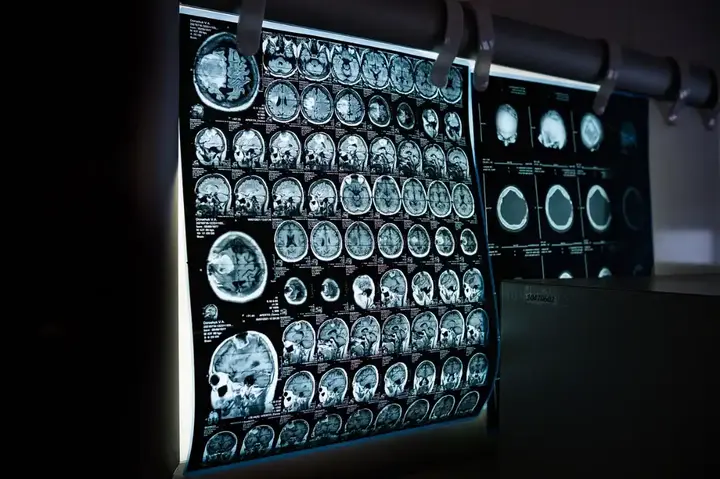
Through analysis of X-rays and MRI scans, artificial intelligence can act like a smart veterinarian, helping to diagnose conditions that cause cats pain. It can distinguish fractures, infections, and tumors with high accuracy, allowing veterinarians to intervene early and effectively to relieve a cat's suffering. The journey of AI in treating cat pain is still in its infancy and many challenges remain. Yet continued advances in artificial intelligence promise a hopeful future for these fragile animals. In the effort to treat cat pain, AI could become a torch that lights the paths of hope — a flame that points toward a pain-free future for these vulnerable creatures.
ADVERTISEMENT
Smart guard to monitor cats
Photo from Pixabay
With smart monitoring devices, artificial intelligence can track a cat's activity, sleep patterns, and movement with high accuracy. It watches them as they play, eat, and sleep, analyzing behavior to detect any changes that may indicate pain or disease. If the system notices that a cat has become less active, is having difficulty moving, or shows altered sleep patterns, AI can alert veterinarians to examine and diagnose the animal.
A major challenge in diagnosing and treating cats is better understanding their behavior. This is where AI technologies act as a smart guardian, helping us maintain the health of these beloved animals.
Analysis of cat behaviors
ADVERTISEMENT
After monitoring and observing behavioral changes that may signal pain or illness, AI can analyze video to identify abnormal behaviors — such as constant restlessness or changes in gait — which can speed up diagnosis and treatment. These mute creatures continue to suffer without the luxury of explaining what hurts them, so our role is regular observation, careful analysis, and timely treatment.
Offering treatment
Photo from Pixabay
In the search for comfort and healing for beloved cats, artificial intelligence can be a reliable companion. After observation and comprehensive data analysis, AI can provide accurate recommendations for suitable treatments and medications that relieve pain and improve a cat's condition, guiding them through the treatment journey.
ADVERTISEMENT
Track progress and modify treatment
AI's role is not limited to recommending treatment. It can act as a loyal, wise companion, closely monitoring a cat's response to therapy and providing continuous, precise analyses of progress. When necessary, AI can guide adjustments to treatment to improve results and support a full, lasting recovery for our little companion. Thus, artificial intelligence plays an integrated role throughout the treatment process — from observation and analysis to recommending and modifying treatment. Have you ever seen such sincerity and precision!
Predicting health problems
As a proactive partner in advanced cat care, AI can analyze past data continuously and accurately to predict potential health problems that might cause pain in the future. We should appreciate its efforts and take the necessary preventive measures to ensure the health and happiness of our little companions.
Nouran Elsadek
ADVERTISEMENT
Exploring Culture and Arts in Chicago: Museums, Street Art, and Iconic Architecture
ADVERTISEMENT
Chicago, the third-largest city in the United States, is a distinctive destination that blends rich culture, diverse arts, and remarkable architecture. From world-famous museums to vibrant street art, the city offers a unique experience for travelers. Let’s take an in-depth look at the cultural and artistic landmarks Chicago has to
ADVERTISEMENT
offer.
Museums in Chicago
The Art Institute of Chicago
The Art Institute of Chicago is one of the world’s leading museums, with a collection of more than 300,000 works spanning classical to contemporary art. Its holdings include masterpieces by Van Gogh, Gauguin, Cézanne, and Monet. Visitors can spend hours exploring galleries devoted to European, Asian, and American art, as well as modern and contemporary works.
ADVERTISEMENT
Museum of Science and Industry
The Museum of Science and Industry offers interactive exhibits on topics ranging from technology and space to the environment. Visitors can tour a real World War II submarine, explore models of planes and ships, and even try simulated space flights.
The Field Museum
The Field Museum is one of the world’s largest natural history museums. It houses vast collections of fossils, minerals, gemstones, plants, and taxidermied animals. A major highlight is Sue, the enormous Tyrannosaurus rex skeleton—one of the largest and most complete ever discovered.
Street Art in Chicago
Photo from Commons Wikimedia
Chicago is famous for its vibrant street-art scene, with striking works visible throughout the city. The Pilsen neighborhood is one of the best places to explore, featuring large murals and painted building walls.
ADVERTISEMENT
16th Street Murals
The 16th Street Murals, in Pilsen, form an open-air gallery along 16th Street. The murals reflect the neighborhood’s culture and history, created by local and international artists.
Street Art in Wicker Park
Wicker Park is another prime neighborhood for lovers of alternative and street art. Stroll its streets to see bold murals and artworks decorating the walls of buildings and shops.
Distinctive Architecture in Chicago
Photo from Elements Envato
Willis Tower
No discussion of Chicago architecture is complete without the Willis Tower (formerly the Sears Tower). At 442 meters tall, it is one of the tallest buildings in the United States. Visitors can go up to the observation deck on the 103rd floor for panoramic views of the city and Lake Michigan.
ADVERTISEMENT
Wrigley Building
The Wrigley Building, on the banks of the Chicago River, is an architectural landmark. Built in the 1920s, its design draws on Spanish Baroque influences. Visitors often stroll around the building and photograph its elegant façade.
John Hancock Center
The John Hancock Center is a well-known skyscraper, rising 344 meters. It has observation decks on the 94th and 95th floors that offer sweeping views of the city and lake. Visitors can also dine at the Signature Lounge while taking in the scenery.
Tribune Tower
The Tribune Tower, built in the 1920s as the Chicago Tribune’s headquarters, is another architectural masterpiece. Its neo-Gothic design incorporates fragments from historic landmarks around the world, including stones from the Great Wall of China and the Egyptian pyramids.
ADVERTISEMENT
Cultural Events and Festivals
Chicago Jazz Festival
The Chicago Jazz Festival is a major musical event where audiences enjoy live performances by local and international artists. Held in Grant Park, it attracts thousands of visitors each year.
Chicago International Film Festival
The Chicago International Film Festival is one of the country’s oldest and most important film festivals, showcasing many independent and international films. Film lovers can attend screenings and take part in discussions and related events.
Taste of Chicago
Taste of Chicago, held in Grant Park, is one of the world’s largest food festivals. Local restaurants offer a wide variety of foods and drinks, and the event includes live music and other entertainment.
ADVERTISEMENT
Chicago offers a rich, diverse experience for travelers, from world-class museums and street art to distinctive architecture. With cultural events and festivals throughout the year, the city remains an ideal destination for those looking to explore its artistic and cultural offerings. If you’re planning a visit, allow enough time to discover its cultural and artistic highlights.
Anselm Koch
ADVERTISEMENT
Why do we shed tears when cutting onions: causes and solutions
ADVERTISEMENT
When we cut onions, we often end up with tears streaming down our faces. So what causes this hot, stinging sensation? Are there ways to prevent it? In this article we explain why cutting onions makes us cry and offer effective solutions to this recurring
ADVERTISEMENT
problem.
1- The scientific reason behind the flow of tears when cutting onions.
Photo by Webvilla on Unsplash
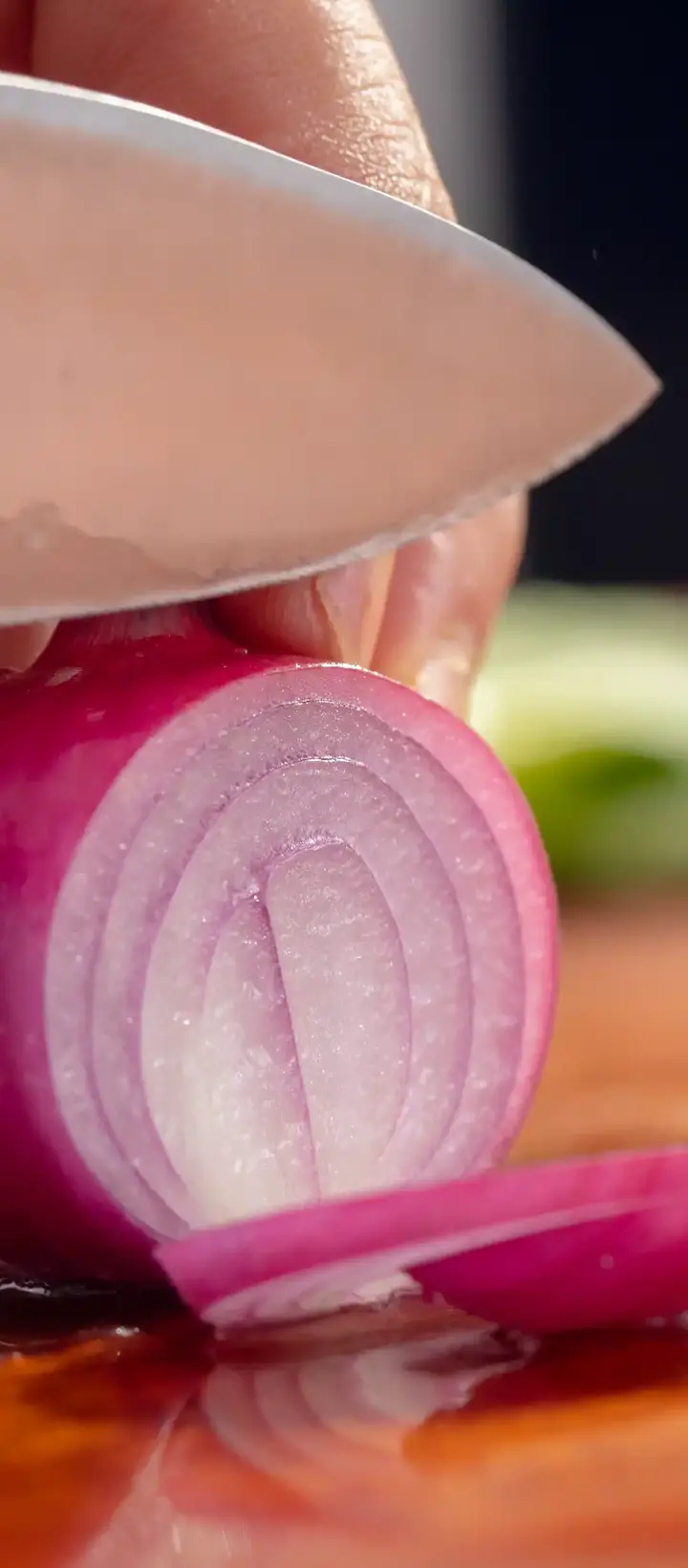
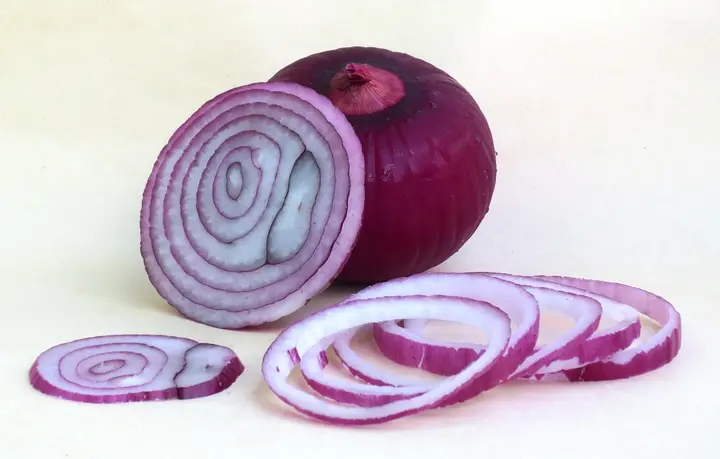
When it comes to explaining the flow of tears when cutting onions, science provides the answer. When we cut onions they release a chemical compound called sulfoxide, which is mainly responsible for eye irritation and tearing. This compound turns into sulfuric acid in the air, triggering nerves in the eye and causing tears.
ADVERTISEMENT
Sulfoxide acts as an irritant to mucous membranes, especially in the eye. The body treats it as a potentially harmful substance. When the eye is exposed to this compound, the glands that produce tears increase their output to wash the eye and remove the harmful sulfoxide. This natural response leads to streaming tears, red eyes, and a burning sensation.
Interestingly, humans are not the only ones who suffer when onions are cut. Animals such as dogs and cats can respond in the same way. Some believe humans evolved to be more susceptible to this reaction, since crying is a protective reflex that helps shield the eye from irritation and damage.
Although tearing while cutting onions cannot be completely prevented, understanding the process and using appropriate measures can reduce the severity of the discomfort. So don’t let onions ruin your cooking—try smart ways to handle them and keep your eyes away from excessive tearing.
ADVERTISEMENT
2- How does chopping onions affect the eyes?
Photo by Shutterbug75 on Pixabay
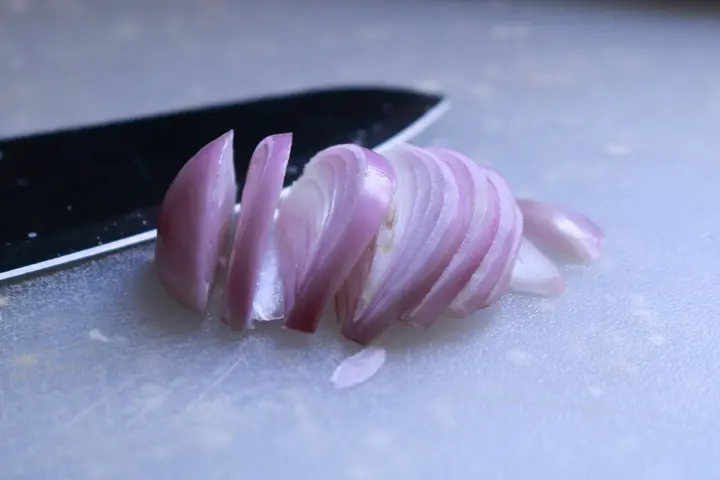
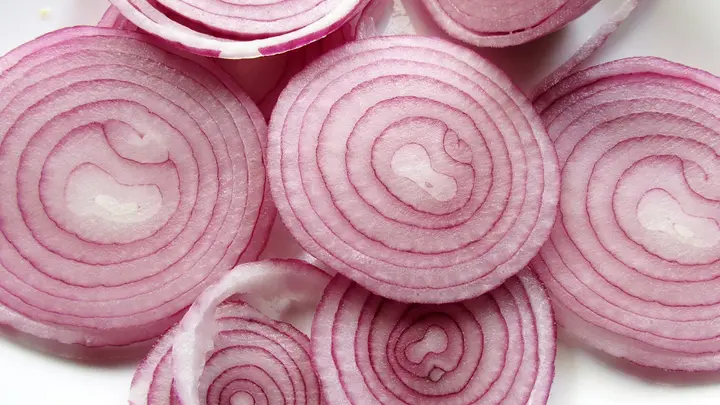
Onions contain an enzyme called allyl cystasis, which gives them their strong flavor and pungent smell. When we cut onions, this enzyme is activated and converted into powerful sulfenate compounds that react with the eye and increase our sensation of pain and tearing.
Chopping onions also stimulates excess tear production as part of the body’s mechanism to eliminate harmful substances. Tears protect the eyes from irritants and germs, so the body treats the gases released by chopping onions as something to be flushed away.
Chopping onions affects the "twisted convex" muscle that helps keep the eye tight and protected. When we begin cutting onions, this muscle experiences tension and pressure, which heightens eye irritation and tightness and eventually leads to tears flowing.
ADVERTISEMENT
Despite the discomfort of chopping onions, this curious phenomenon is part of our kitchen experience. Scientists continue working on ways to reduce tearing and make the process of cutting onions less painful and bothersome. If you want to know some effective solutions, read on for practical tips to deal with this well-known problem.
3- Common methods to reduce the flow of tears while cutting onions.
Photo by lauryann on Pixabay
When it comes to avoiding tears while cutting onions, there are many different options people use to ease the problem. Here are some common methods and how they may help.
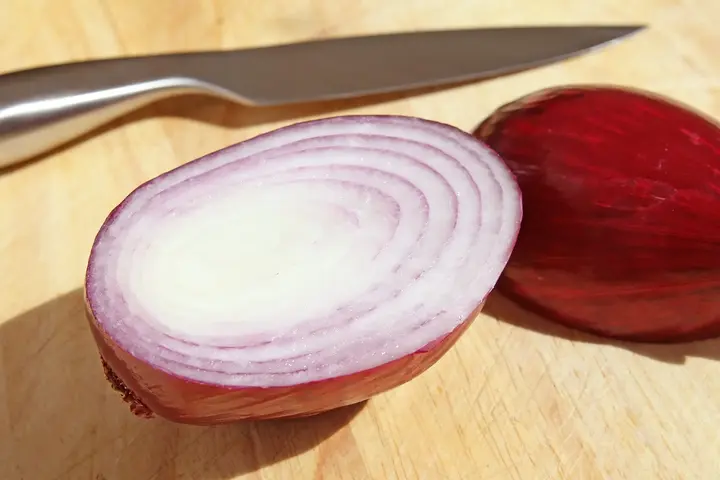
1. Cooling onions: This is considered one of the most effective ways to reduce tearing. Refrigerate the onion for 15–30 minutes before chopping; some believe this lowers the amount of gas released.
ADVERTISEMENT
2. Fan operation: Turning on a fan while cutting onions can help disperse the tear-inducing gases. Place the fan near the chopping area so airflow carries the gases away from your eyes.
3. Use moisture: Hold a damp cloth or wear a fabric mask over your nose and mouth while cutting. Some people find this helps absorb the gases before they reach the eyes.
4. Chopping onions under water: This can be effective for some. Chop the onion in a pot of cold water to prevent the gases from entering the air.
5. Use a sharpened knife: A very sharp knife causes less cell damage to the onion, which can reduce the release of irritating gases.
Keep in mind that these methods may work better for some people than others. You may need to try a few techniques to discover which one reduces your tears the most.
ADVERTISEMENT
4- Natural solutions to prevent tears from flowing when cutting onions.
Photo by costanzimarco on Pixabay
If you prefer natural remedies over chemical or high-tech approaches, several simple methods may help reduce tearing. Natural solutions are popular with people who want to rely on familiar, healthy ingredients. Here are a few you can try:
Use lemon: Place lemon slices near the onion while slicing. The acidity in lemons may reduce the effect of the irritating gases and lessen tearing.
Eye care: Before you start, wash your face with cold water and dry it thoroughly. You can also wear protective goggles or seal the bottom of your glasses with tape to block gas from reaching your eyes.
If you prefer natural approaches, these methods may help you avoid tears while chopping onions. Try a few to see which works best for you, and you may soon enjoy cutting onions without unwanted tearing.
ADVERTISEMENT
5- Using new techniques to prevent tears while preparing onions.
Photo by Buntysmum on Pixabay
With modern technology and innovation, new ways to reduce tearing while preparing onions have emerged. Thanks to scientific advances, several solutions now make onion prep less painful.
One approach uses ultraviolet light. It is claimed that UV rays can help neutralize the tear-causing gases from onions. Special UV lamps have been developed to briefly expose onions to UV light before preparation. Another idea is goggles that include UV filters to protect the eyes from irritating gases.
Beyond UV-based tools, there are devices that rely on airflow and cooling. "Onion fans" create an air stream around the onion as it is chopped to disperse the gases. "Onion coolers" use cooling to reduce the release of tear-inducing compounds.
ADVERTISEMENT
Technological development also extends to natural and traditional products. Laurel oil and extracts from white onions have been promoted as ways to relieve tearing. This oil can be applied to the knife during preparation to help reduce gas release.
Thanks to these new and innovative approaches, we can now prepare onions with less tearing. As technology continues to advance, we may see more solutions that make onion prep comfortable and tear-free.
Photo by Burhan Rexhepi on Unsplash
One onion can turn the pleasure of cooking into a painful, tearful experience. However, knowing the scientific reasons and using the right methods can turn that story into a happy ending. Whether you prefer natural remedies or new technologies, you can now enjoy chopping onions with fewer tears. Remember that patience and practice are key in this small battle against tears.