Amazing facts about the sloth: unraveling the secrets of the world's slowest mammals
ADVERTISEMENT
The sloth is a mammal known for its slow movements and its ability to store energy in its body. It is one of the slowest living creatures on Earth, yet it holds many fascinating secrets. In this article, we reveal surprising and strange facts about the sloth,
ADVERTISEMENT
its hidden traits, and what makes it different from other mammals.
Sloth: The World's Slowest Mammal
Photo via Unsplash
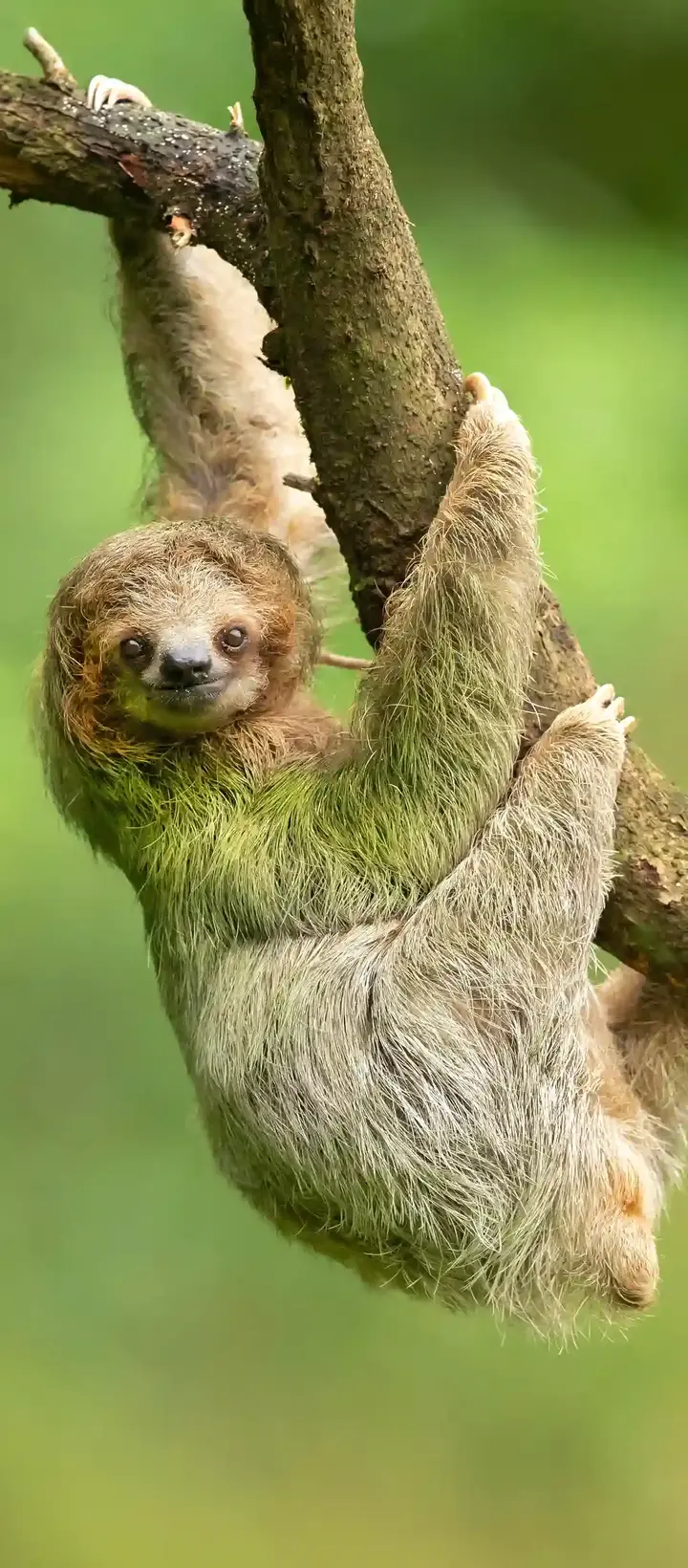
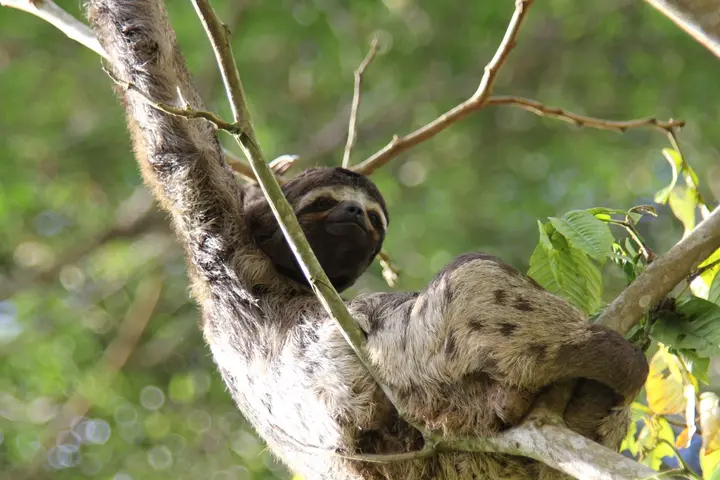
Sloths are remarkable for their deliberate, slow movements, which make them some of the slowest creatures on Earth. Their pace is comparable to that of a turtle, and they take a long time to carry out most activities. This slow tempo is a distinctive trait in the mammal world and has drawn interest from many researchers and scientists.
ADVERTISEMENT
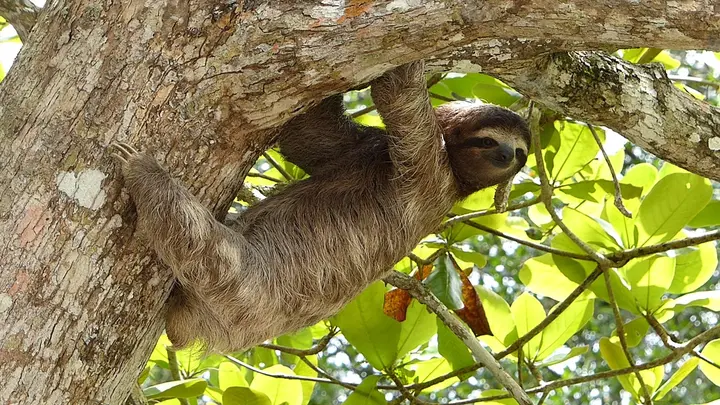
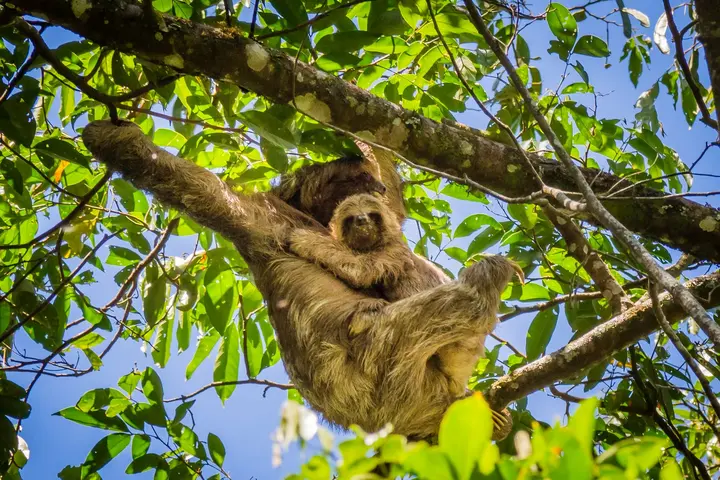
Their sluggishness stems from their unique body structure. Sloths have shorter, weak hind legs that make movement on land difficult, and long, sharp claws that help them climb and grip trees. Despite moving slowly, they have adaptations that let them survive in their environment.
Sloths also store energy as fat in their bodies. These fat deposits act as reserves, sustaining them during long periods of inactivity and rest. Because of this, sloths can go for extended stretches without eating, which helps them cope with changes in food availability.
Although they may seem inactive, sloths have slow but precise responses that rely on deep, flexible muscle movements. When threatened, a sloth uses these measured movements to defend itself or escape by climbing trees to avoid predators.
ADVERTISEMENT
Sloths are also known for their long, deliberate sleep cycles. They spend much of their time sleeping and resting to conserve energy and slow their metabolism. Sloths sleep for about 8 to 10 hours a day, allowing them to conserve energy for future activities.
Sloth Secrets: How Do They Live Without Exhaustion?
Photo via Unsplash
How do sloths live without feeling exhausted? What allows them to maintain vitality with so little apparent effort?
First, sloths are extremely energy-efficient. They avoid unnecessary movement and do only what is essential. By staying calm and conserving motion, they reserve energy for real challenges.
Second, sloths follow a balanced diet. They eat foods that provide the nutrients they need without consuming more than necessary. This measured approach helps them meet nutritional needs without tiring themselves out digesting large amounts of food.
ADVERTISEMENT
Third, sloths have a natural ability to relax and maintain steady energy levels. They spend most of their time resting in calm positions, which lets their bodies recharge. Rather than depleting energy with constant activity, they save it for moments that require quick action or when facing threats.
Finally, sloths gauge their surroundings and adjust their activity accordingly. In a calm environment, they may be more active, while in a disruptive setting they reduce movement to conserve energy.
Sloth Adaptation to the Environment: How They Exploit Their Weakness for Survival
Photo via Unsplash
Despite their slowness and low energy, sloths survive and even turn these traits to their advantage in remarkable ways.
ADVERTISEMENT
One strategy is using their environment for both food and protection. Sloths often live where food is easily available. If resources are scarce, they reduce activity and conserve energy for longer periods.
Some sloth diets include high-energy, nutrient-rich items that help make up for their limited movement. They also take advantage of their slow nature with patient, strategic feeding techniques—waiting and watching so they can seize opportunities efficiently.
Adaptation for sloths goes beyond feeding; they are effective at avoiding predators. Their body helps conceal them, serving as a natural shield and camouflage. With dense fur and tough skin, sloths are hard to spot while resting. They also use sheltered, hidden spots among trees or rocks for protection and concealment.
ADVERTISEMENT
Sloth Diet: What Does This Lazy Creature Eat?
Photo via Unsplash
What does a sloth eat? Despite their slow pace and reputation for laziness, sloths still need energy to survive, so they must eat. What are this creature’s favorite foods?
A sloth’s diet suits its slow lifestyle and low energy needs. According to the text, sloths primarily rely on leaves, fruits, and sap of various trees as their main food sources. They reportedly eat grasses, leaves, roots, and fruits found in their habitat.
With their unique digestive system, sloths can extract energy from plant fibers. The text says their favorite foods include fresh new leaves and some select fresh green shoots. They also eat various fruits such as berries, blueberries, and figs.
ADVERTISEMENT
Because their diet is rich in fiber, sloths can go long periods without substantial food intake. This dietary pattern contributes to their low energy consumption and minimal food requirements.
The Sloth's Distinguished Role in the Ecosystem: Does Laziness Have Biological Value?
Photo via Unsplash
Although sloths are among the slowest animals, they play a distinct role in the ecosystem. It is striking that what appears as laziness can have biological value. So what unique role do sloths play, and can laziness really be biologically useful?
First, sloths are part of the food chain. They consume leaves and branches rich in plant fiber, helping convert organic material into energy that other organisms use.
ADVERTISEMENT
Second, sloths are important for seed dispersal. When they eat fruits and berries, they ingest seeds and carry them through their digestive system. When they urinate or defecate, those seeds are deposited in new places, aiding plant propagation and biodiversity.
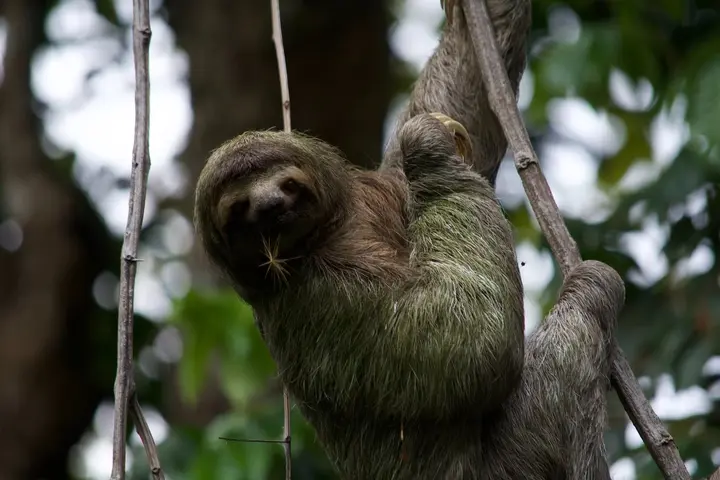
Third, sloths provide food for small organisms. Algae and fungi that grow on a sloth’s skin serve as food for tiny insects living on its body. In this way, a sloth’s presence supports other creatures in the ecosystem.
Given these benefits, sloths do have real biological value. Through their roles in feeding, seed dispersal, and supporting other organisms, they help maintain ecosystem balance and the natural life cycle. Thus, despite their slowness, sloths contribute important ecological services.
ADVERTISEMENT
Photo via Unsplash
In summary, the sloth is a uniquely remarkable mammal with surprising secrets and facts within its body. Despite a slow pace, it has a singular nature that enables it to survive and adapt. While slothfulness may be seen as negative in many cultures, sloths play a significant ecological role and help maintain balance. We can learn from them about conserving energy and finding better balance in our own lives.
Tasnim Alia
ADVERTISEMENT
How to Choose a Woven Straw Beach Tote That Can Actually Handle the Beach
ADVERTISEMENT
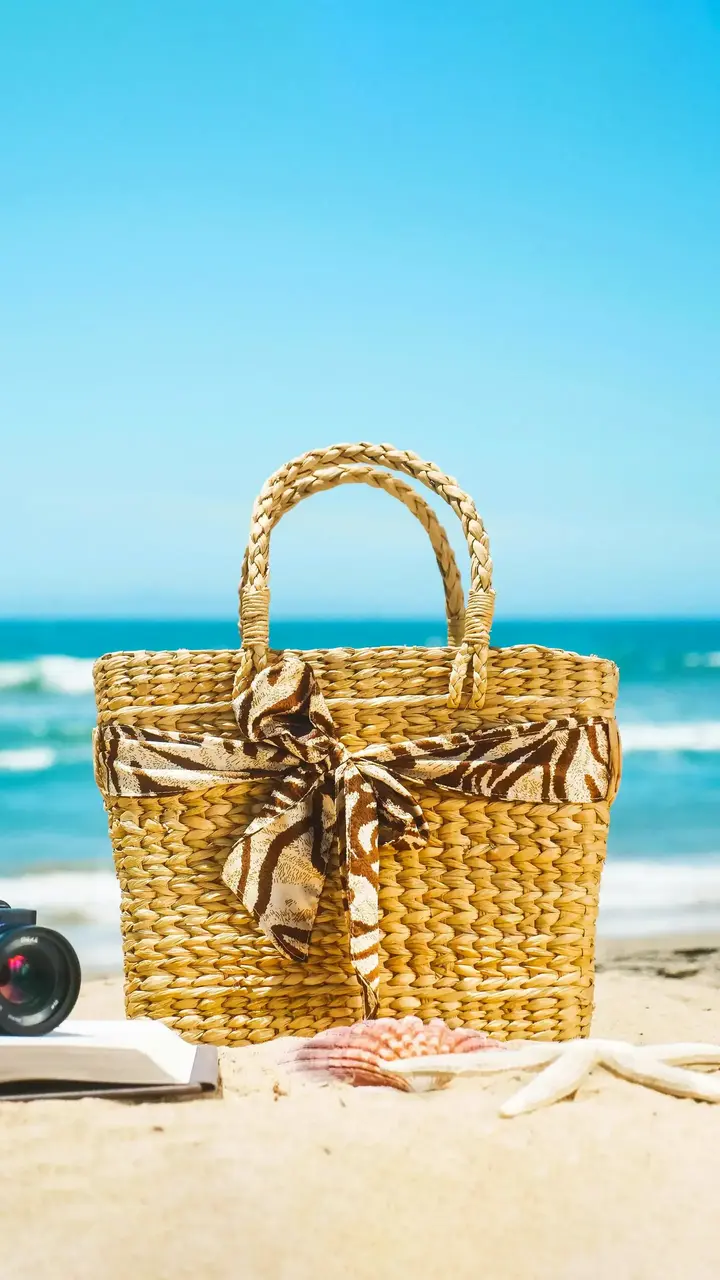
The detail most people shop for first—a pretty open weave or a scarf-tied handle—isn’t what decides whether a beach tote survives summer; the real test is abrasion resistance and how the handles are attached.
That sounds less fun than choosing the cutest straw bag on the shelf, but it is
ADVERTISEMENT
the difference between a tote that still looks polished in August and one that starts shedding fibers after one sandy weekend. Before you step onto the beach, do the parking-lot shake test in your head: where will sand rub, where will weight pull, and what part will fail first?
Stop admiring it for ten seconds and check these parts first
Hard cut: start at the base. Press it. If the bottom collapses like a soft placemat, the bag will sag once you add a towel, water bottle, sunscreen, and whatever else ends up in there by noon. A firmer base helps the bag hold its shape and keeps stress from concentrating in one droopy center point.
ADVERTISEMENT
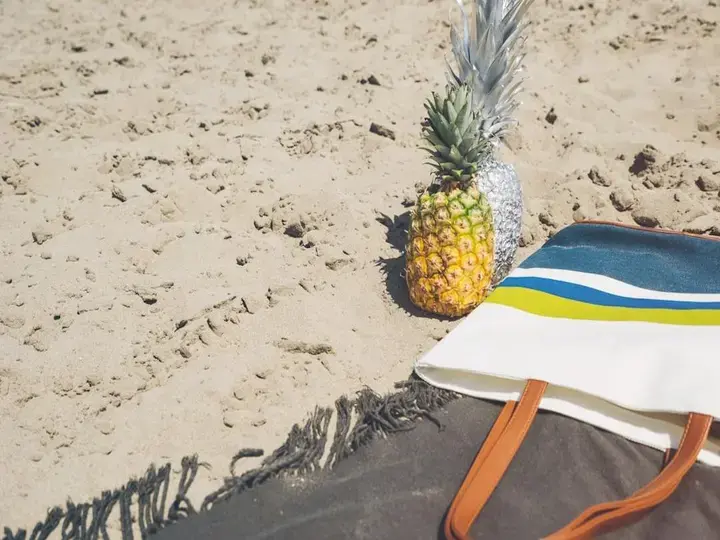
Photo by Pineapple Supply Co. on Unsplash
Rub the body lightly with your palm. Natural fibers can be beautiful, but rough abrasion matters here more than looks. Cotton Incorporated’s textile guidance on abrasion explains the basic problem: repeated rubbing breaks fibers down over time, and rough surfaces speed that wear. Sand is a rough surface that keeps rubbing all day.
Check the weave next. Hold the bag up and look through it. If the gaps are wide enough to easily see daylight and catch a fingernail, they are wide enough to invite grit inside and snag on corners, toys, or a zipper pull. Tighter weave, fewer loose ends, better odds.
Look inside. An unlined interior is not always a deal-breaker, but it is a warning sign for heavy beach use. A smooth lining or even a cleaner interior finish gives sand fewer places to lodge and grind. It also keeps damp items from rubbing directly against the woven body.
ADVERTISEMENT
Pinch the handle attachment. Not the handle itself—the join. If the handle is only threaded through a loose opening or stitched onto a small patch, that is where trouble usually starts. In bag construction, stress collects at joins, and the heaviest pulling happens every time you lift a loaded tote one-handed from the car or sand.
Then check the load shape. A tall, narrow tote can look elegant and still become top-heavy fast. A medium-width opening, a stable base, and some side structure usually carry beach weight better than a floppy vertical shape that twists when you walk.
Last, look for some kind of closure. Not because every beach bag needs to zip shut, but because an open mouth plus an open weave is how sand, wrappers, and damp clutter spread everywhere. Even a snap helps the bag keep its shape when it is half full.
ADVERTISEMENT
Here’s the part most people learn the annoying way: the prettiest woven tote may be the wrong beach bag.
A very soft, airy straw bag can be perfect for lunch, a book, and sunglasses. Put in two towels, a bottle of water, a pouch, and a child’s damp swimsuit, and that same bag may stretch, snag, and start fraying at the handles before the trip home. Style and function are not enemies, but they are not the same thing.
So what makes a woven tote actually beach-safe? Not a fake-perfect finish. Look for a straw-style or woven bag with a tighter body, a smoother interior or lining, reinforced handle anchors, and enough base structure that it does not fold in on itself when set down. Those details keep the summer look while doing the boring work that makes a bag last.
ADVERTISEMENT
Why sand ruins the wrong bag faster than you think
Run your hand across a rough, unlined weave and you can feel the problem right away: grit catches at your fingertips, tiny grains lodge in the gaps, and the inside starts to feel like sandpaper. That is not just messy. It is wear happening in slow motion.
The Textile Institute and standard textile testing methods such as ASTM abrasion tests treat rubbing as a real durability issue because fibers weaken when surfaces repeatedly scrape against them. At the beach, that scraping happens outside from sand and inside from trapped grit, wet towels, and shifting bottles. Open natural-fiber weaves are simply less forgiving than shoppers often expect.
This is also why failure usually does not begin in the pretty pattern you noticed first. It starts at friction zones and stress joins: the bottom corners, the inside where grit sits, and the points where handles meet the body. Once those areas loosen, the whole bag starts looking tired fast.
ADVERTISEMENT
If you carry light, woven straw can still work beautifully. Think book, sunscreen, sunglasses, maybe a small towel. If your beach days involve family gear, drinks, wet clothes, or bulky towels, be honest with yourself and move toward a lined woven tote, a canvas-straw hybrid, or coated fabric that gives the look without asking delicate fibers to do heavy lifting.
The 30-second store test that saves you from a one-trip bag
1. Rub the body once or twice. If fibers lift immediately or the surface feels scratchy and unstable, pass.
2. Pinch where each handle meets the bag. If that point feels thin, loose, or decorative instead of anchored, pass.
3. Check the inside. A lining, bound seams, or at least a smoother finish is better than a raw interior full of catch points.
ADVERTISEMENT
4. Look through the weave. Small, even gaps are easier to live with than large, irregular openings that invite sand and snags.
5. Set the bag down and imagine real weight in it. If it already slumps empty, it will not improve once packed.
6. Match it to your beach load. Light-duty woven bags are fine for light-duty days; heavy-duty beach hauling needs more structure, plain and simple.
There is a fair counterpoint here: it is just a casual beach bag. Maybe you do not need it to last for years. True. But a few small upgrades—lining, tighter weave, reinforced handles, a firmer base—usually make the bag look better longer too. It is not about turning a tote into camping gear. It is about avoiding the kind that looks worn out before summer is over.
ADVERTISEMENT
When you are shopping in person or packing from your closet, use the quickest filter possible: rub the weave, check for lining, pinch the handle joins, press the base, and only trust a straw tote with real beach duty if it stays tight, smooth, and structured under your hands.
Deniz Aksoy
ADVERTISEMENT
Suleiman the Magnificent: Was He the Greatest of the Turkish Sultans?
ADVERTISEMENT
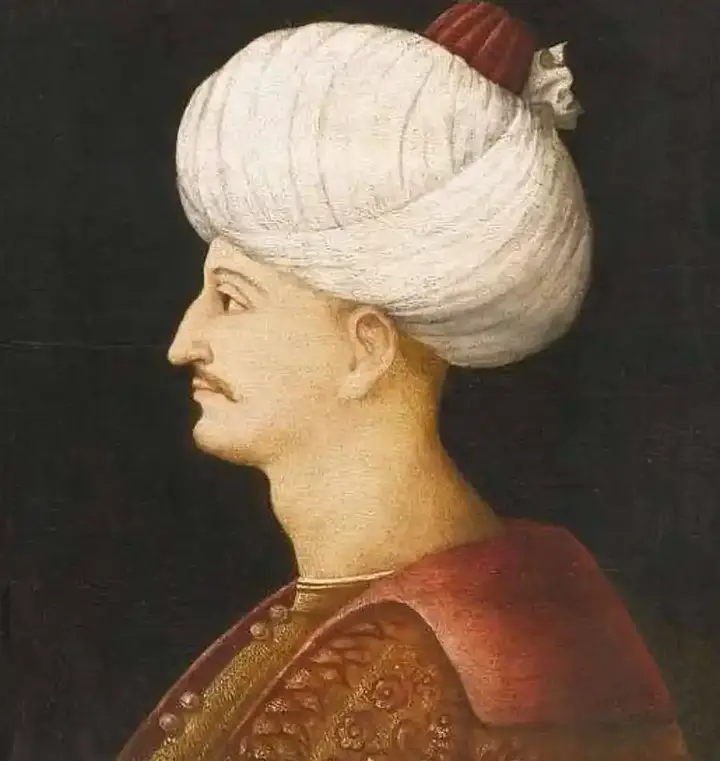
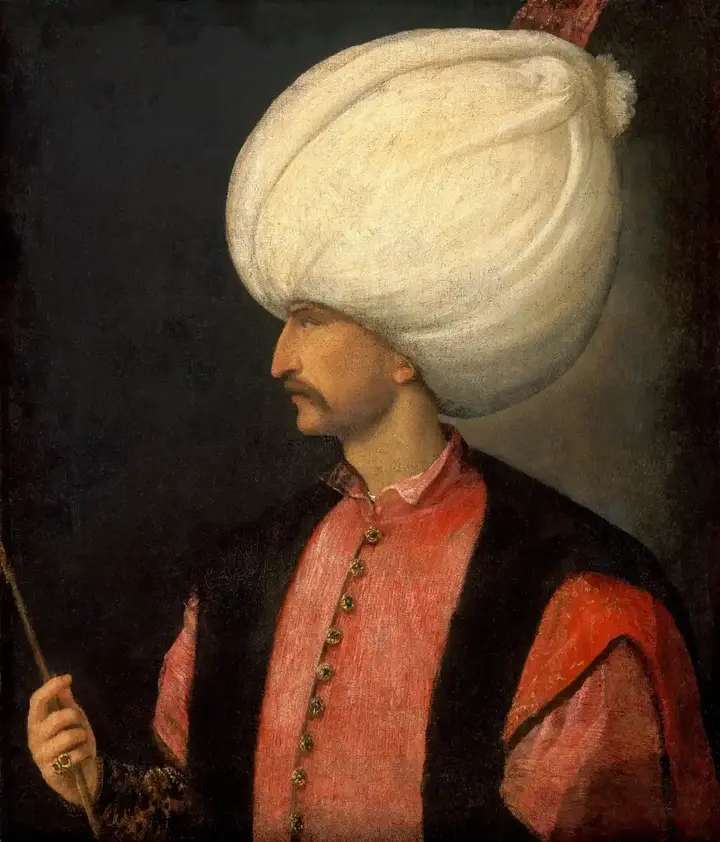
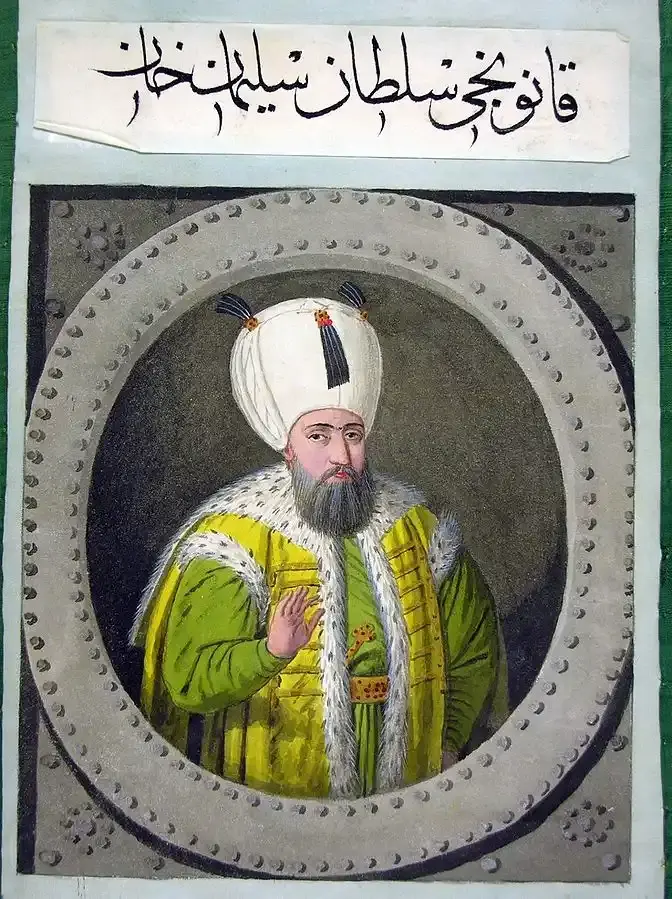
Suleiman I, commonly known as Suleiman the Magnificent, was the tenth sultan and one of the most prominent and influential rulers of the Ottoman Empire. He was the longest-reigning sultan in Ottoman history, succeeding his father, Sultan Selim I, in 1520 and ruling until his death in
ADVERTISEMENT
1566. Under his leadership the Ottoman state governed at least 25 million people. Suleiman presided over a period of notable expansion, cultural vitality, and administrative reform, and his reign is often regarded as the high point of Ottoman power—earning him the epithet "the Magnificent" in Western accounts. This article examines the main features of Suleiman the Magnificent’s life and rule.
ADVERTISEMENT
Military Conquests
Photo via Wikimedia
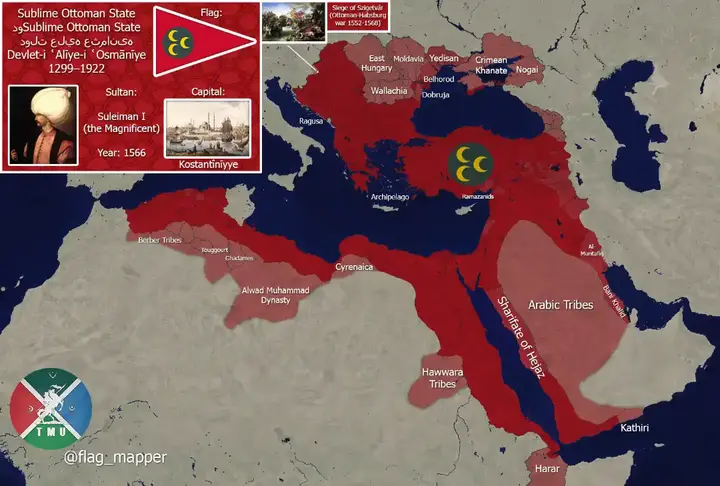
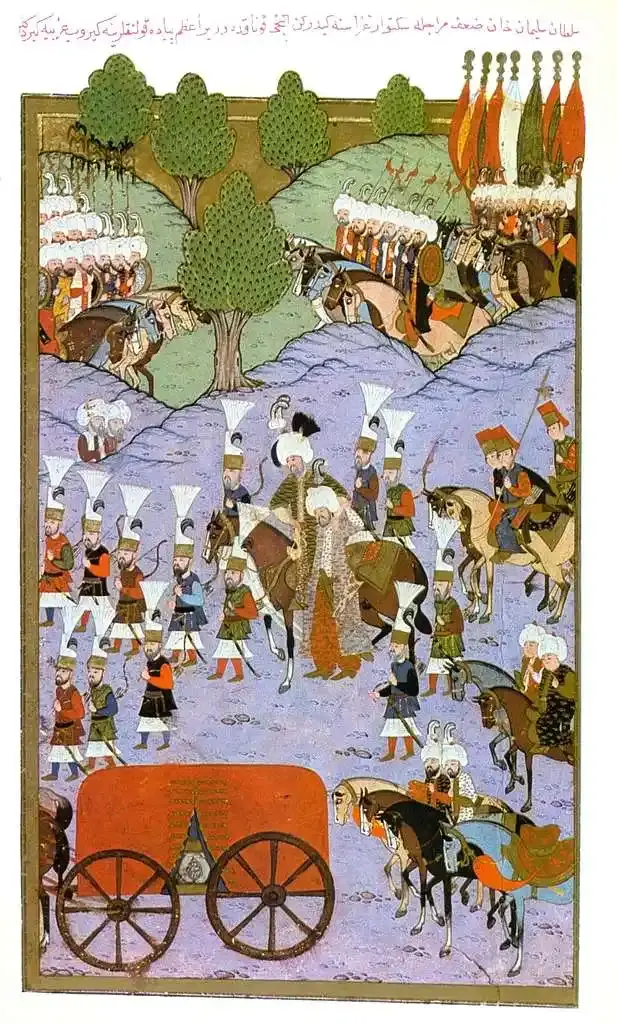
Suleiman the Magnificent’s reign was marked by major military campaigns that expanded the Ottoman realm to its greatest extent. He launched successful operations in Europe, taking Belgrade in 1521 and the island of Rhodes in 1522, and one of his most notable achievements was defeating Hungary at the Battle of Mohács in 1526. Ottoman forces made deep raids into eastern Europe, reaching Vienna in 1529. On another front, the empire extended its control over large parts of North Africa, advancing as far as Algeria during his rule.
During his reign Ottoman naval power also grew formidable. Khayr al-Din, known in the West as Barbarossa, became admiral of the fleet and won the naval Battle of Preveza off the coast of Greece in 1538 against combined Venetian and Spanish forces. That victory gave the Ottomans dominance in the Mediterranean until the Battle of Lepanto in 1571. Tripoli in North Africa fell to the Ottomans in 1551, and a strong Spanish expedition against Tripoli was defeated at the island of Djerba in 1560. Ottoman naval activity even reached as far as India: a fleet sent from Egypt attempted to capture the city of Diu from the Portuguese in 1538 but failed, a fate similar to the Ottoman attempt to take Malta in 1565.
ADVERTISEMENT
Cultural and Architectural Patronage
Photo via Pexels
Suleiman was a major patron of the arts and architecture, and his reign is associated with the cultural flowering often called the Ottoman Golden Age. Under his sponsorship, grand mosques, palaces, and public buildings were constructed, leaving a lasting architectural legacy. The Süleymaniye Mosque in Istanbul, built during his reign, remains a prime example of Ottoman architecture and reflects his support for cultural and artistic endeavors.
Legal and Administrative Reforms
Photo via Wikimedia Commons
Suleiman introduced important legal and administrative reforms that strengthened central authority. His most notable achievement was the codification of Ottoman laws and regulations into what is often called the Ottoman law code. This legislation addressed areas such as criminal law, land tenure, and taxation. It compiled the edicts issued by the nine Ottoman sultans who preceded him, removed duplications, and resolved contradictory rulings to produce a single code that respected the fundamental principles of Islam. The Ottoman law code endured for more than three centuries. These reforms helped simplify governance, improve efficiency, and promote fair administration of justice across the empire.
ADVERTISEMENT
Diplomacy and Statecraft
Photo via Wikimedia
Suleiman was an able diplomat and statesman who managed complex geopolitical relationships. He kept diplomatic ties with European powers such as France and Venice and corresponded with figures like King Francis I of France. At the same time he handled internal challenges within the empire and formed alliances with neighboring states. His diplomatic skill helped secure Ottoman interests and maintain relative stability during his reign.
Cultural Exchange
Photo via Getarchive
Suleiman’s court was a hub of cultural exchange and intellectual activity, and under his patronage the Ottoman Empire entered a golden era of cultural development. Hundreds of imperial art societies known as "Ahl al-Hunar" were established and administered from the imperial headquarters. After apprenticeship, artists and craftsmen could advance in their fields and were paid accordingly; preserved payroll records attest to Suleiman’s extensive patronage. His court attracted scholars, craftsmen, and artists from across the Islamic world and from newly conquered European territories, producing a blend of Arab, Turkish, and European influences. Craftsmen serving the court included painters, bookbinders, furriers, and jewelers. Suleiman also supported education and the arts; he himself wrote poetry in Persian and Turkish under the pen name "Muhibbi."
ADVERTISEMENT
Longevity and Stability
Photo via Getarchive
Suleiman ruled for nearly half a century. Despite the challenges of overseeing a vast and diverse empire, his period on the throne was marked by relative stability and prosperity, earning him admiration and respect both inside and beyond Ottoman domains.
Legacy and Impact
Photo via Wikimedia Commons
Suleiman’s reign left a lasting imprint on the Ottoman Empire and the wider world. His military campaigns extended Ottoman influence into Europe, shaping the political order of the Mediterranean and the Balkans for centuries. His administrative reforms provided a foundation for governance for generations that followed, and his cultural patronage spurred a flourishing of Ottoman art, literature, and architecture. Overall, Suleiman the Magnificent is remembered as one of the most celebrated and accomplished rulers in Ottoman history, symbolizing the peak of the empire’s power, prosperity, and cultural achievement.
ADVERTISEMENT
Conclusion
Photo via Wikimedia Commons
Suleiman the Magnificent combined military strength, cultural patronage, legal and administrative reform, and diplomatic skill. These qualities set him apart as one of the greatest Turkish sultans in history, and his legacy continues to be celebrated for its enduring influence on the Ottoman Empire and the world.