Why a Quiet Country Bend Can Be More Dangerous Than a Highway Stretch

It looks like the kind of road that should be relaxing, but a quiet country bend can demand more from a driver than a highway stretch because you can’t see as far ahead, you often have less room to recover, and the surface can change grip from one turn to the next.
عرض النقاط الرئيسية
- A quiet country road can be more dangerous than a highway because blind bends reduce visibility and recovery space.
- Drivers should only travel at a speed that allows them to stop within the distance they can currently see.
- Blind curves can hide hazards like stopped vehicles, cyclists, animals, rocks, or tightening turns.
- ADVERTISEMENT
- Limited shoulders, ditches, rock walls, and soft road edges leave little room for correction on rural roads.
- Changing surfaces such as gravel, mud, damp patches, or leaf litter can quickly reduce tire grip in a corner.
- Low traffic can create false confidence by removing warning cues that normally help drivers judge risk and speed.
- The safest habit is to slow before the curve, scan farther ahead, stay disciplined in your lane, and expect unseen hazards.
That matters because defensive driving is not about how calm a road feels. It is about visibility, traction, speed, and how much space you have left when something goes wrong.
Try one quick self-check the next time you come up on a blind bend: could you stop within the distance you can currently see? If the answer is no, you are outrunning your visibility, even if there is not another car in sight.
The bend is quiet. The work starts there.
قراءة مقترحة
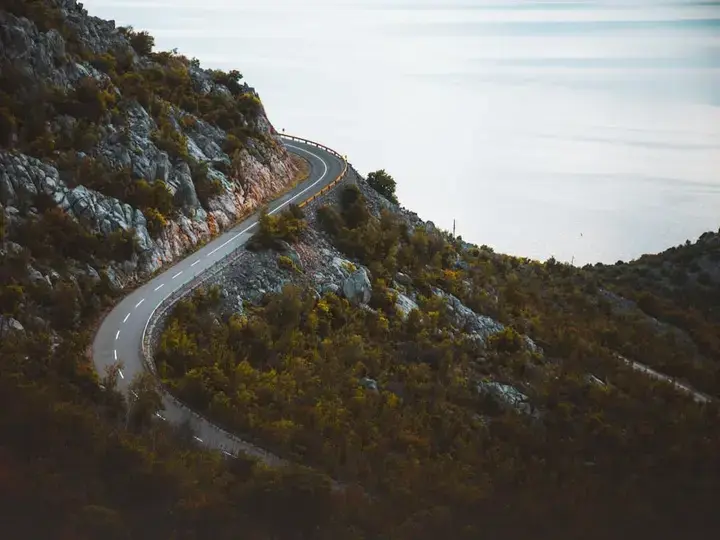
The first hidden demand is the blind curve. On a highway, sight lines are usually longer, turns are gentler, and road design gives you more warning. On a rural mountain road, a bend can hide a stopped pickup, a cyclist, a deer, falling rock, or just a turn that tightens after the point where you thought you had it read.
Take one ordinary sequence: you enter a left-hand curve, the bank and trees block the far side, the shoulder narrows, and halfway through the turn the radius gets smaller. That means the road bends more sharply than it first appeared. The fix is simple but not casual: slow before the turn, not in the middle of it, and hold a speed that lets you stay in your lane if the curve keeps tightening.
This is where many everyday drivers get caught out. The road is empty, so the brain reads that as permission to carry a little more speed. But empty only means fewer moving clues. It does not mean the bend has become easier.
One practical change helps right away: look deeper into the curve for the farthest point you can see, then set your speed to that limit, not to how comfortable the straight section felt a few seconds earlier.
When there’s nowhere to go, small mistakes get expensive fast
The second demand is limited escape room. Many rural roads give you little shoulder, fixed objects close to the pavement, soft edges, ditches, rock walls, or a drop-off. A highway usually gives you wider lanes, more recovery area, and more consistent markings.
That changes your job as a driver. On a narrow country bend, you do not have much spare pavement if an oncoming truck cuts the centerline, if gravel pushes you wide, or if you realize late that the turn is sharper than it looked.
So translate what you see into one behavior change: if the shoulder disappears or looks soft, leave more lane margin and enter the turn slower than you think you need to. Speed is not just about stopping distance. It is also about how much steering correction the car will tolerate before grip starts to run out.
That is basic driver training, not bravado. The safer driver is usually the one who made the earlier decision, not the one with quicker hands.
The surface may not tell you it changed until it already did
The third demand is changing grip. Rural roads can shift from clean pavement to dust, gravel, patched asphalt, leaf litter, farm mud, or damp shaded sections within one short stretch. The risk is not mystery. Tires simply have less traction on loose or slick material, so braking and turning both ask more from them at the same time.
The Federal Highway Administration has long noted that rural roads carry a disproportionate share of traffic deaths compared with the share of travel they handle, and one reason is that road design and roadside conditions often leave less margin for error. That does not tell you what is around your next bend, but it does support the basic point: lower traffic does not erase physical risk.
For the driver, the useful move is to read the road surface as actively as you read the curve. If you see loose material near the edge, dark patches in shade, or rough repairs before a corner, finish more of your braking while the car is still straight. Ask less of the tires once you are already turning.
You do not need racing language for this. You just need to remember that grip is a budget. Spend too much on speed before a bend, and there is less left for steering when the surface changes.
Quiet roads can feel open and simple. They often look like the easy part of a trip.
If this road feels safer simply because it’s empty, what exactly are you trusting?
Not other cars, mostly. You are trusting your own reading of visibility, grip, and escape room, including the parts you cannot yet see. That is the update many drivers need: traffic is not the only hazard signal. On rural mountain roads, the road itself is the active variable.
Low traffic removes one warning system your brain depends on
The fourth demand is false confidence. Busy roads give you cues all the time: brake lights ahead, lane position from other drivers, signs placed for higher volumes, and the simple fact that traffic keeps you mentally alert. An empty road can do the opposite. It lets your speed creep up without much protest.
That does not mean you are careless. It means the usual warning cues are missing. A calm road can hide how much work the next blind bend, narrow shoulder, or dusty patch is quietly asking from you.
Here is the plain adjustment: slow earlier, widen your scan, read the shoulder, check the surface, leave margin, expect the unseen.
Treat each bend as a fresh problem, not as proof that the last bend was easy. That one habit alone keeps many ordinary trips ordinary.
A fair point: highways can be brutal too
Not every quiet rural road is dangerous, and not every highway is safer. Highways bring higher speeds, more vehicles, chain-reaction crashes, and their own severe risks. The point here is narrower than that.
Emptiness is not a safety guarantee. Low traffic often removes warning cues while leaving the physical demands in place. On some back roads, it leaves you with fewer margins than you would have on a busier, better-engineered highway.
What to do the very next time you meet a blind bend
1. Set speed before the curve. If you need significant braking while already turning, you likely entered too fast for what you could see.
2. Keep your eyes working farther ahead. Look for where the shoulder goes, whether the bend tightens, and whether the surface changes color or texture.
3. Give yourself more room than feels necessary. Stay disciplined in your lane, especially where there is little shoulder or no recovery area.
4. Assume something could be just beyond sight distance. That is not fear. It is standard defensive driving logic applied early enough to matter.
A peaceful road can still be a demanding one. The best immediate habit is to treat every blind bend as occupied until proven otherwise.
You do not need to be tense on roads like these, just earlier with your decisions. That is usually enough to turn a pretty drive into a safe one.