How Green Meadows and Year-Round Glaciers Can Share the Same Mountain
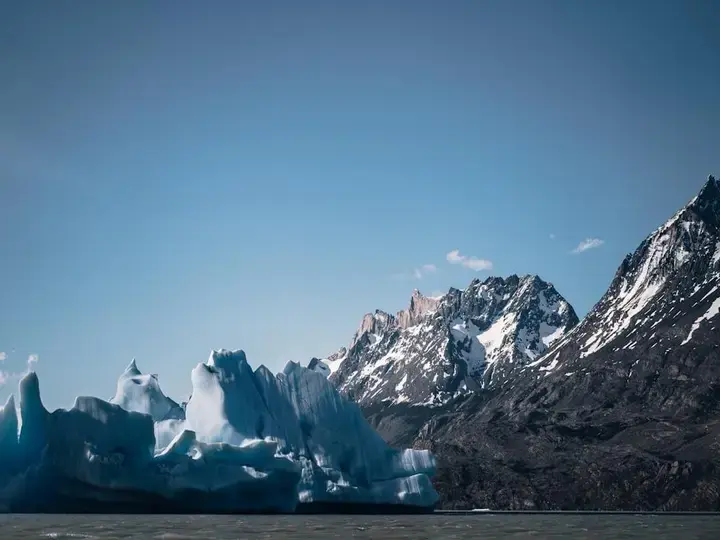
It looks impossible, but green summer meadow and year-round glacier are exactly what you should expect on a tall mountain. The place has not failed to choose a season. It is following a simple rule: every step up the mountain changes the temperature enough that summer at your boots and ice above your head can live side by side.
عرض النقاط الرئيسية
- Temperature usually drops with elevation, so a few thousand feet can separate warm meadow conditions from snow and ice above.
- Mountains stack multiple microclimates vertically, meaning different elevations and landforms can feel like different seasons on the same day.
- South-facing slopes usually melt faster while north-facing slopes stay cooler and hold snow longer.
- ADVERTISEMENT
- Snow reflects much of the sun’s energy, so bright snowpacks often resist melting better than darker ground.
- Deep, shaded, wind-drifted snow can survive summer long enough to compact into firn and eventually glacier ice.
- Warm air in a meadow does not erase colder conditions higher up, where altitude, shade, wind, and snow depth all matter.
- Cold air draining from snowfields and glaciers can make nearby valleys and basins feel surprisingly chilly even in summer sunshine.
That is the main answer right away. The meadow and the glacier are not opposites sharing one spot. They are neighbors sitting on different rungs of the same mountain thermostat ladder.
The first rung: why a little climb changes everything
Start with altitude. As you go higher, air pressure drops, and the air usually gets cooler. The U.S. National Weather Service explains the common rule of thumb this way: air temperature drops about 3.5 degrees Fahrenheit for every 1,000 feet you climb, or about 6.5 degrees Celsius per 1,000 meters. That drop is called the lapse rate, which is just a plain term for how fast temperature falls with height.
قراءة مقترحة
That number does a lot of work. Climb 3,000 feet from a warm valley or meadow, and the air can be roughly 10 degrees Fahrenheit cooler. Climb 5,000 feet, and the difference can be enough to turn shirt-sleeve weather below into snow-holding conditions above, especially if the upper ground starts with a deep winter snowpack.
This is not just theory from a classroom chart. The National Park Service uses the same basic rule in mountain parks because visitors can feel it in a single outing: temperatures often fall as trails rise, and snow can linger far above flowers that are already in full summer bloom.
Now make it bodily for a second. Imagine standing in warm grass with the sun on your forearms. Then you climb a short rise, or you walk into air draining off a glacier, and your skin cools fast enough that you reach for a layer. That little jolt is the mountain teaching the rule better than any diagram can.
The aha: a mountain does not have one weather setting
Here is the part that clears up the whole puzzle: a tall mountain does not have one single climate at one single moment. It stacks climates vertically over short distances. The meadow, the upper snowfield, the shaded gully, and the windy ridge can all be running under slightly different rules on the same afternoon.
Once you see that, the scene stops feeling contradictory. Warm grass is reporting the conditions where you are standing. Glacier ice is reporting the conditions higher up, often only a mile or two away on the map but thousands of feet away in elevation.
The second rung: why one slope melts fast and the next one stays white
Altitude is the big driver, but it is not the only one. Slope exposure matters too. In the Northern Hemisphere, south-facing slopes usually get more direct sun, warm earlier in spring, and lose snow faster. North-facing slopes get less direct sun, stay cooler, and often keep snow much longer.
Mountain scientists and park interpreters lean on this point because you can see it with your own eyes on many ranges. Two slopes at the same elevation can look like different months of the year. One carries grass and wildflowers. The other still holds streaks of old snow in the shade.
Snow also helps protect itself. Fresh snow reflects most incoming sunlight, which keeps it from absorbing as much heat as darker ground. The National Snow and Ice Data Center has long explained this albedo effect in plain terms: bright snow bounces much of the sun's energy back out, while rock and soil soak up more heat.
The third rung: why some snow hangs on long enough to become ice
Not all snow starts equal. A shallow spring snowfall on a sunny slope may vanish quickly. A deep pile packed into a shaded basin, or drifted by wind into a hollow, can last much longer simply because there is more of it to melt and less sun hitting it.
That persistence matters. If snow survives one summer, then another winter adds more on top, the weight slowly squeezes the older layers. Over time the snow grains compact, air spaces shrink, and the mass can turn first into dense firn and then glacier ice. The U.S. Geological Survey describes glaciers in just those terms: they form where more snow falls each winter than melts each summer over many years.
So the ladder is simple. Higher air is colder. Shaded slopes keep their cool. Deep snow lasts longer. Snow that lasts can become ice. Put those together on a tall mountain, and meadow plus glacier is not odd at all. It is what the mountain should do.
Still stuck on one thing? So is everybody
The common objection is fair enough: if the meadow feels hot, should not all the nearby snow melt? Not really, because your warm patch of ground does not erase colder conditions a short vertical distance away. A few thousand feet is enough to change the air. Shade changes the sun. Wind changes the feel. A thick snowpack changes the math again by giving summer more frozen material to chew through.
There is also an honest limit here. This pattern is common on high mountains, but the exact snow line is never fixed like paint on a wall. It shifts with the season, recent storms, wind drifting, slope direction, cloud cover, and the shape of the local terrain.
What your skin already knows before your brain catches up
Here is the midway reset. Think again about warm skin in a meadow. Then picture a short climb, or even a step into cold air flowing off snow and glacier ice. Your arms and face feel the change almost at once. The mountain is not switching seasons on you. It is stacking them, one above another, and sometimes letting the cold spill downhill in little rivers of air.
That is why glacier-fed valleys and upper basins can feel oddly chilly even on a bright summer day. Cold dense air tends to drain downslope, especially at night and in the morning. You can stand in sunshine and still feel a thread of refrigerator air sliding past your knees. That is not your imagination. It is local physics with no drama attached.
A real-world check you can try on your next mountain stop
On any mountain outing, try this small test. First, compare a sun-facing slope with a shaded one at about the same height. The greener or more melted side is often the one getting more direct sun.
Then notice the wind. If air coming from a snowfield or glacier makes you want a jacket while the meadow does not, you are feeling a microclimate, not a mystery.
Last, pay attention to your own comfort after even a modest climb. If you gain 1,000 or 2,000 feet and suddenly want a hat or an extra layer, you have just done a body-scale lapse-rate experiment.
One mountain, several summers at once
Mountain meteorologists often say elevation compresses climate into short distances. The good plain-language version is better: a mountain can hold several kinds of summer at once. Down low, grass grows because the ground is warm enough and the snow has long since melted. Higher up, snow hangs on because the air is colder, the sun hits differently, and winter left a bigger frozen savings account behind.
That is why famous alpine places from the Rockies to the Alps keep giving people the same pleasant surprise. You can walk through flowers, look up, and still find old snow or glacier ice doing exactly what the physics says it should be doing.
So if you find yourself in warm grass with ice still shining above, relax. The mountain is not breaking the rules; it is showing them clearly. Next time, read it vertically: grass, shade, wind, snowline. Once you know that trick, the whole place feels friendlier and a lot easier to understand.