The Off-Road Mistake Performance-Car Drivers Make on Open Grass

A Porsche 911 Turbo can be almost useless on open grass sooner than most drivers expect, because what looks like a gentle parking spot can take away the one thing the car actually needs: grip.
عرض النقاط الرئيسية
- A performance car can lose traction quickly on wet or soft grass because tire grip is limited and power only uses up that grip.
- Road-focused tires are designed for dry pavement and often cannot bite into damp grass, moisture, and soft soil.
- Wide tires, strong torque, and modern electronics help only within the small amount of traction the surface provides.
- ADVERTISEMENT
- Adding more throttle on slick grass usually makes things worse by spinning the tires and polishing the surface underneath.
- If stuck, the best response is to use gentle throttle, straighten the wheels, and avoid digging the tires in deeper.
- Creating texture under the tires with gravel, mats, traction boards, or brush can improve the contact patch more than extra power can.
- Before parking on grass, check ground firmness and the exit route, because restarting from rest is often harder than rolling in.
That sounds dramatic until you strip the badge and the bravado off it. Tire grip is a limited budget. Power does not create traction; it spends it. On grass, especially if there’s moisture in the blades and softness underneath, that budget can vanish fast.
Why the harmless-looking patch is the trapdoor
The plain-English version from tire dynamics is simple: a tire can only transmit so much force before it slides. Racing schools and advanced driving programs teach the same thing in different words. Friction is finite, and once you ask for more than the surface can give, the tire stops rolling cleanly and starts slipping.
قراءة مقترحة
That matters because performance cars are usually set up for dry pavement. Their tires often use soft compounds and shallow tread patterns meant to key into asphalt, not into wet grass laid over soft soil. Michelin’s driving guidance for low-grip surfaces makes the same basic point you hear from winter-driving instructors: smooth inputs help, but no electronic system can invent grip that the surface does not offer.
Wide tires, big torque, driven rear wheels or all four of them, it all sounds reassuring right up until the tire meets a surface it cannot bite. A road tire works best when the rubber can interlock with texture. On compressed grass, the tire can end up riding on a slick layer of plant material and moisture, with loose earth underneath.
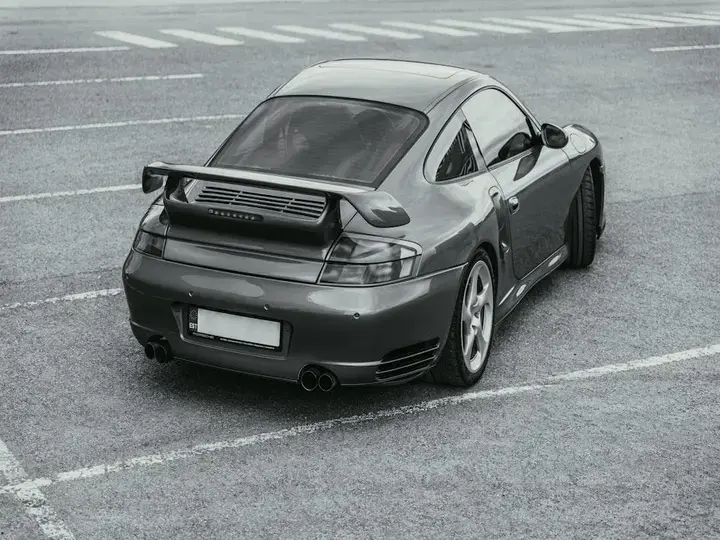
This is the bit people remember once they’ve felt it. Rough gravel looks sketchy, but the tire can often claw into it and find edges. Smooth grass looks friendly, yet if it’s damp and the soil underneath is soft, the tire cannot key in. It smears. Then it spins. Then it polishes the surface into something even slicker.
That is the real aha. The prettier, smoother surface can offer less usable traction than the rougher-looking one. Not because grass is magic, but because the contact patch needs texture and support. Wet blades plus compressed organic mush over yielding dirt is about as far from supportive as a road-biased performance tire likes to be.
But shouldn’t a modern performance car cope better than this?
It is a fair objection. A 911 Turbo has wide tires, serious engineering, smart stability systems, and enough torque to start a family argument. Surely that should count for something.
It does count, just not in the way confidence wants it to. Wide road tires can spread load nicely on asphalt, but on wet grass they may skate over the top or smear the slick layer instead of cutting through to anything solid. Stability control can trim engine output and brake a spinning wheel, which helps prevent a mess, but it still works within the traction available. If the surface gives almost nothing, the electronics are managing scarcity, not performing miracles.
That is why advanced driving schools keep coming back to the same boring-sounding truth: smoothness and surface reading beat horsepower on low grip. The car is not failing. It is reporting the conditions honestly.
What should you do if you’ve already stopped there?
Stop.
Assess. If the driven wheels have started to polish the grass, every extra stab of throttle is usually making a shinier, slicker launch pad.
Unload the throttle. Let the tire try to roll instead of spin. If your wheels are turned, straighten them. A tire asked to steer and pull at the same time has even less grip left for moving the car.
Avoid digging. If the car has selectable modes, choose the gentlest throttle response you have. If traction control is intervening, leave it on unless the manufacturer specifically recommends otherwise for that situation; on grass, wild wheelspin is usually the enemy, not the cure.
Seek texture. A bit of gravel, a rubber mat, traction boards, even dry brush in a pinch can give the tire something to bite. The goal is not more power. The goal is a rougher interface under the contact patch.
If there is a slight downhill route to firmer ground, use that rather than trying to muscle uphill from rest. And if people are pushing, use the smallest throttle opening that keeps the tire rolling. Spinning impresses nobody and helps even less.
The 20-second check that saves the awkward recovery
Before you pull off for the photo stop or picnic, do a little self-check. Press your heel or the edge of your shoe into the ground. If it compresses, feels greasy, or leaves a wet sheen, your tires may find even less support than your shoes do.
Also look at the exit path, not just the parking spot. A tiny rise, a camber change, or a patch that has been flattened by other cars can turn a simple departure into an audience event.
Pretty ground can still strand a smart driver. Check firmness, check your way out, and remember that confidence is not the same thing as grip. I learned that with a sweet-green smell in the air and my dignity parked somewhere behind the rear axle, and you do not need to repeat my lesson to keep enjoying the drive.