Desert Balanced Rocks Aren't Shaped by Wind Alone

People often say the wind carved desert balanced rocks, but wind is mostly the loud performer, not the main builder; the bigger work is usually done by cracks, weak cement between grains, and the small amounts of water a dry country still gets. If you give me a minute at this pullout, I can show you how a tower of sandstone gets narrowed, undercut, and left standing without needing a geology course.
عرض النقاط الرئيسية
- Wind helps polish and expose desert rocks, but it is usually not the main force that creates their narrow necks and balanced forms.
- Weathering breaks rock down along fractures, bedding planes, and weakly cemented layers before erosion removes the loosened material.
- Small amounts of desert moisture seep into cracks, dissolve or weaken mineral cement, and prepare the rock for further breakdown.
- ADVERTISEMENT
- Salt crystal growth, wetting-and-drying cycles, and occasional ice can push sandstone grains apart and cause flaking or crumbling.
- Balanced rocks often survive because a harder caprock protects weaker or more fractured rock beneath it from wearing away as quickly.
- Sandstone strength varies within the same outcrop because grain cement and post-burial changes are not uniform throughout the rock.
- A better way to read a balanced rock is to look for crack lines, softer layers, and resistant caps instead of blaming wind alone.
The National Park Service and the U.S. Geological Survey both make a plain distinction that helps right away: weathering breaks rock down, while erosion carries the loosened material away. In deserts, that breakdown often begins inside the rock along fractures and weak layers, through water, salt, and temperature changes, before wind comes along to sweep, polish, and expose the result.
قراءة مقترحة
Why the Obvious Story Feels Right
You can see why the wind gets blamed. It never seems to stop for long in much of the Southwest, and it does move sand that can sandblast exposed stone. On open surfaces, especially softer sandstone, that abrasion can smooth faces, sharpen edges, and help clear away grains that were already loosened.
But here is the correction that matters: wind by itself usually does not explain why one part of a rock narrows into a neck while a layer above stays broad and intact. For that, you have to look inside the stone. Sandstone is not one uniform block. It is made of sand grains glued together by natural mineral cement, and that cement is not equally strong everywhere.
So if not mostly wind, what starts the damage? Very often it starts with inherited fractures, bedding planes, and changes in how tightly the grains were cemented when the rock formed. A crack gives water a doorway. A weakly cemented band gives it a place to do more work than your eyes can see at first.
The Hidden Carpenter Inside the Rock
Think of the process in simple shapes you could sketch on a napkin: crack, seep, weaken, shed, remain. First comes the crack. Sandstone commonly has joints and fractures from burial, uplift, and stress over long spans of time. Those weak lines matter because weathering attacks weaknesses faster than solid interiors.
Then comes the seep. Even in arid country, rain does fall, dew forms, snow can melt, and brief runoff reaches rock faces and ledges. Water moves into cracks and pore spaces. In some sandstones it dissolves tiny amounts of the mineral cement, especially where that cement is calcite or other soluble material. In other places it simply sets up the next round of damage.
Then the rock weakens. A 2010 review by Sunamura in Earth-Science Reviews on rock weathering and erosion emphasized that rock form depends not just on external abrasion but on material strength and weathering along structural weaknesses. In arid sandstone country, one of the quiet workers is salt. As water evaporates, salt crystals can grow in pores and cracks, pushing grains apart. The National Park Service notes this in many desert park geology pages: salts, ice where conditions allow, and wetting-and-drying cycles can break rock apart grain by grain.
Now the pace quickens. Crack opens. Water slips in. Salts grow. Grains loosen. Flakes fall. Small bits drop by gravity or get washed off in short runoff. The harder cap remains. That is how a broad top can outlast a softer or more fractured section below it.
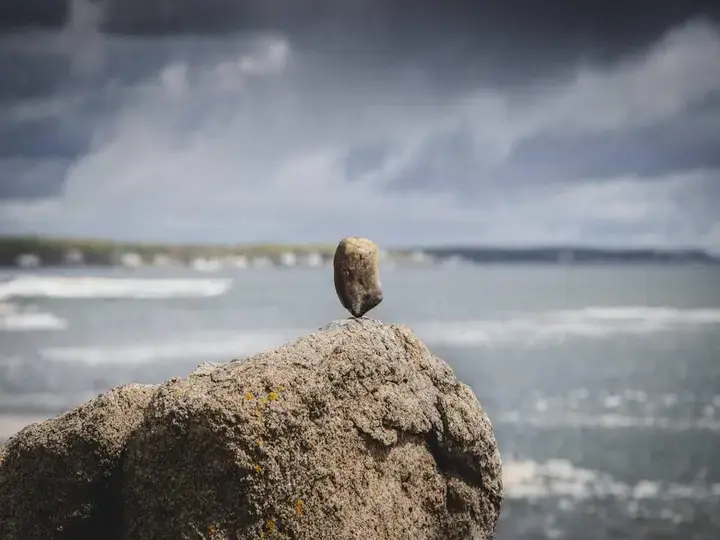
No single tower follows one script exactly, and it is only fair to say so. Local mineral mix, bedding, crack direction, storm history, and whether the rock has a tougher caprock all change the details. What you are getting here is the common pattern, not a pretend one-size-fits-all origin story.
The Half-Truth Everybody Can See
Now, to give the obvious story its due: desert wind is real muscle. It moves dunes, drives sand against exposed stone, strips away fine debris, and can visibly shape outer surfaces. Stand in a gusty basin long enough and you do not need a geologist to tell you wind is doing something.
But here is the jolt. Wind can polish and clear away loosened material, yet it usually cannot by itself explain why one band narrows while another holds. That depends on fracture patterns, cement strength, and mineral makeup, plus the rare but repeated work of moisture-driven weathering. Wind is the showman out front. The hidden carpenter is inside the rock, working the weak joints and softer layers.
You can see this in well-known Southwest examples where balanced forms persist because a tougher layer protects weaker rock below. The National Park Service explains Balanced Rock in Arches National Park in those terms: a more resistant cap of Entrada Sandstone rests above less resistant Dewey Bridge Member material, and weathering and erosion remove the weaker rock faster. Wind is part of that story, but not the whole thing, and not the deciding part.
What Your Hand Can Tell You That the View Cannot
If you ever get the chance to touch permitted bare sandstone at a trail stop, lay your fingertips on that sun-warmed surface for a second. It often feels chalk-dry and slightly gritty, not like one poured slab. That little grit is your clue.
Sandstone is a built thing in the geologic sense, a mass of grains held together by cement. When the cement weakens along a crack or a softer bed, grains do not all let go at once. They loosen selectively. A surface may look solid from ten feet away while, close up, it is already preparing to flake or crumble along the weaker zone.
That is why the desert can seem to make sculpture out of almost nothing. The drama comes from infrequent water meeting built-in weakness over and over again, with gravity and runoff carrying off what has been softened. Wind often arrives afterward to tidy the stage and make the shape easier for us to notice.
A Better Way to Read a Balanced Rock
Here is a small self-check for your next overlook. Before blaming the wind, look to see whether the narrow part follows a crack line, a softer-looking layer, or a zone where the rock is flaking grain by grain. Then look above it. Is there a harder cap that seems to be surviving while the section below gives way faster?
That habit will get you closer to the truth than simply judging which side is most exposed to open air. Surface exposure matters, yes. But structural narrowing is usually a story of differential survival: weaker zones fail first, stronger zones hang on.
A review by McBride and Picard in 2004 in the Journal of Sedimentary Research, discussing sandstone petrology and diagenesis, also helps make sense of this for non-specialists: sandstone strength depends heavily on what cements the grains and how that cement changed after burial. You do not need the full technical details. You only need the takeaway that not all sandstone is equally well glued together, even within the same outcrop.
The Desert Is Quieter Than the Story We Tell About It
So the old line is not entirely wrong; it is just incomplete. Wind matters. It abrades, sweeps, and reveals. But the shaping that makes a balanced rock possible usually begins with fractures, variable hardness, and those modest visits from water that work deep into the stone before anything dramatic falls away.
That makes these formations more interesting, not less. They are not simple wind sculptures. They are survival stories, where the parts with the better cement, the luckier fracture pattern, or the tougher cap outlast the parts around them.
Next time you stop in desert country, look for the crack line or the harder caprock before you blame the wind. The Southwest does some of its finest work quietly, and once you know that, the rocks feel less like tricks and more like old companions telling the truth plain.