Why Sports Coupes Sit Low and End Short

That low roofline and short rear are not mainly there to look dramatic; they exist because aerodynamic drag, vehicle balance, and the hard packaging of people, wheels, suspension, and crash structure all push the shape in the same direction.
عرض النقاط الرئيسية
- A coupe’s low roofline reduces frontal area and helps cut aerodynamic drag at speed.
- Lowering the cabin, glass, and structure also lowers the center of gravity, improving stability in braking and direction changes.
- Cabin position, wheelbase, seat height, suspension, crash structure, and fuel tank packaging largely determine coupe proportions before styling begins.
- ADVERTISEMENT
- A short rear overhang helps centralize mass, improve agility, and create a more balanced visual stance.
- Coupe rear design balances airflow management with practical needs like luggage space, exhaust routing, and crash performance.
- Cars like the Porsche 911 and Toyota GR86/Subaru BRZ show how honest coupe proportions come from engineering constraints as much as design intent.
- Good coupe styling usually starts with hard functional points, while designers refine the final shape to add emotion without ignoring physics.
Car designer and educator Frank Stephenson has said more than once in plain terms that proportions come first: wheelbase, cabin position, safety needs, and airflow set the car up before surface drama arrives. In other words, a sports coupe is usually a physical solution before it becomes a sketchbook fantasy.
Start with the roof. A lower roof reduces frontal area, and frontal area is a basic part of aerodynamic drag. Drag force depends on drag coefficient, air density, and frontal area, which is why sports cars work so hard to stay low while taller vehicles cut a bigger hole through the air at speed.
قراءة مقترحة
That same roof also affects the center of gravity. Keep the cabin, glass, and structure lower and you keep mass lower, which helps a car feel calmer in direction changes and braking. What looks like a sleek gesture from outside is often the visible result of wanting less air resistance and less body movement.
Why the Cabin Sits Where It Does
Then come the wheels and the people. In a coupe, the occupants usually sit relatively low and close to the wheelbase rather than upright above it, and that changes everything you see from the side. The hood length, roof peak, and rear deck are all negotiating around seat height, suspension travel, fuel tank placement, luggage space, and crash structure.
Short, stacked version: low roof lowers frontal area. Short rear reduces overhang. Cabin placement affects balance. Wheel position defines stance.
A good real-world comparison is a sports coupe next to a more upright hatchback or sedan of similar footprint. The upright car keeps more headroom, a taller glasshouse, and often a more vertical rear opening because daily utility matters more; the coupe gives away some of that easy space so the mass sits lower, the airflow leaves more cleanly, and the wheel-to-body relationship feels tighter and more planted.
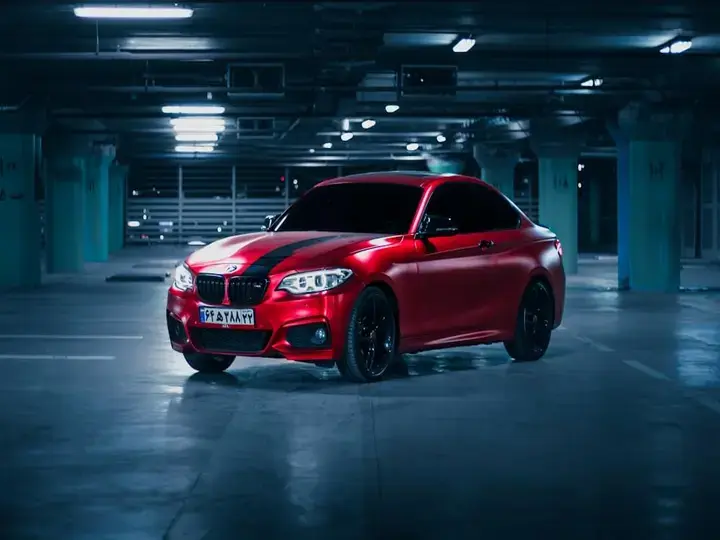
Rear length matters too. A long overhang puts more body beyond the axle, which can add visual heaviness and work against the compact, balanced feel designers and engineers want. Keeping the rear end short can help centralize mass, improve the sense of agility, and reduce the amount of body hanging out behind the rear wheels, even though the tail still has to manage luggage volume, exhaust routing, crash performance, and airflow separation.
Aerodynamics makes that rear section especially interesting. A coupe does not need an endlessly tapering tail like a pure streamliner; road cars need usable packaging and reasonable overall length. So designers often aim for a controlled fastback line or a neat cutoff at the tail, trying to let the air stay attached long enough to reduce wake turbulence without turning the whole car into a teardrop too long to park or sell.
Beauty, here, is pressure made visible.
The Part That Looks Aggressive Is Often Just Compromise
If you want the aha moment, it lives right there: what reads as aggressive styling is often the visible compromise between drag, center of gravity, rear packaging, occupant space, and high-speed stability. Once you see that, the car stops looking like a pose and starts looking like a solved problem with a little poetry left in it.
There is a nice example in the Porsche 911, a shape refined for decades around rear-engine packaging, rear-axle load, cooling needs, and high-speed stability. Another sits in the Toyota GR86 and Subaru BRZ, where the low roof, low seating position, compact cabin, and short rear work with a low-mounted flat engine and a wheel-at-the-corners stance to make the proportions feel honest rather than inflated.
Then the car rolls onto loose ground and you hear the soft crunch of gravel under the tires as it settles to a stop. In that little hush, the shape makes more sense, because nothing is moving and yet the body still looks as if forces are passing through it from nose to tail.
That is why a parked coupe can feel calm, fast, and a touch sad at once. The calm comes from the low center of mass and long horizontal read. The speed comes from the way the roof, glass, and tail suggest air being managed. The sadness, if you feel it, may come from how much utility has been edited out to leave only what the shape most needs.
Yes, Designers Add Theater Too
It is only fair to add the qualifier. Some coupe shapes are exaggerated by brand styling choices, so not every low roof or tight rear deck is purely functional. A designer can sharpen a shoulder line, darken the glass, stretch the visual dash-to-axle proportion, or pinch the greenhouse to make the car look more intense than the engineering alone required.
But the better way to think about it is this: the hard points come first, then the styling team gets a limited but real chance to sharpen, soften, or romanticize the result. Good coupe design is rarely function versus beauty. It is function first, then beauty working carefully around it.
Try a quick self-check next time you see one parked. Trace four points with your eyes: the wheel centers, the highest point of the roof, the angle of the rear glass, and where the tail cuts off. Those four clues will tell you whether the car is mostly obeying physics, or dressing itself up a little louder than physics asked.
What looked like pure styling now reads more clearly as visible engineering. Next time a coupe catches you, read the roof, wheel placement, and tail as clues rather than decoration, and the shape opens up. Once you see that, dusk or no dusk, the car feels less mysterious in the best possible way.