84 Calories Is What Makes Blueberries a Smarter Snack Than They Taste

At about 84 calories per cup, blueberries do more useful work than most people expect from something this light-tasting—and that is exactly why they punch above their weight at breakfast or snack time. The short version is simple: they give you a lot of food volume, useful fiber, and a handful of nutrients for not many calories, which is a very practical trade when you want something that feels fresh instead of punishing.
عرض النقاط الرئيسية
- One cup of raw blueberries has about 84 calories, 3.6 grams of fiber, and provides vitamin C, vitamin K, and manganese.
- Blueberries are mostly water, so they add volume and help a meal feel more filling without adding many calories.
- They can make yogurt, oatmeal, or cottage cheese more satisfying by contributing bulk, chew, and fiber.
- ADVERTISEMENT
- Their anthocyanin-rich pigments are linked in research to potential vascular, metabolic, cardiometabolic, and cognitive benefits.
- Blueberries are nutritious and helpful, but they are not a magic fix and work best as part of an overall healthy diet.
- On their own, blueberries may not provide lasting fullness, especially for people who need more protein or fat in a snack.
- A practical way to use them is to add a cup to breakfast or an afternoon snack with protein, such as Greek yogurt.
Here is the factual base layer. The USDA lists 1 cup of raw blueberries at roughly 84 calories, with about 3.6 grams of fiber, plus vitamin C, vitamin K, and manganese. That is not marketing language. It is just the ordinary nutrition profile of a common serving, and it explains why a cup of blueberries can make a breakfast bowl feel more substantial without making it heavy.
قراءة مقترحة
Why 84 calories is the part people get backwards
Low calories are often treated like a warning sign, as if the food must be flimsy or unsatisfying. But in snack design, low calories can be a strength when they come with water, fiber, and real volume. Blueberries are mostly water, so a cup takes up space in the bowl and in your stomach in a way a tiny sweet snack with the same calories often does not.
That is why a cup of blueberries changes a yogurt bowl from sweet to more filling. You are not just adding flavor. You are adding bulk, chew, and fiber, which slows the whole thing down a little and makes breakfast feel like food instead of garnish.
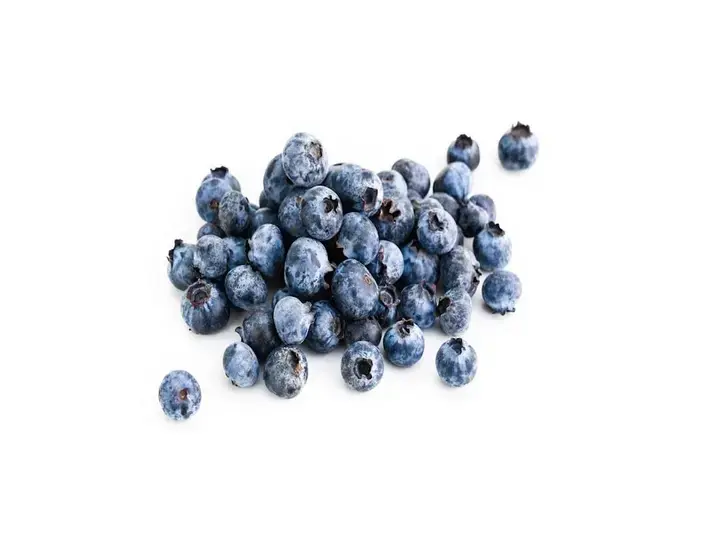
The micronutrients matter too, but only if they connect to real eating. Vitamin C supports normal immune function and helps make that cup feel like more than just sugar in fruit form. Vitamin K and manganese are there in meaningful amounts as well, so when you scatter blueberries over oatmeal or fold them into cottage cheese, you are not only making the bowl prettier or sweeter—you are widening the nutrition return on a very small calorie spend.
Then there are the dark blue pigments, the anthocyanins. A 2020 review by Rodriguez-Mateos and colleagues in Advances in Nutrition looked at evidence on berry polyphenols and noted potential benefits for vascular and metabolic health, while also making clear that these foods work as part of an overall healthy diet, not as a stand-alone fix. In plain terms: blueberries are helpful, interesting, and worth eating, but they are not magic and they do not cancel out the rest of your habits.
Calories. Fiber. Water-rich volume. Vitamins. Anthocyanin pigments. Easy to eat. Easy to pair. That case gets strong fast.
Have you ever mistaken a light flavor for light nutrition? Blueberries taste gentle, but nutritionally they are not empty.
The breakfast moment where this finally clicks
Picture the spoon going through cold yogurt and catching crunchy granola, then a blueberry skin gives way and lets out that mild sweet-tart juice. Nothing about that bite tastes loud or dense. That gentleness is part of why blueberries are easy to underestimate, even though the nutrient payoff is bigger than their soft flavor suggests.
This is where the 84-calorie point becomes useful instead of just interesting. If a breakfast feels skimpy, blueberries can add volume and fiber without tipping the whole meal into heavy territory. If an afternoon snack feels flat, they can freshen it up while still leaving room for the part that actually keeps you going, like Greek yogurt, a handful of nuts, or a higher-fiber granola.
Researchers have also looked at blueberries and brain and heart-related markers, largely because of those polyphenols. A 2023 review in Antioxidants on blueberries and health effects described evidence pointing toward benefits in cardiometabolic and cognitive areas, while also noting that findings depend on the amount eaten, the study design, and the rest of the diet. So yes, there is real research interest here. No, it does not turn blueberries into a cure-all.
The honest catch: sometimes blueberries need backup
But blueberries alone may not keep you full for long. This doesn’t mean blueberries are automatically the best snack for everyone—especially if you need more protein or longer-lasting fullness.
That is not a flaw so much as a pairing note. Blueberries shine when they ride alongside protein or fat: stirred into yogurt, spooned over cottage cheese, eaten with a few nuts, or added to oats that have enough texture to slow you down. In those setups, the berries bring freshness, fiber, and volume, while the partner food gives the staying power.
If your snack leaves you hungry in under an hour, ask what it’s missing: protein, fiber, or enough volume? Blueberries can cover the fiber-and-volume side nicely, but they are often best when another food handles the protein piece.
A very easy way to use this this week
Healthy food does not have to arrive with intensity to be useful. Sometimes the smart move is the quiet one: a cup of blueberries making breakfast bigger, brighter, and more satisfying for only about 84 calories.
This week, add a cup of blueberries to one breakfast or afternoon snack, ideally with protein—Greek yogurt is the easiest place to start. It is a small spoonful of effort, and it pays back more than it first lets on.