Mathematicians Wrote a Proof for a 100-Year-Old Problem—and May Have Just Changed Geometry

Two mathematicians now say they've made progress in solving a very old, unsolved mathematical problem. The problem involves a subfield called geometric measure theory, in which sets of objects are generalized in an advanced way using properties such as diameter and area. According to the duo's recent research (which has not yet been peer-reviewed), it turns out that examining things through the lens of geometry can reveal other interesting properties that objects may share, which is valuable in the increasingly interdisciplinary field of mathematics.
The Kakia Set:
In a special problem in geometry called the "Kakia Set," mathematicians ask how small a space must be in which a line, or a needle, can rotate through 360 degrees. You might imagine something like a rotating needle in a board game or a spinning stick, so the rotating needle must be in a circle. But the reality is much more complicated, because space can essentially be reused by different needles, and the needles' positions don't need to have the same midpoint. And if you move them around in clever ways, you can do much better.
Recommend
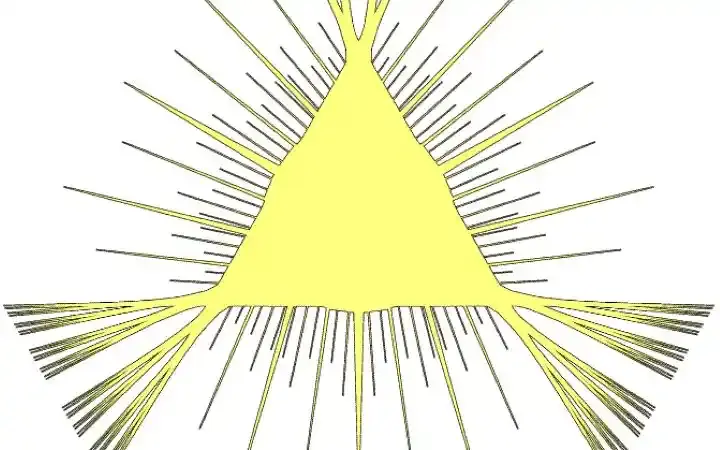
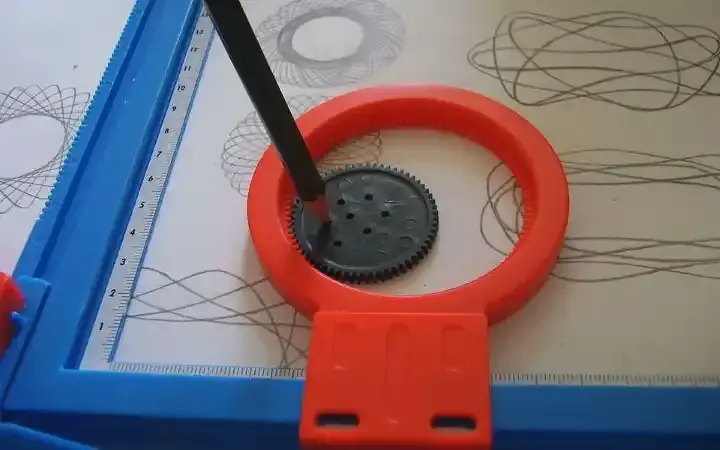
This creates shapes like the spirograph, a roughly triangular shape that might remind you of the old-fashioned drawing game where you draw shapes on paper by rotating them (called a spirograph). The spirograph can have a much smaller area than the circle surrounding the same needle rotating like a stick. Mathematicians studying this problem are essentially trying to find the smallest possible spirograph—whatever its shape ultimately is—across a variety of spaces.
The Kakiya set—named after its discoverer, Soichi Kakiya—was further complicated by a later mathematician named Abram Samoilović Pescovich. Pescovich introduced the idea that a Kakiya set transposed to a different number of dimensions could have an area of zero. This is a specific definition that involves surrounding a given element with points that can be brought closer and closer together until they almost disappear, with the intuitive meaning of having no area at all. Mathematicians cannot codify and prove this intuitive meaning without a basis in mathematics.
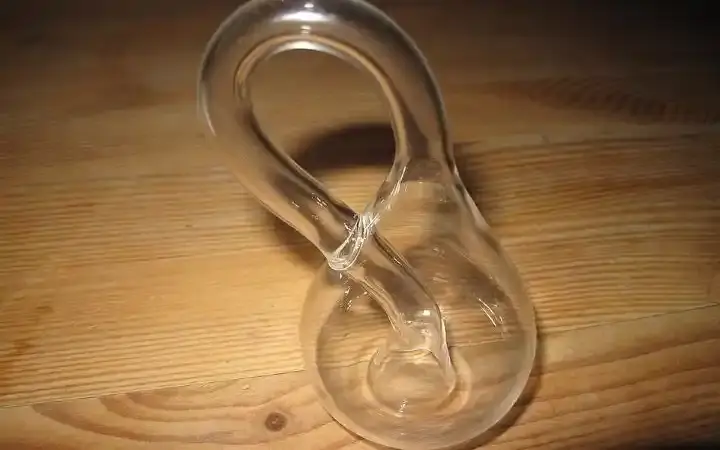
As a result, this problem—and others like it, all of which were puzzling to those already immersed in similar concepts—ultimately contributed to the creation of the field of geometric measure theory. If you've ever seen a Klein bottle illustration (an iconic depiction of a four-dimensional shape squeezed into a three-dimensional version that our human minds can analyze), it's just one example of the intellectual exercise of geometric measure theory.
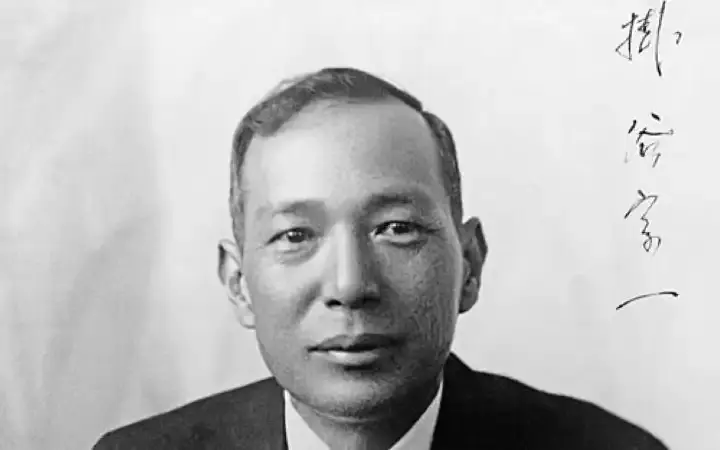
Khakiah died in 1947 and Pesekovich in 1970, so even the most recent possible formulations of these questions have been open and unproven for at least 55 years. But they actually date back 100 years, when both men were in their mathematical prime... so to speak. Since then, mathematicians have racked their brains over different types of Khakiah sets in different types of spaces and with different properties. After all, there is no limit to the number of dimensions something can have.
Reframing the Problem:
As is often the case with recent discoveries, the secret for these two mathematicians—Hong Wang of New York University (NYU) and Joshua Zahl of the University of British Columbia (UBC)—was to reformulate the thorny problem using lateral thinking. While this solution relies on recent developments in the field, it combines many new ideas with remarkable technical mastery. For example, the authors were able to find a statement about tubular intersections that is more general than the Kakia conjecture, and at the same time easier to process using a powerful approach known as induction over scales.
Induction on a Scale:
By making fundamental substitutions and clarifications to the original problem, Wang and Zal opened the door to a type of proof called induction on a scale. A classic proof by induction involves showing a relationship between, say, a value of 1 and a value of 2. If you can transform these concrete values into a generalization using mathematical notation instead, such as n and (n + 1), you can simplify and solve the mathematical problem so that the solution applies to all possible values of n, not just 1 and 2.
Induction on a scale is similar, but it involves manipulating the scale of something. In their proof, Wang and Zal consider pipes rather than simple lines or needle shapes. We all know what a pipe is, but mathematically, it is a set of points at a specific distance and position from a specific line, curve, or shape—such as a key, circle, or knot. This means that they have a certain three-dimensional dimension when applied to a two-dimensional shape, which is what turns a straight line into a straw. The size of these pipes can then be adjusted to demonstrate properties about the needles they surround.
Expert opinion:
Terence Tao, a mathematician and Fields Medalist (a medal awarded to mathematicians under 40 to compensate for the absence of a Nobel Prize), analyzed this 125-page proof in a detailed blog post, where he also described the work as an “astonishing advance.” Such complex proofs often emerge over decades as people iterate over small parts of the same problem—a process that is part chiseling and part letter-by-letter deciphering. In his analysis, Tao already points to several places where the work can be iterated over again, now that the piece is in place.