Marrah Mountain of Darfur , A Natural Wonder in Sudan
ADVERTISEMENT
In the heart of Darfur in western Sudan stands a towering mountain that captivates the eye and draws adventurers from far and wide. Jebel Marra is Sudan's highest peak and one of the country’s most famous natural landmarks. It is more than a geographical elevation: a rare landscape of waterfalls,
ADVERTISEMENT
valleys, dense forests and volcanic lakes. The mountain’s terrain and climate are strikingly different from Darfur’s arid surroundings, making it a thriving agricultural area and a refuge for rare species. From the summit to the foothills, the view enchants visitors: blue lakes, green terraces and vibrant rainforests. Jebel Marra is both a natural landmark and a cultural symbol, set amid ancient mountain villages and rich local legends. A trip there is more than tourism; it is a contemplative experience that reconnects people with nature.
ADVERTISEMENT
Photo by Hammy07
Where is Jebel Marra located and how do you reach it?
Jebel Marra lies in the Darfur region, roughly between the towns of Zalingei and Nyala, and covers an area of about 12,000 square kilometers. The mountain is part of an extinct volcanic chain, and its highest point reaches roughly 3,042 meters above sea level.
To reach Jebel Marra, you first travel to Zalingei or Nyala by air or overland. From there the journey begins, ascending the mountain in four-wheel-drive vehicles or on foot along marked trails. The route requires local coordination and a guide who knows the terrain well, but the effort is rewarded by a remarkable experience.
The road to the summit passes simple mountain villages, dramatic valleys and dense forests, giving the sense of moving from one world into another. Arriving at the mountain is like entering a complete natural realm unlike anywhere else in Sudan.
ADVERTISEMENT
The extinct Jebel Marra volcano: the geological history of the region
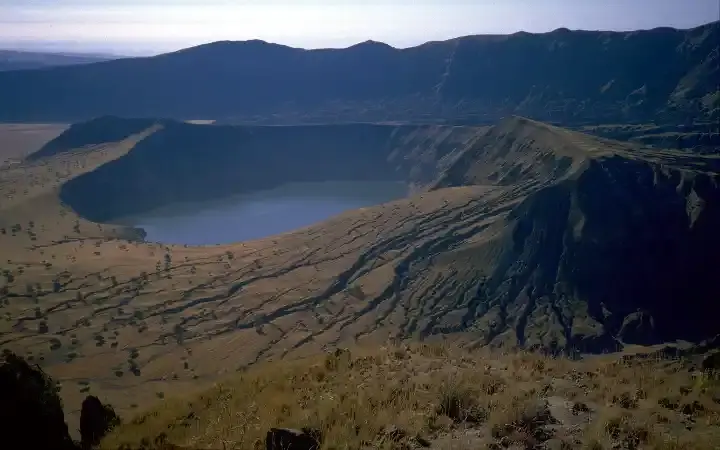
Jebel Marra is more than a towering rock mass; it is a rare volcanic formation that holds millions of years of geological history. Once an active volcano, it is believed to have ceased erupting thousands of years ago, leaving behind a captivating landscape and features such as volcanic craters and crater lakes.
The main crater near the summit contains Lake Deribat, a beautiful lake formed within the ancient caldera. Its deep blue waters sit below towering rock walls, reminders of the volcanic eruptions that shaped this exceptional place.
Ancient volcanic activity helped produce the rich soils of Jebel Marra, making it one of Sudan’s most fertile agricultural areas and explaining the flourishing farms around the mountain. The uncommon volcanic rocks scattered along the slopes also draw geologists from around the world. If you enjoy earth sciences or nature adventures, walking around the extinct Jebel Marra volcano combines the grandeur of the landscape with the wonder of its origins.
ADVERTISEMENT
Jebel Marra waterfalls: a symphony of water amid the rocks
When you visit Jebel Marra, don’t miss one of Sudan’s most magnificent natural sights: the Jebel Marra waterfalls. They are more than water tumbling over stone; they form a magical chorus of droplets against dark volcanic rock.
The most famous is Qaloul Waterfall, which rushes through dense trees into a small lake ringed by rocks and wild plants. The scene resembles a painted landscape, with cool sprays of water filling the air and natural rainbows forming in sunlight.
These waterfalls draw visitors from across Sudan, especially during the rainy season when their flow peaks. The sites are ideal for rest, photography and quiet reflection on the beauty of creation.
ADVERTISEMENT
The Jebel Marra waterfalls are not only tourist attractions; they are vital ecological resources, nourishing surrounding farmland and supporting the region’s biodiversity. They are the mountain’s heart, pulsing with water and life.
Photo by Ahmed Rasool
Environmental and animal diversity in the Marra Mountains
Jebel Marra is more than a landmark; it is an integrated ecosystem teeming with life. Because of its altitude and cooler climate compared with the rest of Darfur, the mountain is a natural refuge for many plant and animal species, some of which are rare and endemic.
The mountain supports evergreen forests with trees such as baobab, cypress and acacia, along with medicinal herbs and plants used by local people for generations. This rich vegetation provides ideal habitats for a variety of animals and birds.
ADVERTISEMENT
Wildlife includes several species of gazelles, monkeys, hyenas and even leopards, together with colorful mountain birds such as hoopoes, woodpeckers and black vultures. Rare reptiles and amphibians have been recorded in valleys and among the rocks.
This ecological diversity makes Jebel Marra a true biological treasure worthy of protection as a nature reserve. Every tree and every bird on the mountain speaks to a unique natural balance that sets this place apart in Sudan.
Agriculture in Jebel Marra: a green paradise in the heart of Darfur
Although Darfur is known for its semi-arid climate, Jebel Marra is a striking exception: its slopes are fertile and green year-round. Abundant rainfall and volcanic soil have made the region one of Sudan’s important centers of agriculture.
ADVERTISEMENT
Local people practice terraced mountain farming, an ancient method adapted to steep slopes that makes the most of available land. A wide range of crops are grown on Jebel Marra, particularly mangoes, apples, potatoes, tomatoes and corn, along with leafy vegetables such as lettuce and parsley.
The region is one of the few places in Sudan where cool‑climate fruits like apples and pears thrive, thanks to the highland’s mild temperatures. The quality of the produce has also made the area a destination for fruit and vegetable traders from across Sudan.
Farming here is more than a livelihood; it is a way of life tied to the land and its rhythms. It is a green agricultural paradise beating with life amid the harsher landscape of Darfur.
ADVERTISEMENT
Can Jebel Marra become a global tourist destination?
The short answer is yes. Jebel Marra has all the ingredients to become one of Africa’s and the world’s leading ecotourism destinations. Who does not seek a place that combines natural beauty, tranquility, authenticity and biodiversity? Jebel Marra has all of that, but it needs promotion and support.
If infrastructure such as roads, accommodation and tourist services were developed, the mountain could welcome nature lovers, climbers, photographers and travelers seeking unique experiences. The area could become a world-class national park attracting visitors from Sudan and abroad.
Promoting Jebel Marra on global platforms, including it in ecotourism itineraries and working with conservation organizations would help put the mountain on the international map. Involving local communities in sustainable tourism would protect the environment while creating jobs for residents.
ADVERTISEMENT
In short, Jebel Marra deserves recognition, exploration and celebration worldwide as a symbol of Sudanese nature at its most beautiful.
Photo by Santosh Seethumadavan
The most famous waterfalls in Jebel Marra: paintings of water and nature
The waterfalls of Jebel Marra are among the region’s most striking attractions, known for their breathtaking beauty and rare ecological diversity. Scattered through dense forests and rugged highlands, they create enchanting scenes that shift with the seasons.
The most famous of these waterfalls are:
1. Qaloul Waterfall: Located near the village of Qaloul, it is the mountain’s most famous waterfall. It plunges from a great height and forms a small lake surrounded by trees and wild plants. It is beautiful year-round, with peak flow during the rainy season.
ADVERTISEMENT
2. Katrum Waterfall: Found on the eastern side of the mountain, it is known for its steep drop and roaring sound. It attracts adventure seekers and nature photographers.
3. Soni Waterfall: Noted for its gentle flow and location among green hills, it is an ideal spot for family outings and relaxation.
The waterfalls are not only destinations for visitors; they also provide crucial irrigation for nearby farmland and help maintain the mountain’s distinct ecosystem. They are truly rare water treasures in the heart of Sudan.
Photo by Ramah Al-Zaybar
Conclusion
Jebel Marra is the beating heart of Sudanese nature, full of life, beauty and history. From its roaring waterfalls to its volcanic craters and verdant plains, the mountain offers an unforgettable experience and deserves a permanent place on the global tourism map. Are you thinking of visiting Jebel Marra one day?
Joshua Bell
ADVERTISEMENT
Unveiling the Mystery: Why Are Conceptual Cars Rarely Produced?
ADVERTISEMENT
Every now and then you might see cars—or just photos of them—that look unlike anything on the road. They seem unlikely to escape the velvet ropes and security at shows to ever hit the street.
These intriguing vehicles, often called innovative cars, evade our constant craving for novelty and are
ADVERTISEMENT
forgotten year after year. Why do they exist in the first place? And if they are built, why don’t we see them on the road? Buckle up—we're about to find out!
Why Do Manufacturers Build Innovative Cars?
Photo from Unsplash
Before we examine why innovative cars don’t make it to the road, it’s important to understand what they represent. These vehicles may—or may not—be prototypes that lead to production models. Depending on how carefully they’re conceived, they can remain experiments on the drawing board or evolve into real-life models. Innovative cars cover the whole range, from concept sketches and computer renderings to clay or wax models and full-scale prototypes.
ADVERTISEMENT
Here’s a fun fact—most innovative cars never see the light of day. Very few are kept, and even those are often not fully operational. Still, automakers invest significant effort and resources in making them. Here’s why.
Proof of Concept
Photo from Unsplash
It’s not enough for a car to look great on paper; it must work in the real world. Innovative cars are the best way to confirm or disprove ideas about design and engineering.
They also serve as testbeds for new technologies, design languages, features, materials, and more.
Design Excellence
Photo from Unsplash
Innovative cars are often developed with generous budgets and flexible timelines. Free from the usual optimization, trade-offs, and cost-cutting, they give manufacturers room to explore ideas to their fullest.
ADVERTISEMENT
At trade shows and auto exhibitions, they also act as powerful marketing tools, showcasing a manufacturer’s skills across different areas of car making.
A Glimpse into the Future
Photo from Unsplash
Beyond showmanship, extravagant concepts often reflect a manufacturer’s vision of the future. Features, engineering ideas, and styling shown in innovative cars may eventually appear—at least in part—in future production models.
Why Aren’t Innovative Cars Produced?
Photo from Unsplash
All vehicles that use public roads must comply with certain regulations. These rules exist to protect passengers and the public. Some of these regulations include:
Limiting engine power to reduce accidents.
Avoiding sharply designed components that could increase the risk of injury to vulnerable road users.
ADVERTISEMENT
Requiring crumple zones and other safety features that need specific space within the vehicle.
Because innovative cars are designed with a lot of creative freedom, they may violate some or all of these rules. As a result, they aren’t suitable for public roads and therefore aren’t fit for mass production.
High Cost of Mass Production
Photo from Unsplash
Features included in innovative cars can be well ahead of their time—or simply very expensive. Putting them into production would raise costs and push up prices, making the cars less attractive to buyers. For example, a concept fitted with a premium sound system or an advanced heads-up display might be irrelevant for a vehicle aimed at the average customer. Adding such features could drive the price up and hurt sales.
ADVERTISEMENT
Design Impracticality
Photo from Unsplash
Production vehicles are designed to appeal to the widest possible audience, both in looks and function. Innovative cars, by contrast, aren’t necessarily built with buyers in mind. While they make great engineering or design exercises, they often offer little practical benefit to ordinary customers.
Take, for instance, a car made from exotic materials that crease like skin when doors open, or one that uses foam pads instead of seats to save weight. Some concepts might even feature aircraft-style engines as a technical showcase.
Although these models push material science and engineering forward, they add little real value for most buyers. Sometimes a promising technology is simply ahead of its time and may lose relevance for some customers.
ADVERTISEMENT
What Happens to Innovative Cars at the End of Their Lifecycle?
Photo from Unsplash
Once an innovative car has served its purpose, it usually follows one of these paths:
Complete dismantling or destruction to protect the manufacturer’s intellectual property.
Preservation in the manufacturer’s facility for marketing and historical purposes.
Sale to museums or private collectors, often with strict measures to prevent them from being registered for road use.
Aside from being unavailable for regular use, innovative cars have another downside: what seems ultra-futuristic at first often loses its novelty over time.
Design ages. What looks futuristic at one point may not be fashionable a decade later. Automakers must focus on what customers want, not just on their own preferences. Still, innovative cars are usually designed with a decade of the future in mind.
ADVERTISEMENT
Innovative cars are a great way to introduce customers to things they might want in the future. Most importantly, they show buyers things they didn’t even know they wanted!
Álvaro Quintana
ADVERTISEMENT
The Majestic Grey Crowned Crane Encounter: A Breathtaking Creature from Africa
ADVERTISEMENT
Among the stunning wildlife of Africa's wilderness and savannas wanders a majestic bird: the Grey Crowned Crane. It is one of the most enchanting creatures you can encounter in nature. Seeing this remarkable bird is a rare chance to experience the magic and grandeur
ADVERTISEMENT
of African forests.
1. The Journey Begins: From Egg to Bird
Photo by Miguel Cuenca on Pexels
Deep in Africa's dense forests, a mother crane lays her precious egg — a moment full of awe and expectation. She shelters it beneath her broad wings, watching closely for new life.
After many days she keeps vigil, waiting for the chick to hatch. At last the first crack appears in the shell.
More cracks follow as the chick works its way out. When the shell breaks, a tiny bird emerges, unsteady on its feet and mottled in gray and brown.
ADVERTISEMENT
The delicate chick stumbles as it learns to stand and move. Its down shows subtle striping, each feather reflecting the challenges these birds face as they grow.
As its wings strengthen, the Grey Crowned Crane grows into its full majesty. It soars over the savanna, displaying feathers that showcase nature's artistry. The adult's gray plumage shines, a striking example of Africa's rich wildlife.
2. Structure of the Grey Crowned Crane: Distinctive Features and Unique Adaptations
Photo by Pixabay on Pexels
When a Grey Crowned Crane appears, you immediately notice its distinctive form. This remarkable bird has features and adaptations that help it survive in a demanding environment.
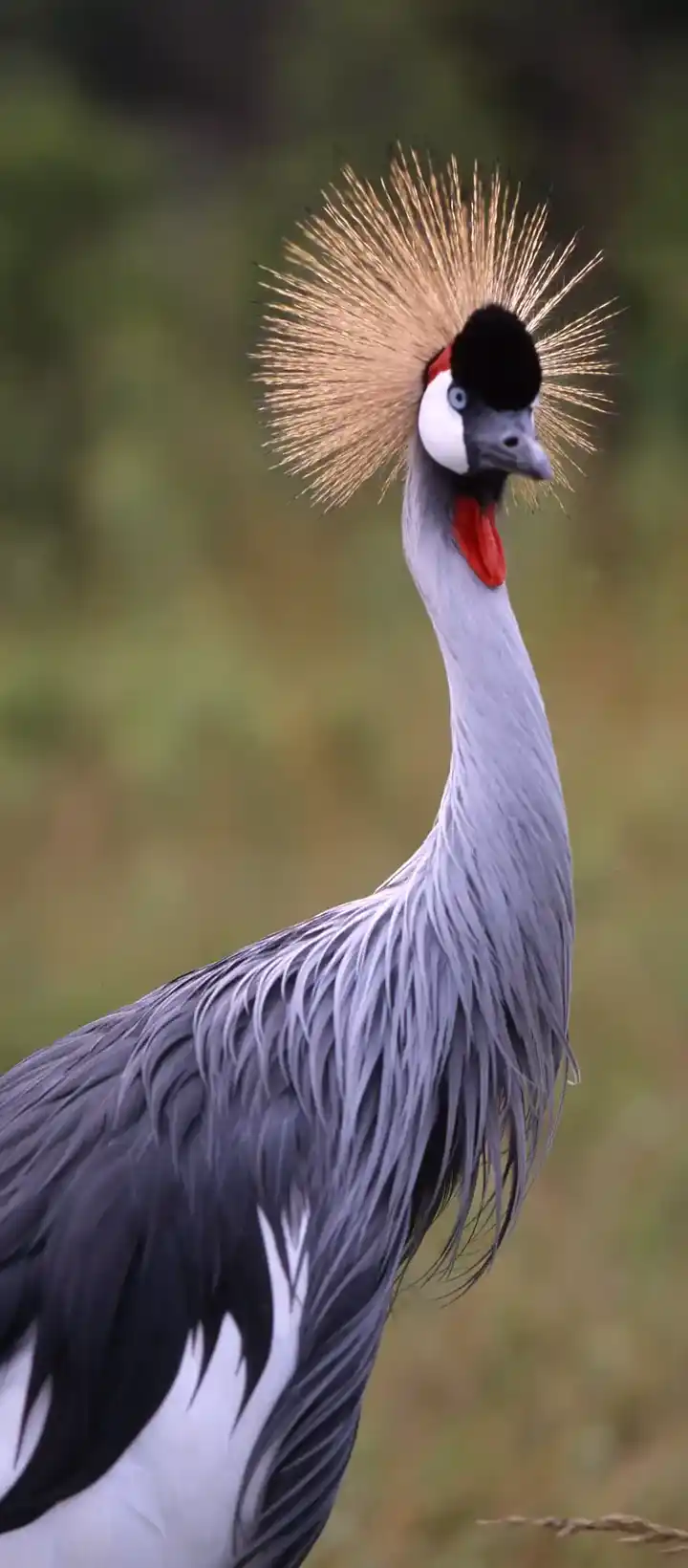
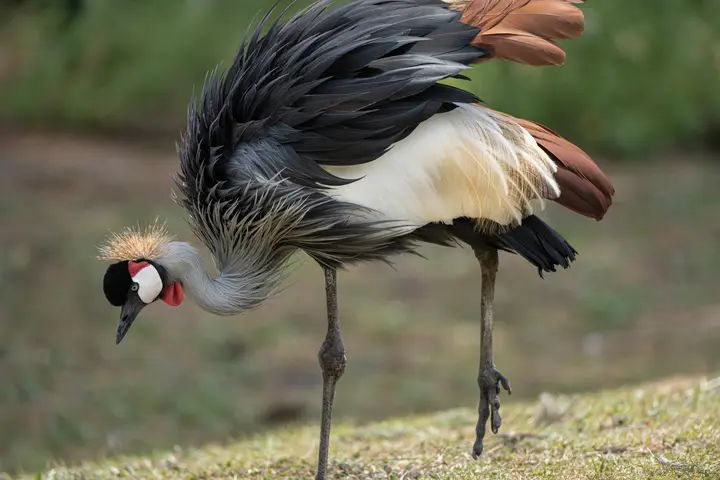
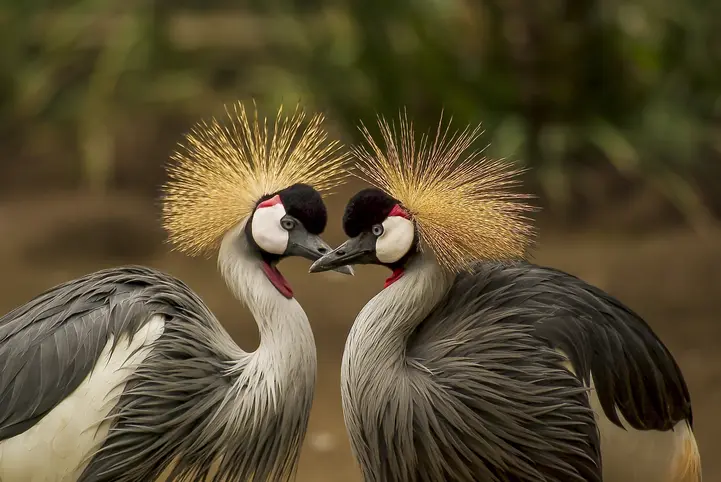
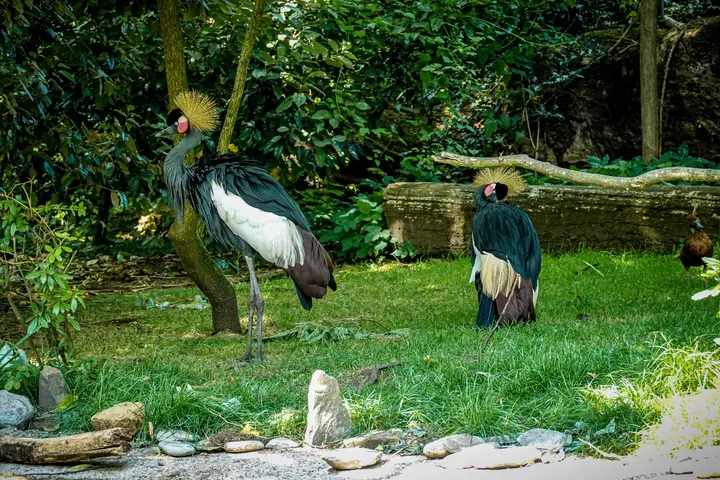
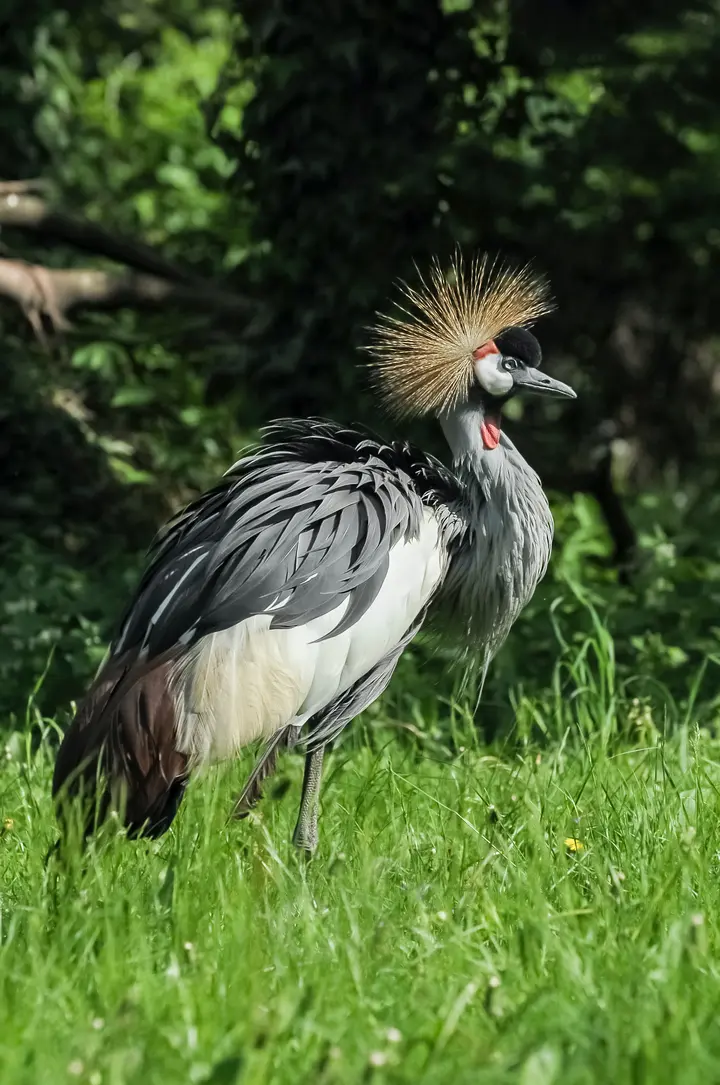
Most striking is its crown, which gives the bird a regal appearance. A halo of long yellow-gray feathers rises above its rounded head, making the crane instantly recognizable across the savanna.
ADVERTISEMENT
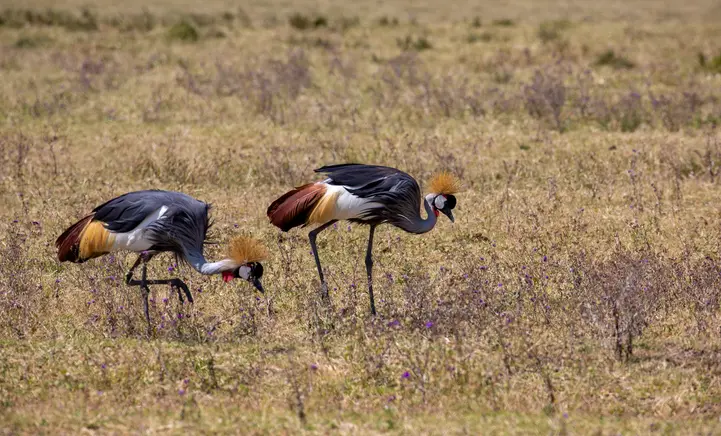
It also has a strong, pointed bill for foraging. While it will eat plants and seeds, it often feeds on insects and small animals found in rough terrain. Long, powerful legs let it walk and hop through grasses and launch into graceful flight.
The crane carries adaptations for varying conditions. A layer of insulating feathers helps during cooler weather, while its loose outer plumage allows air to circulate and cool the bird in hotter months.
Seeing the Grey Crowned Crane up close, its uniqueness and beauty are clear. Like a prince of the savanna, it bears unmatched grace and delights anyone who watches it.
3. Life in the Wild: Grey Crowned Crane's Behaviors and Dietary Habits
Photo by Михаил Ковалевский on Pexels
ADVERTISEMENT
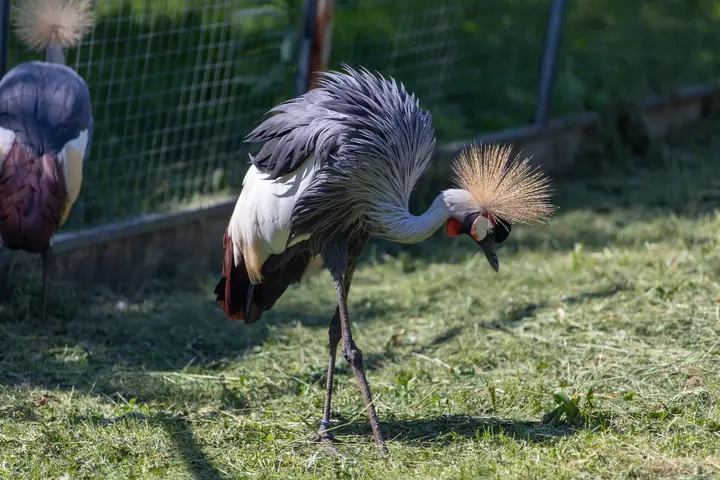
With skill and speed, the Grey Crowned Crane moves across the savanna, using low plants and shrubs as cover. It can blend with shadows and slip into mud to avoid predators.
When it finds prey, the crane can strike quickly and with force. The bird also uses its prominent crown in displays that can help in both defense and competition.
The crane's diet is varied. It feeds on green plants across the grasslands and plays an important role in the ecosystem by dispersing seeds. It also consumes insects and small animals, helping keep local food webs in balance.
As day ends, the Grey Crowned Crane retreats to a safe roost to rest and prepare for the next day's challenges, gathering strength to continue its life across Africa's forests and savannas.
ADVERTISEMENT
4. Family Dynamics: Grey Crowned Crane's Relationships and Flock Formation
Photo by Magda Ehlers on Pexels
Grey Crowned Crane families share a strong social bond that helps them survive on the savanna. They rely on teamwork and close cooperation within the flock.
Adult males often take a leading role in protecting the flock from outside threats. They show strength and skill in defending their group when danger approaches.
Females play a central part in raising the young and teaching survival skills. They help organize the flock's movements, mark the areas where it feeds, and warn of potential threats using gestures and signals.
Crane social ties can extend beyond a single family. Different flocks sometimes overlap and interact in shared areas, which strengthens communication across generations and builds wider community bonds.
ADVERTISEMENT
5. Survival Challenges: Threats to the Grey Crowned Crane and Conservation Efforts
Photo by Mike Knibbs on Pexels
This enchanting bird faces serious threats that endanger its future. One major danger is poaching: hunters set traps and use nets to capture cranes, often targeting the striking crown that makes them so distinctive.
Fortunately, many organizations and governments are working to protect this species. They strengthen environmental laws, run awareness and education campaigns, and establish protected areas to safeguard crane habitats.
These efforts offer hope. Continued support and cooperation are essential to ensure the Grey Crowned Crane survives. Its bright, watchful eyes reflect a desire to live on, and by protecting it we help preserve a living symbol of Africa's natural beauty.
ADVERTISEMENT
6. Exploring African Forests: Tips for Viewing the Grey Crowned Crane and Experiencing Its Magic
Photo by Pavel Bak on Pexels
African forests hold many secrets and an abundance of beauty. Birds fill the air with song and the scent of wildflowers fills the breeze. If you want to encounter the Grey Crowned Crane, here are some practical tips to make the experience richer.
First, be prepared for adventure. Forests and savannas are lively places, so expect long walks and varied terrain as you approach crane gathering sites.
Second, stay calm and quiet. Cranes are wary creatures; sudden noise or movement will often scare them away. Move gently and speak softly.
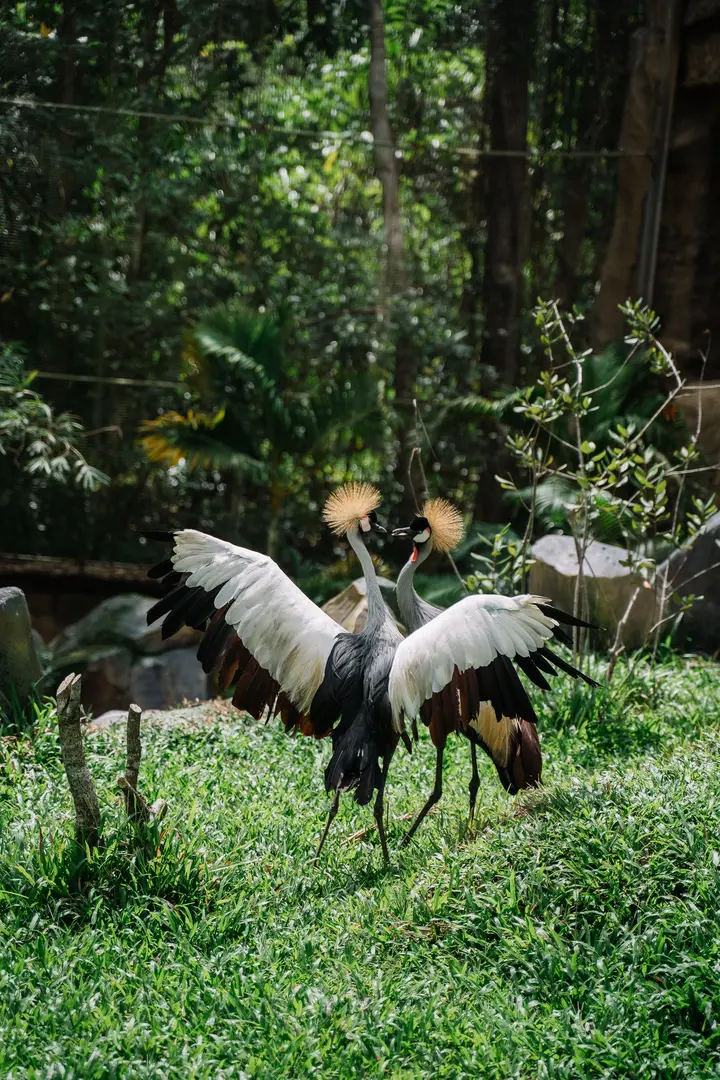
Third, expect the unexpected. Cranes can appear suddenly and sometimes perform surprising displays or dances. Keep your camera ready to capture those moments.
ADVERTISEMENT
Fourth, hire a professional guide. A local guide knows the best spots for sightings and can explain crane behavior, making your visit more informative and rewarding.
Finally, respect the environment. The forests are home to cranes and many other species—leave no trace and treat the area as their home so future generations can enjoy it as well.
Photo by Anna Tarazevich on Pexels
After an adventure among cranes, it becomes clear that this bird is a living masterpiece and an ambassador of Africa's wild spirit. We must protect this treasure and preserve its habitat so future generations can also be inspired by the Grey Crowned Crane's beauty. The journey to meet this magnificent bird awaits—are you ready to discover it?