Maaloula Explore the Syrian Village Where Aramaic Is Still Spoken

Nestled on the slopes of the Qalamoun Mountains, approximately 56 kilometers northeast of Damascus, the enchanting village of Maaloula feels like a piece of history suspended in time. Maaloula is internationally recognized as one of the last places in the world where Western Aramaic, the language spoken by Jesus, is still spoken. This village combines a rich Christian heritage, spiritual significance, and stunning natural beauty. What truly distinguishes it is its preservation of its unique cultural identity through centuries of transformation. From its mountain monasteries to its sacred traditions and natural landscapes, Maaloula offers visitors an exceptional experience, where the past is clearly evident in the present.
Recommend
Why Maaloula is Named Maaloula
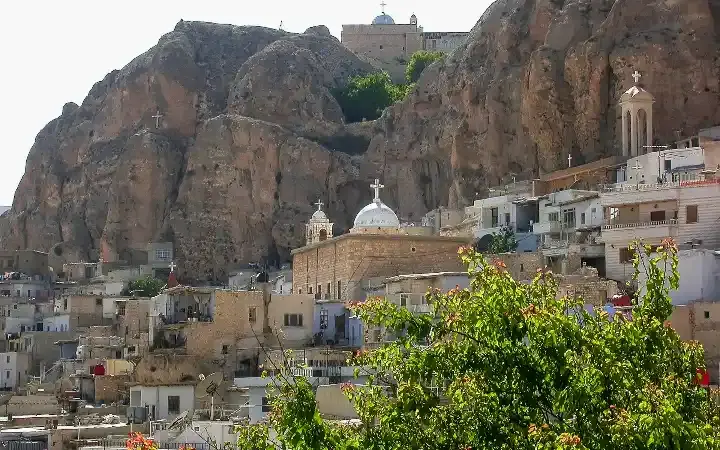
The name Maaloula carries deep linguistic and historical significance. The word is derived from the Aramaic language, specifically from the root "ma'ala," meaning "entry" or "passage," a clear reference to the village's unique geographic location. Situated on a mountain slope, it is crisscrossed by narrow paths that connect the surrounding mountains and plains. These paths, long a route for visitors and pilgrims, gave the village its name and reputation as an entry point for spirituality and contemplative seclusion.
The name itself reflects Maaloula's essence as a transit village—not only geographically, but also as a bridge between civilizations, languages, and religions. Maaloula was a meeting point between Semitic culture and emerging Christianity, between Aramaic and Arabic, and between rocky nature and deep spirituality.
Thus, the name Maaloula is not merely a spatial term; it is a key to understanding the depth of its history and its spiritual and cultural role in the heart of Syria. It is a name that encapsulates time, place, and identity, all in an unforgettable mountain landscape.
The Spiritual and Linguistic Heritage of Maaloula
Maaloula holds a profound spiritual and linguistic place in the history of the Middle East. It is one of the oldest continuously inhabited Christian villages in the world and represents a living repository of early Christian heritage and ancient Semitic culture. Even the name "Maaloula" is derived from the Aramaic word "ma'alla," meaning "entry" or "passage," referring to the mountain cleft that connects the village to the surrounding areas.
Christianity in Maaloula is not just a belief, but a way of life. A mixture of Greek Orthodox and Melkite Catholic Christians live in the village. Maaloula represents a living model of religious and cultural cohesion, preserving its ancient Aramaic language and authentic spiritual customs.
In its narrow streets and rock-hewn houses, prayers, greetings, and songs in Aramaic are heard, as if you were transported back in time to the days of Christ. The resilience of this heritage in the face of modern changes is an extraordinary achievement, making Maaloula a beacon of cultural and spiritual resilience.
Visiting the Monasteries of Mar Sarkis and Mar Thecla
A visit to Maaloula is not complete without exploring its two famous monasteries: Mar Sarkis and Mar Thecla. These two monasteries are not just religious landmarks, but historical symbols that tell the story of Christianity in the region.
The Monastery of Mar Sarkis, dating back to the fourth century AD, is one of the oldest monasteries in Syria and was built in honor of the martyred Roman soldier Sarkis. Perched on a mountainside, the monastery offers stunning views of the valley and houses an ancient stone altar still in use today, as well as rare religious icons and manuscripts.
The Monastery of Mar Thecla is said to house the tomb of Saint Thecla, a disciple of Saint Paul, who fled to Maaloula to escape Roman persecution. Legend has it that the mountain split open to allow her escape. This crack, now known as "Saint Thecla's Passage," leads visitors to the monastery via an enchanting mountain path. Both monasteries represent important spiritual centers for the local community, attracting thousands of pilgrims annually. Despite the damage sustained during the conflicts, restoration work has restored their luster, standing as a testament to Maaloula's resilience and profound faith.
Qalamoun Mountains...a breathtaking mountainous landscape
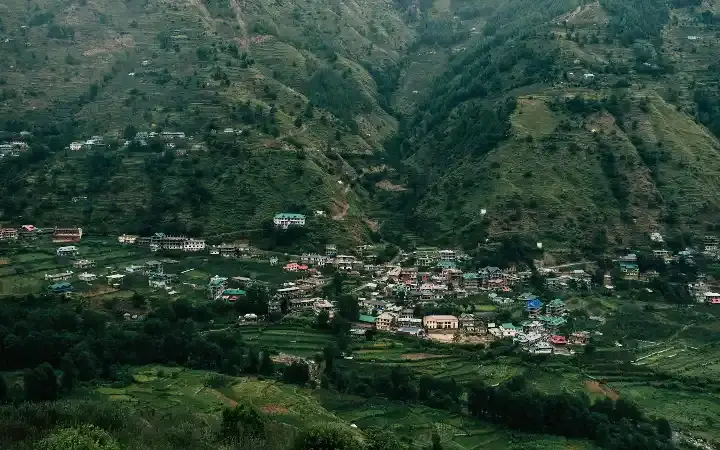
The village of Maaloula is surrounded by the towering Qalamoun Mountains, one of the most beautiful and unique mountainous regions in Syria. Located on the border with Lebanon and spanning the Rif Dimashq and Homs governorates, this mountain range is known for its diverse terrain and mild mountain climate, making it an ideal destination for nature lovers and adventurers.
What distinguishes the Qalamoun Mountains is the interweaving of limestone rocks with steep slopes and natural trails, seemingly sculpted by an artist. During the spring and fall, these mountains are adorned with wildflowers and aromatic plants, while in the winter, they transform into a picturesque landscape covered in white snow.
In addition to their natural beauty, these mountains hold historical and spiritual value. They have housed monasteries and caves that have been a refuge for monks and mystics for centuries, and from them the stories of saints such as Mar Thecla and Mar Sarkis began. From their highest peaks, visitors can admire a breathtaking panoramic view of Maaloula and the surrounding villages, making the Qalamoun Mountains a heartbeat of beauty and history.
Festivals, pilgrimages, and local traditions
Maaloula celebrates a number of religious festivals and cultural events annually, embodying its community and traditional spirit. These occasions are a unique opportunity to experience the village's lifestyle and rituals.
One of the most prominent of these celebrations is the Feast of Saint Thecla, held every September and attracting thousands of pilgrims from within Syria and abroad. The occasion includes masses, candlelight processions, religious chants in Aramaic, and communal banquets that embody the spirit of sharing and solidarity.
Maaloula also maintains its own traditions of marriage and baptism, with ceremonies often conducted in Aramaic, and women adorned in traditional hand-embroidered attire. Local crafts such as embroidery and the making of carved wooden crosses are showcased during the festivals.
Hospitality in Maaloula is an integral part of its culture, with visitors welcomed with local drinks such as arak and wine, along with ma'amoul sweets. During these occasions, doors are open to all, creating an atmosphere of intimacy and belonging. These traditions not only enhance social cohesion, but also serve as an attraction for cultural and religious tourism.
The beauty of nature and mountain scenery in Maaloula
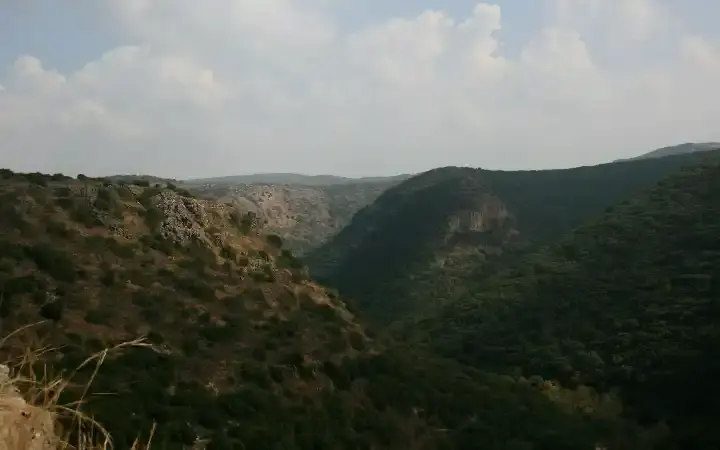
Maaloula also captivates with its breathtaking natural beauty. Situated at an altitude of over 1,500 meters, overlooking the towering Qalamoun Mountains, the stone houses blend in stunningly with the surrounding rocks, creating a scene that combines simplicity and magnificence.
A prominent natural landmark is Saint Thecla's Pass, a narrow cleft in the mountain said to have opened miraculously to save the saint. Hiking this passage is both a spiritual and natural experience, as you walk between the high rock walls and feel the awe of the place.
Maaloula changes with the seasons. In spring, wildflowers bloom and the hills are lush with greenery. In winter, it is covered in snow, transforming into a magical landscape of serenity and beauty.
Scattered around the village are olive groves and vineyards, adding a touch of lushness to its mountainous landscape. Maaloula is an ideal destination for nature lovers, photographers, or those seeking contemplation in a tranquil and pristine environment.
Visitor's Guide: How to Get There and Best Times to Visit
Maaloula is easily accessible from Damascus via the Damascus-Homs highway, and the journey takes about an hour by car. It is best to travel with a local guide or on an organized tour, especially for foreign visitors.
The best times to visit are during spring (April to June) and autumn (September to October), when the weather is mild and the landscape is at its most beautiful. These periods also coincide with some important festivals, such as the Feast of Saint Thecla.
Maaloula offers limited but warm accommodation options, such as small guesthouses or monastic stays. Many visitors prefer to stay in Damascus and take a day trip to Maaloula.
It is recommended to dress modestly when visiting religious sites and to respect the privacy of local residents, which will enhance an unforgettable cultural and spiritual experience.
Conclusion
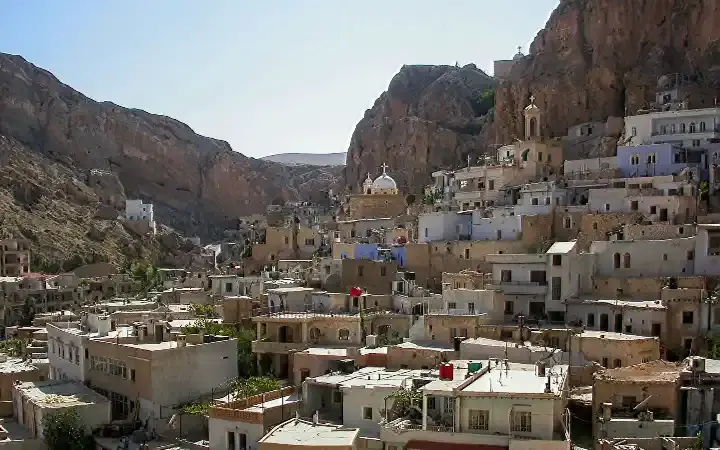
Maaloula is not just a tourist destination, but a living testament to faith and cultural resilience. With its carved monasteries, Aramaic prayers, and deeply rooted traditions, Maaloula offers visitors a rare window into an ancient world that still lives on. Whether you come as a pilgrim, a researcher, or simply a history buff, this unique village will captivate your soul and leave an unforgettable impression.