Jemaa el-Fnaa Market: The beating heart of Marrakech, full of art, perfumes, and spices

In the heart of Marrakech, on the outskirts of its ancient walls, Jemaa el-Fna Square extends like a daily pulse, capturing the city's spirit in a stunning blend of folk arts, fragrant scents, and intertwining sounds. More than just a market, it's a complete sensory experience that transports you from the moment you enter into a world of authenticity and cultural diversity. This open square is one of the most prominent landmarks that attracts tourists from all over the world, a meeting point between past and present, between Moroccan traditions and the celebration of daily life. Here, we'll take you on a tour through this unique space, the jewel of Marrakech's souks, discovering its details from every angle: shopping, performances, scents, colors, and people.
Recommend
Show key points
- Jemaa el-Fna Square in Marrakech serves as a vibrant cultural hub where history, tradition, and daily life merge seamlessly.
- Dating back to the 11th century, the square has evolved from a political center to a symbol of Moroccan identity and communal life.
- It acts as the gateway to Marrakech’s rich network of souks, offering handmade crafts, spices, oils, and traditional goods.
- ADVERTISEMENT
- As the day progresses, Jemaa el-Fna transforms into a stage for live performances including storytelling, music, magic, and snake charming.
- The square offers a unique culinary adventure with local dishes like tajine, harira, couscous, and Moroccan sweets cooked in open stalls.
- Visitors can explore nearby spiritual and historic landmarks such as the Koutoubia Mosque and traditional bathhouses.
- To fully enjoy the Jemaa el-Fna experience, it's best to visit in the evening, embrace the art of bargaining, and stay open to all sensory delights.
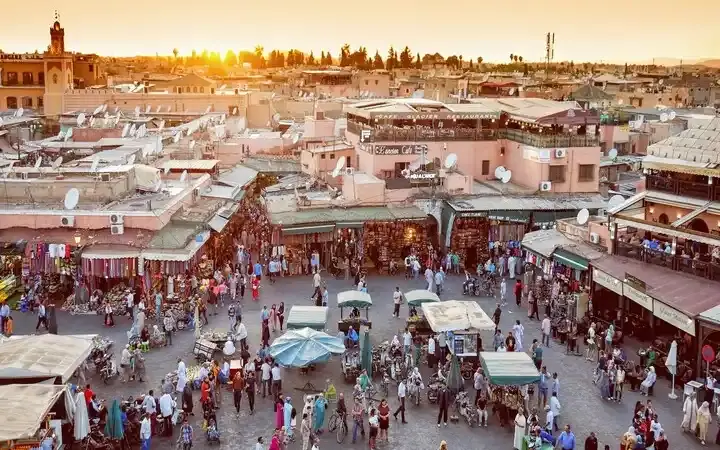
Jemaa el-Fnaa Throughout History
The history of Jemaa el-Fnaa Square dates back to the eleventh century, specifically to the era of the Almoravids, who founded the city of Marrakesh. At that time, the square was a political and commercial center, and its importance expanded over the ages to become a meeting point for travelers, caravans, merchants, and artists.
Its name is controversial and intriguing. It is likely that "el-Fnaa" means "courtyard," meaning a place where people gather until they disperse. It may also refer to a large mosque that once stood and then disappeared. Whatever the origin of the name, Jemaa el-Fnaa today is a square that embraces life in all its manifestations. It is a symbol of Moroccan cultural identity and a mirror that reflects the daily life of the Red City.
Marrakesh Souks: Jemaa el-Fnaa as a Starting Point
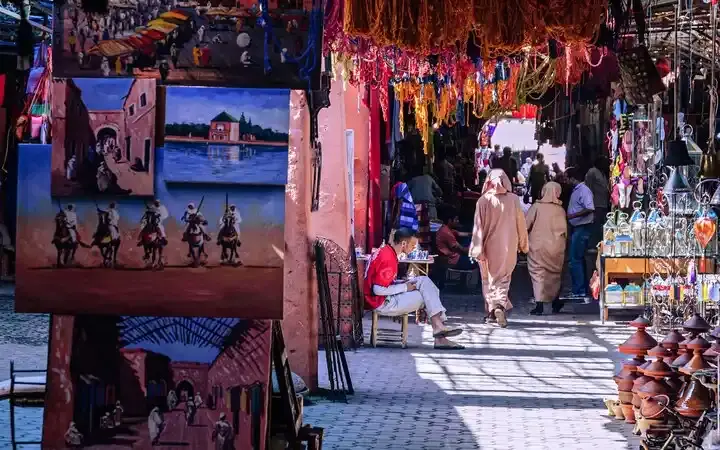
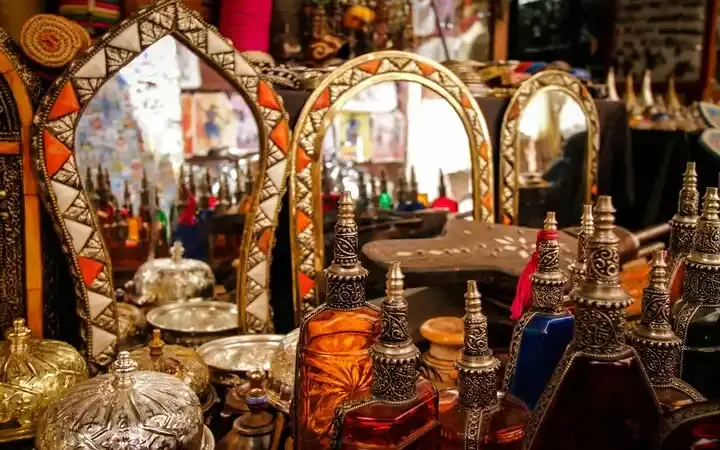
Although Marrakesh has many traditional markets, Jemaa el-Fnaa remains the most prominent hub from which the alleys branch out to the other markets. Visitors will find themselves among small shops filled with traditional goods: Moroccan carpets, leather goods, copper artifacts, precious stones, traditional clothing, and aromatic herbs.
The souk's most famous offerings also include spices, which fill the air with the scent of saffron, cumin, cinnamon, and ginger. Visitors know they're approaching the spice shops by the aromas that precede them, blending into an aesthetic display that delights the eye before the nose.
There are also stalls selling aromatic oils such as argan oil and rose water, along with handcrafted skincare products using traditional Moroccan recipes.
Live Art: Performances Filling the Square
What distinguishes Jemaa el-Fna from other markets in Marrakech is the presence of popular arts in every corner. At sunset, the square transforms into a multi-faceted open-air theater:
- Hakawatiyyin: Storytellers who weave tales from popular heritage in a dramatic and lively style, forming a link with the history of Moroccan oral tradition.
- Dancers and Musicians: From Gnawa bands to soloists on the rebab, oud, and daff, the melodies rise and blend into a spontaneous symphony that astonishes visitors.
- Magicians and Jugglers: Strange shows that attract crowds, beginning with sleight of hand and ending with curious folk games.
- Snake Charmers: One of the most exciting spectacles, visitors gather around a man sitting quietly as a cobra sways to his flute playing.
These performances and other daily rituals reflect the depth of cultural tourism in Marrakech, offering visitors visual and auditory content unmatched anywhere else.
Taste Experience: Popular Food in the Heart of the Market
Anyone visiting Jemaa el-Fnaa cannot ignore the aroma of Moroccan food that fills the air. Traditional food stalls are organized throughout the square, each offering meals cooked right in front of visitors. Among the most popular dishes to taste here are:
- Harira: A rich Moroccan soup served in the evening.
- Tajine: With lamb or chicken, vegetables, olive oil, and rich spices.
- Roasted lamb's head: A bold dish famous in Moroccan cuisine.
- Fried sardines, couscous, and Moroccan desserts like chebakia.
Sitting at wooden tables amidst the crowds, and watching live performances, makes the dining experience at Jemaa el-Fnaa both a social and cultural one.
As the Sun Rises and Sets: The Square's Transformations
Jemaa el-Fna is not a single square, but rather a living entity that changes with the times of the day:
- In the morning, the square is relatively quiet, often used as a crossing between alleys, with a few street vendors.
- At noon, commercial activity picks up, with juice carts and street vendors swarming in.
- In the evening, the square transforms into a lively carnival, with lights, drums, and scents, a spectacle that immerses the senses and captures the true pulse of the city.
Spiritual and Cultural Aspects: From the Square to the Neighboring Corners
Near Jemaa el-Fnaa are important religious and historical landmarks, such as the Koutoubia Mosque, one of Marrakesh's most prominent landmarks. Its towering minaret can be seen from most parts of the square.
Sufi zawiyas and traditional baths are also scattered around the square, allowing visitors to explore the spiritual and social dimension of the city, deepening their understanding of Morocco's deep-rooted traditions.
Visitor Tips: How to Experience Jemaa el-Fnaa to the Fullest
- Choose the Right Time: It's best to visit the square in the evening for the full experience, but daytime visits are suitable for leisurely shopping.
- Haggling is an essential art: Prices in the markets in Marrakech are always negotiable, and bargaining is part of the local culture.
- Carry small notes: Most vendors don't accept bank cards.
- Beware of spontaneous photos: Some performers in the square may ask for payment for their photo.
- Enjoy all your senses: Don't hesitate to taste the food, smell the spices, or listen to the music—the experience at Jemaa el-Fnaa is truly one of completeness.
Conclusion: Jemaa el-Fna... The Open Spirit of Marrakech
Jemaa el-Fna is more than just a shopping destination in Morocco; it is a vibrant cultural center, pulsating with authenticity and popular beauty. It combines history and innovation, bringing together merchants and artists, locals and visitors from around the world. Through it, you discover the true spirit of Marrakech and see how the open square transforms into a vibrant stage that reflects the richness of cultural tourism in Marrakech.
Whether you're looking to shop, discover the arts, or taste the local cuisine, Jemaa el-Fna offers you an authentic Moroccan experience that epitomizes the magic and spirit of Marrakech's markets.