Turkish cuisine is one of the ancient and diverse cuisines, and just as Turkish culture has spread in its forms in many countries of the world, Turkish food also attracts many. The old Ottoman Empire influenced many countries, so don't be surprised if some of your recipes come from Turkish
ADVERTISEMENT
cuisine. Many Turkish cuisine recipes also come from the Middle East and Arab countries in particular by virtue of their long stay among the Arabs. You will notice that Turkish cuisine is influenced by European countries as well.
These influences vary according to different cities, we find the influences of Arab cuisine evident in southern cities such as Gaziantep and Mardin, while European influences are evident in the Black Sea regions. The influences of Ottoman traditions are evident in Istanbul, Bursa and Izmir.
ADVERTISEMENT
1- Turkish Muhlama "Al-Kuimac"
صورة من pixabay
If you are a cheese lover, the Turkish mahlama is one of the famous Turkish dishes made from cheese and is especially suitable for breakfast, you can prepare it easily.
Ingredients:
100 grams of butter
200 grams of mozzarella cheese "can be replaced with braided cheese or any type of stretchable cheese"
2 tablespoons of corn flour
cup water
salt "to taste"
Cooking:
Melt the butter over low heat, then add corn flour, stirring well, then narrow the water and stir. After mixing the mixture, add the mozzarella cheese and stir until the consistency becomes dense and melted at the same time, then add salt as desired or dispense with it completely. Remove from heat and can be served with any type of toast.
ADVERTISEMENT
2- Borek spinach
صورة من pixabay
Ingredients:
large onion, chopped "cut into small pieces"
4 tablespoons olive oil
Spinach bundle chopped "relatively large pieces"
Salt, cumin, coriander and caraway
Two tablespoons of chopped garlic
4 spoons ricotta cheese "or any other cheese to taste"
4 eggs
Cup of milk
Gelash Paper
1/2 cup melted butter
1/2 cup corn oil "or any vegetable oil"
Sesame or nigella "can do without"
Cooking:
Saqqa sauce:
Beat two eggs with a little salt and pepper, then add the milk and continue to whisk, then add the butter and mix them together, then add the corn oil and mix well.
Preparation of the mixture and cooking:
Put the olive oil in a bowl and add the chopped onion to the hot oil, stirring add a little salt and continue stirring. Then we add spinach and stir until it begins to wilt a little, then add a little cumin, coriander and caraway and continue to stir, then leave on low heat for several minutes, then add garlic, then cover and leave it until the water evaporates from it and becomes completely dry. Remove from heat and leave to cool down. Add the cheese, stir, add 2 eggs and mix well.
ADVERTISEMENT
Spread the paper Algelash "two sheets at a time" paint the paper sauce Altsqia "preferably use a brush to distribute it well" and then we spread spinach width paper and wrap the paper in the form of roll "cylindrical shape" around the spinach while leaving the edge without filler to avoid coming out during cooking. You can also stuff the gelash without twisting after spreading the layers of goulash in the tray and grease the layers with the sauce of the quenching as well. Stack the cylinders in a greased tray and then grease all the cylinders with the quenching sauce until we get a soft borek. Then we sprinkle sesame or black seed on the face "to taste" and then cut it in the same way as baklava. Then enter the Chinese oven until fully cooked and get a golden or light brown color. Serve hot or warm to taste.
ADVERTISEMENT
3- Turkish carrot soup
صورة من pixabay
Ingredients:
5 medium carrots
4 medium potatoes
Half a large onion" cut into small pieces"
Butter cube equivalent to 3 tablespoons butter
salt + ground nutmeg + white pepper
Vegetable stock cube or chicken "dispensable"
Liter of water
Cooking:
Put the butter with the onion and stir until golden, after the onion wilts add the carrots and potatoes cut into small squares. Continue stirring for a minute, then add water and leave it on medium heat, leaving the lid over it without sealing it so that the water does not escape out of the pot. After 20 minutes we beat the mixture with a handblinder or a regular blender. We return it to the fire, add the spices, test the taste and if it is too dense than desired, gradually dilute it with a little water until we reach the desired consistency.
Noha Mousa
ADVERTISEMENT
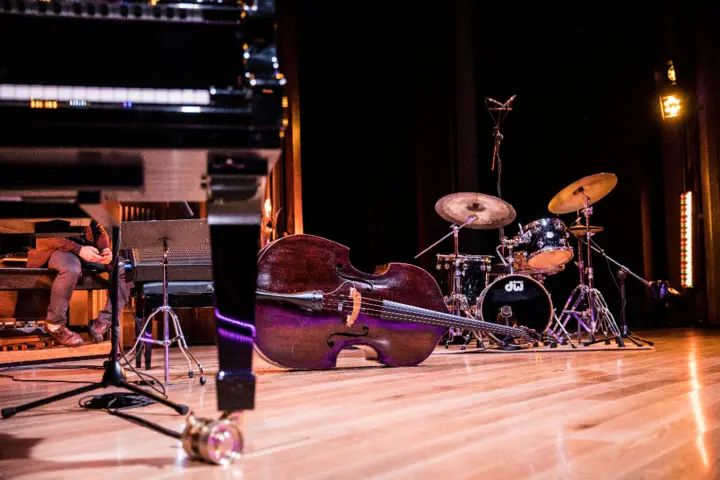
Unleash your musical potential: Can you start playing an instrument at any age?
ADVERTISEMENT
A few weeks ago, I was having a conversation with a friend. In fact, it was more than just a debate about whether the other side of the twenties is a bad time to learn an instrument. While I was against this statement, my friend was fully in favor of
ADVERTISEMENT
it. Personally, this can be considered bias. It is easy for someone to say that learning a musical instrument is not difficult after a certain age if a person already plays it. Perhaps my friend had a slightly more realistic view on this as someone trying to do the said task. So what does science say?
Is it too late?
الصورة عبر Dolo Iglesias على unsplash
Let's move on to the answer, which is a resounding "no"!
I read that right. It's never too late to learn how to play a new instrument. While it won't necessarily be as easy to learn from childhood, it's certainly not impossible.
ADVERTISEMENT
Consider reading and playing a piece of music. Your brain performs multiple functions. You should read music, understand and maintain the rhythm, rely on your memory to play notes/strings, and if it's an instrument like a guitar or harp, your hands will also need to play the strings properly.
Unlike language learning or drawing, there are no specific brain areas for learning a musical instrument. Instead, different areas of the brain communicate with each other to produce a beautiful violin melody, or dramatic piano concerto.
Brain Symphony
الصورة عبر Kelly Sikkema على unsplash
The auditory cortex in the temporal lobe detects complex musical notes and the visual cortex is activated to read the musical note, the cerebellum is involved in voluntary motor control and the sensory-motor areas of the brain sense motor movements. All these different areas and others that are not mentioned coordinate with each other to produce, for example, Beethoven's "Moonlight Sonata". And don't forget to use parts of the prefrontal cortex for concentration, parts of the brain involved in the emotional response of parts, and memory structures such as the hippocampus.
ADVERTISEMENT
It is a real orchestra of the brain. Among these orchestras, the cerebellum deserves special mention. This structure is located at the base of the skull, beneath the larger brain, and has been the focus of much exciting research in the last two decades of neuroscience.
It looks like a small brain, with complex folds and two hemispheres. The cerebellum is responsible for our motor skill. Activities such as writing, sitting upright, jumping, or playing the guitar require the cerebellum to do its job. Researchers are exploring how the cerebellum helps us learn and improve our motor skills, as well as its relationship to cognition.
Why should you choose a new tool after the age of thirty?
الصورة عبر wal_172619 على pixabay
Developing and maintaining this format is easier in childhood than in adulthood. Since children's brain cells are still developing, it's easier to create cells dedicated only to the instrument they play. However, at puberty, no new cells form. The way to learn a tool is to create new connections between already existing cells, and then enhance these neural pathways.
ADVERTISEMENT
That's why, although it's difficult, it's not impossible to learn a new musical instrument after your thirtieth birthday. In fact, there are actually some advantages!
Let's start with the fact that music has a surprising number of advantages, from being a way to de-stress to realizing your hidden potential. As an adult, you need a way to de-stress more than the 12-year-old version. So, music can be a great release. Learning a new tool is like any other new challenge, as it keeps those gray cells going. It can prevent your brain cells from wilt and actually make you more alert. Patience is key here. As an adult, you essentially have better discipline and patience to learn a new tool.
If you don't use it, you'll lose it
ADVERTISEMENT
الصورة عبر Pexels على pixabay
The adult brain is not fixed and does not change. Even in adulthood, the brain has the ability to reshape and create new connections. At the age of thirty, one may not have an arsenal of new neurons that a child's brain possesses, but the ability to learn and reshape connections is still there. This ability is called plasticity.
But as the old saying goes, "If you don't use them, you'll lose them," practice reinforces these newly formed neural connections. Children find the practice easier not only because their brains are still developing, but because they lack the inhibitions that many adults face from failure. So, patience is key here. As an adult, you have better discipline and patience to learn a new tool, and you can remind yourself that failure is not bad.
ADVERTISEMENT
Adults also have a better understanding of music than a child, which can be a game-changer. Most children are motivated for reasons other than their desire to learn a new form of music. As an adult, you are the master of your own life, and the fact that you decided to learn a new musical instrument speaks a lot about your motivation, not just a child forced to go to his evening class by his authoritarian parents.
Learning a new tool can be a daunting challenge. However, it is not impossible, although it seems like a daunting task! I think what I'm trying to say is that you shouldn't lament wasted time. If you've always wanted to play drums all over the world, pick up those drumsticks, give yourself a nice enthusiastic talk, read this article again and get to work!
Aisha
ADVERTISEMENT
Guilin and Yangshuo: The Heart-Capturing Karst Landscapes
ADVERTISEMENT
In the heart of southern China, lie two legendary cities that captivate every visitor: Guilin and Yangshuo. Famous for their astounding karst landscapes formed over millions of years, they are among the top natural destinations in Asia for adventure enthusiasts and lovers of scenic beauty. Cone-shaped mountains covered in greenery,
ADVERTISEMENT
shimmering rivers reflecting the sky, and traditional villages retaining the charm of ancient China.
In this article, we'll take you on an extended tour of this unique region, showcasing its landmarks, the secrets of its beauty, and the travel experiences awaiting you amidst the karst natural wonders.
Photo by Vigor Poodo on Unsplash
Guilin – The Story Begins with Nature
ADVERTISEMENT
Strategic Location and Unique Beauty
Situated in the Guangxi Zhuang Autonomous Region, Guilin is the perfect starting point to explore the karst nature in southern China. The Chinese have long praised the beauty of Guilin, considering it a living painting that epitomizes the harmony of water and mountain. Even in classic Chinese poetry, Guilin appears as a symbol of absolute beauty.
Li River: The Jewel of Guilin
A journey on the Li River is an experience not to be missed by any traveler to Guilin. Stretching approximately 83 kilometers between Guilin and Yangshuo, it is renowned for its enchanting views where boats glide between scattered karst mountains, sailing as if in a realm of ancient tales. Early morning mists rise from the water's surface, adding a magical touch to the scene, while simple rural villages line the banks.
ADVERTISEMENT
Tours are available on traditional or modern tourist boats, but bamboo raft rides offer the most authentic and nature-integrated experience.
Reed Flute Cave
Another highlight in Guilin is the Reed Flute Cave, an astonishing natural cave featuring stalactites and stalagmites with vibrant colors illuminated by artificial lights, highlighting its intricate details like an underground dreamland. The cave is an ideal destination for photography and exploration enthusiasts.
Photo by Vigor Poodo on Unsplash
Yangshuo – The Chinese Countryside at Its Best
After the enchanting river journey, travelers reach Yangshuo, a small town yet a vibrant hub for eco-tourism and adventure. Yangshuo is known for its tranquil atmosphere, charming countryside, and a variety of activities combining reflection and action.
ADVERTISEMENT
Cycling Among the Mountains
One of the most popular activities in Yangshuo is renting a bicycle and riding through the fields and villages. The rural roads pass between green mountains offering unrivaled panoramic views. You can stop by small villages to interact with locals or visit the region's tea and mandarin farms.
Yulong River: The Untamed Beauty
If the Li River amazed you, the Yulong River will captivate your heart with its wild charm. No electric boats are allowed on this river; only bamboo rafts are used, and motors are prohibited to maintain nature’s tranquility. On the riverbanks, you will see water buffalo grazing peacefully and farmers tilling the land, offering a glimpse of the simplicity of Chinese rural life.
ADVERTISEMENT
Impression Liu Sanjie Show
No visit to Yangshuo is complete without attending the famous night show directed by world-renowned director Zhang Yimou. Held on the Li River banks, the show involves hundreds of local villagers reenacting the legend of "Liu Sanjie," a folk heroine in Chinese heritage, through a mix of music, lights, and dance against a stunning natural backdrop.
Photo by Federico Mata on Unsplash
A Deep Cultural Experience
Local Cuisine
A trip to Guilin and Yangshuo is not just about nature; it also includes experiencing Chinese culinary delights in their local flavors. Notable dishes include:
Guilin Rice: Rice mixed with beef, seasoned with local spices.
Spicy Noodle Soup: A traditional dish served in small villages with an unforgettable taste.
Street Food in Yangshuo: From stuffed pancakes to Chinese kebabs, visitors can enjoy fresh local eats on the sidewalks.
Rural Life and Interacting with Locals
Staying a day or two in a rural guesthouse in Yangshuo is an excellent way to understand the local culture. The locals are friendly and warmly welcome visitors, sometimes offering to teach farming or Chinese cooking techniques.
ADVERTISEMENT
When to Visit Guilin and Yangshuo?
The best times to visit the area are from March to May or September to November, when temperatures are moderate, and nature is at its peak. Summers can be humid and rainy, adding a more vibrant hue to the rivers and mountains.
Photo by Timon Studler on Unsplash
How to Get There?
Getting to Guilin: There is an international airport in Guilin that receives flights from major Chinese cities like Beijing, Shanghai, and Guangzhou.
From Guilin to Yangshuo: You can reach it through a river cruise on the Li River (around 4 hours) or by car (about 1.5 hours).
Travel Tips
Be prepared for walking and climbing: Some caves and high points require a bit of physical exertion.
Carry cash: Some villages do not accept bank cards.
Language: Few people speak English, but the locals are very friendly, and apps can be used to help communicate.
A camera is essential: You won't want to miss capturing the stunning views.
Conclusion: Why Guilin and Yangshuo?
Because they are simply the spirit of natural China. This place represents a rare balance between geographic beauty and rural traditions. From the mountains embracing the clouds to the clear rivers flowing like nature's hymns, this corner of the world offers an experience that nourishes the soul and inspires the mind.
ADVERTISEMENT
Whether you're seeking relaxation, a cycling adventure in the heart of the countryside, or capturing breathtaking natural scenery, Guilin and Yangshuo open their doors and invite you to discover the best of southern China.