Those Red Seams Aren’t Decoration at All

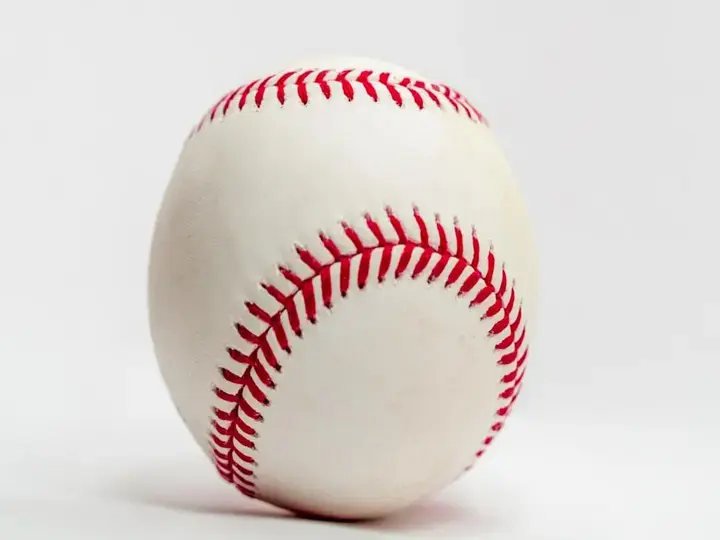
A baseball looks like a simple white ball with red stitching, but its most visible feature actually works as a control surface. Those raised seams are there to help human fingers hold the ball and to help the air push on it in different ways once it leaves the hand.
عرض النقاط الرئيسية
- Raised seams help pitchers grip the ball securely and place their fingers consistently for better control.
- Different pitches begin with different finger placements on the seams, which changes how the ball leaves the hand.
- The seams affect both grip and flight by influencing spin and the airflow around the baseball.
- ADVERTISEMENT
- Seam orientation can alter lift and drag, which helps determine how a pitch carries, runs, or drops.
- Researchers and physics experts have shown that baseball seams are functional design features, not decoration.
- Pitcher skill still matters most, but seams help turn that skill into more repeatable command and movement.
- A baseball’s red stitching is a working tool that both the hand and the air can effectively grab.
That is the belief-breaking part. The seams are not mainly for show. They give pitchers traction, help set a repeatable grip, and can change how the ball moves by changing its spin and the airflow around it.
The part your hand notices before your eyes do
Start with the plainest job. A smooth ball is harder to command. A baseball’s seams stand up just enough for fingertips to catch them, which lets a pitcher place fingers in consistent spots and apply force the same way again and again.
قراءة مقترحة
That matters because pitching begins in the hand, not in the air. A four-seam fastball, a two-seam fastball, and a slider all begin with different finger placement relative to the seams. Change that contact point, and you change how the ball rolls off the fingers at release.
Alan Nathan, an emeritus physics professor at the University of Illinois who has spent years studying baseball aerodynamics, explains it in plain terms: the seams affect both grip and flight. His work and public explanations show that seam orientation can change how air moves around a spinning baseball, which helps explain why pitches with different grips and spins do not travel the same way.
If you have a baseball nearby, try a quick self-check. Hold it loosely and slide your fingertips over the leather until they meet the seam ridge. You can feel the moment control improves. Even imagining that little bump is enough to understand why pitchers care so much about where their fingers sit.
The hidden ridge that changes the whole pitch
Now slow it down for a second. A pitcher settles the pads of two fingers onto the raised red seams, thumb underneath, wrist quiet for a beat. That tiny ridge gives the hand a place to press, pull, and guide. Without it, different grips would blur together.
Have you ever wondered why the seams are raised at all?
Because they are engineering, not decoration. The height and path of the seams give the fingers traction on the way out, and they also stick into the airflow enough to matter once the ball is spinning.
Here is the short version. Grip changes spin. Spin changes airflow. Airflow changes movement.
That does not require a physics lecture. When a ball spins, the seams keep interrupting the air around it. Depending on how the seams are oriented, that disturbance can make one side of the ball behave a little differently from the other. Over 60 feet 6 inches, a little difference is plenty.
Researchers at Washington State University, including Lloyd Smith, have tested baseball aerodynamics in wind tunnels and lab settings and shown that seam orientation affects lift and drag, the forces that shape how a pitch carries and breaks. In plain English: turn the seams, and you can change how the air pushes back on the ball.
So is it the seams, or is it just the pitcher?
Fair question. The pitcher is still the one doing the hard part. Arm speed, finger pressure, release point, and spin efficiency matter a great deal, and the seams do not magically make every person throw nasty movement.
But that is not the same as saying the seams are minor. Skill creates the input. The seams help turn that input into repeatable control and, in many cases, more movement than a smoother ball would allow. Think of them as the working edge the hand and the air can both grab.
You can see this most clearly in the difference between seam orientations. A pitcher can throw hard with one grip and get a straighter ride, then shift finger placement and seam angle and get more run or drop. Same athlete, same baseball, different use of the ridges.
That is also why baseball people talk so much about feel. It is not mystical. It is mechanical. The hand is sensing seam height and seam position, then using that information to shape the release.
The one thing to notice next time you hold one
A baseball keeps its secret in plain sight. The red seams are the part that lets the hand command the ball and lets the air argue with it on the way to the plate.
Next time you hold a baseball, or even watch a pitcher set a grip before coming set, pay attention to where the fingertips meet the seams. Do that once, and the ball stops looking like a plain white sphere with stitching and starts looking like a working tool.
That is a satisfying little upgrade in how you see the game, and it fits right in the palm of your hand.