The Washington Monument Isn’t One Color After All

The Washington Monument looks like one clean block of pale stone, but it is visibly two different colors when you actually look at it. About halfway up, the shade changes, and that odd seam is real.
عرض النقاط الرئيسية
- The Washington Monument appears in two different shades because construction stopped for decades and later resumed with marble that did not match the original stone.
- Work began in 1848, stalled in the 1850s, and did not truly restart until 1879 after the Civil War.
- By 1854, the monument had reached about 150 feet before funding problems and political conflict halted the project.
- ADVERTISEMENT
- Congress eventually took over the effort, and the U.S. Army Corps of Engineers supervised the later phase of construction.
- The monument was completed in 1884, long after the original quarry source and stone supply had changed.
- The National Park Service confirms the color break comes from different marble sources and natural variation in the stone, not just weather or lighting.
- The visible seam makes the monument more than a simple obelisk because it shows a physical trace of American delay, division, war, and recovery.
If you have never noticed it, you are in good company. Plenty of people walk the Mall for years without seeing it. Then someone points halfway up, and after that they can never quite look at the monument the old way again.
The easiest monument fact in DC to miss
Here is the quick version: the monument is two tones because construction stopped for years and then started again with stone that did not match the earlier stone exactly. The color break is not your eyes playing tricks, and it is not just weather.
قراءة مقترحة
The National Park Service explains it plainly. Work began in 1848, then stopped in the 1850s, and did not really resume until after the Civil War, in 1879. When construction restarted, builders used marble from a different source, and the new stone came out a different shade from the lower section that had already been built.
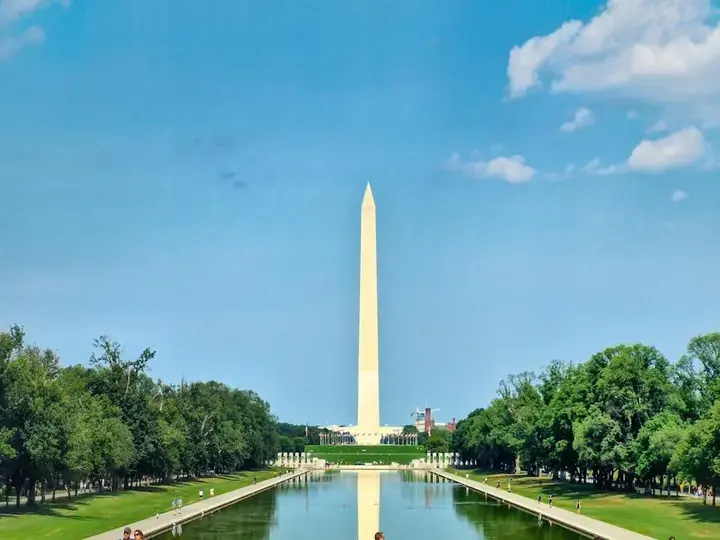
That is why the monument looks so simple from far away and so strange the longer you study it. It carries its interruption on the outside.
The useful little test is this: next time you are on the Mall, or even watching any wide shot of DC, look halfway up the monument before anyone explains a thing. See if you can spot the shift on your own.
Had you ever actually noticed that it’s two different colors?
That question changes the whole monument for people. I have watched visitors squint up at it in winter, in heavy summer haze, after school field trips, on quick lunch walks. Once they catch the line, they usually laugh a little. Not because it is funny, exactly, but because this giant familiar object has been quietly showing its history the whole time.
The seam is a pause in American history
The stop was not brief. The Washington Monument was started by the Washington National Monument Society, and by 1854 the shaft had risen to about 150 feet before money ran out and political conflict tangled the project. Then the country moved toward the Civil War, and the monument sat unfinished for decades.
Congress eventually took over the project, the U.S. Army Corps of Engineers supervised the later work, and construction resumed in 1879. The monument was completed in 1884. By then, the original quarrying and supply had changed, and the replacement marble did not match the first section perfectly.
The National Park Service notes that the visible difference comes from using marble from different quarries, along with some variation in the stone itself. So yes, light and weather can make the seam look stronger or softer on a given day, but the mismatch is physical and documented, not just a camera effect.
Why such a plain obelisk feels oddly alive
That is what makes the Washington Monument more interesting than its outline suggests. It is not only a tribute cast in stone. It is also a record of delay, funding trouble, political fights, war, restart, and finish—all visible without stepping inside a museum.
Visitors often expect the strange facts in DC to belong to the smaller memorials, the plaques, the tucked-away corners. But one of the best shareable details on the Mall is sitting right out in the open: the city’s most famous obelisk is split into two shades because history interrupted the build and the stone changed when the work came back.
So the next time you see the Washington Monument, do not just glance at the top and move on. Look halfway up and find the seam. DC has a nice habit of rewarding patient attention, and this is one of its best examples.