The 6.5°C Rule Written Into This Mountain Valley

Here’s the strange part: a climb of only a few hundred meters can produce a temperature difference big enough to feel like a month has passed, which means what seems like one mountain valley morning can actually hold two seasonal conditions at once.
عرض النقاط الرئيسية
- A rise of just a few hundred meters can create a noticeable temperature difference that makes one valley morning feel like several seasons at once.
- The average environmental lapse rate is about 6.5°C per 1,000 meters, or roughly 2–3°C cooler over a 300–500 meter climb.
- Higher elevations are usually colder because rising air expands in lower pressure and cools as it goes up.
- ADVERTISEMENT
- These temperature shifts affect everyday mountain conditions such as frost, lingering snow, visible breath, and what clothing feels comfortable.
- Temperature patterns are not always straightforward because valley inversions can trap colder air below warmer slopes, especially after calm, clear nights.
- Sunlight, wind, shade, and cloud cover can all modify how strongly the mountain’s temperature layers are felt on a given morning.
- Drivers can observe the effect by comparing thermometer readings from town, shaded mid-slope stretches, and higher exposed bends.
I’ve watched that lesson repeat itself on the same road for forty autumns. Down near town, a light jacket does fine. A little higher, on the shaded bends, your hands start asking for gloves. Up at the pull-off above the switchbacks, you can sometimes see your breath and wonder how the day got older so fast.
Why the air changes before the view does
If you stop at first light beside a roadside ditch, you can smell the difference before you name it. There is that cold mineral smell just above the water-dark earth, damp grass holding the night, and a thin thread of pine coming down from higher up. The air feels sharper not because the mountain is moody, but because the road is carrying you through stacked layers of temperature.
قراءة مقترحة
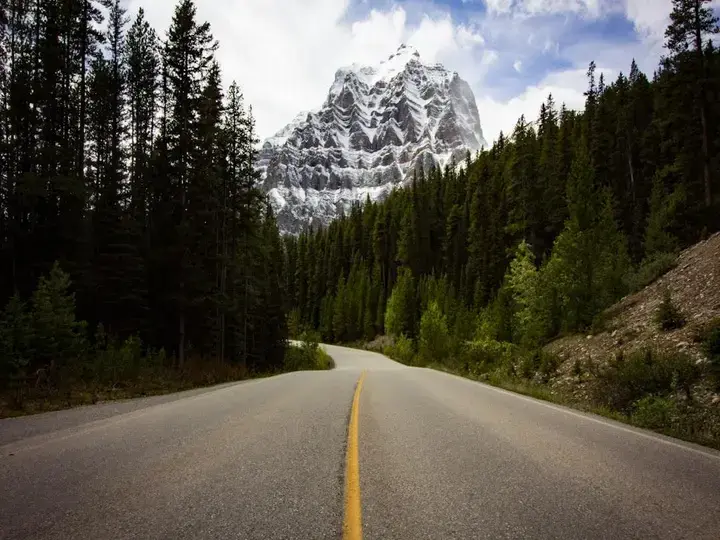
Meteorologists teach an average rule called the environmental lapse rate: about 6.5°C cooler for every 1,000 meters you go up. The World Meteorological Organization and standard meteorology texts use that figure as a useful average for the free atmosphere. It is a rule of thumb, though, not a promise for every hour, every slope, and every bend in the road.
Bring that down to ordinary driving distance and it starts to feel personal. Climb 300 meters and the average change is roughly 2°C. Climb 500 meters and you are near 3°C or a bit more. That is enough to change whether grass carries frost, whether yesterday’s snow still lingers in the shade, and whether morning stings your cheeks or merely brushes them.
The plain reason is simple. Higher up, the air pressure is lower. Air that rises into lower pressure expands, and when it expands, it cools. You do not need a blackboard for it; the mountain is sorting the air by height, step by step, like a family stairwell where each landing has its own temperament.
A short drive, and suddenly the season slips
This is where the numbers turn into something your skin trusts. Town road: jacket. Shaded bend: gloves. Upper switchback: visible breath. Same morning, same valley, one short drive.
And here is the part worth noticing with your own eyes: a few hundred vertical meters can rewrite the day. Not in a poetic sense. In the plain, physical sense that one patch of road keeps last night’s cold while another has already traded it away.
Now look at the warm valley floor and the slopes still held in shadow: doesn’t it begin to make sense that the mountain is not giving you one morning at all, but arranging several versions of it at once?
That is the aha, really. Once you know the average drop with height, the valley stops feeling random. You begin to see why frost can touch one field and spare another, why snow hangs on above while rain falls below, and why a child in town may leave home in autumn air and arrive uphill in something closer to early winter.
But what about those mornings when uphill feels warmer?
Yes, that happens, and it does not break the rule so much as show you the mountain’s mischief. On calm, clear nights, cold dense air can drain downhill and pool in the valley bottom. Forecasters call this an inversion when colder air sits below warmer air for a time, turning the usual pattern upside down.
Sunlight matters too. One slope may catch the morning sun and warm quickly while another stays in shade and keeps the night. Wind matters as well, because mixing can erase some of the layering that was neatly built before dawn. Cloud cover can soften the cooling overnight and change the whole feel of the road by breakfast.
So the 6.5°C per 1,000 meters figure is the backbone, not the whole body. Real mountains complicate it with sunlight, wind, cloud, and cold-air pooling. That is why a valley can sometimes be colder than a higher slope for a few hours, especially near dawn.
The easiest way to catch the mountain in the act
You can test this on your next drive without doing anything fancy. Watch the car thermometer in town, then at a shaded mid-slope stretch, then again at an exposed higher bend. Do it on a clear morning if you can, and note where the sun reaches first and where cold air seems to sit.
After a time, you start reading the road differently. A hollow near a stream will often hold colder air. A sunlit shoulder may feel friendlier than a shaded curve only a minute away. A rise of a few hundred meters will no longer seem small, because you know it can be enough to change the whole morning’s manners.
Mountains are not changing mood at random; they are revealing structure. Next time the road climbs, notice how many vertical meters it takes before the day feels newly rewritten. Once you know that, a valley morning becomes much easier to read.