The Fiber in Oatmeal Has a Specific Job

Most people think oatmeal is mainly a high-fiber breakfast that helps keep you regular, but its most important job is actually to form a thick, gel-like matrix during digestion, which helps explain why a bowl of oats often feels steadier and more settling than cold cereal or toast alone.
عرض النقاط الرئيسية
- Oatmeal feels more settling than cold cereal or toast because beta-glucan forms a thick gel that slows digestion.
- This soluble fiber increases viscosity in the gut, which helps food leave the stomach more gradually and slows sugar absorption.
- Research suggests oatmeal can increase fullness and reduce hunger for hours compared with ready-to-eat cereal.
- ADVERTISEMENT
- Oats may support steadier energy because their carbohydrates are absorbed more slowly than many refined breakfast foods.
- Beta-glucan also helps lower LDL and total cholesterol, with 3 grams per day commonly referenced for heart health benefits.
- Some people get hungry quickly after oatmeal when the portion is too small or the bowl is heavily processed and sugary.
- For a more satisfying bowl, choose old-fashioned or steel-cut oats, limit added sugar, and add protein or healthy fat.
That thickening comes largely from a soluble fiber in oats called beta-glucan. In plain terms, when beta-glucan meets water, it helps make the contents of the stomach and gut move more slowly, so food leaves the stomach at a gentler pace and sugars are absorbed more gradually. Kitchen implication: the bowl that feels a little more substantial is often doing something real, not just giving off an old-fashioned healthy glow.
قراءة مقترحة
Why oatmeal seems to sit differently than lighter breakfasts
This is the part many oatmeal articles make too small. They turn oats into a bathroom story and stop there. But the more useful story for breakfast is texture and timing inside the gut.
A 2021 review in Foods looked at oat beta-glucan and described how its viscosity, that natural thickening quality, is tied to slower digestion, a softer rise in blood glucose, and cholesterol effects. That sounds technical, so bring it back to the bowl: thicker contents move more slowly, nutrients arrive more gradually, and your body does not have to deal with the whole breakfast in one quick rush.
There is also human trial evidence behind the fullness side of this. One often-cited randomized crossover study by Rebello and colleagues, published in the Journal of the American College of Nutrition in 2013, gave 48 adults either oatmeal or ready-to-eat oat cereal and found the oatmeal meal increased fullness and reduced hunger over the following hours. Bodily explanation: a hotter, thicker bowl can slow the meal down in your system. Kitchen implication: if oatmeal keeps you going longer than a dry cereal, that is not just in your head.
You can watch the mechanism before you eat it. Stand over the pan a minute and stir. The oats loosen, then gather, then drag a little on the spoon. That same thickening quality is the clue.
Inside the body, soluble fiber does not turn into some magical scrub brush. It behaves more like a soft gel dispersed through the meal, increasing viscosity, slowing gastric emptying, and changing how quickly carbohydrates are broken down and absorbed. One kitchen-level use for that fact: if you want breakfast to last, choose oats that still have some body to them and do not drown the bowl in sugar.
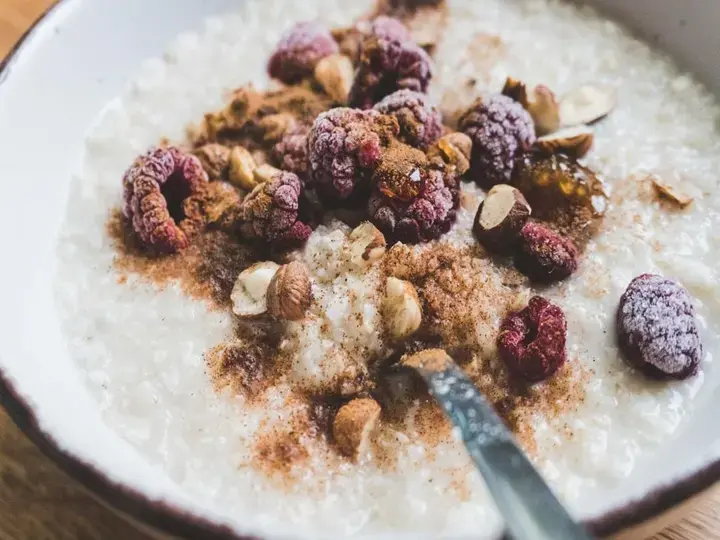
And when the steam carries a little cinnamon warmth with that faint toasted-cashew nuttiness, you can almost feel why the bowl lands differently: this is a breakfast built around thickness, not speed.
Have you ever noticed that oatmeal seems to settle in you differently than cold cereal?
That “full” feeling is not imaginary
This is the hinge. Once you see oatmeal as a texture-and-timing food, a lot of ordinary breakfast experience starts making sense.
Slower digestion means the meal hangs around longer. More gradual absorption means blood sugar tends to rise less sharply than it would with many refined breakfast foods. Longer fullness means you may be less likely to go looking for something sweet an hour later.
The energy side matters too. Oats are not low-carb, and they are not supposed to be. The point is that the carbs arrive with a built-in brake, especially when the bowl still contains meaningful beta-glucan and has not been turned into a sugary dessert.
Here is a simple self-check: compare how you feel one to two hours after oatmeal versus cold cereal or toast alone. Not what you think you should feel. What actually happens in your body. Are you calm and fed, or prowling the kitchen already?
The cholesterol part has a physical explanation too
Oatmeal’s reputation for helping cholesterol did not come out of nowhere. The U.S. Food and Drug Administration allows a health claim for oat beta-glucan and heart disease risk reduction when people get enough of it daily as part of a diet low in saturated fat and cholesterol. The amount commonly referenced is 3 grams of beta-glucan per day from oats.
The plain-language version is that this same gel-forming soluble fiber can help reduce LDL cholesterol by interfering with how bile acids are handled in the gut, which nudges the body to use more cholesterol to replace them. Bodily explanation: some cholesterol gets pulled into that daily housekeeping. Kitchen implication: oatmeal can contribute to cholesterol management, but it works best as part of a pattern, not as a lone heroic bowl.
A 2014 meta-analysis by Whitehead and colleagues in The American Journal of Clinical Nutrition pooled randomized controlled trials and found that oat beta-glucan lowered LDL and total cholesterol. That is a useful reminder that the effect is not folklore. It is modest, repeatable, and tied to the fiber itself.
Why some people eat oatmeal and get hungry fast anyway
Now for the honest part: oatmeal does not work the same way for everyone. Some people feel solid for hours after a bowl. Others are hungry again sooner than they expected.
Usually the difference is not mysterious. The portion may be too small. The oats may be highly processed and sweetened. The bowl may be mostly quick carbs with very little protein or fat. And some people simply have different appetite patterns or blood sugar responses, even when they eat the same breakfast.
So if you have tried oatmeal and thought, that did nothing for me, it does not mean the evidence is wrong. It may mean the setup was weak. A small packet of sugary instant oats can behave very differently from a more substantial bowl built to stay with you.
How to make a bowl actually hold you
1. Start with oats that have some substance. Old-fashioned or steel-cut oats generally give you a bowl with more chew and less of the fast, soft slide you get from some instant packets. The practical point is not purity. It is slowing the meal down a bit.
2. Add protein or fat that you will truly eat. A spoon of Greek yogurt on the side, some nuts, nut butter, or milk can make the breakfast more satisfying. The bodily explanation is simple: mixed meals tend to leave the stomach more slowly and feel more complete.
3. Watch the sugar load. A little sweetness is one thing. A heavy pour of syrup, sweetened dried fruit, and flavored packets all together can turn a steady breakfast into a quicker one. If you want comfort without the crash, keep the bowl warm and flavorful, not candy-like.
4. Let the fiber do its job. Cook the oats with enough liquid and give them time to thicken. That is not a fussy chef’s note. It is the mechanism you are after.
A plain reason oatmeal earns its place
A bowl this simple can do more than seem comforting. Its soluble fiber, especially beta-glucan, changes the texture of digestion in a way that can help with fullness, steadier energy, and part of oats’ cholesterol-lowering effect.
If you want one useful move this week, make your oatmeal with less-sugary oats that still have some body, then add a protein or fat topping you genuinely enjoy. Breakfast does not need to be perfect to help. It just needs to give you a steadier start.