Laayoune: The Largest and Most Important City in Western Sahara

Laayoune is one of the most intriguing cities in North Africa, not just for its size or location but for its political significance in the ongoing dispute over Western Sahara. Founded in 1938 by Spanish authorities during the colonial period, it quickly became the region's main administrative center. Today, Laayoune is the largest city in Western Sahara, with a population estimated at over 271,000 as of 2023, according to Wikipedia.
Show key points
- Laayoune was founded in 1938 as a Spanish military outpost and developed into an important administrative center.
- Laayoune is located in Western Sahara and is currently administered by Morocco.
- Its population exceeded 271,000 in 2023, making it the largest city in the region.
- ADVERTISEMENT
- Laayoune is multicultural, comprising a mix of Sahrawi natives and newcomers.
- The city has witnessed significant infrastructure and service development under Moroccan administration.
- Laayoune is a focal point of political tension between Morocco and the Polisario Front.
- The city symbolizes the resilience of its inhabitants, balancing developmental aspirations and political challenges.
Located in northern Western Sahara near the Atlantic Ocean, Laayoune is administered by the Kingdom of Morocco, which considers it part of its southern provinces. The Polisario Front rejects this status and demands an independent state, making the city a central focus in the decades-long regional dispute.
Recommend
This article examines Laayoune's origins, urban development, infrastructure, demographics, and political role, and looks at how the city has become both a symbol of rapid development and a focal point of identity and sovereignty struggles.
Origin and History: From Military Post to Urban Center
Laayoune was founded in 1938 when Spanish colonial authorities established a military observation post near the Saguia el-Hamra. Over time this outpost grew into a full administrative center, especially after Laayoune became the de facto capital of the Spanish Sahara. According to Britannica, Spanish forces used Laayoune as a key logistical base to support their operations in the region.
After Spain withdrew in 1975, the city became a focal point in the conflict between Morocco and the Polisario Front. Moroccan forces entered Laayoune during the Green March, and since then the city has expanded and developed under Moroccan administration. From the 1980s onward, the Moroccan state has invested heavily in the city's infrastructure, including roads, airports, and government institutions.
Laayoune is not only an administrative center but also a political symbol in the sovereignty dispute over Western Sahara. Rabat regards it as part of its territory, while the Polisario Front envisions it as the capital of a future independent state.
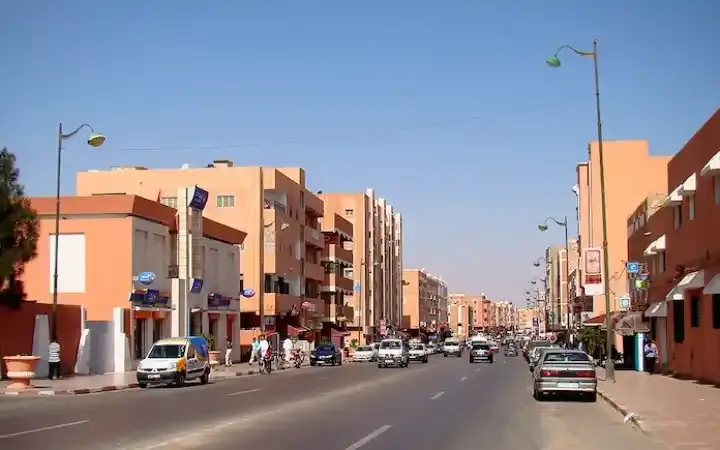
Panoramic view of Laayoune showing its urban development
Demographics and Culture
Laayoune has a diverse population made up of native Sahrawis, newcomers from various parts of Morocco, and workers in both the public and private sectors. This mix has produced a cultural mosaic reflecting multiple identities and affiliations within the city.
According to 2023 statistics, Laayoune's population exceeds 271,000, making it the largest city in Western Sahara by population. The city is linguistically diverse, with the Hassaniya dialect spoken alongside Moroccan Arabic, and Sahrawi traditions coexist with urban lifestyles.
Laayoune hosts numerous cultural events that reflect this diversity, such as Hassaniya music festivals and poetry evenings, and has educational and cultural institutions that promote residents' awareness of their history and regional context.
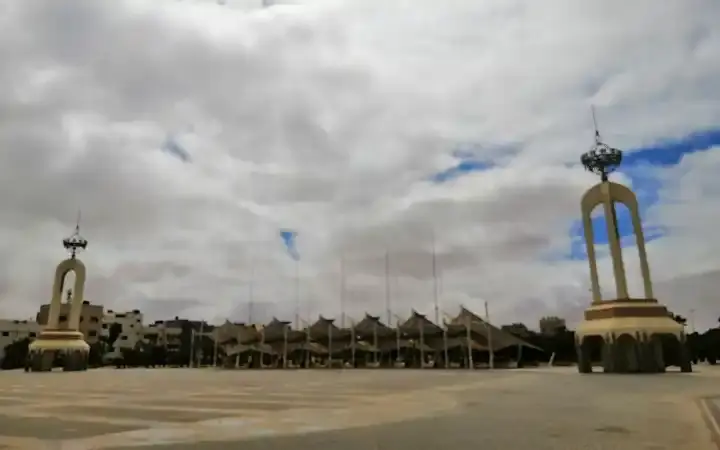
Al-Machour Square in the heart of Laayoune: a blend of modernity and Sahrawi identity
Development and Infrastructure
Despite the sensitive political context, Laayoune has experienced significant development in recent decades. The Moroccan state has invested billions of dirhams in projects such as upgrading Hassan I Airport, expanding the port, and building modern road networks that connect Laayoune to other southern Moroccan cities.
New hospitals, schools, universities, and modern housing complexes have been constructed, turning the city into a destination for those seeking employment or improved living standards. These investments are part of Morocco's efforts to integrate the southern provinces into the national economy and enhance regional stability.
New industrial and service zones have also been launched, creating job opportunities and stimulating local economic activity. Improvements in water, electricity, and communication services have made Laayoune a city with essential modern services.
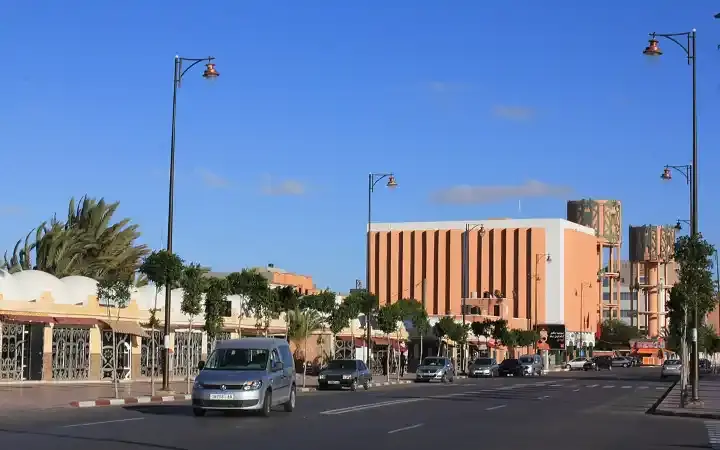
A modern street in Laayoune, showing signs of development and modernization
Political and Regional Role
Laayoune plays a central role in the political conflict over Western Sahara and is one of the key points of tension between Morocco and the Polisario Front. Morocco treats the city as the capital of its southern provinces and reinforces this status through a strong administrative and political presence, including regional government offices, courts, and central administrations.
The Polisario Front, however, regards Laayoune as occupied territory and demands Morocco's withdrawal as part of a comprehensive settlement. Between these positions, the city remains at the core of United Nations negotiations aimed at resolving the Western Sahara issue.
Despite these disagreements, Laayoune has sometimes served as a gateway for dialogue and reconciliation, particularly through internationally supported development programs that seek to improve the lives of local residents apart from political calculations.
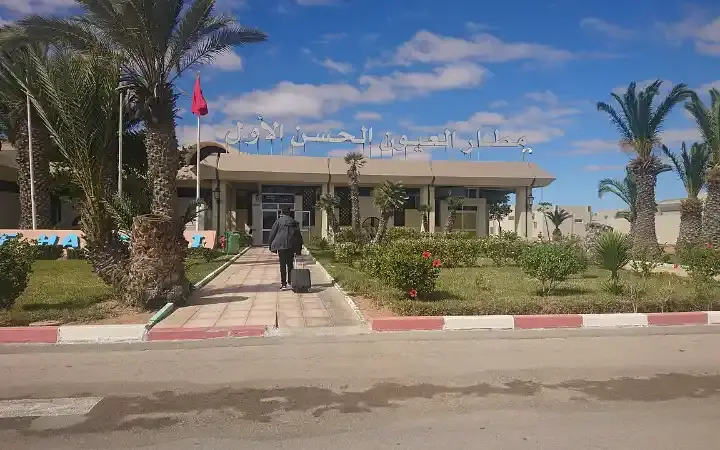
Laayoune Hassan I Airport
Laayoune is not only the largest city in Western Sahara but also a reflection of the political, social, and cultural complexities of this contested region. From its founding under Spanish colonial rule through major transformations under Moroccan administration, the city has played a crucial role in shaping the face of Western Sahara.
The city is at once a modern urban center experiencing rapid development and a political platform marked by contrasting visions of sovereignty and allegiance. Despite political discord, the people of Laayoune live daily lives shaped by development goals, cultural identity, and regional challenges.
Laayoune's future depends not only on local policies and development initiatives but also on the political consensus that may one day resolve the enduring conflict. Until then, the city remains a symbol of resilience and coexistence, showing humanity's ability to adapt and build despite difficult circumstances.