New Shark Species Emerging from the Depths

More and more new species of sharks are being discovered as humanity delves deeper into the oceans. Until the mid-1980s, science had settled on about 360 shark species, but in less than 40 years, this number has jumped by around 40%. There are now over 500 known species. In 1989, scientists in Australia found a strange type of "mermaid's purse"—a leathery egg case laid by some shark species instead of giving live birth. The empty egg cases had a nearly unique feature—a row of ridges along the top. In September 2024, a new ghost shark species was identified thanks to a specimen caught in deep waters off the east coast of New Zealand. In 2011, researcher Brett Human found the wavy shark egg case. This animal had never been found in Australian waters. Human linked the egg case to another found off Australia, narrowing the species down to being a member of the demon catshark family.
قراءة مقترحة
عرض النقاط الرئيسية
- The number of known shark species has increased by 40% over the past four decades, reaching over 500 species.
- A new type of ghost shark was identified based on a uniquely-shaped egg case found off the coasts of Australia and New Zealand.
- Scientists discovered a new species of demon catshark, named Apristurus ovicorrugatus, living at depths greater than 700 meters below sea level.
- ADVERTISEMENT
- Horn sharks, known for inhabiting shallow waters, had a new species recorded at unusual depths off the coast of Western Australia.
- A German scientist and local research teams discovered two previously unknown sawshark species in Southeast Africa.
- The new sawsharks featured unique anatomical traits, such as six gill slits and forward-positioned barbels.
- Local fishermen's involvement and collaboration with researchers played a pivotal role in the recent discovery of rare shark species.
A New Wave of Discoveries
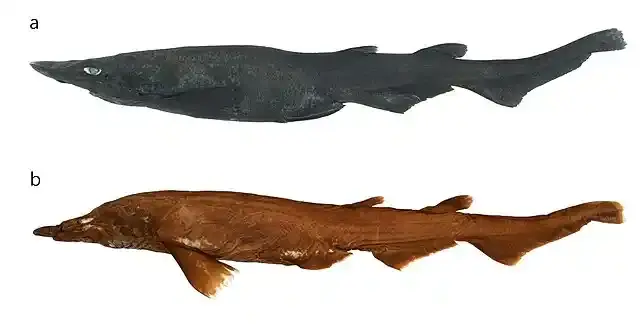
The researcher White and his colleagues knew that the eggs retrieved in the 1980s came from a specific depth—between 410 meters (1345 feet) and 504 meters (1640 feet)—and began searching for sharks caught at the same depth. The Commonwealth Scientific and Industrial Research Organisation had what was thought to be a South China catshark, which turned out to be pregnant when caught. Scientists dissected it and found a developing embryo inside an egg case with the same ridges discovered years earlier. Investigative work proved it was a completely new species, now with a scientific name and revealed in the Journal of Fish Biology in April 2023. This new species of demon catshark, also known as Apristurus ovicorrugatus, is believed to inhabit depths of about 700 meters (2297 feet), laying its eggs on coral in waters so deep sunlight can't penetrate. The demon catshark wasn't the only discovery White was recently involved in identifying. Another shark species, a type of horn shark, was caught in surprisingly deep waters off Western Australia during a survey conducted last year. Horn sharks typically live in shallow waters, but this new species was found at a depth of 150 meters (500 feet). The waters around Australia aren't the only ones yielding new shark species.
Across the Indian Ocean, German shark scientist Simon Weigmann helped discover two new sawshark species—odd-looking creatures armed with a long rostrum, or snout, studded with sharp teeth—off Africa's southeast coast. The sawsharks were found with the help of a colleague searching for new related sawfish species off Madagascar's coast. Weigmann says one of her colleagues reached out because fishermen had saved two ros trum parts for her, thinking they were sawfish. When she saw the pictures, she immediately realized these weren't sawfish but sawsharks—another intriguing finding since sawsharks aren't caught daily.
New Species?
The sawsharks had some interesting details: instead of the usual five gill slits most sharks have, these had six—an evolutionary echo from much older shark species that lived millions of years ago. They also had tiny fleshy cavities known as barbels positioned much closer to the rostrum's tip than those on other sawshark species. Another shark researcher—Andrew Temple from King Abdullah University of Science and Technology in Saudi Arabia—was contacted. They found a sawshark off Zanzibar in Tanzania, where they surveyed local fishermen's landing sites, and it was different from the ones they found. "It's very special because saw sharks aren't common, and you have only a few species." But it wasn't just scientists like Weigmann who first noticed something different—it was fishermen in Madagascar who caught these sharks. Weigmann notes, "It was really important that we relied on local fishermen to provide us with these materials. Had they not collected the shark bones or later brought forth the specimens captured in Zanzibar, we would not have noticed. Many of the saw sharks discovered so far live in relatively deep waters—up to 300 meters (1000 feet)—but the species found off Zanzibar were caught less than 30 meters (100 feet) from the surface. We think it's likely they might reach shallower depths at night, which is common for many marine life groups," says Weigmann.
The Future
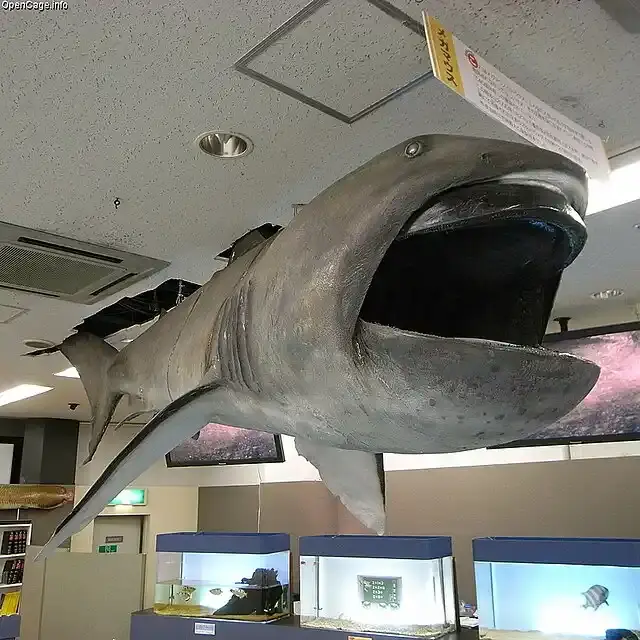
There's more to this discovery than just adding to the species known in a reference book or a new museum display. In 2021, scientists discovered three new species of deep-sea sharks that glow in the dark, including a type that can grow up to 1.8 meters (5.9 feet). Less than 50 years ago, researchers discovered a bizarre creature stuck on a U.S. Navy ship's sea anchor off Hawaii. The shark in question was about 15 feet (4.5 meters) long and a type never seen before—a filter feeder that swims with its jaws open. Shark expert Leighton Taylor called it the "mega-mouth shark"; this species is now considered one of the largest growing species today. What lies ahead for shark scientists deep beneath the ocean's surface?