Solar Panels in the Sahara Could Boost Renewable Energy but Harm Global Climate

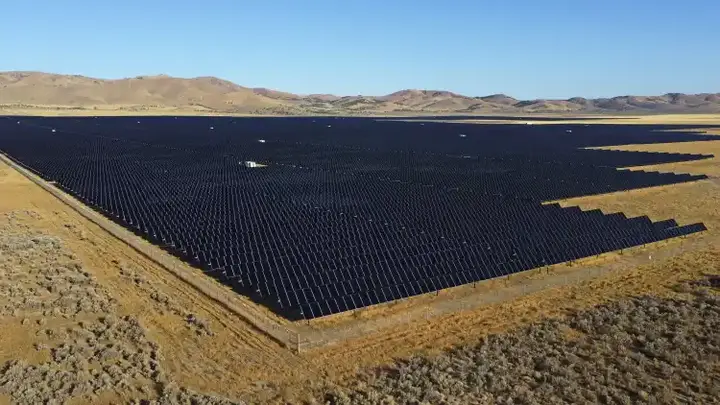
The fact is that the world's harshest deserts might be the best places on Earth to harvest solar energy—the most abundant and cleanest energy source we have. Deserts are vast, relatively flat, rich in silicon—the raw material from which semiconductors and solar cells are made—and they never lack sunlight. In fact, the ten largest solar power stations around the world are all located in deserts or arid regions.
عرض النقاط الرئيسية
- Deserts are ideal locations for building solar farms due to their vastness, abundant sunlight, and necessary raw materials for making solar cells.
- Huge solar farms in the Sahara could generate enough energy to meet four times the current global demand.
- Covering a large part of the deserts with solar panels could lead to environmental changes, such as increased rainfall and plant growth, gradually transforming the desert into greener areas.
- ADVERTISEMENT
- The low albedo effect from the dark-colored solar panels could create feedback loops that affect local and regional climates.
- Complex climate studies show that massive solar energy projects could cause global temperature increases and changes in global weather patterns.
- These changes are expected to cause droughts in areas like the Amazon and an increase in hurricanes in other regions like Vietnam and North America.
- Despite the potential benefits of solar energy in deserts, its complex global effects necessitate more integrated studies before widespread implementation.
Researchers envision that it might be possible to transform the world’s largest desert, the Sahara, into a giant solar farm capable of meeting four times the current global energy demand. Plans have been developed for projects in Tunisia and Morocco that would supply millions of households in Europe with electricity. While the black surfaces of solar panels absorb most of the sunlight that reaches them, only a small fraction (about 15%) of that incoming energy is converted into electricity. The rest is returned to the environment as heat. Because the panels are often much darker than the ground they cover, vast areas of solar cells would absorb a huge amount of additional energy and emit it as heat, impacting the climate.
قراءة مقترحة
A Greener Desert
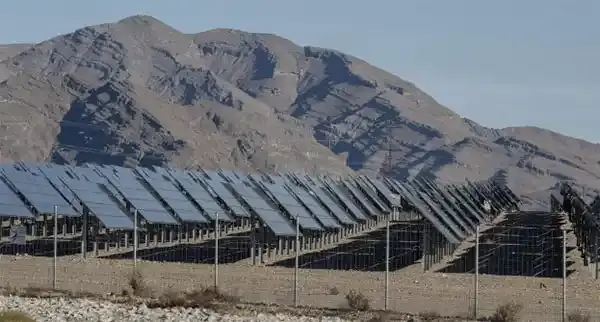
A 2018 study used a climate model to simulate the effects of decreased albedo on the desert surface due to large-scale solar farms. Albedo is a measure of how well surfaces reflect sunlight. Sand is more reflective than solar panels and thus has a higher albedo. The model revealed that when solar farms cover 20% of the desert area, they create a feedback loop. The heat emitted from dark solar panels (compared to highly reflective desert soil) creates a sharp temperature difference between land and surrounding oceans ultimately lowering surface air pressure and causing moist air to rise and condense into raindrops. With increased seasonal rainfall, plants grow, and the desert reflects less solar energy since plants absorb light better than sand and soil. More plants lead to more water evaporation, creating a more humid environment allowing vegetation to flourish.
This scenario might sound fanciful, but studies suggest a similar feedback loop kept much of the Sahara green during the African Humid Period, which ended just 5,000 years ago. So, a giant solar farm could generate abundant energy to meet global demand while transforming one of Earth's most hostile environments into a habitable oasis. Sounds ideal, right? Not quite. In a recent study, we utilized an advanced Earth system model to examine how desert solar farms interact with the climate in more detail. Our model considers the complex feedback among the interacting realms of the world’s climate—the atmosphere, ocean, land, and their ecosystems. It showed that there might be unintended effects in distant parts of the earth and ocean that offset any regional benefits on the desert itself.
Drought in Amazon and Hurricanes in Vietnam
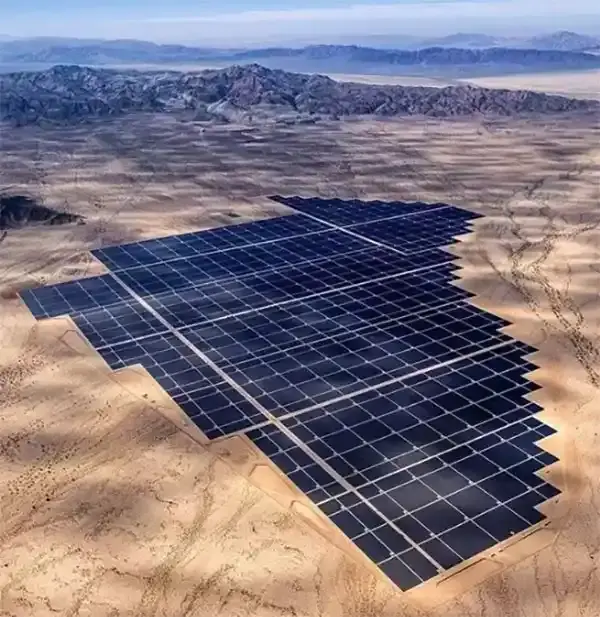
Covering 20% of the Sahara Desert with solar farms raises local temperatures in the desert by 1.5 degrees Celsius according to our model. Covering 50% increases the temperature by 2.5 degrees Celsius. This warming eventually spreads globally through atmospheric and oceanic circulation, raising the average global temperature by 0.16 degrees Celsius for 20% coverage and 0.39 degrees Celsius for 50% coverage. However, the global temperature shift is not uniform—polar regions warm more than tropical areas, increasing Arctic sea ice loss. This could accelerate warming as melting sea ice reveals dark waters that absorb more solar energy. This massive new heat source in the Sahara reorganizes global air and ocean circulation, affecting worldwide precipitation patterns.
The narrow band of heavy rain in the tropics, which accounts for over 30% of global rainfall, supporting the rainforests in the Amazon and Congo basins, shifts northward in our simulations. For the Amazon, this causes drought with less moisture reaching it from the ocean. Nearly the same amount of additional rain that falls over the Sahara due to the darkening effect of solar panels is lost from the Amazon. The model also predicts more tropical cyclones striking coasts in North America and East Asia. Some critical processes are still missing from our model, such as dust emitted from large deserts. Desert dust carried by winds is a vital nutrient source for the Amazon and the Atlantic Ocean. Thus, a greener desert might have a bigger global impact than our simulations suggest. We are just beginning to understand the potential consequences of creating massive solar farms in the world’s deserts. Solutions like this may aid society in transitioning from fossil fuels, but Earth system studies like ours emphasize the importance of considering the many interconnected responses of the atmosphere, oceans, and land surface when examining their benefits and risks.