Teaching children English on YouTube is one of the best opportunities you can give your child. Today's kids rely on screens; this generation is very different from previous ones. Depriving a child of technology may leave them behind their peers. So directing children to learn through play is ideal and
ADVERTISEMENT
has become widely available. YouTube is one of the most important platforms for this, hosting numerous channels that teach English and other languages in an enjoyable way, often with native teachers who help ensure accurate pronunciation—especially beneficial for young children, who have a strong capacity for language learning and comprehension.
Why Children Learn Better Through YouTube
Photo from Unsplash
ADVERTISEMENT
Older teaching methods relied on theoretical explanations, making memorization more important than understanding. Teaching children English on YouTube is easier because they grasp letters and sounds better when shown rather than told. Children also learn well visually; seeing things helps them absorb new information. When lessons are entertaining, children retain information more quickly because they learn for enjoyment, not just for school.
Native Instructors
Photo from Unsplash
Teaching children English on YouTube with native teachers helps them learn more accurately—improving pronunciation, listening skills, and phonetic awareness. We Arabs have a distinct Arabic accent that differs from English, including many letter sounds. For this reason, American or British native teachers are often preferable to Arabic-speaking English teachers, because native teachers present the language in its original form and help children develop strong English skills.
ADVERTISEMENT
Benefits of Visual Learning on YouTube
Photo from Unsplash
Watching videos is like hearing a real conversation—only better. Along with hearing the words, children see facial expressions and gestures that clarify meaning, tone, and context. Educational videos place children in realistic settings for using English: they see other children and families living similar lives but speaking a different language, yet still understanding one another. That can motivate our children to learn. Any visual scene that accompanies speech makes the lesson more engaging. Learning is not limited to words and phrases; it builds connections and sparks curiosity about the culture behind the language.
How to Choose the Right English Videos for Kids
ADVERTISEMENT
Photo from Unsplash
Choosing the right English videos for children is extremely important. Platforms like YouTube offer a vast array of videos, many in English. They can be grouped into types. Simple conversation videos feature cartoon characters telling stories—such as a father and son or a mother and daughter discussing basic topics—which help children link scenes with dialogue through repetition.
There are also direct educational videos led by native English teachers who teach phonics using games and pictures, much like a classroom. Children interact a lot with these teachers because the approach is friendly and entertaining; it feels like a fun educational game. Over time and with repeated exposure, children become accustomed to the original sounds of letters and words.
ADVERTISEMENT
The Right Time to Teach Kids English on YouTube
Photo from Unsplash
For children from birth to three years old, it's not advisable to introduce two languages at once. For example, pointing at a ball and immediately giving its English name ('ball') could hinder speech development, making words and speaking feel like a burden. At this age, learning should be effortless; children shouldn't be pressed to memorize words or languages. Once a child begins speaking and interacting in their mother tongue, they are better able to express themselves and move past this early stage.
From ages three to five is an ideal time to introduce English via YouTube, since children begin to imitate speech as play. When choosing videos, consider the child's age, language level, and interests. Short, engaging videos are preferable to maintain attention and enjoyment.
ADVERTISEMENT
Photo from Unsplash
Teaching children English is not a luxury. English is widely used in many jobs and professions. Learning English does not mean abandoning our Arabic mother tongue. Still, teaching children two or more languages makes them better communicators. It also gives them an advantage in job opportunities and competitions when they can communicate fluently in English. Many leadership positions today require English fluency; as a neutral language increasingly used in business and politics, English gives children an edge over their peers over time.
Lucía Ferrer
ADVERTISEMENT
Items in Your Attic That Might Be Worth a Fortune
ADVERTISEMENT
We've all heard stories of a kid finding a valuable comic book at a thrift store or a family moving into a new home only to discover a wine cellar under the floorboards that's worth a fortune. Some of the biggest sales in history have come from
ADVERTISEMENT
the most unexpected items—everything from sports cards and Coca-Cola cans to stuffed animals or even ticket stubs has fetched millions.
You might be unaware of long-forgotten items that could secretly hold the key to a brighter (and greener) future. Read on to discover some of the most valuable collectibles over time—you never know if it's time to grab a ladder and head up to the attic for an adventure. You could be sitting on a goldmine and not even know it.
ADVERTISEMENT
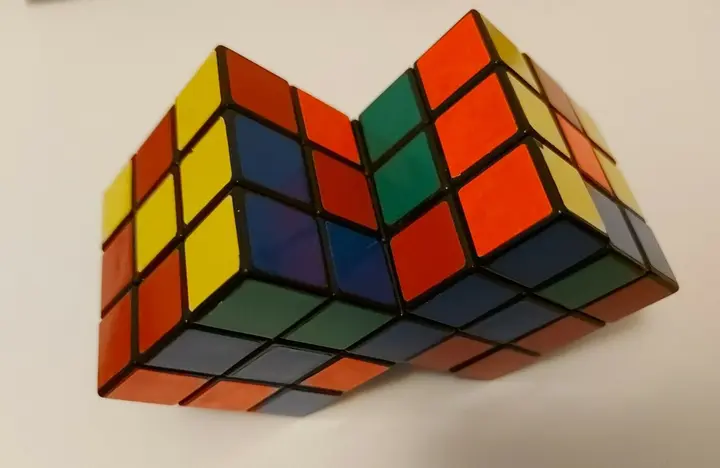
1. Siamese Twin Rubik's Cube
Photo via Pinterest
Creator: Tony Fisher
Original Price: $4
Current Price: $100 - $125
Created by Tony Fisher in 1982, the Siamese Twin Rubik's Cube features two Rubik's Cubes connected at an angle so the cubes interlock, making the attached side impossible to solve. Instead, you must solve the other sides.
These cubes were sold during the original craze, though they weren't produced in the millions like single Rubik's Cubes. On eBay, original interlocking Mate Cubes from the 1980s now sell for around $100 to $125, significantly more than the original $4 price.
2. Colored Tamagotchi Plus
Photo via Wikimedia Commons
Manufacturer: Bandai
Original Price: $45.85
ADVERTISEMENT
Current Price: $200 - $400
The Tamagotchi Plus Color (TMGC+C) was the first Tamagotchi to feature a colored LCD screen. It was initially released in 2008 in Japan, where fans could buy the TMGC+C a week before its official release. This Tamagotchi's shell was larger than other versions and came in eleven colors.
The first wave included white, pink, black, green, purple, orange, and blue. The second wave added yellow, navy, creamy pink, and green mixed with white. A used TMGC+C from 2008 sells for about $200, while a brand-new, unopened one goes for roughly $400.
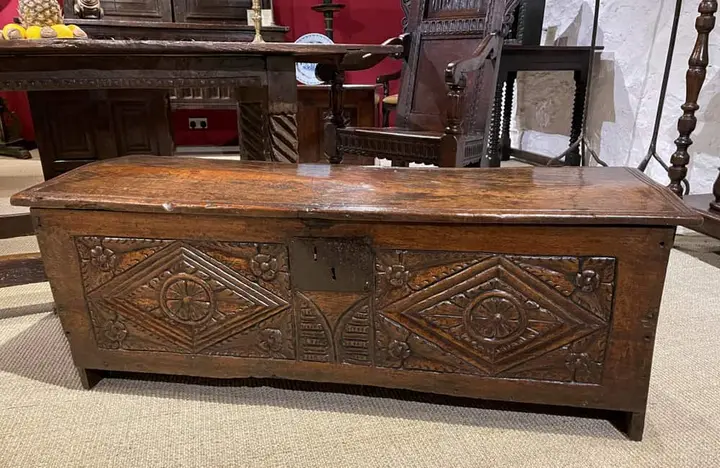
3. Antique Chests
Photo via Pinterest
Maker: Tudor-era carpenter
Original Price: Unknown
Current Price: $8,500
While it's unlikely you have something like this, you should check the dates and origins of your furniture. Old containers and chests can be valuable. For example, this oak chest was made during the Tudor period and features a one-piece lid, a molded carved edge, and intricate leaf and flower carvings worked into the oak.
ADVERTISEMENT
The seller, Period Oak Antiques, states that this Henry VIII oak chest dates back to the 16th century, which makes its condition all the more remarkable. The chest is currently listed for $8,500.
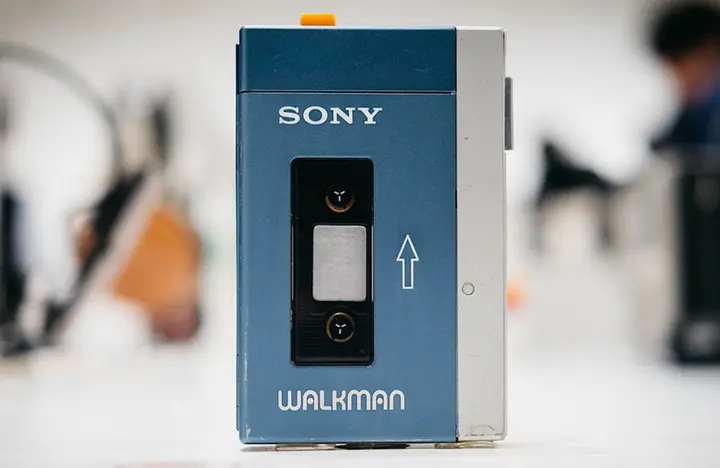
4. OG Sony Walkman
Photo via Pinterest
Manufacturer: Sony
Original Price: $200
Current Price: $951
The Walkman was a technological revolution and hugely profitable for Sony. When the Walkman was first introduced in 1979, the portable audio player cost $200 (roughly $800 in today's dollars). Since then, total sales of all versions have surpassed 385 million, paving the way for other portable audio players.
Old-tech nostalgia is lucrative in the collector's market. Walkmans from the late 1970s can fetch up to $1,000 today, even though they were mass-produced. Although Walkmans are essentially obsolete now, you can still sell them on eBay to make some money.
ADVERTISEMENT
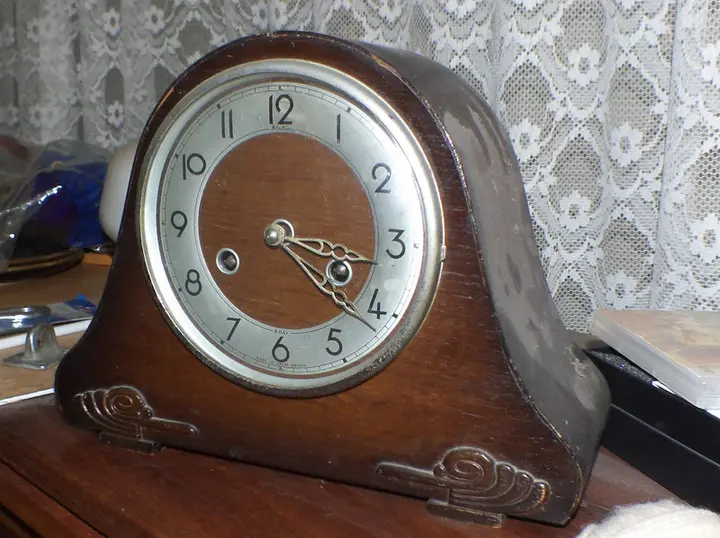
5. Mantel Clocks
Photo via Flickr
Manufacturers: Seth Thomas, Gilbert, Boston, and others
Original Price: $10 - $100
Current Price: $50 - $500
To identify your antique mantel clock, look for the maker's name or company name. The name might be printed or engraved near the center of the dial, around the edge of the face, on the clock movement's backplate, or on a paper or plastic label attached to the back of the clock.
Rare and unique clocks—like the antique Boston #11 clock—can sell for thousands (one Boston clock sold for around $3,000). Mass-produced mantel clocks usually range from $50 to $500 on eBay, depending on the maker, model, and whether they still function.
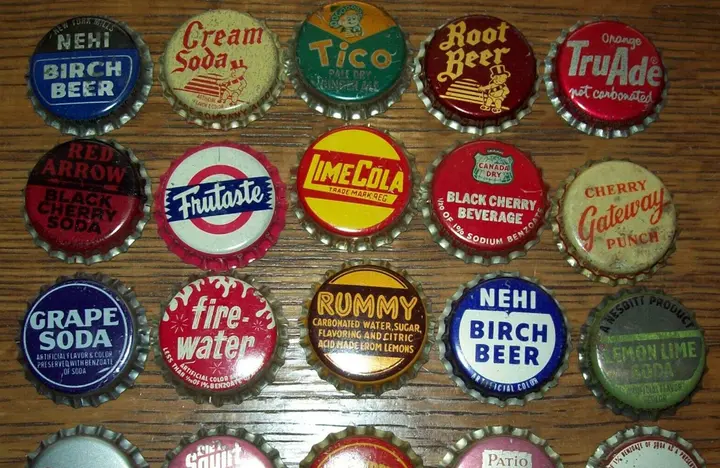
6. Bottle Caps
Photo via eBay@Silvernugget
ADVERTISEMENT
Manufacturers: Coca-Cola, Pepsi, and others
Original Price: $0
Worth Today: $10 - $50 per collection
As you might expect, there's a market for almost everything, and you can usually find it on eBay. Bottle cap collectors can make a few dollars from their collections, no matter the size, whether the caps are from beer, soda, or water—the more unique the caps, the better.
For example, a set of 100 red Budweiser crown beer bottle caps is listed on eBay for $11. Another set of 100 caps is being sold individually for $13. Note: If you plan to sell your collection, it should contain at least fifty pieces, if not more.
Lennart Vogel
ADVERTISEMENT
How to Get a Charred Pizza Crust Without Ruining the Pie
ADVERTISEMENT
A black pizza crust is not proof that you nailed it; a lot of the time it means the pie baked too long or with the wrong heat balance, and you can learn to tell the difference on your very next bake.
Home pizza people get trained to chase darkness.
ADVERTISEMENT
Fair enough. In great pizzerias, char can mean fast heat, strong oven spring, and a crust that stayed moist inside while the surface blistered hard.
But dark is only evidence. It is not the verdict.
The best char usually comes from a shorter, hotter bake with strong top and bottom heat working together. Leaving the pizza in longer often gives you a different result: more black, less life.
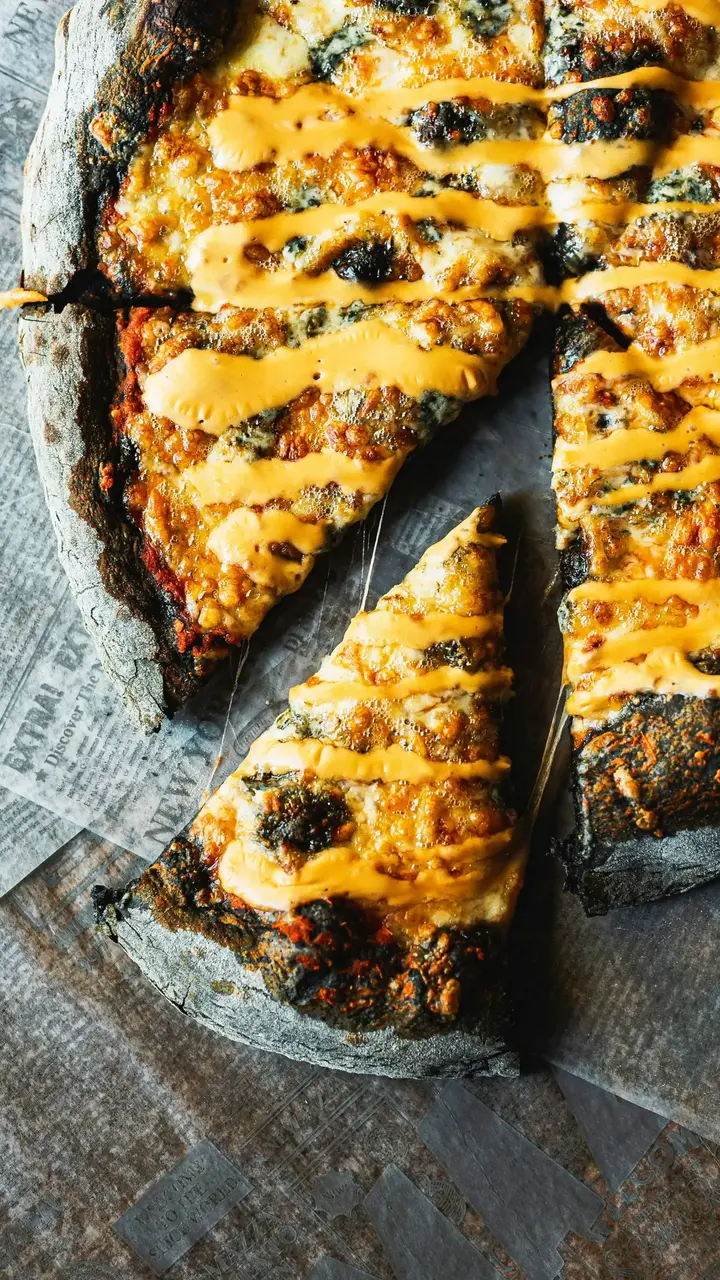
Photo by Ari Kurniawan on Unsplash
Why the prettiest black spots often come from less time, not more
ADVERTISEMENT
Think about what you actually want from the rim. You want the dough to puff fast, set quickly, and blister in places before the inside dries out. That is a high-heat event, not a patience event.
When pizza authority Tony Gemignani explains good charring, he ties it to oven heat and fast baking, not just color for its own sake. The plain-English takeaway for a home baker is simple: if your oven can brown the top and bottom quickly, the crust can spot and blister before the crumb loses too much moisture.
Serious Eats testing on steel-backed home oven pizza made the same basic point in practice. A baking steel stores and dumps heat into the dough faster than a stone, which helps the bottom char in a short bake, especially when paired with strong top heat from a broiler. What you should change today: preheat longer than you think, and if your oven allows it, use the broiler to help the top keep pace with the bottom.
ADVERTISEMENT
That balance matters because pizza does not burn in one simple way. The underside, the rim, the cheese, and the exposed sauce all respond to different kinds of heat. Bottom heat comes mostly from the steel or stone. Top heat comes from the oven air and broiler. Good char shows up when those sources hit hard enough, and at close enough speed, that the dough rises and marks before it slowly dries out.
Here is the trap. If the bottom is scorching while the top still looks pale, or if the top is drying while the underside is barely colored, your crust marks stop meaning what you think they mean.
And sometimes that black crust is getting there for the wrong reason entirely: too much sugar in the dough, weak top heat, or just too much time in the oven. That is the reset. Char is not automatically skill. Sometimes it is just overexposed dough.
ADVERTISEMENT
When the char is right, it looks like scattered dark blisters on a still-lively crust. When it is wrong, it often turns into one continuous matte-black band, the kind that looks flat and dry instead of bubbled and raised. You can see it the second the pie lands on the board: spots versus strip, blisters versus burnout.
That visual difference usually points back to mechanism. Scattered blisters mean parts of the surface puffed and browned fast while the interior still held water. A continuous black band usually means the crust kept sitting in heat after much of that surface moisture was gone.
That is the real standard: blistering while the interior is still protected.
The self-check that tells you if your oven is helping or hurting
ADVERTISEMENT
When your pie comes out, do you see scattered dark blisters or one continuous black band?
If it is scattered blistering, especially on a rim that still feels light and airy, you are close. If it is one dark band around the cornicione, or a hard black ring with a dry interior, the pizza usually spent too long in heat that was not balanced well enough to finish the bake sooner.
A short home-bake scene makes this easy to spot. The pizza launches clean. The rim rises. Cheese bubbles. But the underside goes dark before the top edge gets those spotted blisters, so you leave it in another minute to finish the top. Now the bottom is bitter, the rim has gone from charred to leathery, and the center lost steam it needed. A lot of home bakes die right there.
ADVERTISEMENT
This is also why the darkest good-looking char can come from a shorter bake. If the top and bottom hit hard together, the crust marks develop while the dough is still expanding and holding moisture. Leave that same pizza in longer and you do not get “more artisan.” You just keep cooking past the sweet spot.
The few variables that change what black really means
This does not work the same way in every home oven. Broiler strength varies a lot. A steel usually transfers heat faster than a stone. Wetter dough can blister beautifully, but it can also behave differently from a lower-hydration dough in the same oven. Sugar changes the picture too, because sugar speeds browning and can push a crust from deep brown into black before the bake is truly balanced.
ADVERTISEMENT
That last part matters more than many home bakers think. If your dough has added sugar, honey, or malt, it may color much faster than a lean dough made from flour, water, salt, and yeast. In a very hot oven, that can make you believe you are getting proper pizzeria char when you are really seeing accelerated browning.
The correction is not mysterious. Hotter steel or stone. Stronger top heat. Less sugar if your crust is blackening too fast. Shorter bake. Watch the rim, not the clock.
Those fixes stack together because they solve one problem: they let the crust mark early, while the pizza still has water left where it counts.
But what about famous pizzas that are deeply charred?
That argument is fair. Some respected styles do run darker than the average home baker expects. Wood-fired Neapolitan pizzas can show dramatic leopard spotting. Some New York and New Haven pies carry deeper overall color. Intentional char is real.
ADVERTISEMENT
The line is not “black equals bad.” The line is whether the char matches the bake style and leaves the crust tasting developed rather than simply burnt. If the crumb is still open, the rim still has some give, and the dark areas are part of a fast bake rather than a long death march, that can be a very good pizza.
But a continuous matte-black exterior and a dry, stiff crumb are not badges of authenticity. They are outcome clues. Read them that way.
What to aim for on your next pie
Use color as a pattern, not a scoreboard. Good char usually shows up as scattered blistering on a crust that still looks expanded and feels alive. Bad char usually shows up as broad, even blackening after the dough has spent too long losing moisture.
ADVERTISEMENT
On the next bake, judge the crust by this one rule: chase fast, balanced blistering, not extra minutes in the oven.